
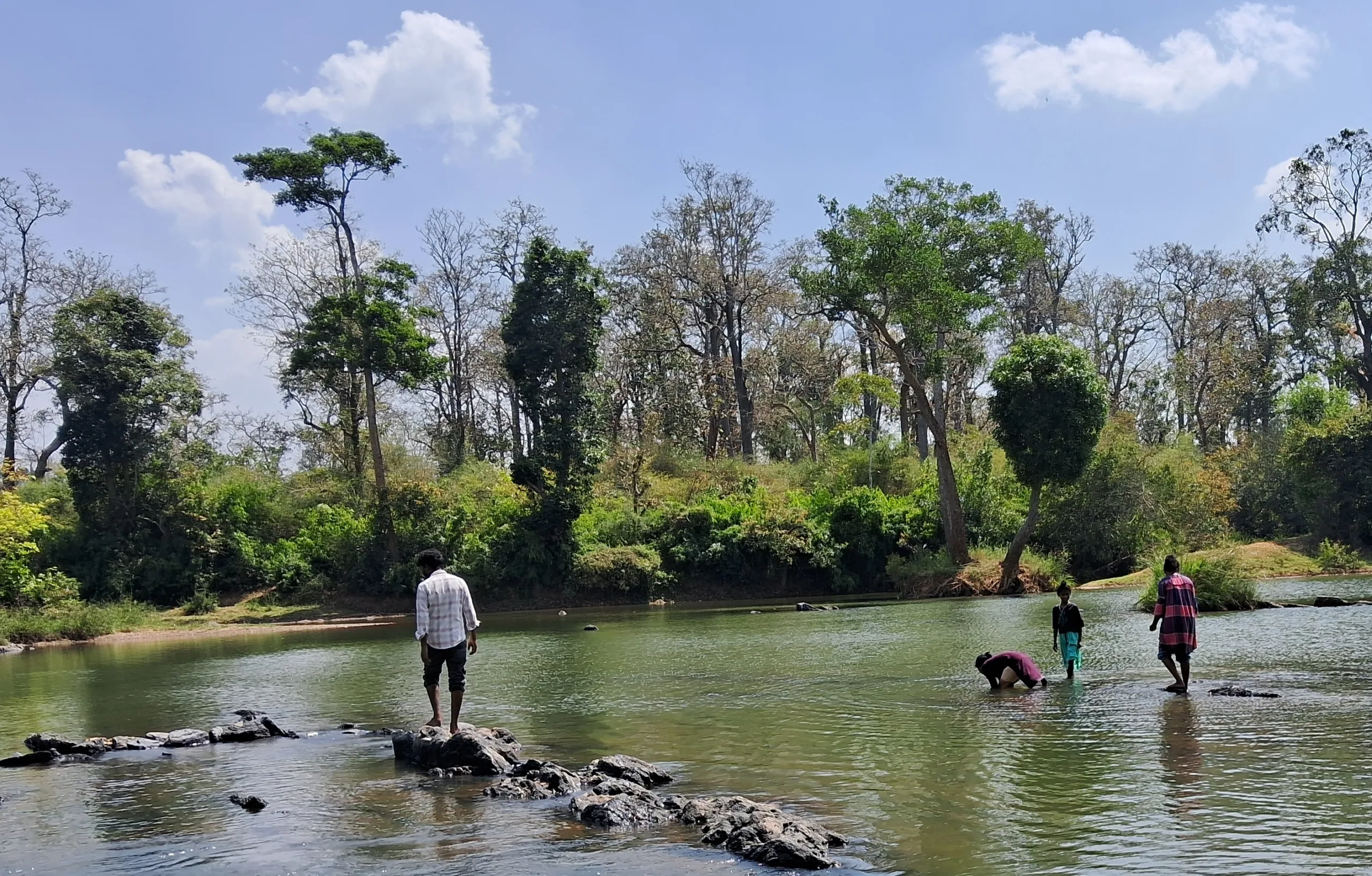
Nothing Permanent in the Forest-Part 2
What remains when a community leaves behind no monuments, possessions, or permanent traces? This second part of Seeds and Herbs – Walking in the Land, with the People journeys into the lived philosophies of indigenous communities, revealing ways of knowing, sharing, and belonging that challenge dominant ideas of property, progress, and human separation from nature.
Where do the boundaries of art and life begin and end? The book, Seeds and Herbs – Walking in the land, with the people, is a glimpse into the decade-long co-travelling, sharing, and moulting by a small team comprising visual artists, poets, theatre artists and cultural activists.
In this long journey, they walked with the Forest Fringe Farmer’s collective of the Western Ghat region of Kerala, FTAK, and with members of the indigenous communities of Wayanad. They together walked within a defined space: In the paddy fields, on the field bunds, in the forests and forest fringes, often in silence, at times entering into short conversations. Nature and human beings were not divided into separate shores in the dwelling places of the farmers and the tribal communities
The book also holds recollections and documentation from two art exhibitions: “Let Me Come to Your Wounds, Heal Myself” (2020) and “Ottamuri Veedu – Where Wounds and Herbs Heal Each Other” (2025) took shape from these journeys.
The footprints of this journey are marked in this book, published with the support of the India Foundation for the Arts (IFA) under the Arts Practice programme, made possible with support from Parijat Foundation.
Part Two
Nothing permanent in the forest, Nothing owned by anyone…
At each place they make tools needed for that place. They do not keep any tool as ‘the tool’ permanently. So also with other things, belongings. If they did not find enough firewood to keep them warm in the cold nights, the Paniya tribes people might chop pieces of wood from the pillar of their own house. For us, the pillar of the house is most important, the Paniya tribe considers a house to be only temporal.
– KR Pradeesh
When we try to understand earlier civilisations, we search the forms they had created. Excavations of burial sites offer leads to understand past civilisations, their culture. But the tribal communities we interacted with do not leave any traces for future discovery. We will not get any artefacts from them. What they have are at its minimal level and temporal. At the same time, they have remained alive. They have shared like any other community, and held the community together. They made stories, they sang, and they danced. They walked a large ex tended world within the world they lived.
Like the tiny well – the keni – the survival necessities the tribal communities created or erected were minimal. They leave hardly any trace of their existence for postertiy. For many tribes, traditionally, every year starts anew. They did not make anything permanent. During monsoons, when the river overflows, they just shift the washing stone to a higher plain. When the water recedes, they bring it lower. Even their houses were temporary. For them, their community and the forest were their home. All they wished for was the forest and their place within it as a community. ‘Veedu Kaadanu’ – forest is our home, they say. Not the buildings.
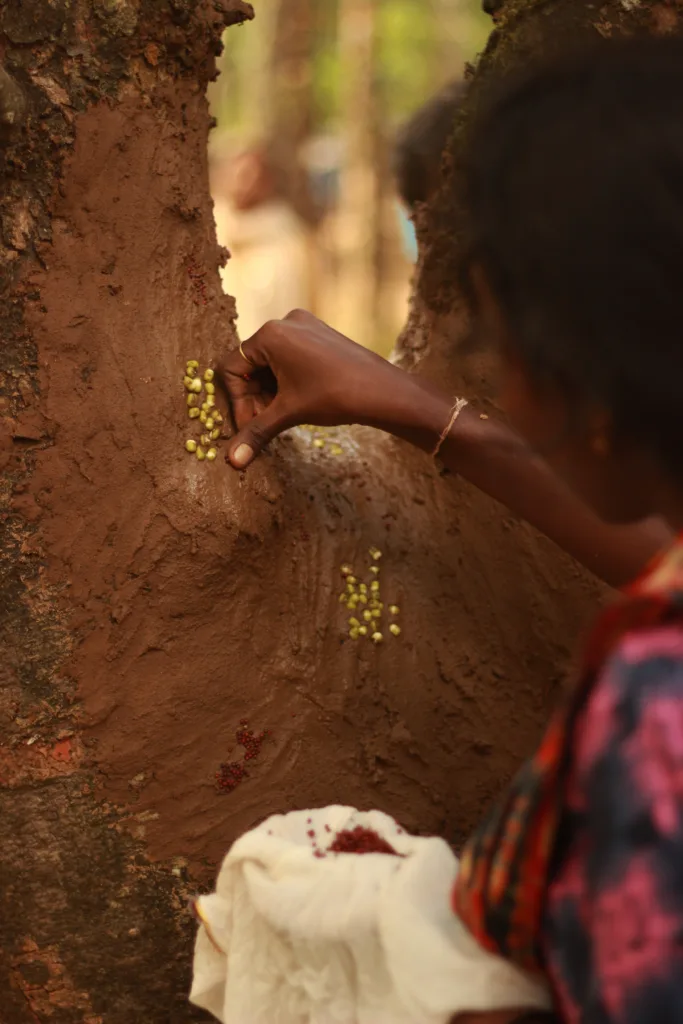
the earth shows ways…
When we fall ill, we use healing herbs. The earth shows ways to restore our physical and mental health. Whatever we need, the earth provides. Whatever we eat gets digested, and we get energy and health. Earth gives us joy. When we imagine a god here and pray and express our gratitude, they call it superstition, irrational and unscientific. But we own a couple of acres of land and pay tax to the government and the government gives us a small slip of paper which is supposed to be the guarantee that the land is ours. We believe that. Otherwise we will be superstitious! He laughs…-
Annan, a Kurichya Karanavar(elder).
As we were walking and listening, Azis said, In the city, some people change their apartment, because of noise from the neighbour’s flat. Some people change their house because the leaves or flowers from the neighbour’s compound fall into theirs. Or because they don’t like the behaviour of their neighbour. Now architects take pains to design apartments that insulate one dwelling unit from another. Gated communities are formed not just to ward off others from the community, but to sufficiently isolate one unit from the other. If anyone needs to drill a nail into the wall, there will be a commonly agreed time for it. Because it may disturb someone’s sleep. And these are considered ideal and desired measures to take when housing complexes and gated communities are formed. Tribal people do not leave their forest because of elephants, tigers, or for any other reason. As they are there, animals and other creatures too stay there, as it is their place too. Through winter, summer and mon soon, all seasons.
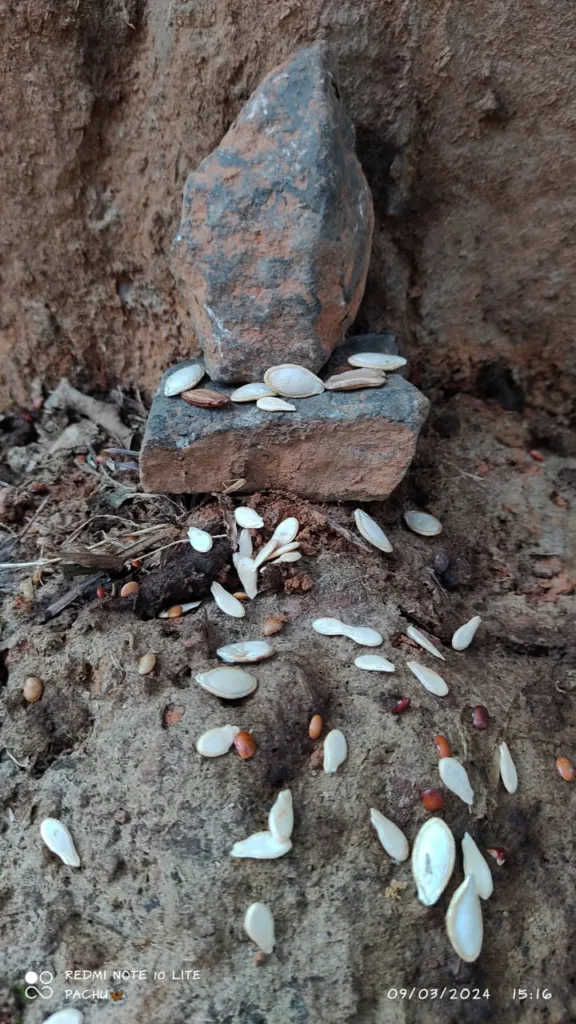
Where does the forest begin and end? What is the nature of its borders? How distant is the forest from our homes?
How can you separate a stone from the worm? The bees from the orbit of the earth? Humans and animals from these forests? If you ask a tribal to sing, he will say that he does not know any songs. A tribal person seldom sings a song all alone. Even if you ask those who are good at singing, they decline. They can sing only when all stand side by side. One cannot take the song from the community and make it one’s own.
– Sukumaran Chaligadda
Fluidity of knowing
For the tribal, there is less of a divide between what was domesticated and what was wild. There is less division between the physical and metaphysical. The humans, the gods, animals, birds, poison and medicine all have their place and exist together. There is meager differentiation between those with and without names.
Here, animate and inanimate beings, plants and prayers intermingle, wind together and unwind too. Dreams and revelations might come into play in the transfer of knowledge from one person to another, one generation to the next. Like the identification of a deity in the resemblance one recognises in a stone while on a stroll in the wilderness, knowledge from the elders gets transmitted, either during their lifetime or thereafter. A mind constantly awake and receptive to the deep flow of knowledge, receives it. This is not the path of teaching and learning, but sharing and discovering. Like air and water, knowledge is immersed in such lives. It cannot be preserved in archives, museums or books. There are no texts. It is instead an ecosystem where the soil, water, the woods, fields, animals, paddy, plants, birds, the dead and the to be born, past times and future times intertwine. It is alive.
Several tribes do not teach the young anything specifically as knowledge. Each one is supposed to learn through their keen observation and participation. They do not preserve and nurture certain things as knowledge. It is fluid and free, which also includes the absence – not needing to have. It is about living in knowing.
-KR Pradeesh
The promises that knowledge hold
In those days we did farming using old varieties of seeds and without chemical manure. They (agricultural officers) ridiculed us. They said the harvest will be poor, and we will starve. Now what has happened? Earlier, everyone collaborated in each one’s work. Today people take pride in not de pending on others. We are moving away from each other, the distance between people have increased. Now we are like a lone monkey on a tree. When I see what is happening today, I spend nights without sleep, it brings much pain. Everyone, regardless of caste, should work. Then this world will become better. Illness will reduce. Younger, smaller trees are safe from the wind, where there are tall/old ones around.
– Koppi of Kodumayi, Kurichya Tharavad
To get a few people to do some select work, we make thousands of students run through the tunnel of education. The chosen few are considered winners, all the rest are considered failures; failures in life. Only the winners have digntiy. Earlier times those who studied and those who did not, lived in some kind of peace. Those who did not study or failed in classes were not be littled; they were not sidelined or seen as nikrushtan or mlechan. Today’s system makes them such, says KR Pradeesh.
When we speak of resilience, what are the limits to our conveniences? We need an inverter for the time the power goes off. Air conditioner when the temperature goes up. Stock of provisions for the days of uncertainties. Appreciation to light up our days and policies and systems to meet our desires. Someone who speaks a different faith is a threat. Walls, gates, surveillance cameras and security guards; police, courts, mental hospitals, old age homes, rehabilitation centres, as well as call taxis, fitness and meditation centres. Shopping malls, art and performance spaces, book talks, and a government which we have voted to power. We have too many forms of knowledge to guard.
We select a few greens as edible and grow them. Our knowledge is restricted to what we grow. When the circumstances are not conducive to growing what we know, we suffer. But most tribal communities eat many kinds of leaves. When one particular kind of leaf is not available, there would be some other, all through the year. And they survived shortages, they endured hunger, even when it was not of their making.
Today people listen to and look up to science. But what science speaks will keep changing. Science is not committed to protecting and preserving the earth. But our faith is. Our faith tried its best to honour, protect and preserve life on earth. No one will fall ill because of physical work. Today people try to find easy ways to earn without much (physical) work. And it makes both the body and the mind ill. Earlier times, our parents sent the children to the field to learn farming. It starts with rearing the cattle. Now we send children to school; they don’t know anything about the land and the life in it. We feel sad to see this situation. Today people do not go to the forest but to the medical shop when they fall ill.
– Koppi
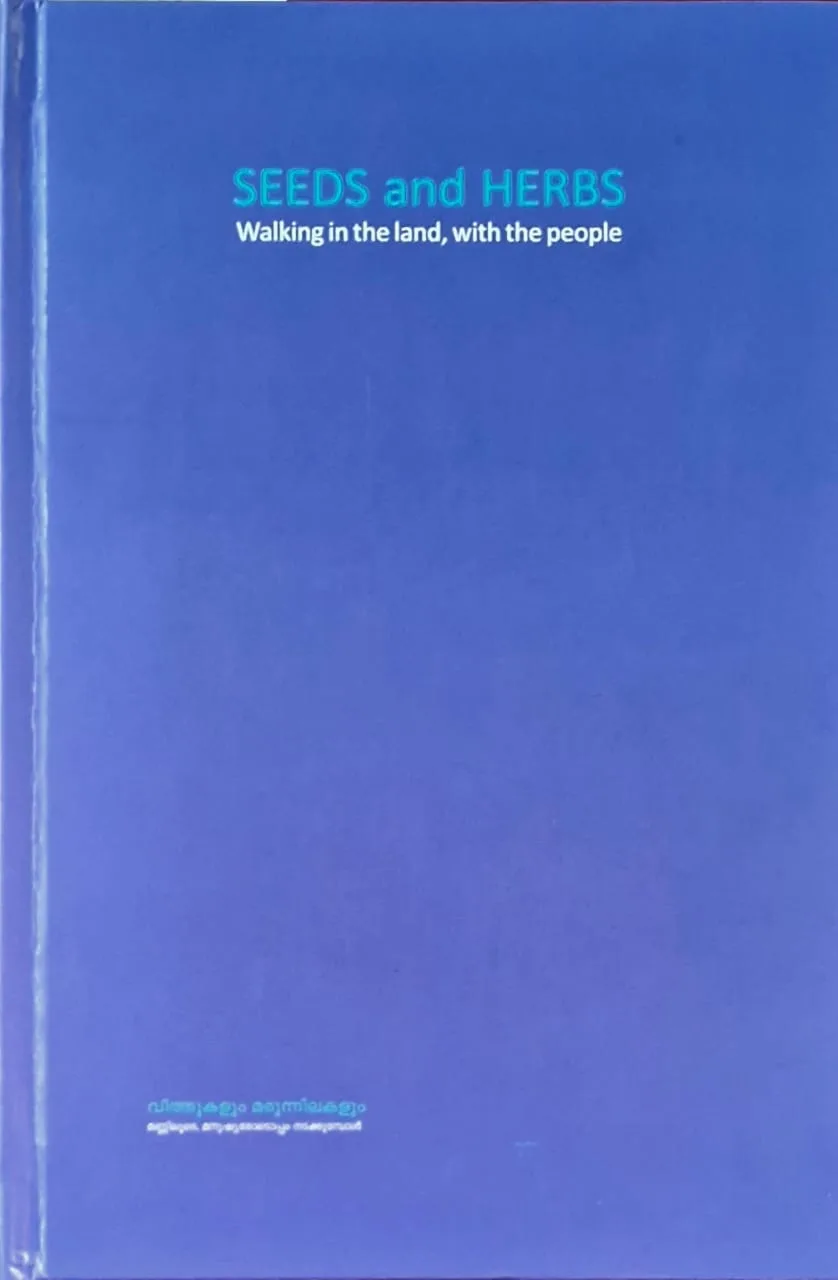
The book, Seeds and Herbs – Walking in the Land, with the People, is a glimpse into the decade-long co-travelling, sharing, and moulting by a small team comprising visual artists, poets, theatre artists and cultural activists.
- adivasi communities
- adivasi culture
- Commons
- community living
- decolonial thought
- Environmental justice
- forest and people
- forest communities kerala
- Forest Ecology
- Indigenous knowledge
- indigenous rights
- indigenous worldview
- kerala adivasis
- Seeds and Herbs
- sustainability
- traditional ecological knowledge
- tribal wisdom
- wayanad tribes