
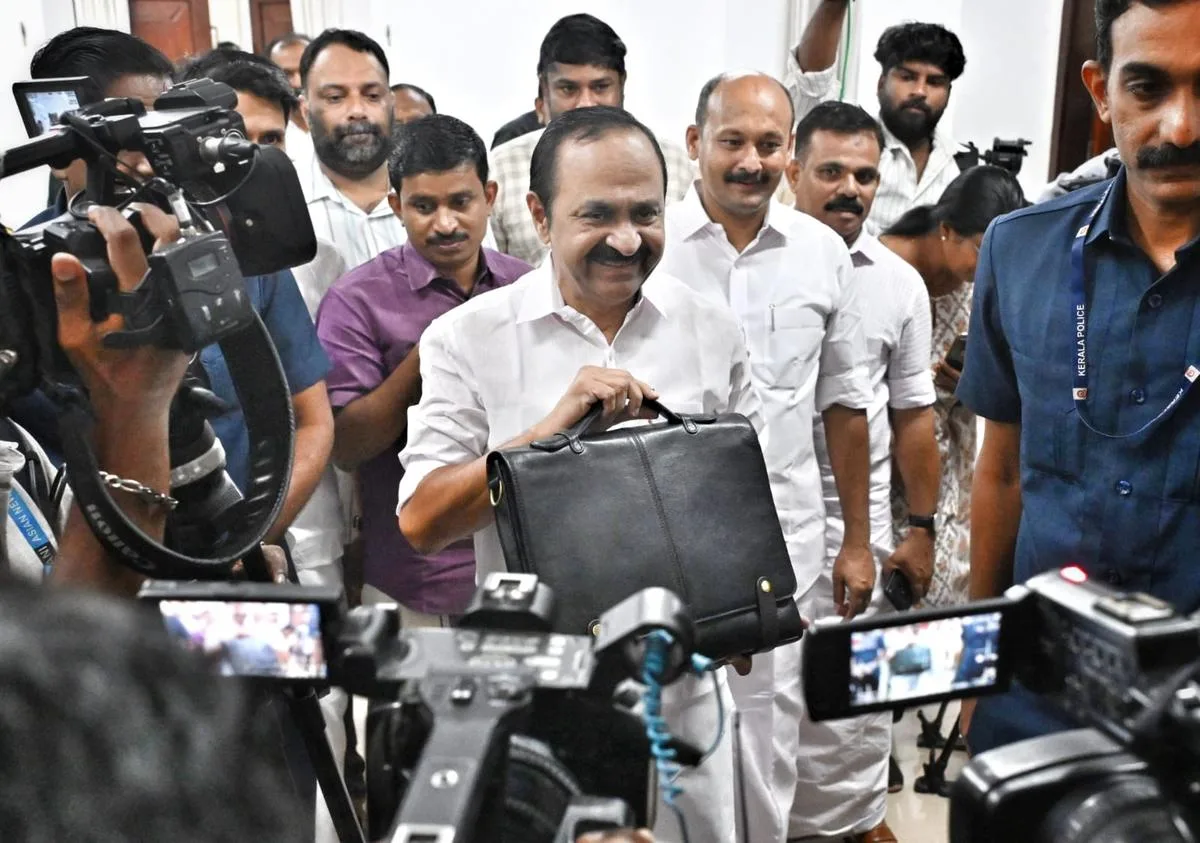
Kerala’s Revised Budget 2026–27: A Strategy Shift under Fiscal Stress?
Kerala’s Revised Budget 2026–27 signals a significant shift in the state’s development strategy. Facing severe fiscal stress, the budget seeks to balance welfare commitments with a renewed focus on productive sectors, employment generation, investment, logistics, technology, and the knowledge economy. This article by Prof. A M Jose and Prof. Jos Chathukulam critically examines the opportunities, limitations, and long-term implications of this strategic reorientation.
Introduction
Kerala’s development experience has long been interpreted through the lens of high human development achieved despite a comparatively weak productive structure. The state’s achievements in literacy, public health, social welfare, decentralisation and social mobilisation have rightly attracted national and international attention. Yet Kerala’s development model has also carried a structural tension: its social achievements have not been matched by an equally strong transformation of agriculture, manufacturing and employment-generating productive sectors. The result has been a persistent dependence on remittances, consumption, services, construction, public expenditure and migration.
This tension is not new. Scholars of Kerala have repeatedly pointed out that the state’s social development created human capabilities, but the economy did not generate enough productive employment to absorb those capabilities locally (Heller, 1999, Kannan, 2005). In Amartya Sen’s language, Kerala expanded substantive capabilities through education, health and public action, but the conversion of those capabilities into productive employment and locally embedded accumulation remained incomplete (Sen, 1999). The issue today is therefore not whether Kerala should abandon welfare for growth. The real issue is whether Kerala can create a new development compact in which welfare, social justice and productive employment reinforce one another.
The Revised Budget 2026–27 must be read in this context. It is not merely an annual fiscal statement. It is an attempt to redefine Kerala’s development strategy under severe fiscal constraint. The budget explicitly argues that the state’s social sectors are under strain, that social development indicators have stagnated, and that youth unemployment has become an alarming concern (Government of Kerala, 2026a). It proposes a “Puthuyuga Keralam” that combines social justice, economic growth, modern infrastructure, environmental responsibility and technology-led development. The central question is whether this marks a genuine strategic shift or only a new vocabulary of development.
This commentary argues that the revised budget does indicate a real shift in development thinking. Compared with the earlier model that relied heavily on welfare expansion, public expenditure and KIIFB-led infrastructure financing, the revised budget places greater emphasis on productive-sector revival, investment mobilisation, entrepreneurship, technology, logistics, knowledge economy, health economy, tourism, care services and employment generation. This is a more promising direction for Kerala’s long-term development. Yet it cannot be supported uncritically. A strategy shift becomes meaningful only when it is fiscally realistic, socially accountable, regionally inclusive and employment-measurable.
Fiscal Crisis as the Starting Point
The revised budget cannot be understood without reference to the White Paper on Kerala’s fiscal position placed before the legislature shortly before the budget. The White Paper, Kerala’s Fiscal Health: A Status Report, functions as the fiscal baseline of the new government. It presents Kerala’s problem not merely as a temporary cash-management difficulty, but as a structural compression of fiscal space arising from high debt, persistent revenue deficit, large committed expenditure, low capital expenditure, accumulated arrears, public sector losses and off-budget liabilities (Government of Kerala, 2026d). The revised budget draws directly on this diagnosis when it states that Kerala faces an aggregate debt burden of ₹5.07 lakh crore, committed expenditure amounting to 77% of revenue receipts, interest payments absorbing 20.9% of revenue receipts, and capital expenditure remaining at only 1.3% of GSDP (Government of Kerala, 2026a). It also notes that Kerala’s State Own Tax Revenue declined from 6.94% of GSDP in 2015–16 to 6.41% in 2025–26, placing the state below peer-state and national averages (Government of Kerala, 2026a).
The fiscal stress is also visible in the revision of the Plan Outlay. The budget reports a ₹20,500 crore shortfall in expected receipts under revenue deficit grant, other grants and the state’s share of Union taxes. Consequently, the Plan Outlay has been reduced from ₹35,750 crore to ₹30,370 crore (Government of Kerala, 2026a). The budget further points to accumulated liabilities of ₹87,012 crore, including DA arrears, DR arrears, bill discounting obligations, deferred liabilities, KIIFB repayment obligations and Kerala Social Security Pension Limited liabilities. In addition, nearly ₹35,000 crore will have to be mobilised for ongoing KIIFB projects (Government of Kerala, 2026a).
These claims must be read alongside the Comptroller and Auditor General’s assessment of Kerala’s state finances. The CAG’s State Finances Audit Report for 2023–24 placed Kerala’s overall liability/GSDP ratio at 37.84% after including off-budget borrowings. It also noted that KIIFB and Kerala Social Security Pension Limited together had outstanding liabilities of ₹32,942.14 crore as on 31 March 2024. In the case of KIIFB, the CAG observed that since KIIFB has no revenue of its own and depends on state budget transfers to service debt, its borrowings are in the nature of state liabilities and therefore off-budget borrowings (Comptroller and Auditor General of India, 2025).
The White Paper is therefore not merely a political document blaming the previous regime; it is also an important analytical document because it makes explicit the fiscal limits within which any new development strategy must operate. At the same time, Kerala’s debt problem must be assessed not only in absolute terms but also relative to GSDP, revenue capacity, federal transfers and developmental obligations. The fiscal crisis is real, but it should not be used to justify a retreat from welfare. Rather, it strengthens the case for rebuilding Kerala’s productive base so that social commitments can be financed on a more sustainable foundation. Kerala’s fiscal crisis is thus also a development crisis: it reflects the limits of a model in which social expenditure expanded faster than productive-sector revenues and employment.
The Developmental Logic of the Revised Budget
The revised budget’s main contribution is that it recognises the need to shift from a primarily distributive development model to a productive-sector-oriented model. The budget does not abandon welfare; rather, it attempts to place welfare within a wider growth and employment strategy. This is theoretically important. A developmental state is not one that merely spends; it is one that builds capabilities, coordinates investment, creates productive linkages, and expands employment-generating sectors (Evans, 1995). Kerala’s next stage requires precisely such a transition.
The strongest evidence of this shift lies in the flagship projects announced in Part II of the budget. Mission Samudra seeks to integrate Kerala’s 600-kilometre coastline, Vizhinjam and Kochi ports, non-major ports, inland waterways, dry ports, logistics facilities, shipbuilding, green bunkering and coastal employment. The allocation of ₹400 crore for Mission Samudra is not large relative to the scale of the ambition, but the conceptual direction is significant. Kerala has long underutilised its maritime geography. If Vizhinjam is linked with logistics, manufacturing, coastal employment, port-led services and inland connectivity, it can become more than a port project; it can become an economic geography.
Similarly, the Southern Kerala Economic Corridor and the Rare Earth and Critical Minerals Corridor represent an attempt to think in terms of regional clusters rather than isolated schemes. The budget proposes to link Thiruvananthapuram, Kollam and Alappuzha through knowledge, space technology, mineral processing and blue economy, with ₹100 crore for the Rare Earth and Critical Minerals Corridor and ₹50 crore for the Southern Kerala Economic Corridor. This cluster-based thinking is important because modern growth is increasingly organised through networks of infrastructure, skills, research, logistics and specialised production.
The Aviation Hub, with an allocation of ₹200 crore for preliminary activities, similarly seeks to connect Kerala’s four international airports with logistics, tourism, exports, pharmaceutical cargo, packhouses, maintenance, repair and overhaul facilities, pilot training, aeroparks and aerocities. This is a significant attempt to use Kerala’s international mobility and airport infrastructure for economic diversification.
Invest Keralam and the Special Investment Zone proposal are also central to the budget’s strategy shift. The budget recognises that land scarcity, high land prices, high wages and delays in clearances have historically constrained investment. Invest Keralam is proposed as a data-driven single-window mechanism with a Project Implementation Protocol. If implemented professionally, this can address one of Kerala’s most persistent weaknesses: the gap between investment intention and grounded investment.
The Kerala MSME Growth Scheme, with ₹100 crore, seeks to support 10,000 new MSMEs through revolving funds, technology funds, challenge funds, tax incentives and techno-managerial mentoring. This is important because Kerala’s productive future cannot depend only on large projects. MSMEs, cooperatives, start-ups, local enterprises and producer collectives must form the decentralised base of employment generation.
Human Capital, Knowledge Economy and the Employment Question
Kerala’s central paradox is that it produces educated youth but cannot absorb them adequately. This has resulted in large-scale outmigration for education and work. The budget addresses this problem through the Global Job Watch Tower, Kerala Knowledge Valley, Research Park, Space Economy, Health and Life Sciences City, Gen-Z technology initiative and Malayalam AI Initiative.
The Global Job Watch Tower is proposed as a Future Skills and Employment Intelligence Mission with an initial allocation of ₹2 crore. Its role is to track domestic and international employment trends, identify future skills, guide curriculum reforms and strengthen industry-academia linkages. This is a useful idea because Kerala’s education system has often remained weakly connected to labour-market transitions. However, such a mission will be meaningful only if it influences curriculum design, apprenticeships, placements, migration counselling and sector-specific training.
Kerala Knowledge Valley, with ₹100 crore, seeks to attract leading national and international universities and create a higher education ecosystem with research parks and centres of excellence. The Research Park, with ₹60 crore, is proposed on the model of IIT Madras Research Park. The Health and Life Sciences City, with ₹100 crore, aims to integrate hospitals, medical colleges, research laboratories, diagnostics, rehabilitation, training centres and medical tourism. These proposals recognise that Kerala’s human development advantage must be converted into high-value employment.
The Space Economy proposal, the Gen-Z technology initiative with ₹50 crore, and the Malayalam AI Initiative with ₹10 crore extend this logic to satellite technology, data analytics, AI, robotics, IoT, virtual reality and language technology. The challenge, however, is that institutions alone do not create ecosystems. Knowledge Valley, Research Park and the Global Job Watch Tower must be linked with firms, investors, universities, start-ups, public institutions and international labour markets. Otherwise, Kerala may create new institutions without creating new employment pathways.
Agriculture and Allied Sectors: Recognition without Full Transformation
The agriculture and allied sectors receive an allocation of ₹1,534.98 crore. The budget proposes to raise the support price of rubber under the Rubber Production Incentive Scheme from ₹200 to ₹250, improve paddy procurement and timely payments, establish new coconut procurement centres, support export-quality fruits and flowers, promote women-led agriculture through Krishi Sakhi, use AI, drones and IoT in agriculture, promote farm tourism, attract youth to agriculture, and introduce a Carbon Farming and Soil Credit Framework (Government of Kerala, 2026a).
These proposals respond to real problems. Kerala’s agriculture is marked by small and fragmented holdings, high labour costs, ageing cultivators, price volatility and climate vulnerability. The Economic Review shows that agriculture and allied activities contributed only 7.64% of Kerala’s GSVA in 2024–25, while the primary sector as a whole contributed 8.06%. Coconut accounted for 30.44% of cropped area, rubber 21.78%, plantation crops 28.22%, and rice only 7.01% (Government of Kerala, 2026b). The rice area was 1.76 lakh hectares, with production of 5.30 lakh tonnes and productivity of 3,006 kg per hectare. These figures show both the continuing importance and structural limits of agriculture.
The rubber support price increase is politically and economically relevant for highland and central Kerala. But price support alone cannot revive rubber unless accompanied by replanting, productivity enhancement, labour-saving technologies, processing, domestic industry linkages and farmer-owned institutions. The Carbon Farming and Soil Credit Framework is innovative, but it requires measurement protocols, aggregation platforms and credible market linkages. Krishi Sakhi recognises the feminisation of agriculture, but women farmers need land rights, credit, machinery, extension access and market participation.
The greatest weakness of the agriculture strategy is the limited emphasis on Farmer Producer Organisations, producer companies, cooperatives, crop-specific value chains, working capital, local processing and farmer-owned brands. In a state where average holdings are tiny, technology cannot be adopted efficiently by individual farmers alone. Drones, AI, carbon farming, procurement, processing and export marketing require collective platforms. Kerala’s agricultural future depends less on increasing cultivated area and more on building producer collectives, value chains and market power.
The dairy and fisheries proposals are stronger. The budget allocates ₹102.88 crore for dairy development and aims to increase daily milk production from 70 lakh litres to one crore litres within three years. Fisheries receives ₹200.93 crore, with an additional ₹50 crore for fisheries activities. The Economic Review reports total fish production of 9.28 lakh MT in 2024–25, including 6.47 lakh MT marine fish and 2.81 lakh MT inland fish. Kerala exported 1.80 lakh MT of seafood worth ₹6,941.29 crore in 2024–25 (Government of Kerala, 2026b). These figures justify a more ambitious fisheries and coastal economy strategy.
The Fisheries Sub-Plan and the fisheries-sector proposals together recognise fisherfolk as one of the most marginalised communities and include education support, overseas study opportunities, rescue boats, women’s vending support, housing, alternative livelihoods, women’s self-help groups, wage assistance during warning days, pattayams and coastal protection. If backed by clear budgeting and community participation, it can become a model of occupation-based social justice planning.
Welfare, Social Justice and the Care Economy
The budget does not abandon welfare. It provides ₹600 crore for free travel for women and transgenders in ordinary KSRTC buses. It increases the honorarium of Anganwadi workers and helpers by ₹1,000, with ₹66.20 crore earmarked; increases ASHA workers’ honorarium from ₹9,000 to ₹12,000, with ₹78.40 crore; raises wages of noon meal cooks by ₹1,000, with ₹13.30 crore; and increases the honorarium of pre-primary teachers and ayahs by ₹1,000, with ₹4.72 crore (Government of Kerala, 2026a). It also proposes a Department of Elderly Welfare, Silver Economy, caregiver certificate courses, day-care centres, elderly parks and fitness centres.
This is an important reframing of welfare. Kerala’s ageing is often seen as a burden, but the budget treats it as the basis for a care economy. This is a promising direction because elder care, geriatric health, rehabilitation, assistive technologies, caregiver training and retirement services can generate employment while responding to demographic change.
The budget also allocates resources to local governments. It provides ₹3,236.77 crore as General Purpose Grant, ₹4,315.69 crore as Maintenance Grant, and ₹8,655.45 crore as Development Fund for local governments, constituting 28.5% of the revised Plan Outlay. This is important because decentralisation remains one of Kerala’s major institutional strengths. Productive-sector development must be connected to local governments, cooperatives, Kudumbashree, FPOs and local economic planning.
On social justice, the revised budget provides additional allocations of ₹527.68 crore for Scheduled Caste sectors and ₹152.52 crore for Scheduled Tribe sectors to compensate for the reduction caused by the revised Plan Outlay. This is a welcome corrective. However, Kerala’s earlier fiscal debates show that SCSP and TSP allocations can become residual under fiscal stress. Therefore, the test is not only budgetary provision but actual release, utilisation, outcome and compensation for past shortfalls.
Land, Investment and the Need for Safeguards
The budget’s land proposals are among its most consequential and politically sensitive components. It proposes a Land Management Policy, Land Bank, Land Pooling Framework, review of outdated land laws, faster land conversion for commercial enterprises, and empowerment of agencies such as KINFRA and INKEL for land acquisition. It also proposes Special Investment Zones with streamlined clearances and dedicated infrastructure.
These reforms address a real constraint. Kerala cannot attract productive investment if land remains locked in administrative uncertainty, fragmented ownership, unclear regulation and high transaction costs. At the same time, land in Kerala is not merely an economic commodity; it is linked to social history, agrarian reform, housing security, ecology and local democracy. Therefore, land reforms must be designed carefully.
The risk is that land mobilisation may become speculative rather than productive. If land reforms mainly enable real estate accumulation, plantation tourism enclaves or high-value private projects without employment and social safeguards, the strategy will lose legitimacy. Every land-based project should therefore include public disclosure, social impact assessment, environmental safeguards, local employment commitments, worker protections and mechanisms to prevent displacement of vulnerable communities.
Centre-State Relations and Fiscal Federalism
A limitation of the budget is that it does not sufficiently develop the federal dimension of Kerala’s fiscal crisis. The budget attributes a major part of the fiscal correction to a ₹20,500 crore shortfall in revenue deficit grant, Union tax share and other grants. The Economic Review also notes that transfers from the Centre declined by 6.15% in 2024–25 compared with the previous year, even as the state’s own revenue receipts increased by 2.7% (Government of Kerala, 2026b). This indicates that Kerala’s fiscal stress cannot be understood only as a state-level expenditure problem.
Kerala’s fiscal position is shaped by GST compensation issues, borrowing limits, centrally sponsored scheme burdens, declining grants, demographic criteria in devolution, and the mismatch between high social-sector obligations and limited revenue autonomy. A credible development strategy must therefore combine internal fiscal transparency with assertive federal bargaining. The state must reform KIIFB and improve expenditure quality, but it must also argue for a fairer fiscal compact within Indian federalism.
Resource Mobilisation and Fiscal Prudence
The revised budget estimates revenue receipts at ₹1,69,646.37 crore and revenue expenditure at ₹2,05,001.67 crore, implying a revenue deficit of ₹35,355.30 crore. Net capital expenditure is estimated at ₹19,651.41 crore. The budget also records an overall deficit of ₹41.23 crore and a closing balance of minus ₹423.68 crore at the end of the year. After accounting for the additional expenditure of ₹1,080.95 crore announced in the revised budget, the cumulative deficit at the end of the year is estimated at minus ₹1,504.63 crore. This reveals the core tension of the budget: its development ambition is large, but its immediate fiscal provision is limited.
This does not automatically invalidate the budget. A first budget under fiscal stress may legitimately begin with concept allocations, DPRs, institutional mechanisms and seed funding. But it does mean that the budget should be judged by implementation milestones rather than the scale of announcements. The government must publish timelines, financing structures, expected private investment, employment targets and annual progress for each flagship project.
The proposal to reconstitute the State Planning Board as a government think tank is important in this context. But a think tank should not merely prepare reports. It should evaluate project outcomes, track employment generation, assess regional distribution, measure social inclusion, and publish evidence-based reviews.
Towards an Implementation Framework
The budget’s vision can succeed only if announcements are converted into projects, projects into investments, investments into jobs, and jobs into broad-based social advancement. For this, Kerala needs a disciplined project delivery framework.
First, each major scheme should have a project sheet specifying the objective, location, implementing agency, financing source, timeline, expected private investment, direct jobs, indirect jobs, women’s employment, SC/ST participation, local community benefits and environmental safeguards. Second, a Chief Minister’s Delivery Unit or equivalent professional mechanism should monitor 20–25 flagship projects monthly. Third, Invest Keralam should publish data on applications received, approvals granted, land allotted, investment grounded and employment generated. Fourth, the Global Job Watch Tower should connect training institutions to specific employment pipelines in ports, logistics, aviation, health, tourism, care, MSMEs, renewable energy, agriculture and fisheries. Fifth, all land-based and PPP projects must include social accountability mechanisms.
Productive-sector growth should not be measured only by investment volume. Kerala must measure decent jobs, local value addition, women’s employment, youth retention, coastal and hill-area inclusion, ecological sustainability, fiscal returns and local economic multipliers.
Conclusion
Kerala’s Revised Budget 2026–27 represents a significant shift in development strategy. It moves beyond a conventional welfare budget and places productive-sector revival at the centre of the state’s future. Its emphasis on ports, logistics, MSMEs, investment facilitation, knowledge economy, health and life sciences, tourism, care economy, renewable energy and technology reflects a new development imagination. This shift is important because Kerala cannot sustain its welfare commitments without rebuilding its productive base.
The revised budget is therefore developmentally more promising than a continuation of the earlier model that depended heavily on welfare expansion, public expenditure and off-budget infrastructure financing. However, it remains only a beginning. The fiscal space is narrow, many allocations are preliminary, agriculture lacks a full producer-collective and value-chain strategy, land reforms carry risks of exclusion, and the federal fiscal challenge remains underdeveloped.
The budget deserves cautious support because it recognises Kerala’s central development problem: the absence of a sufficiently strong productive base to sustain social development. But the test lies in execution. If the government builds institutions, mobilises investment, protects social justice, strengthens local governments and producer collectives, and measures employment outcomes transparently, the budget can mark the beginning of a new development phase. If not, it will remain an ambitious document without structural transformation.
References
Comptroller and Auditor General of India. (2025). State Finances Audit Report for the year 2023–24, Government of Kerala (Report No. 3 of 2025). Government of India.
Evans, P. (1995). Embedded autonomy: States and industrial transformation. Princeton University Press.
Government of Kerala. (2026a). Revised Budget Speech 2026–2027. Government Central Press, Thiruvananthapuram.
Government of Kerala. (2026b). Economic Review 2025, Volume I. Kerala State Planning Board.
Government of Kerala. (2026c). Economic Review 2025, Volume II. Kerala State Planning Board.
Government of Kerala. (2026d). Kerala’s fiscal health: A status report. Government of Kerala.
Heller, P. (1999). The labor of development: Workers and the transformation of capitalism in Kerala, India. Cornell University Press.
Kannan, K. P. (2005). Kerala’s turnaround in growth: Role of social development, remittances and reform. Economic and Political Weekly, 40(6), 548–554.
Sen, A. (1999). Development as freedom. Oxford University Press.
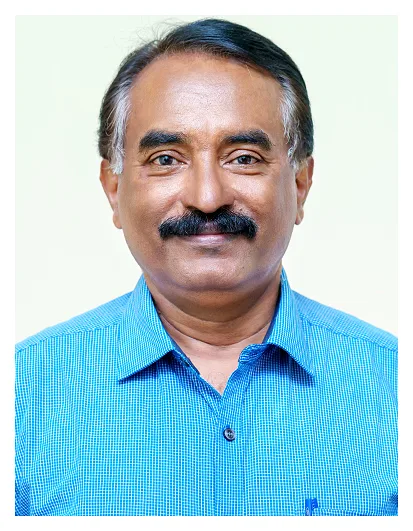
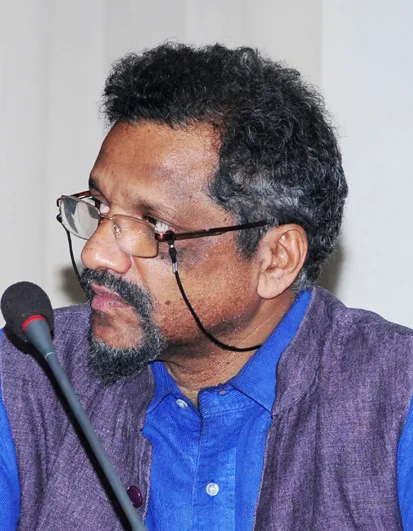
Jos Chathukulam is a Professor of Political Economy and Director of the Centre for Rural Management (CRM), Kottayam, Kerala. His academic work focuses on public policy, decentralisation, public finance, local governance, development studies, and political economy in India, with a special emphasis on Kerala. Prof. Chathukulam has authored and edited several influential books and research papers, and has served as a policy advisor to governments and international agencies. He is widely recognised for his critical engagement with development paradigms and for advocating sustainable, people-centred alternatives in economic and governance practices.