
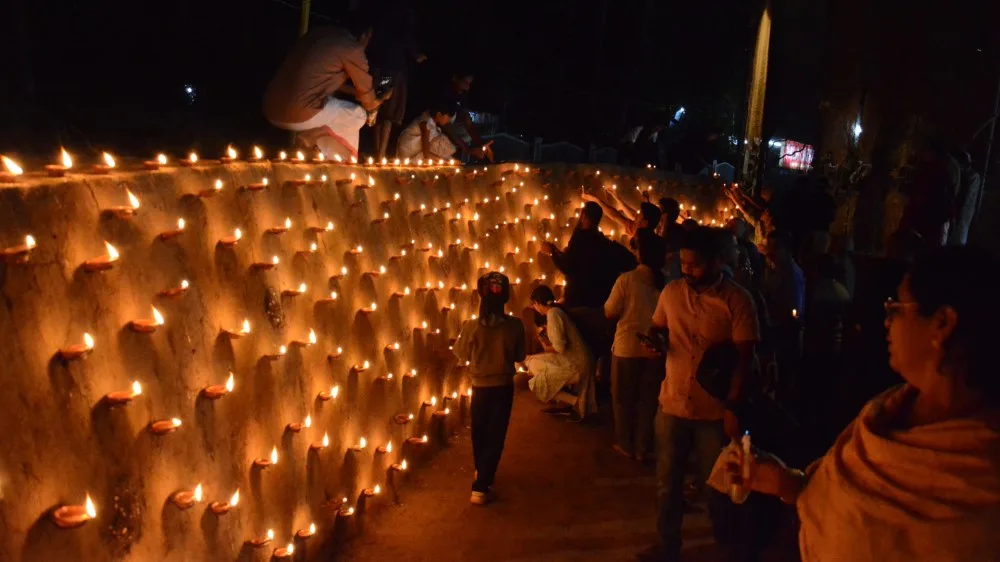
Thorns, Predators and Ghosts: The Wisdom of Living with the Forest
The sixth part of Seeds and Herbs – Walking in the Land, with the People explores the intricate relationships between Indigenous communities and the forest. Through stories, memories and reflections, this excerpt reveals traditional ecological knowledge, practices of conservation, and the boundaries that communities observe in their relationship with nature. It also examines how changing economic pressures and institutional interventions affect Indigenous knowledge systems, collective initiatives and ways of life.
Thorns, predators, ghosts
They walk through the forest. They stay clear of elephant paths. They fall silent on the slopes where the tiger frequents. A certain direction in the forest, they do not venture to. That particular area of the river, they do not enter. But they walk daily through the forests. Search food, gather firewood, watch animals and birds, linger on leaves and flowers. Pluck some fruits, pick some leaves, flowers. Swim in the stream, sunbathe on a rock. Sing, tell stories, feel the rain, walk in the dark. They reckon an unseen boundary for everything. Decide there isn’t the need to go beyond. That some honeycombs should be left untouched. That the fruits beyond a certain height should be left. But what is available is shared, hunger is quenched, they feel satiated.
When fishes swim upstream we will not catch them. They are moving upstream to breed. Only when they come downstream we catch them. When a deer or boar is seen treading slowly the elders told us Don’t hunt that; it might be pregnant. We would look for another. Similarly, we don’t catch birds during their nesting season. Hunting anything during their pregnancy is a sin.
– Koppy
Ghosts are everywhere. Guarding everything. What can be done and not done is told by the ghosts. In the forests, in the river, there are areas one should not venture into. Sacred spots. Or spots where danger lurks. If we go there, the ghosts would scare us. They will mislead our paths and blind our eyes. And we go round and round, not finding our way back home.
– Sukumaran Chaligadda
A story around Koodal Kadavu goes: A pregnant girl was killed, cut into pieces and thrown in the area. Her ghost is wandering around. Looking for her mother’s home. According to tribals, no one was supposed to go to Koodal Kadavu; the place had to be left untouched. But the local authorities cut the rocks and built a bund across the river at the very same place. So the girl (the river) has not been able to find her mother’s home and she endangers the lives of people who go there.
Things that have survived for thousands of years on this earth have come to an end during our lifetime. Many kinds of trees, grass, birds, animals and other creatures have gone extinct. The last cry of a certain animal, the last breath of a tree, all this has already happened in our lifetime. In the days we have so far lived, without us knowing, the last survivor of many a bird species has sung its last song and left.
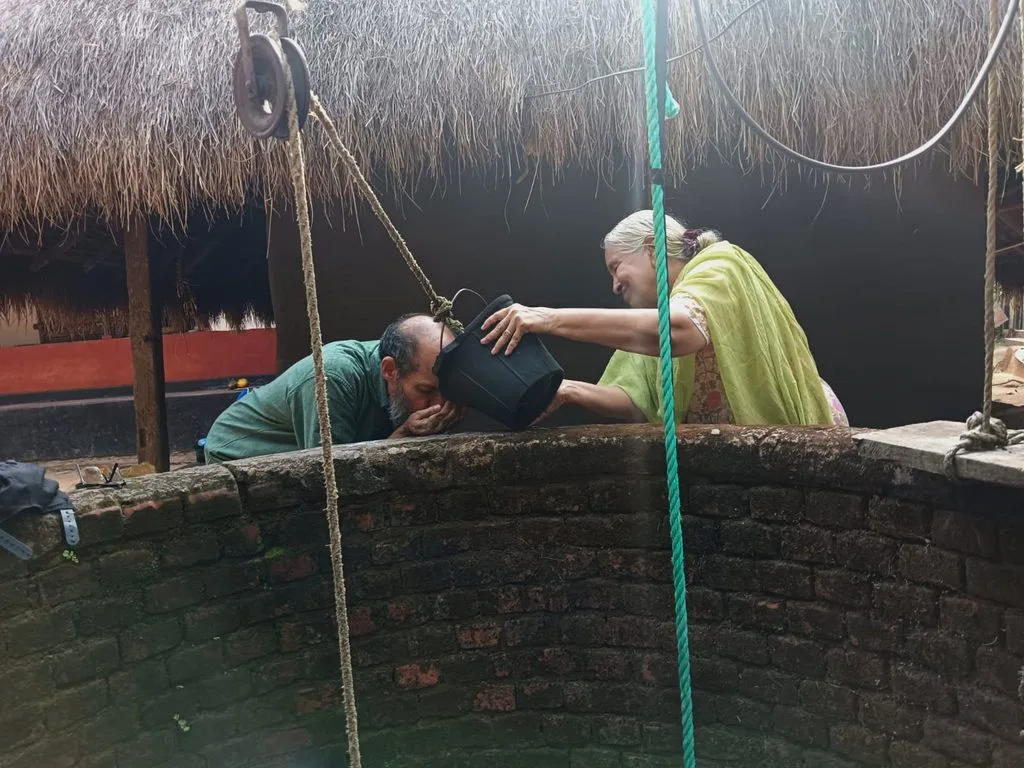
whose thirst is it..?
Before starting to collect honey during the season, honey gatherers of the Thenkurumar tribe have to follow cleansing rituals. Their mind and body have to be cleansed. They know the precise life patterns of bees, their migration, and all the details about their lives. Such knowledge serves to avoid harm and aid conservation. Tribes follow cleansing practices before they go hunting or gathering.
Earlier times, when honey was not so much in demand, we did not gather honey from all the trees. Some honeycombs were left undisturbed. Honey was so much part of our food as well. Now in season, the attempt is to gather as much honey as possible, sell it to the trading society and earn cash. We earn quite some money. It gets spent in a couple of months.
Sadly, alcoholism too has increased in the community. Broken families are the result. Changing cultural perceptions have devalued practices, knowledge and sensibilities that fostered preservation and the intimate relationship with the forest.
With torches tied to the head, they scale those massive trees in the dead of the night. Risky job, but not to quench their hunger. To serve the unquenchable thirst of some other world.
whose thirst is it?
the enigma..
When the existing web of relationships is torn asunder, what promise do we offer in its place? Here we look at two stories; the first one is an enthusiastic initiative, of women trying to reclaim themselves, but beset by the unsettling that its new form of thinking entails. And the second is a story of deep agony, caused by our crossing the threshold.
a tribal women’s collective
A collective of women belonging to two different tribes took the effort to develop a plot of land to preserve crops that are increasingly getting extinct. The plot was unkempt, but with a determined mind, the women worked hard, cleared the land and planted the seeds of various plants. Now they preserve around one hundred and eighty varieties of seeds and many medicinal herbs.
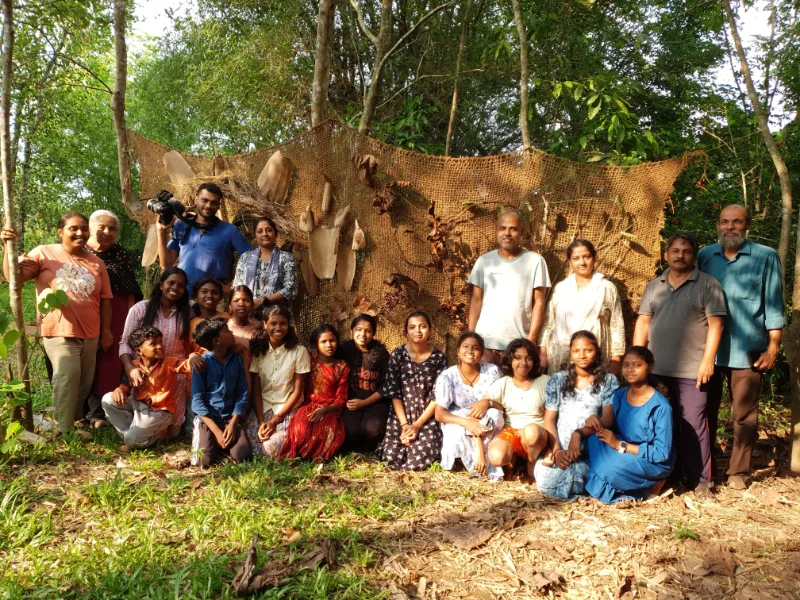
accountability, loss, gain, and success.
A spontaneous, self-driven initiative by a women’s collective like this can become a good storyboard for agencies interested in the field. Such interest is genuine, aimed at community wellbeing. But institutional support, for all its good intentions, inserts an alien intelligence of accountability and sustainability as deciphered by the modern world. There is also the compulsion to speak stories of continued success. It becomes the need of both the collective and the agency.
Ms. S says, ‘’When the land was cleared, the only thought we had was, let us see where this will lead us to. Earlier we had our Uru Moopan, who would say what is to be done and what not to. Today all speak their opinion, which is unsettling in some ways, causes uneasiness and pain. It also stops us from what we need to do. So some of us would think, if we just sit and keep stating our opinion, how will the work happen. So we stop talking and get to work. Though everyone speaks, and that causes pain and anger, the next day in the morning, all of us are here to work.”
Ms. S continues, when we were going to the forest to forage, we were together, and it used to be a celebration. Even if we did not get anything one day, it was fine. Then we did not have all these calculations of labour, loss, gain and success. We were free. Now we are trying to bring at least the spirit of togetherness through this collective but find it difficult to spend time with our families and children, which is another kind of pain.
Diverse systems of life can be possible. For which diverse products of earth need to be produced by diverse people. In diverse living conditions, with its care and sensibility…
– K.R.Pradeesh
This is a special series of excerpts from Seeds and Herbs – Walking in the Land, with the People, a book born from a decade-long journey of artists, poets, theatre practitioners and cultural activists walking alongside the Forest Fringe Farmers’ collective and Indigenous communities in Kerala’s Western Ghats.
The series brings together reflections, poems, conversations, memories, and documentation emerging from shared journeys through forests, paddy fields, hamlets and sacred landscapes. It explores relationships between art and life, ecology and community, healing and memory, through the voices of Indigenous knowledge keepers, artists, and land-based communities. The footprints of this journey are marked in this book, published with the support of the India Foundation for the Arts (IFA) under the Arts Practice programme, made possible with support from Parijat Foundation.
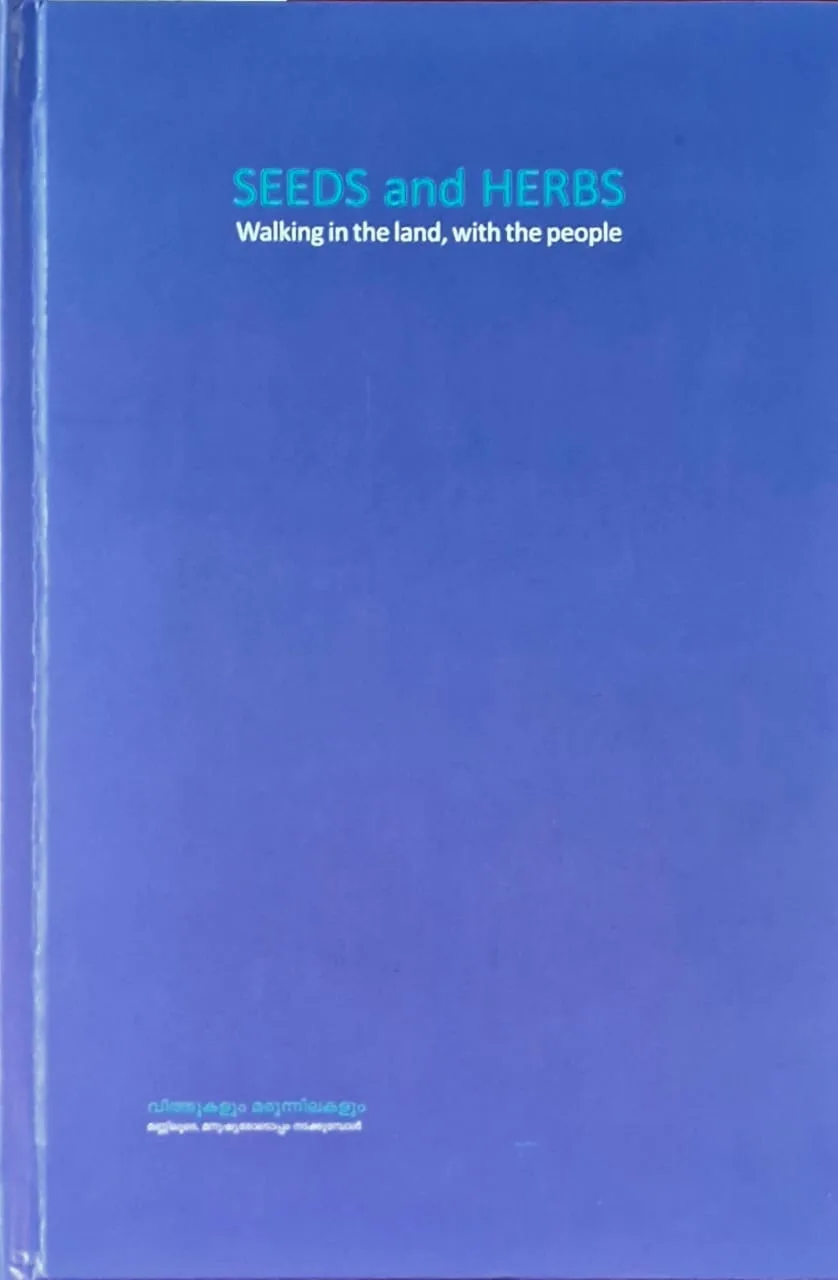
The book, Seeds and Herbs – Walking in the Land, with the People, is a glimpse into the decade-long co-travelling, sharing, and moulting by a small team comprising visual artists, poets, theatre artists and cultural activists.