
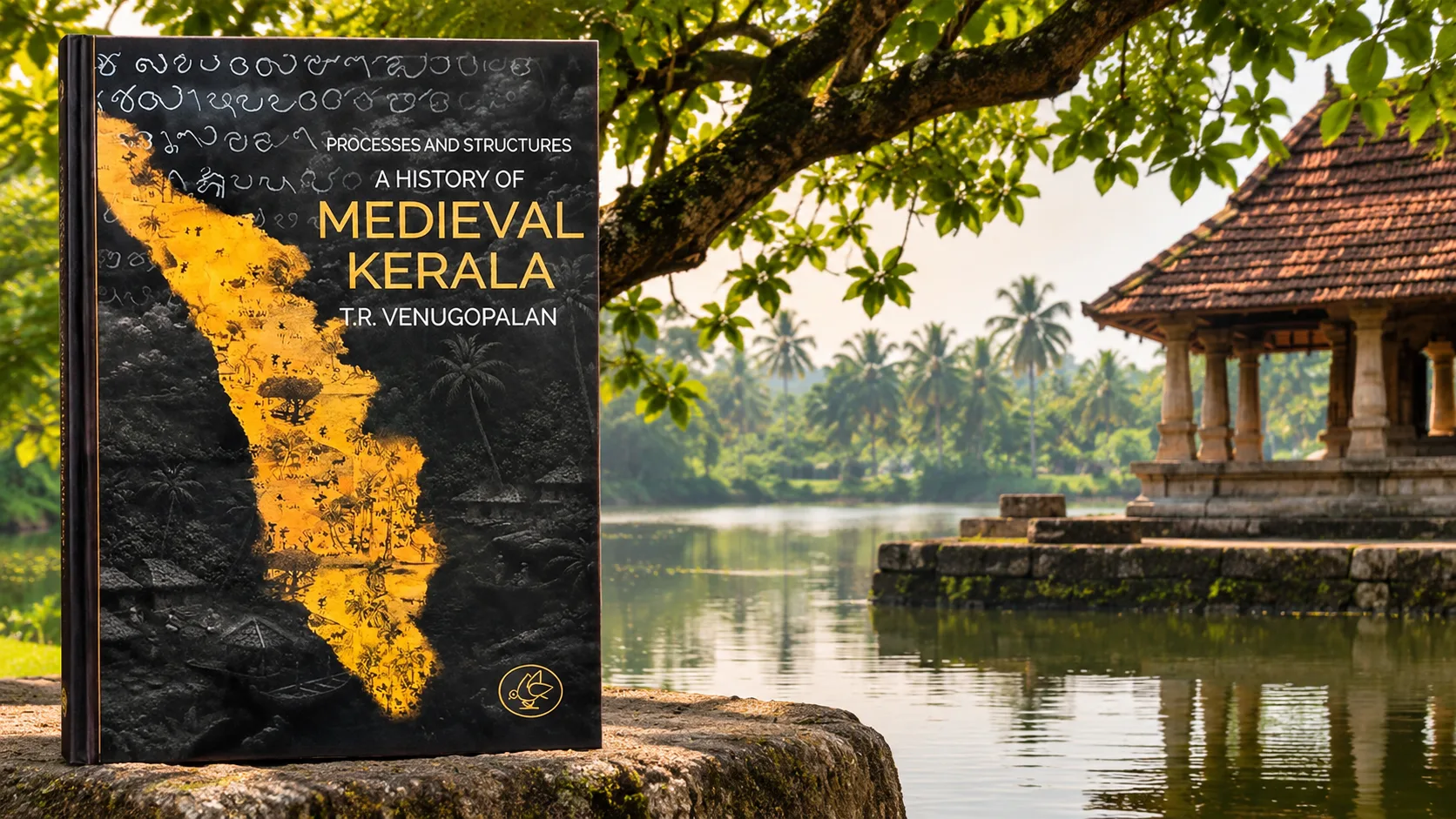
Revisiting Medieval Kerala: Agrarian Change, Feudal Power and the Politics of Temple Authority
In this review, Dr. P. K. Sreekumar critically examines T. R. Venugopalan’s Processes and Structures: A History of Medieval Kerala, highlighting its fresh interpretation of the socio-economic and political transformations that shaped medieval Keralam. Drawing on epigraphic records, archaeological evidence, revenue documents and other historical sources, Venugopalan challenges conventional narratives of Kerala’s past and explores the emergence of agrarian structures, feudal political formations, trade networks and Brahmanical temple authority. The review particularly highlights the book’s examination of land, surplus extraction, caste relations and the institutional power of temples, offering a critical perspective on how medieval Kerala’s social and political order evolved.
Since the beginning of nineteenth century, if not earlier, substantial attention has been construed by administrators to look in to the design, order and pattern of Indian society. The debates thus became a lively one, inviting controversies, interventions and interpretations from a wide range of scholars comprising of Sociologists, Historians and Anthropologists. The earlier stand on Indian villages that, they were ‘ petty republics’, was rejected precisely, and came to be studied more rationally from the perspective of treating them as administrative and revenue units in medieval India. This in turn , invites our attention to a critical and serious understanding of Indian Society in general and Keralam in particular.
Though earlier writings on Kerala history depended too much on myths and legends in Keralolpathy text , a brahamanical one in essence and character, they, to a larger extent, were accounts centered around Chera Samrajyam, Parasurama legend, brahman settlements ,chiefdoms etc. Some of the wrirers utilized inscriptional data, but then, their approach revealed a class character pertaining to the upper-middle class mentality.
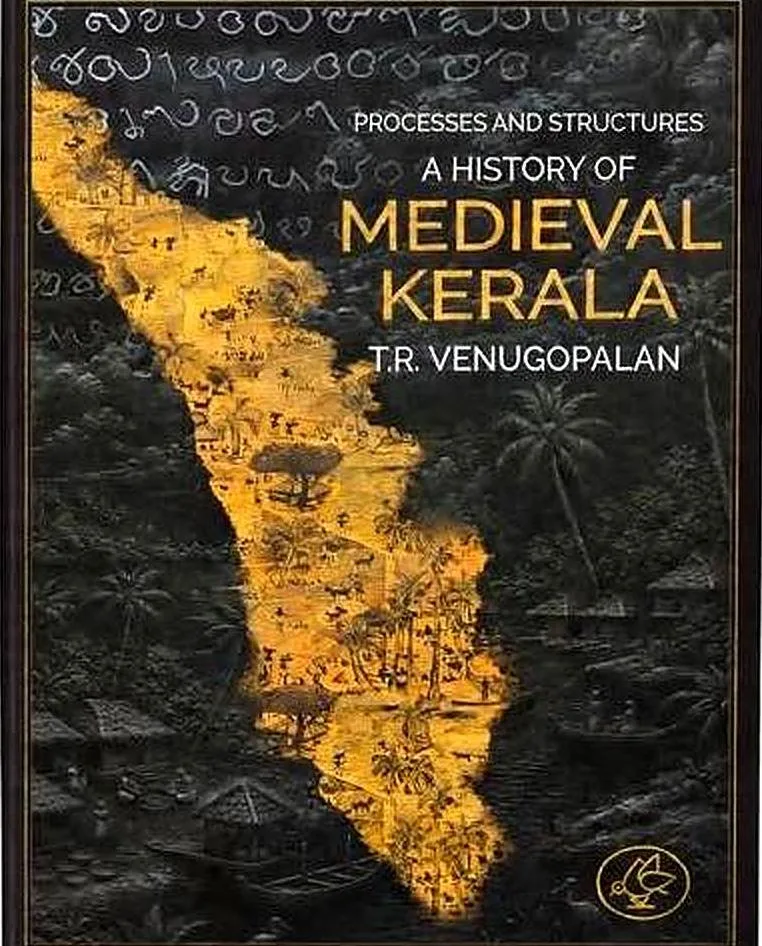
Critically evaluating the socio-economic processes in medieval Keralam, T.R. Venugopalan has come out re-visiting the primary sources and questioning some early positions taken by historians like Elamkulam, M.G.S. Narayanan, M.R.Raghava Varier, Kesavan Veluthat and the like. Equipped with inter-disciplinary tools, he has observed with caution, creative interventions and using analytical apparatus , re-imagined Medieval Keralam, re interpreted epigraphic data, granthavaris, archaeological material, and revenue records that offer Processes and Structures: History Of Medieval Kerala, more meaningful, rational and therefore intellectual. Marked by agrarian expansion and trade, surplus extraction largely came under the command of chiefdoms, which later came to be qualified as Svaroopams. A new agrarian order gradually emerged, which substantially witnessed the utilization of human labour in large numbers. Demand for occupational groups like blacksmiths, goldsmiths, carpenters and braziers were on the rise. Socio-economic processes based on epigraphic data, stretching from ninth to sixteenth century, were consulted and put to rigorous analysis which offer a totally new interpretation on medieval Keralam. Further, the decline of Perumal period witnessed the sprouting of Svaroopams, which pocketed the surplus from the ‘parampu–purayitam’mode. A nineth century work, Subhadra Dhananjayam, furnish a narrative , that portray Keralam as a land rich in paddy cultivation, is duly attested by records. It is appealing to draw attention to the fact that land charters do talk about donations to the temples. Both regal as well as individual donors appear in records, where individual donors outnumber the royal ones. Varied shades of landed magnets cropping up with multiple interests culminating in independent political units, where the control system came under the command of the natuvazhis. This state of affairs became increasingly evident from the Veera Raghava copper plate of 1225. Old natus fragmented into independent political units.
T.R.Venugopalan discusses in detail on trade , putting forward the argument that it was sustained as a diplomatic device to consolidate the power of the Perumal. Traders were given hurdle-free access to markets, and were allowed to make their own settlements. The natuvazhi became quite content with whatever gifts he received from the traders. Tharisappally copper plates substantiate this stand. The arrival of Judaism, Christianity and Islam brought to Keralam new belief systems, thought patterns and modes of living. The conventional historians’ format of a’ Rome centric’ trade approach is seriously questioned by Venugopalan. To him Rome was one among the many trade associates who had definite interests in Kerala trade. Moreover, this sort of trade brought little profit to the treasury. Along with this, Manipravalam works need to be re-assesed with a critical eye too. This is so, for, these works portray a society where angadis , brisk trade, and luxurious life style of the traivarnikas are eulogized with little facts to substantiate. Poets , in medieval period, for their livelihood, composed Kavyams , Prasasthis, Champus, and Prabamdhams. Though these works may bring stray facts, the treatment in these works are far from reality, and hence remain anti-people in character.
The chapter entitled State Formation in Medieval Kerala seeks to locate the “idea of Kerala” from nineth century onwards, through epigraphic data and granthavaris. This idea , it seems was first demonstrated by Dandin. Interestingly enough, an unknown author of Vyangya Vyakhya ,describes his lord, Shanu Ravi Kulasekhara as ‘Keralavishayadhipa’. The term ‘vishaya’, in Kannada and Telugu inscriptions is used in the sense of a district/ territory , rather than a kingdom. Anyhow this need further research.
It has been argued that, with the expansion of agriculture, the former pattern of kin based labour faded. Different classes of cultivators formed an overwhelming majority in Natus. Growth of occupational groups became a necessity in villages. Along with this, the non-cultivating intermediaries appropriated the surplus. Based on epigraphic data, this specific attribute was addressed by writers like Elamkulam who projected the concept of a Chera Samrajyam. This hypothesis was rejected by M.G.S. , and he put forward the idea of a small kingdom. Based on the same data, Venugopalan projects a Kerala polity deeply rooted in feudal configuration. Further with the decline of the so called’ Perumal state’, (1122-1126), there surfaced Svarupams.
Both matrilineal joint families and patrilineal brahman houses claimed Svarupam status. T.R. Venugopalan defines Svarupam as “polity without state”. This needs further research. With elaborate details, three chapters are devoted to brahamanical temple – Temple:Wealth And Authority; Temple: Power And Ritual; Temple And State. The evolution of this brahamanical institution with substantial data brings to one’s notice, the material support offered by Perumal. In turn the institution provided ideological backing and to a certain extent legitimacy to the Perumal rule.
To me, the chapter, Temple And State is the core one- for, it situates the actual power which it enjoyed through varied control systems over capital, ritual and authority. Where can one fix absolute authority in medieval Keralam? This remained vested in Sankethams attached to this brhamanical institution. Vaikkom and Elankunnappuzha Granthavaris reveal the facts that even capital punishments were imposed by these Sankethams, which acted as revenue and judicial authority. King/Natuvazhi came under the scanner of Sankethams, and were punished for offences. No historian has touched upon a detailed and critical evaluation on Sankethams as done by Venugopalan. The chapter therefore needs to be re-named as” Temple As State”, rather than Temple And State.
The work , Processes and Structures: A History Of Medieval Kerala, authored by T.R. Venugopalan, is a fruitful venture , using critical apparatus, evaluates socio-economic processes that moulded medieval Keralam.The records from Karnataka,Telengana,Andhra Pradesh and Tamil Nadu repeatedly speaks about arajakam(anarchy), prakopam(commotion), and ahava vyaparam( war like operations), reminding us that “kinglessness” marked the order of the day. With mutual enemity among the natuvazhis, casteism with un-seeability, untouchability and heavy taxation squarely fell on the shoulders of agricultural labourers and on the occupational groups, offer a portrait of kingless state of affairs in medieval Keralam.
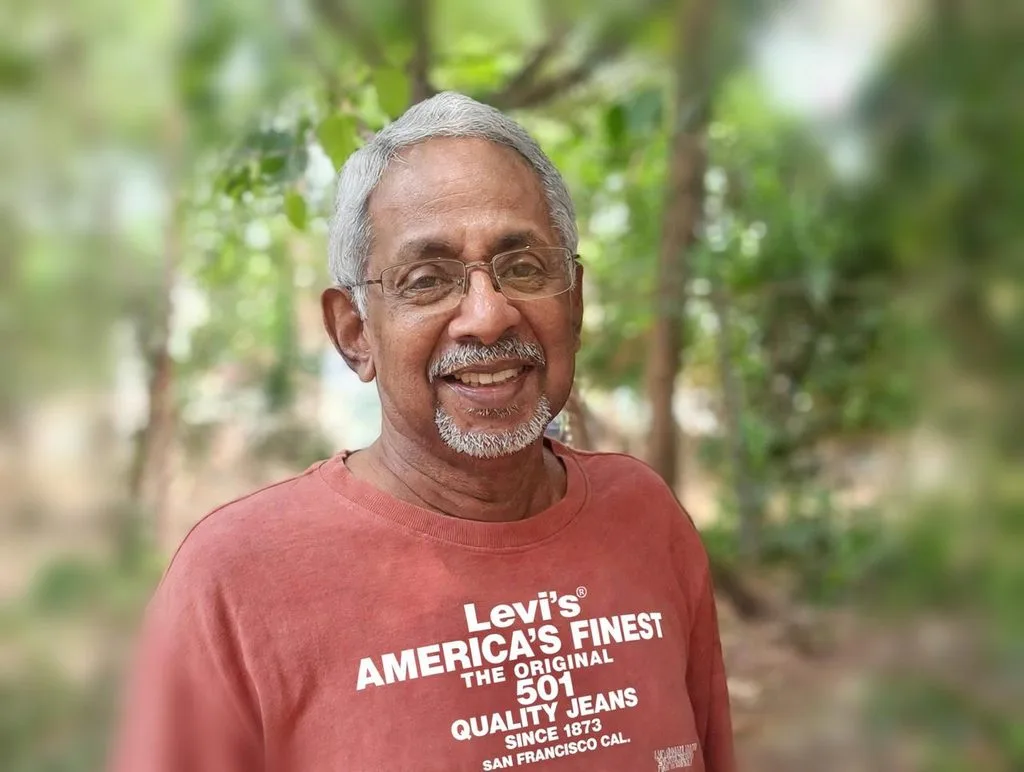
Prof. T R Venugopalan isa retired proffessor of Histroy. He retired from Government Sanskrit College, Pattambi, Kerala as its Principal in 2007
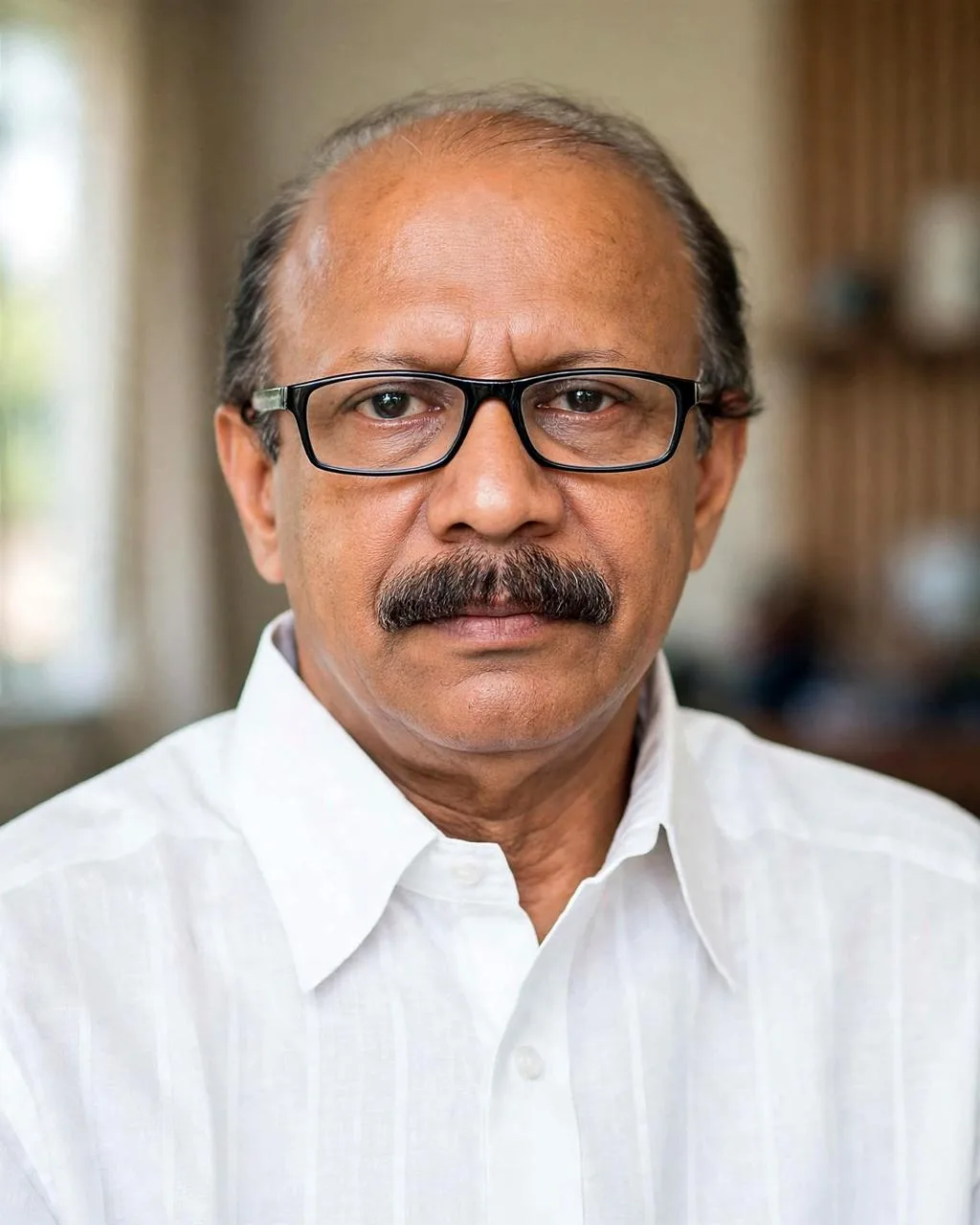
Dr. P K Sreekumar is a specialist in Medieval History and former Head of the Department of History, Government Victoria College, Palakkad