
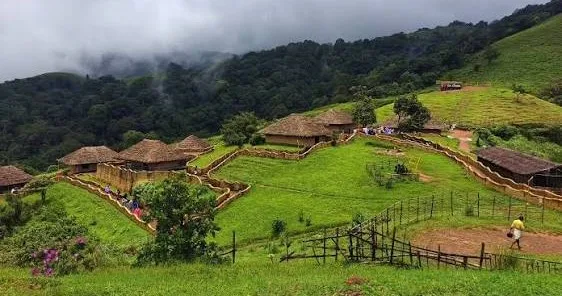
The Abundance Within the Forest
What does it mean to live in abundance? This excerpt from Seeds and Herbs – Walking in the Land, with the People explores a very different understanding of abundance, one rooted not in accumulation and individual prosperity, but in community, trust, sharing and a living relationship with the forest. Through the experiences and reflections of tribal communities and others who have worked closely with them, the piece asks what modern society may have lost in its pursuit of individual self-interest and material development.
Read Part Four here
Sarada of Noorang Collective says, if we did not get any tubers or fruits one day, we know that we would get them next day or the day after that. This is a trust we have carried through the ages. Our experience is that, such a flow is assured.
Kopi fills in: Even while we starved, we were not desolate; we were together. It did not leave any (scratch) mark on us. We took it with ease. Since we did it together, there was joy in it. It is not right to eat when others are starving. We drummed the thudi, sang together and slept. Even a tiny beetle nut, we would pound and share among ten. In those days, even in our starvation, we did not feel this pain.
K R Pradeesh adds: We thought the tribal children starved, and what they needed most was food. So we tried to lure them to school with food. We offered eggs and milk. Still the children ran to their starving huts.
Even in the midst of the slavery and starvation, they did not lose their songs. They were in their home. Their home was not their individual huts but the community and the forest. That home was within each one, and none was alone. As long as the expanse and trust of the forest and the community remained within them, they were able to endure.
We will not find a tribal begging in the street.
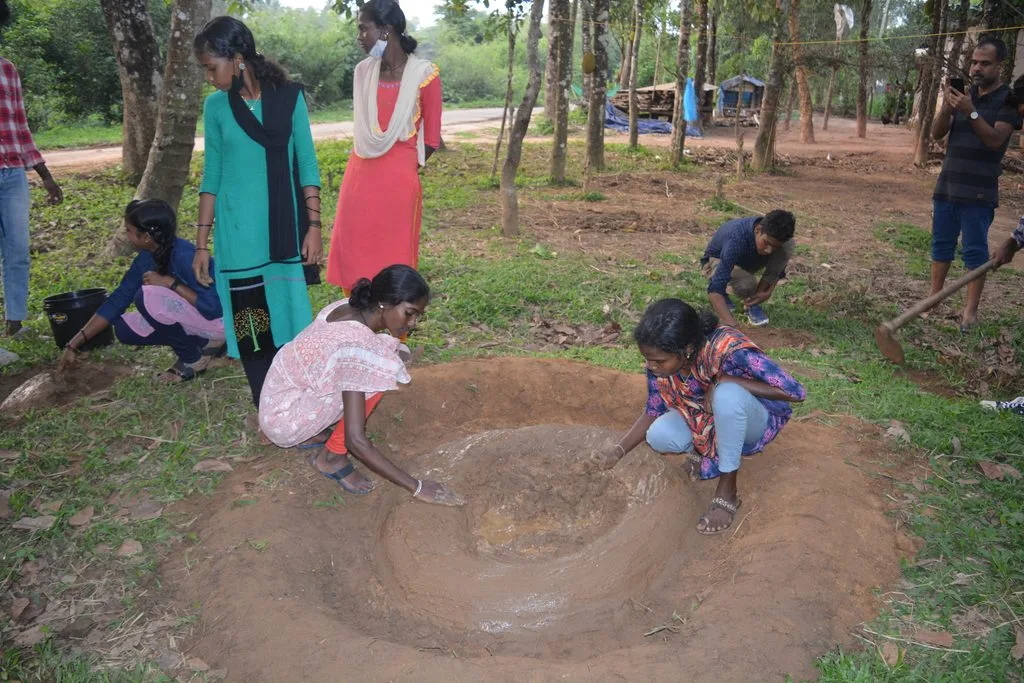
Pradeesh adds, Today, even with enough food to eat and many other conveniences, people are committing suicide. The trigger could seem a trifle – not able to afford something they fancy. Just this previous year, in the Thirunelli panchayat alone, 6 youngsters ended their lives. All between the ages of 18 and 25 years.
The tribals were not afraid of elephants. Today they are. That is the impact of all the developmental works that was done among them. The projects intended to empower or self-sustain the tribals have made them more vulnerable and dependent on the systems, losing their own agency.
When they used to go for daily labour, they did not have any debt. When they shift to a monthly salaried job, they drown themselves in debt.
In the city too, the situation is not different. People do not have time to sit together or even to eat. They eat while waiting for the bus or a cab.
-K.R.Pradeesh
Within abundance
Members of the community come together for post death rituals, often on the third or seventh day of the demise. Before the rituals begin, the community elder would ask the assembled, if everybody has had coffee. Those who have any grievance with the family or the community would not drink the coffee offered. But the rituals cannot proceed without every one having coffee. The elder would sit and talk to sort the matter, among the concerned. Only when all grievances are resolved, everybody has had coffee, will the rituals commence.
It is not just the gods that see everything in the forest. The community, ancestors, trees and animals, all see each other in the forest. It is in such trust and in communion that each individual lives. What do we call such a web of trust, grace, abundance and promise!
Seeing the forest…
T.V. Sajeev, the chief scientist of the Kerala Forest Research Institute (KFRI), speaks about one of the earliest experiences he had with the tribal communities that changed his view of life. The Forest Department had partnered with tribal com munities to develop nurseries of forest trees. When the saplings grew and were ready to transplant, the officers went to collect them. When they started picking just the ones that seemed to them healthy and robust saplings, a woman from the community objected. She insisted that they take all the saplings. Seeing the com motion, Sajeev went to them and told them that they will be paid even for the saplings not selected. This made her more angry. She shouted, saying, we planted these seeds; we fetched water from the distance and watered them. When the animals were coming, we asked them to spare this place to save the saplings. We laboured to bring all these saplings to this level. Now you say, among these, some are good and some not good. If we have five children, would all of them be the same? Will you kill some of them?
Sajeev says, For the community, all these have life. Just like their children, they brought up those saplings. For me it was only a product. I felt as if the earth had parted and taken me in. Felt ashamed of myself. For the tribal, nothing lives alone. The gods, ancestors, trees, animals, birds, and the whole forest are seeing them, as they are seeing the whole forest. No one was separated from the other. So they do not make errors in life. The forest areas that had tribal presence were all healthy forests.
Has an exalted notion of the individual (self) thrown us into confusion and dark ness? Have we exhausted ourselves in its pursuit? Has the notion of the individual self, alienated from communities and the earth, affected the true nature of our being?
This is a special series of excerpts from Seeds and Herbs – Walking in the Land, with the People, a book born from a decade-long journey of artists, poets, theatre practitioners and cultural activists walking alongside the Forest Fringe Farmers’ collective and Indigenous communities in Kerala’s Western Ghats.
The series brings together reflections, poems, conversations, memories, and documentation emerging from shared journeys through forests, paddy fields, hamlets and sacred landscapes. It explores relationships between art and life, ecology and community, healing and memory, through the voices of Indigenous knowledge keepers, artists, and land-based communities.The footprints of this journey are marked in this book, published with the support of the India Foundation for the Arts (IFA) under the Arts Practice programme, made possible with support from Parijat Foundation.
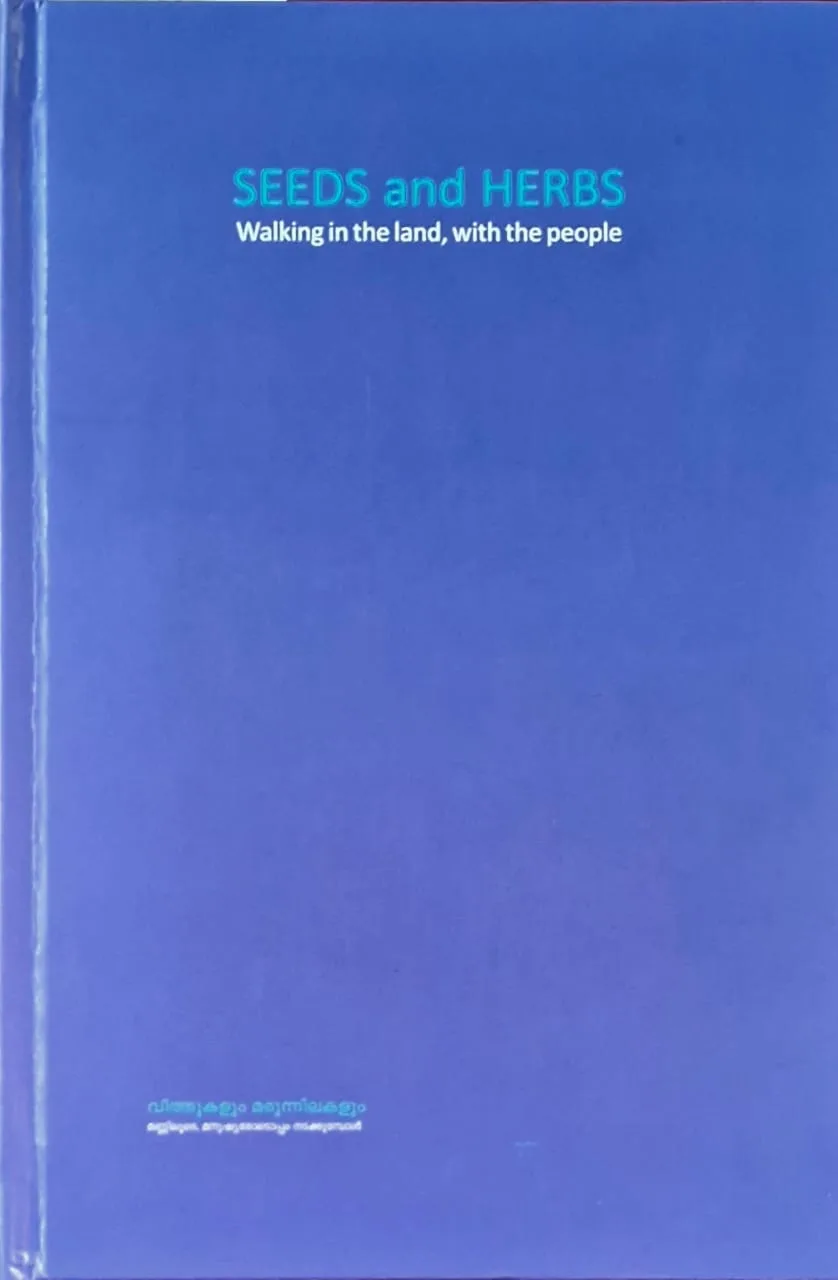
The book, Seeds and Herbs – Walking in the Land, with the People, is a glimpse into the decade-long co-travelling, sharing, and moulting by a small team comprising visual artists, poets, theatre artists and cultural activists.