
Where Did the Commons Go?
The fourth excerpt from Seeds and Herbs – Walking in the Land, with the People, explores what happens when forests, fields and riverbanks that once sustained Indigenous communities become fenced, owned and regulated. Through the memories and voices of Paniya communities in Wayanad, the piece reflects on the loss of forest, food, community and belonging—and questions whether our efforts to “empower” Indigenous people may instead be uprooting them from the worlds that sustained them.
Where did those commons go; the woods, fields and river banks that belonged to everyone, yet was no one’s..?
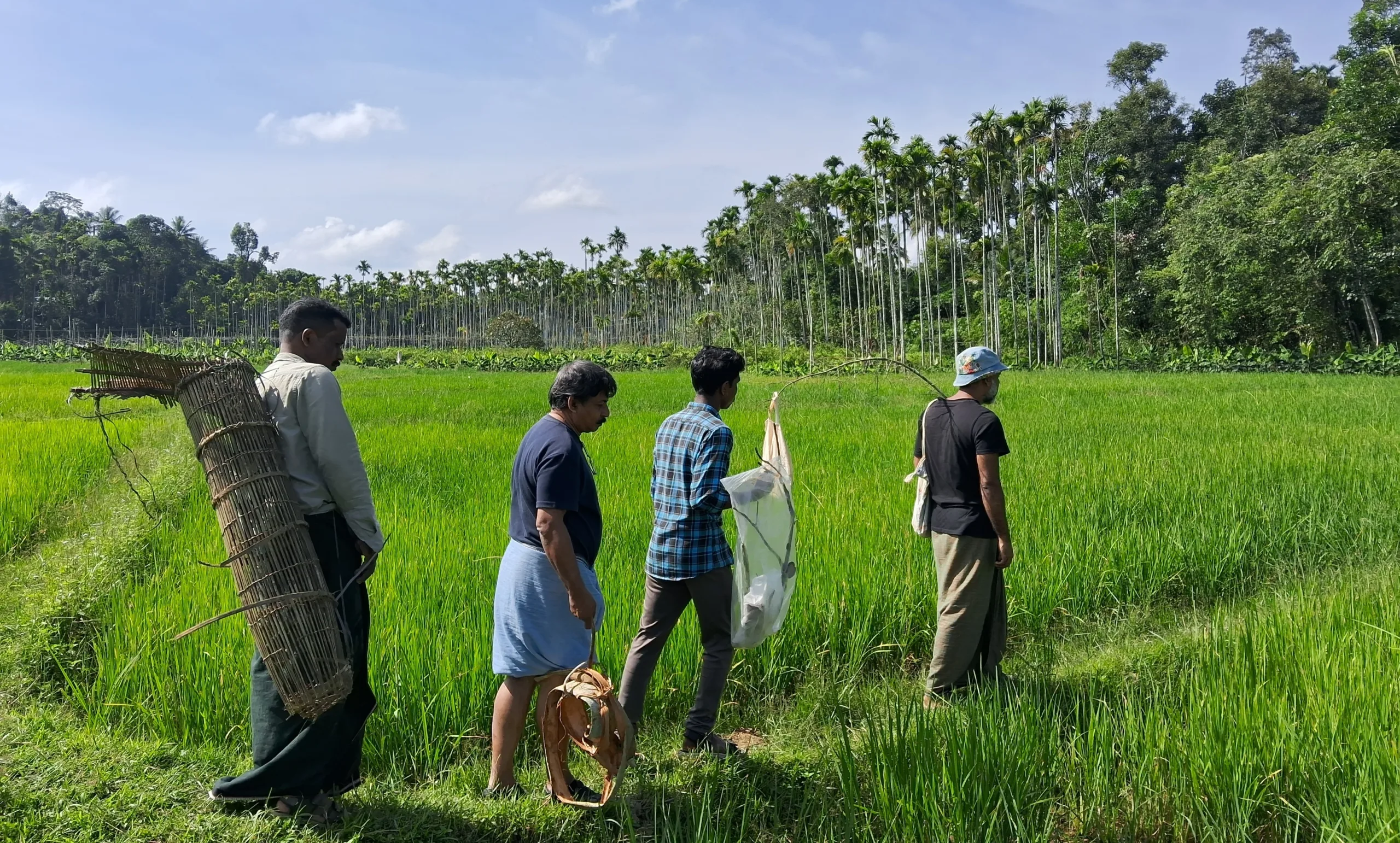
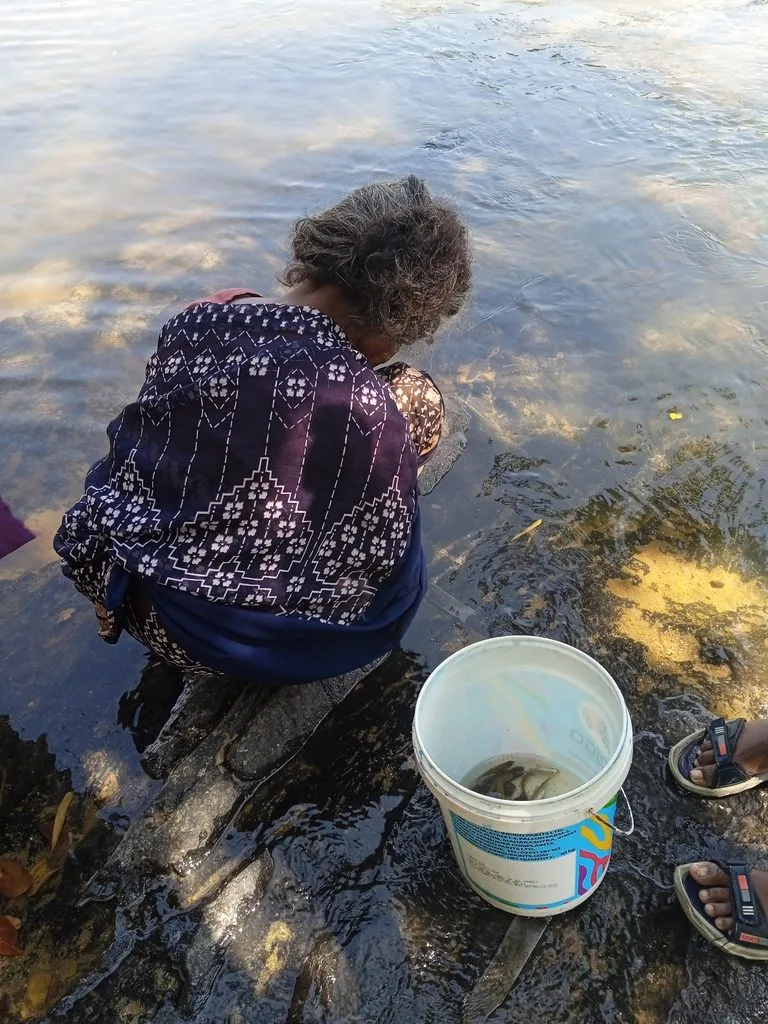
For tribal people walking is the original language. They roam around, as is their wont in the deep forests, fields and riverbanks. They scrounge for food, make songs, tell stories. Play. Fish in the streams, wash clothes and utensils, swim. They collect leaves around marshy lands, hunt crabs, find tubers from the forests, gather firewood, search for mush rooms, pluck berries. At times, they walk distances, just to watch the birds, rocks, flowers, shadows. Now electric fences block their path to the forests, there are places they cannot go any more. Rules that prohibit. All the lands have owners and boundaries now.
Where did those commons go; the woods, fields and river banks that belonged to everyone, yet was no one’s?
Every small bit of land around us treasures abundance: it may be seen or unseen, subtle or gross, beautiful or ugly. Thousands of creatures, things and matter. How do we set foot into, or make an acknowledging gesture to this dance of life? Or simply take a glance?
In those days the landlords forced us to strip our own mother (the Earth). Made us cut her primary root (thaiveru). The sustenance (nilanilpu) of the earth is ours too. This soil is our mother. They did not allow us to sprout (from our soil/mother). If anyone sprouted, they were uprooted like grass from the field.
-Velliyettan, Paniya tribe
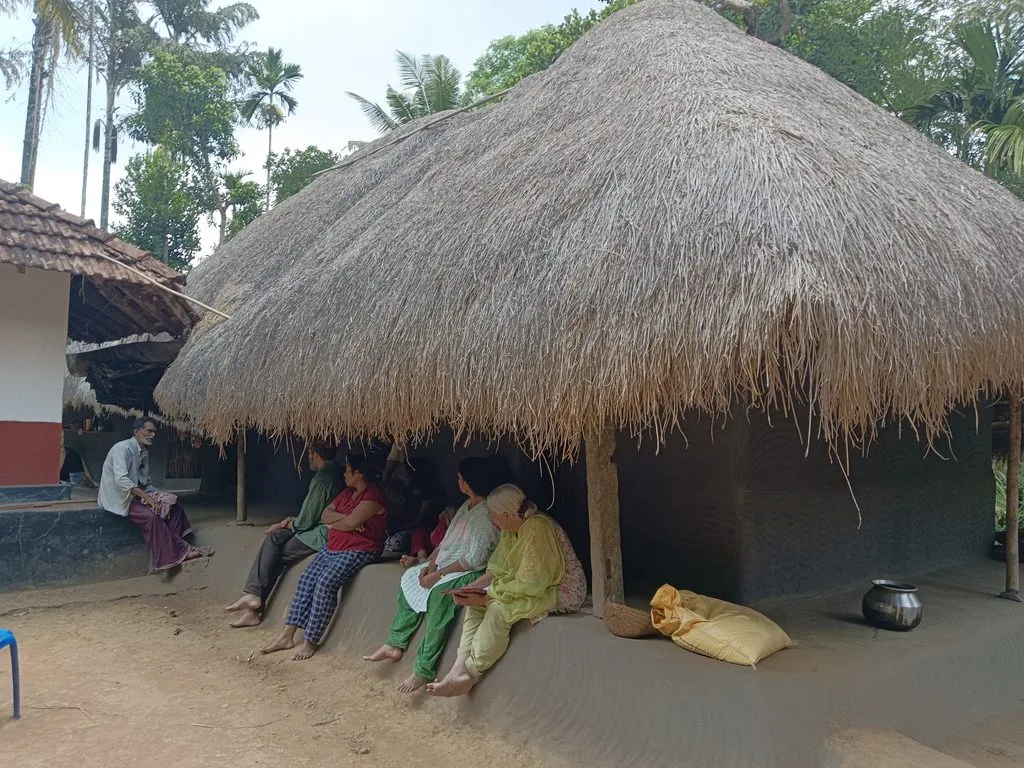
They continue to be prevented from sprouting in their own soil. Instead all the efforts are to herd them and replant them in the soil we have prepared, drag them to our world. A world that we ourselves have become sceptical of. Their sustenance is deeply linked with the sustenance of the earth, as rooted in their trust. Where the earth and the communities dwell in each other.
Then (even during the slavery), we had our home (the community), and we had our forest..
They deprived us of our food by not giving us our due of rice for our labour. So that we remained in our hunger and as slaves. When we saw them, we had to bow down, addressing Thamburane (O’ Lord). Our place was within the lines that they had marked. When the police or officials came, like a water hen hides under the dry leaves, we used to hide in the forest. No one could find us.
-Velliyettan
We make persistent efforts to bring them out from the forest and to ‘civilise’ and ’empower’ them; as civilised and empowered as us. And we are mostly earnest about it: we don’t want them to be deprived of all the pleasures and comforts that we enjoy. These efforts happen even amidst our own helpless and frantic efforts to find solutions to the problems that we have created. Our solutions mostly beget further problems. We enter the vicious cycle where consolidating our own power to subdue the earth and all its being becomes the only helpless recourse we have.
On the other hand, if we look enough, we can find the tribal communities, effortlessly, with ease, staying aligned with the regenerative process of the earth. But we spend over a hundred thousand crore of rupees each year for their ‘upliftment’. Where does this approach stem from? Honest ignorance of the problems of our civilisation? Arrogance and confidence in our own knowledge?
Is it that we really want them to be empowered? Or do we actually fear the possibility of another world which bears a fine disregard for all that we uphold? Like a wounded soldier retreating to his native place, do we fear our children finding in them the possibilities of another world? Or is it just plain greed? We want them out of the forests which hold resources that we could want only extract to fuel our progress?
The tribals in Wayanad have said again and again, all that they need is their forest. They will appropriate the modern knowledge and tools as and when they feel it appropriate, at their own pace and scale. Similar to a wise farmer using new tools for her farming. But we despatch our police and weapons to suppress their every effort to reclaim their forests. If repression is the only way to civilise and empower them, so be it, is our conclusion. And unlike the water hen hiding under dry leaves, the tribal has no place to hide now.
Times have changed
Our young are tormented by mental health issues, struggling and failing to fit in to life and living as today’s world demands. In parallel, our relentless efforts towards the empowerment of the tribal communities have drained them, of their forest and community and from deep within.
Women of Nacholi colony say, Today we are no more known by our community name – Paniyar – but reduced to a general name – adivasi. We feel it is darkness now. In those days we had the joy of together ness. We remained as a community. Even after a hard day of labour, when we had to pound the two measures of paddy to make gruel and drink by midnight, there was light within us. We knew that the sun would rise in a few hours of time. But today, it is darkness everywhere.
Anju added, In those days, we could not stand straight and raise our heads and speak to people. Today we can look them in the face and speak. But what is the use? Today we need to run around to many offices and sign things. Still we don’t get anything. We have lost our family (community) and our forest. We have lost our peace at home; there is no peace outside too. Then (even during the slavery), we had our home (the community), and we had our forest. Forest was our home. In those days, we sat together and all spoke. Everyone got to understand each other’s observations, suggestions, and feelings. We were all together. When we had our community and forest, we were able to bear any suffering.
-Women of Nacholi colony
But today we hesitate to enter each other’s houses. We hesitate to call others for help. We will be anxious whether we are troubling them, or if asking for help would make us dependent.
– Anju
This is a special series of excerpts from Seeds and Herbs – Walking in the Land, with the People, a book born from a decade-long journey of artists, poets, theatre practitioners and cultural activists walking alongside the Forest Fringe Farmers’ collective and Indigenous communities in Kerala’s Western Ghats.
The series brings together reflections, poems, conversations, memories, and documentation emerging from shared journeys through forests, paddy fields, hamlets and sacred landscapes. It explores relationships between art and life, ecology and community, healing and memory, through the voices of Indigenous knowledge keepers, artists, and land-based communities.The footprints of this journey are marked in this book, published with the support of the India Foundation for the Arts (IFA) under the Arts Practice programme, made possible with support from Parijat Foundation.
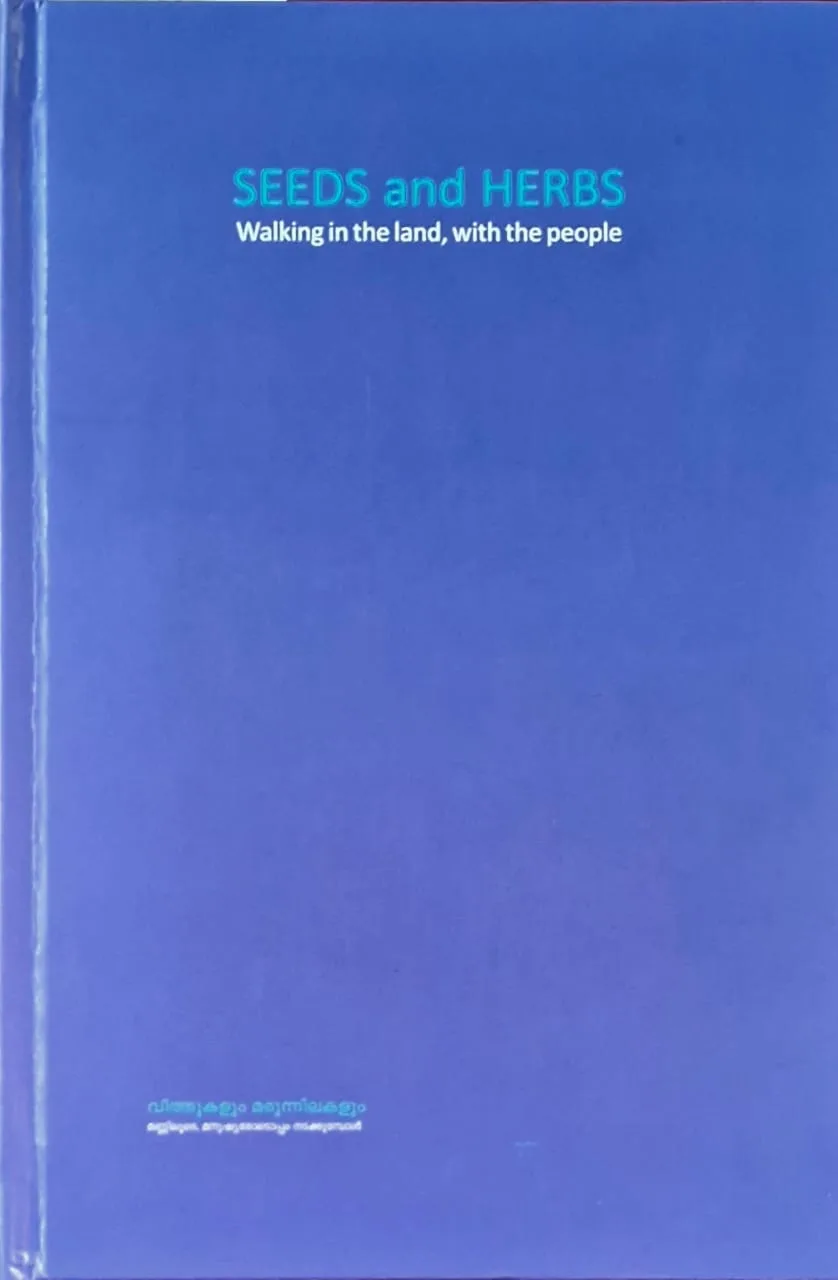
The book, Seeds and Herbs – Walking in the Land, with the People, is a glimpse into the decade-long co-travelling, sharing, and moulting by a small team comprising visual artists, poets, theatre artists and cultural activists.