
Ecological Catastrophes: Climate Crisis and the Cost of Inequality
The climate crisis is no longer a distant warning but a reality unfolding through record temperatures, rising seas, melting glaciers, extreme weather events, wildfires, floods and growing food insecurity. But ecological catastrophes do not affect everyone equally. The destruction of ecosystems, the exploitation of natural resources and the unequal distribution of wealth and power leave poorer and more vulnerable communities bearing a disproportionate share of the consequences.
In the third part of Mirage Economy, T. Ramakrishnan (Ramki) examines the growing evidence of ecological breakdown and explores its links with capitalism, inequality and colonialism. From the plantation economy of Hawaii to climate-related displacement and food insecurity, the discussion raises fundamental questions about who benefits from economic expansion and who pays its ecological and social costs.
Mirage Economy- Part 3
Read Part 2 here
Seven climate indicators
Characterizing the problem from a different perspective, the World Meteorological Organization lists the following seven key climate indicators and the associated risks:.
1. Atmospheric carbon dioxide:
In 2023, the atmospheric concentration of carbon dioxide, as well as those of methane and nitrous oxide, reached the highest levels in the last 800 000 years. [Human actions have emitted more carbon di-oxide in the thirty-year period from 1990 to 2020 than it had in all preceding history43!]
2. Global mean near-surface temperature:
The annually averaged global mean near-surface temperature in 2024 was 1.55 °C ± 0.13 °C above the 1850–1900 average used to represent pre-industrial conditions.
• The year 2024 was the warmest year in the 175-year observational record, clearly surpassing the previous warmest year, 2023 at 1.45 °C ± 0.12 °C above the 1850–1900 average.
• For global mean temperature, each of the past ten years, 2015 2024, were individually the ten warmest years on record.
3. Global heat content:
In 2024, ocean heat content reached the highest level in the 65-year observational record, exceeding the previous record high set in 2023.
• Over the past eight years, each year has set a new record for ocean heat content.
• The rate of ocean warming over the past two decades, 2005–2024, is more than twice that observed over the period 1960–2005.
4. Global mean sea level
• In 2024, global mean sea level reached a record high in the satellite record (from 1993 to present).
• The rate of global mean sea-level rise in the past 10 years (2015 2024) was more than twice the rate of sea-level rise in the first decade of the satellite record (1993–2002).
5. Ocean pH
• Acidification of the ocean surface has continued over the past 39 years as shown by the steady decrease of global average ocean surface pH.
• Regionally, ocean acidification is not increasing uniformly.
6. Glacier mass balance
• Glacier mass loss from 2021/2022 to 2023/2024 represents the most negative three-year glacier mass balance on record, and seven of the ten most negative annual glacier mass balances since 49 Mirage Economy 1950 have occurred since 2016.
• Exceptionally negative mass balances were experienced in Norway, Sweden, Svalbard and the tropical Andes.
7. Sea-ice extent
• The minimum daily extent of Arctic sea-ice in 2024 was the seventh lowest in the observed record (1979 to present).
• The 18 lowest Arctic sea-ice extent minima in the satellite record all occurred in the past 18 years.
• The annual minimum and maximum of Antarctic sea-ice extent were each the second lowest in the observed record (1979 to present).
Extreme events
Climate change leads to extreme events with severe consequences to humanity and many other organisms. “Although broad-scale changes in the climate are important, the impacts of weather and climate are most clearly felt during extreme events such as heavy rain and snow, droughts, heatwaves, cold spells and storms, including tropical storms and cyclones. These meteorological and climatological extremes, individually, in combination and in conjunction with other factors, can lead to other events such as flooding, landslides, wildfires and compound extremes.”
“As of 2021, 2.3 billion people faced food insecurity, and nearly 10% of the global population was undernourished. Rising undernourishment has been exacerbated by the compounded effects of COVID-19, conflicts and violence on health, food security, incomes, and equality.”
Heat:
“China had the most extensive and long-lasting heatwave since national records began … There were significant heatwaves elsewhere in East Asia, including a record nine consecutive days above 35 °C in Tokyo … Europe also experienced numerous heatwaves … Numerous locations broke previous records by more than 3°C … The pre-monsoon period was exceptionally hot in India and Pakistan. Pakistan had its hottest March and hottest Ecological Catastrophes 50 April on record, with both months having national mean temperatures more than 4 °C above the long-term average. In India, grain yields were reduced by the extreme heat and there were a number of forest fires, particularly in Uttarakhand. … The first half of January was extremely hot in many parts of subtropical South America … The July to September period was the hottest on record for many parts of the western United States. … Exceptionally high regional temperatures occurred over the plateau of East Antarctica in mid-March.” In contrast, the WMO report notes that “few significant cold records were set globally in 2022.”
Droughts:
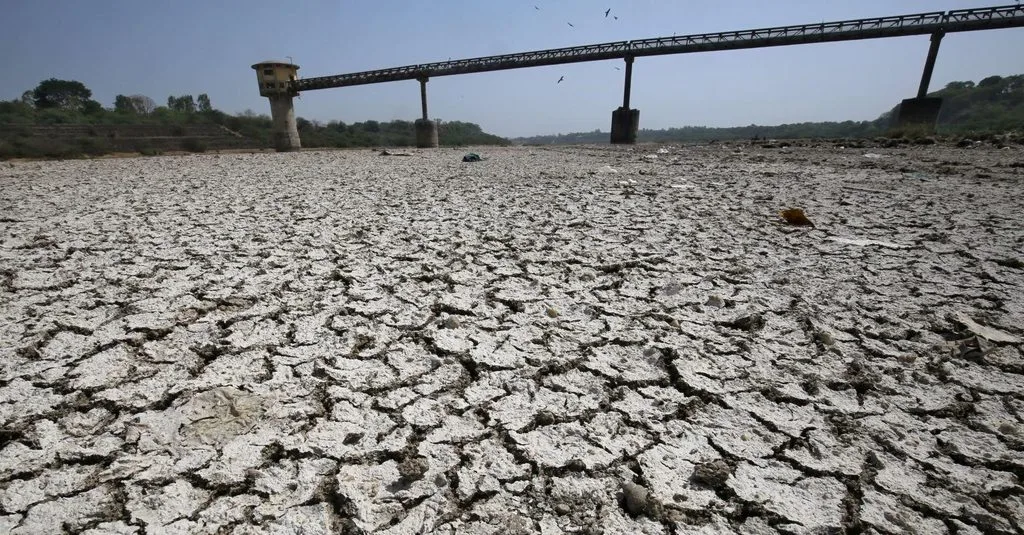
“Significant drought also continues to affect parts of South-west Asia … Drought also affected many parts of Europe and the Mediterranean … Drought intensified in the Greater Horn of Africa region … Buenos Aires had its first rainless June on record, and much of north-eastern Argentina from the Buenos Aires region northwards was in severe drought by the end of the year. For this region, as well as for Uruguay, it was the third consecutive year of significantly below-average rainfall. … Significant drought continued in much of the western half of North America.”
Warmer atmosphere can accommodate more water vapor (higher ‘evaporative demand’)45. As a result, more water will evaporate from water bodies (this, in turn, results in reduction in water availability for human use), plants (resulting in lower yields, poor nutritional quality of farm produce, and higher irrigation requirements) and soils. Since soils dry up more, for the same amount of rain as before, the water (and soil moisture) deficit and requirement would go up. The severity of droughts also goes up since drought “depends on both the rain that falls and how quickly it is evaporated and used.” This worsens the agricultural crisis since farmers need more water for their crops as the climate heats up; the intensity of heavy precipitation and associated torrential flooding also go up.
Unlike the strong correlation between climate change and global warming, “The connection between climate change and drought is not as 51 Mirage Economy straightforward as it seems. Some areas are likely to get wetter while others get drier. Still others may accumulate the same total rainfall, but in inconsistent patterns: More rain might fall in fewer, more intense bursts, followed by longer dry spells. “It’s complicated,” said Benjamin Cook, a climate scientist at NASA and the Lamont-Doherty Earth Observatory. But scientists can say some things with certainty. As the world gets hotter, soils are getting drier; it takes more and more precipitation to water the same crops and fill the same reservoirs. Rising temperatures, therefore, are digging the American West and other arid regions into a deeper and deeper hole. The more the world warms, the more rain will be needed to compensate, and that will force people to rethink how – and where – they will live and eat when the water dries up.”
Wildfires:
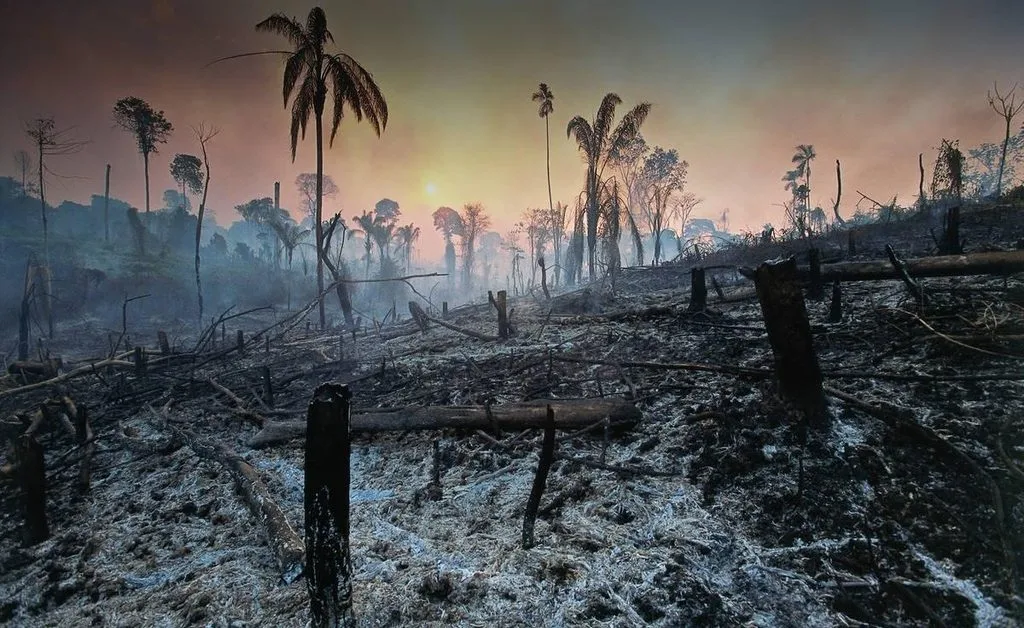
“South-western France was severely affected by wildfires, with over 62 000 ha burnt. For the second consecutive year, wildfires were associated with major loss of life in Algeria. … Total area burned during the United States wildfire season was slightly above average, with one of the most active seasons on record in Alaska and the largest recorded fire in New Mexico, but loss of life and property was lower than in most recent years.”
In 2023 Hawaii experienced massive wildfires. What caused those wildfires and, earlier, famines are plantation Capitalism46:
In the wake of fires that ravaged the historic town of Lahaina in August 2023, the public began questioning how a tragedy of this magnitude could have occurred. Drought conditions paired with high winds were the immediate cause of the inferno. Yet the colonial history in Hawaii reveals a more insidious, human ʻ caused, explanation for this disaster: a pervasive and unsustainable system of extraction exacerbated by the climate crisis. On Maui, the roots of injustice are shrouded in the legacy of plantation Capitalism, perpetuated today by a shameless new wave of disaster Capitalism.
At their peak, [sugar plantation] companies had the potential to collectively take roughly 1,200 million gallons of water per day across the islands …
Throughout Maui, plantation Capitalism not only affected Kānaka Maoli (indigenous population to Hawaii), but drastically altered ʻ the natural ecosystem, disrupting, or completely replacing, intricate biocultural resource systems that sustained life in the middle of the Pacific Ocean for millennia. Diverse areas of vegetation that had uniquely adapted to Hawaii’s climate were ʻ plowed flat to prepare for planting. To manufacture the perfect conditions for sustaining sugarcane in the late nineteenth century, American-owned foreign corporations constructed extensive irrigation systems designed to extract as much water as possible from wet areas of the island to arid fields.
Foreign agribusinesses seemingly had no concept of or concern for environmental stewardship. Instead, they modeled the exploitative character of American Capitalism. They diverted water outside of the watershed of origin, causing a vicious cycle of worsening drought conditions below diversion points that attracted less moisture to the fire area over time with the decrease in greenery. Moreover, the de-watering of rivers and streams decimated the once vibrant Native stream life, which required continuous flow from the mountains to the sea.
Historical accounts from this era illustrate the chilling effect plantation water diversions had on native tenants and the environment throughout Maui. In 1866, only four years after the first plantation in the region emerged, one kānaka maoli wrote to a newspaper about the Maui town of Wailuku. The newspaper said that the man warned, “Despair! Wailuku Is Being Destroyed By The Sugar Plantation” and that “the land of Wailuku is being lost due to the cultivation of sugarcane . . . . [T]he current condition of once cultivated taro patches [is] being dried up by the foreigners, where they are now planting sugarcane.”
Dried taro patches and increased sugar cultivation contributed to widespread famine by the mid-nineteenth century. … Sugar even played a central role in the overthrow of the Hawaiian Kingdom.
What happened in Maui Komohana was not a natural disaster? Instead, it was the consequence of over 150 years of rapacious land and natural resource management practices. Sugar continued to cause widespread cultural and environmental damage on the 53 Mirage Economy once-thriving island community until it was surpassed by tourism in the 1960s. While the physical infrastructure of smoke stacks and cement flumes are remnants of the injustices during the plantation era, the legacy corporations of these plantations maintain their chokehold on our island.
The Sixth Assessment Report of Working Group II of IPCC47 states: “Regional increases in area burned by wildfires (up to double natural levels), tree mortality up to 20%, and biome shifts up to 20 km latitudinally and 300 m upslope, have been attributed to anthropogenic climate change in tropical, temperate and boreal ecosystems around the world (high confidence), damaging key aspects of ecological integrity. {ES-Ch2} Wildfires generate up to one-third of global ecosystem carbon emissions, a feedback that exacerbates climate change (high confidence). Increases in wildfire from levels to which ecosystems are adapted degrades vegetation, habitat for biodiversity, water supplies, and other key aspects of the integrity of ecosystems and their ability to provide services for people.”
Floods:
In just one year, 2022, thousands of deaths, millions of dwellings damaged or destroyed, crop and livestock losses and other damage were reported from all continents. In Pakistan alone, total damage and economic losses were assessed at US$ 30 billion.
Severe storms:
Europe, the US, South-west Asia, and the Arabian Peninsula reported unusual and exceptional storm activity and attendant damage.
Socioeconomic impacts
Since the fifth Assessment Report (AR5 of the IPCC, 2014 Oct) there is increasing evidence that degradation and destruction of ecosystems by humans increases the vulnerability of people. Unsustainable land-use and land cover change, unsustainable use of natural resources, deforestation, loss of biodiversity, pollution, and their interactions, adversely affect the capacities of ecosystems, societies, communities and individuals to adapt to climate change. “Loss of ecosystems and their services has cascading and long-term impacts on people globally, especially for Indigenous Peoples and local communities who are directly dependent on ecosystems, to meet basic needs48.”
“The risks posed by weather and climate-related hazards are complex and context specific, depending on the vulnerability, exposure and adaptive capacity of human and natural systems49.” Across the world, approximately 3.3 to 3.6 billion people live in contexts that are highly vulnerable to climate change50.
The following are some recent examples of poorer people fighting environmental regulations affecting them while those who contribute most to ecological crises go about their life unaffected:
Fishermen joined the farmers protesting in Rennes, angered by a far-ranging ban along the Atlantic coast supposed to spare dolphins and porpoises — at an estimated cost of tens of millions of euros to the 450 boats affected51. More such examples are described in several pages, starting from page 79 below.
As Lucas Chancel notes52, “the rich should contribute the most to curbing emissions, and the poor be given the capacity to cope with the transition to 1.5C or 2C. Unfortunately, this is not what is happening – if anything, what is happening is closer to the opposite”.
He cites the example of France raising carbon taxes in 2018 that hit the low-income households hard while leaving the well-off almost unaffected. By way of less inequitable actions he also cites positive examples from British Columbia and Indonesia but these are clearly insufficient given the enormity of the problems we face.
Corporate and political leaders incessantly claim that more economic growth is necessary to solve the problems of poverty and climate breakdown. But, the facts about climate change expose this claim to be a ruse used by the wealthy and powerful to maintain and further entrench their position in the hierarchy53:
“In the period since 1990, as emissions almost doubled, the rising consumption of the world’s top 10 percent was responsible for almost half of that increase—almost as much as the entire remaining 90 percent of the world’s population The emissions of the richest 5 percent (37 percent of all post-1990 emissions) were particularly notable, and the emissions of the top 1 percent (who contributed 21 percent of all post-1990 emissions) were far 55 Mirage Economy greater still….
The problem isn’t just that wealthy people generate more carbon emissions than poor people. It’s that the sheer overwhelming extent to which they do so belies the endlessly repeated claim that rising fossil fuel consumption and even the destabilization of the climate system are justified by the need to lift the world’s poor from poverty.
The truth is that the poorer, energy-deprived half of the human population has barely contributed to, and barely benefited from, these past three decades’ rise in emissions, during which the earth’s temperature has risen perilously. Rather, they continue to struggle, even as they’re pummelled by the devastation of an ever more inhospitable climate system.”
Food security:
“As of 2021, 2.3 billion people faced food insecurity, of whom 924 million faced severe food insecurity. Projections estimated that 767.9 million were people facing undernourishment in 2021, or 9.8% of the global population. Half of the 767.9 million are in Asia and one third are in Africa. Rising undernourishment has been exacerbated by the compounded effects of hydro meteorological hazards and COVID-19 on health, food security, incomes and equality, as well as the effects of protracted conflicts and violence. As of October 2022, several countries in Africa and Asia (such as Ethiopia, Nigeria, South Sudan, Somalia, Yemen, and Afghanistan) and the Caribbean (Haiti) experienced starvation or death and required urgent humanitarian action (IPC Phase 5: Catastrophe 75). In these countries, the key drivers and aggravating factors for acute food insecurity were conflict/insecurity, economic shocks, political instability, displacement, dry conditions and cyclones.”
Population displacement: Millions of people are displaced worldwide due to climate-related extreme events, the global political economic system, and wars and other conflicts. These numbers keep going up every year. For example, in 2022, 1.2 million more Somalis, 512,000 Ethiopians, 8 million Pakistanis and Afghan refugees in Pakistan, close to a million in the Eastern Indian state of Assam, and 656,000 Brazilians were displaced.
In a significant development, IPCC’s Sixth Assessment Report explicates the link between colonialism and climate breakdown: “historic and ongoing forms of colonialism have helped to increase the vulnerability of specific people and places to the effects of climate change54.”
But colonialism is a deeply complex word. Referring to the practice of acquiring full or partial control over another group’s territory, it can include the occupation of that land by settlers as well as the economic exploitation of land to benefit the colonising group.
Connecting climate change to such acts of colonisation involves recognizing that historic injustices are not consigned to history: their legacies are alive in the present.
Researchers have shown, for example, that the scale of bushfires in Australia today – including the catastrophic fires of 2019-20 – is not being exacerbated by climate change alone. It’s also amplified by the colonial displacement of Indigenous people from their lands and the disruption of their land management practices that skilfully used controlled burning to help landscapes flourish.
… addressing the effects of climate change cannot be achieved without also addressing the legacies of colonialism. It’s a message that also acknowledges how the climate justice movement has long campaigned for the recognition of the unequal effects of climate change on different groups of people.
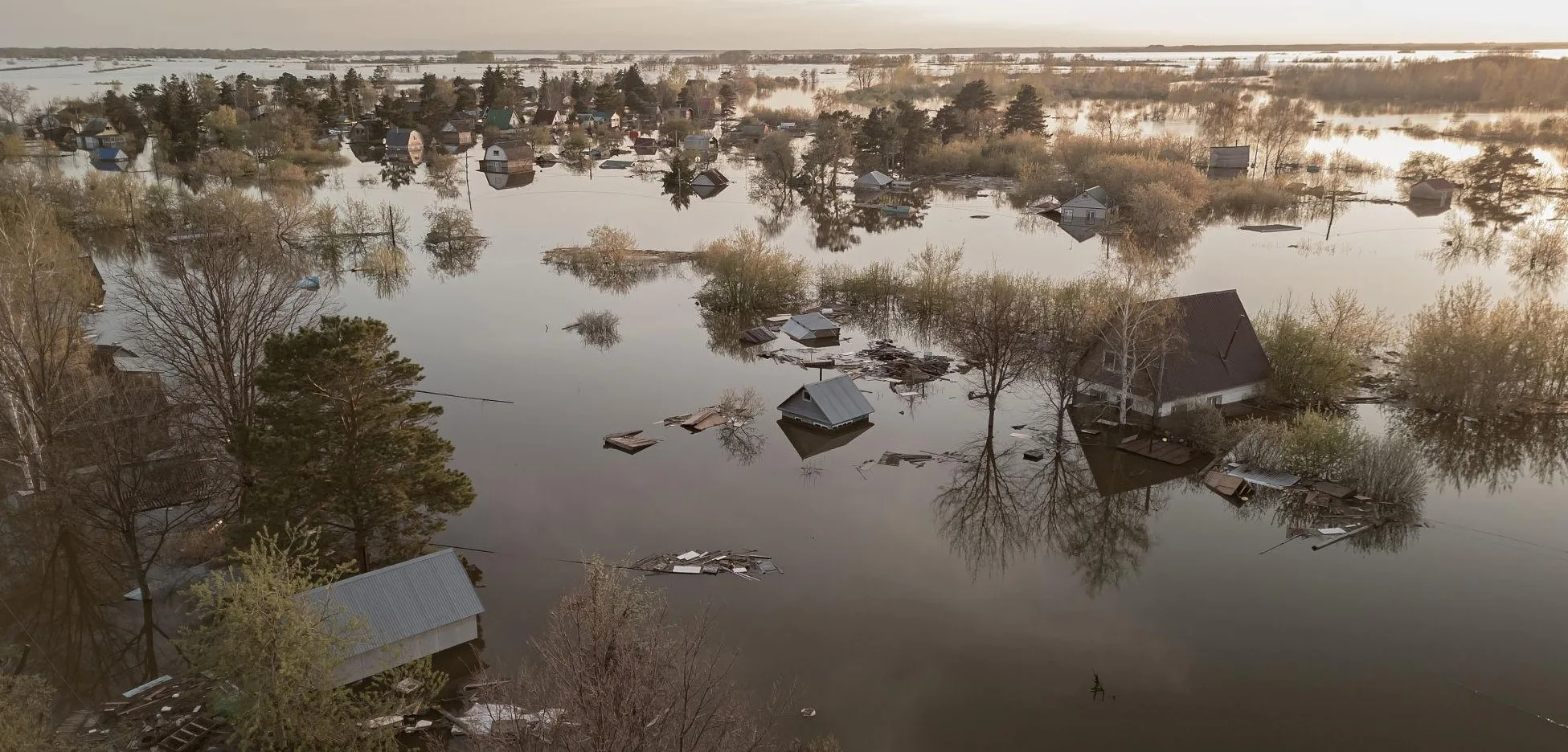
Featured image: A wide landscape showing a region inundated by floodwaters after an extreme weather event, with trees, fields and parts of the surrounding landscape partially submerged.
This article is the third in Panthi’s serial publication of Mirage Economy, a book by T. Ramakrishnan (Ramki), originally published on the author’s blog. We are reproducing the series with permission to make these ideas accessible to a wider audience. Mirage Economy and its accompanying slide presentations can be accessed on the author’s blog.

Ramki studied electrical engineering and worked for about a dozen years in VLSI Design Automation before quitting his job to (a) reduce his load on the environment and (b) try and do something useful for the society. He has put together six books in Tamil on social, economic, political, and environmental issues. He has translated six books from English to Tamil and one from Tamil to English, on socialism, agriculture, and education. Mirage Economy (an open-source online book) is the latest book that he has put together.