
Learning from the Land: Indigenous Knowledge and the Limits of Our Knowing
In this third excerpt from Seeds and Herbs – Walking in the Land, with the People, the authors explore indigenous ways of relating to soil, seeds, forests and other forms of life. The knowledge of Kurichya and Paniya communities challenges our human-centred understanding of nature and invites us to rethink what we consider knowledge, healing and sustainable living. What might we learn if we listened more carefully to the land and to communities who have lived with it for generations?
Read Part One here
Read Part Two here
It is time to look into our notions of production and see if there is anything to learn from the tribal communities. We are keen to understand the properties of certain plants, vegetables or fruits that we eat, to see in what ways it benefits our health. Will it not then be beneficial to try to learn the ‘properties’ of such a living. They lived long and healthy lives. What stops us from understanding the components of such ways of living? We think the borders of our knowledge are vast, but does not our refusal to learn from the tribal communities actually expose our narrowness.
They wake up to the sound of seeds sprouting
Among tribal communities of Wayanad, the Kurichya community focuses on farming. They hold an integrated system of knowledge and set practices, which honours and respects both the earth and life forms. Most other communities are traditionally foragers or gatherers, the way they fit into nature’s ebbs and flows differ. Koppy, a Kurichya tribe family elder says; We wake up to the calling of the seeds. When we start ploughing, we ask forgive ness from the soil. We sow the seeds after lighting the lamp in our family temple. The elder (karnavar) of the family does this. Before sowing we keep a muram or para filled with rice at home and light a lamp in the field. We pray to God and ancestors to be with us in this continuing work for the coming generation. We pray to give a yield of 16 to the 10 that we sow. Asking not for double or triple but just a modest little over 50 per cent of yield for the family to sustain. The eldest lady (karnothi) of the family will plant the first paddy saplings in the field and also the last one at the finish. When the paddy starts flowering, we do a prayer, offering tender coconut, camphor and water. It is called makam kulipikal (bathing the paddy in the month of Kanni). It is a ritual to invoke divine grace in the flowering field.
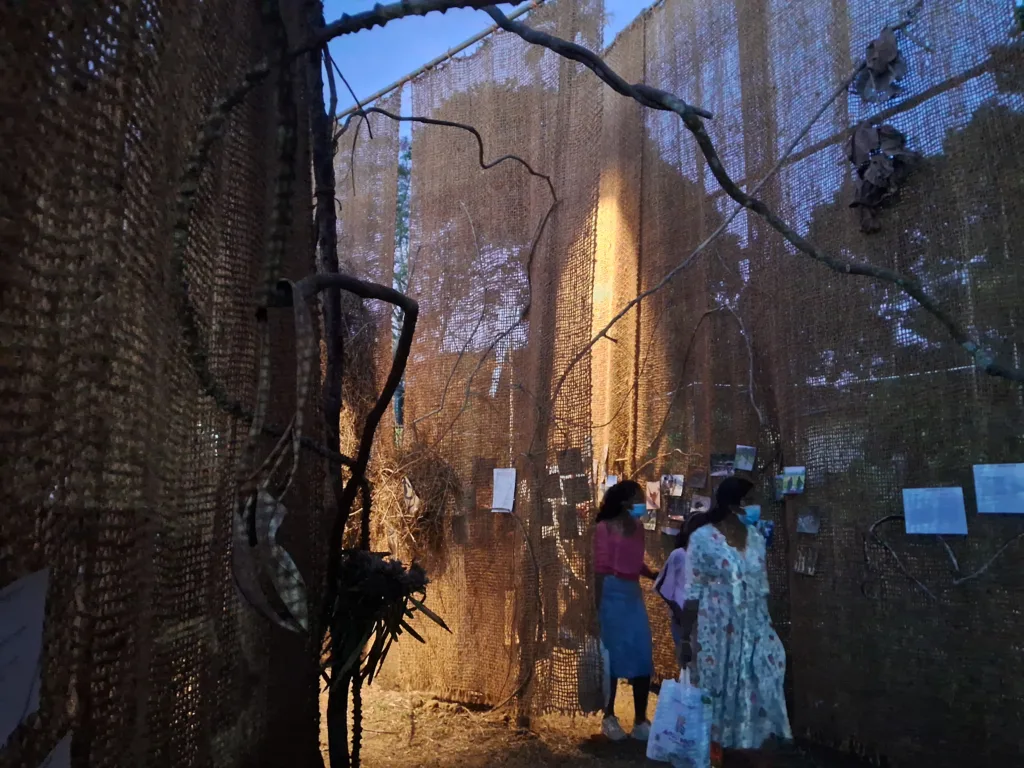
Prayers to the soil
They see the flowering field akin to their daughters attaining puberty. Both are part of the same grace, abundance and promise. Similarly, when they hunt, be it birds, animals or fish, they take care. They know when to hunt and when not to and its limits. Once the harvest is done, we keep a portion of the paddy and some flattened rice in the field to express our gratitude. The rest of the harvest is then distributed to the members of the family. We also keep a katta (bunch of paddy) in the field as a sign of gratitude. And light a lamp from the field and bring it home. We keep the bow and arrow, tender coconut and betel leaf in front of the god before we go hunting. It is faith that preserves everything. Be it cattle, crops and trees, any and everything.-
-Koppi
If we polluted the soil, to restore its sanity, we need to repent and ask for forgiveness and do reparations. It is necessary to correct our errors. We call out to the gods and our ancestors for forgiveness. Today when we make an error, it is like a vehicle finishing its diesel. You fill it and continue driving.
– Anju, Paniya tribe
Restoring the sanity of the soil is resto ring the sanity of our own mind that caused the error. The soil, land, forest, ancestors, community and the self are connected.
When these butterflies vanish
What will happen to the trees?
What will happen to those humans?
Knowing unbound
The sap of leaves that heal a wound in our body is a direct and familiar expression of knowledge. A wound happens, blood oozes out, immediately the knowledge of a remedy comes to mind. The leaves of a particular plant are plucked, sap squeezed from it. It is medicine. But knowledge is not just linear like this. The knowledge worlds of the indigenous communities are broader and include several remedies for the same wound. It’s not one world but several worlds. Not one plant but several plants. Imagine identifying one plant from the several available at a particular place and time and turning it the remedy. One is not substituted for another. Here, now, this plant is the medicine. Another time, at the same place, may be another. The richness of such knowledge domains springs from not viewing space and time as fixed forms, but as flowing, transforming realities.
For tribal communities, knowledge is not linear. It travels in multiple directions. Knowledge does not confine itself between two forms of matter. There is a perpetual flow where every plant is medicine or food somewhere, sometime. What is medicine now is food at another time. Food is decor at a different time. On yet another occasion decor turns remedy again. This way of uniquely identifying a plant or insect there and then, leaving it there to survive, even thinking of it only temporarily, is characteristic of the eco system that holds the knowledge worlds of indigenous communities.
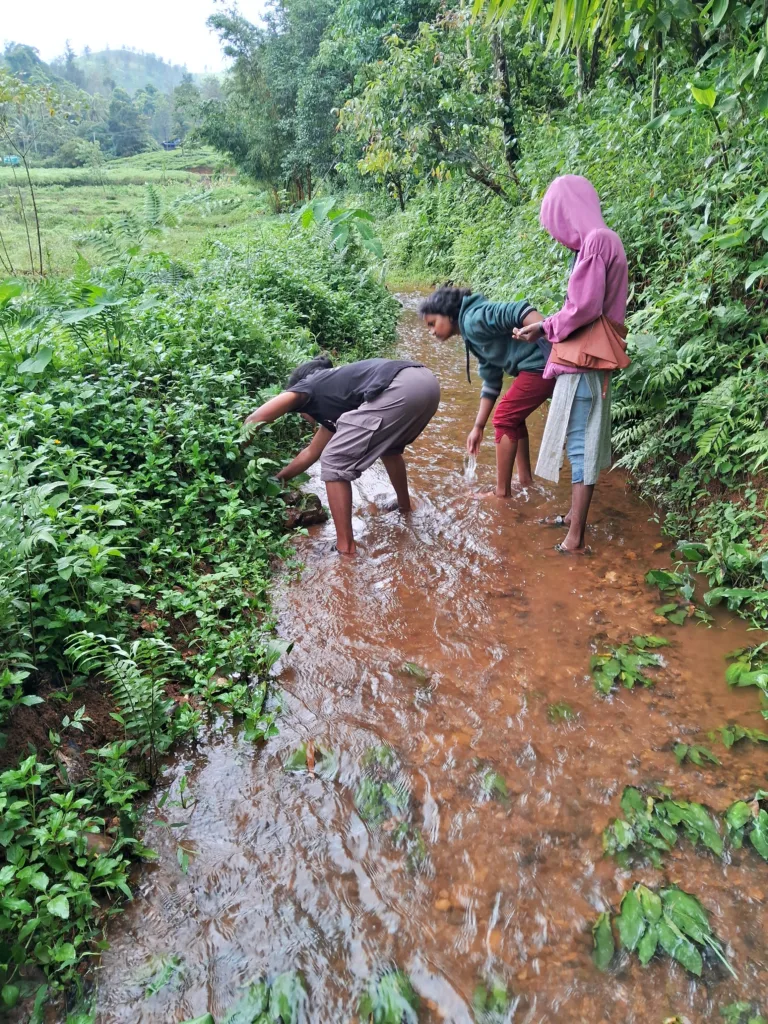
How narrow, our ways of knowing…
Mainstream cultures place humans at the centre of knowledge. All that was recognised or found beneficial for humans got included within the structure of our knowledge and culture. We select only what is needed for us. All that was not useful and found unimportant remained outside our knowledge and culture. They survived in the wilderness. How long can we survive in the human centered knowledge world. Can we start seeing a grass that has survived in our backyard for hundreds or thousands of years as important because it is an integral part of life on earth, even if it cannot be our food or medicine? Can we be captivated by such a life, and can our imagination and knowledge embrace it? Tribal communities have lived and stayed on for ages in a particular way. And they have fathomed out a unique relationship to the earth and other beings through a process of refinement.
This is a special series of excerpts from Seeds and Herbs – Walking in the Land, with the People, a book born from a decade-long journey of artists, poets, theatre practitioners and cultural activists walking alongside the Forest Fringe Farmers’ collective and Indigenous communities in Kerala’s Western Ghats.
The series brings together reflections, poems, conversations, memories, and documentation emerging from shared journeys through forests, paddy fields, hamlets and sacred landscapes. It explores relationships between art and life, ecology and community, healing and memory, through the voices of Indigenous knowledge keepers, artists, and land-based communities.The footprints of this journey are marked in this book, published with the support of the India Foundation for the Arts (IFA) under the Arts Practice programme, made possible with support from Parijat Foundation.
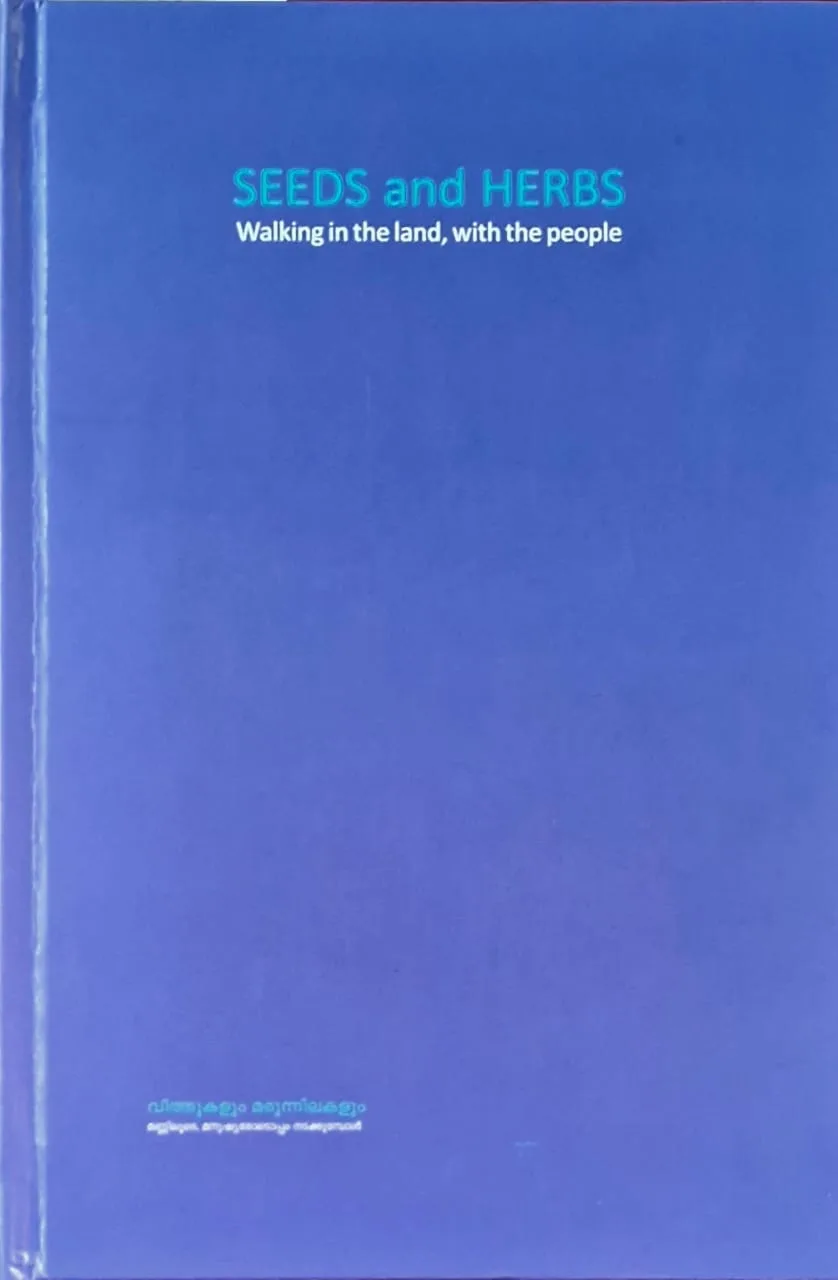
The book, Seeds and Herbs – Walking in the Land, with the People, is a glimpse into the decade-long co-travelling, sharing, and moulting by a small team comprising visual artists, poets, theatre artists and cultural activists.