
In the Rubble of Truth: Modi, Power and the Politics of Dissent
In this provocative political reflection, K. Aravindakshan draws on Salman Rushdie’s reflections on truth and language to examine the politics of power, fear, and dissent in contemporary India. From the RSS ideological influence on Narendra Modi to the suppression of dissent and the rise of Gen Z, the author questions what happens to truth, democracy, and dialogue when power begins to fear its own citizens.
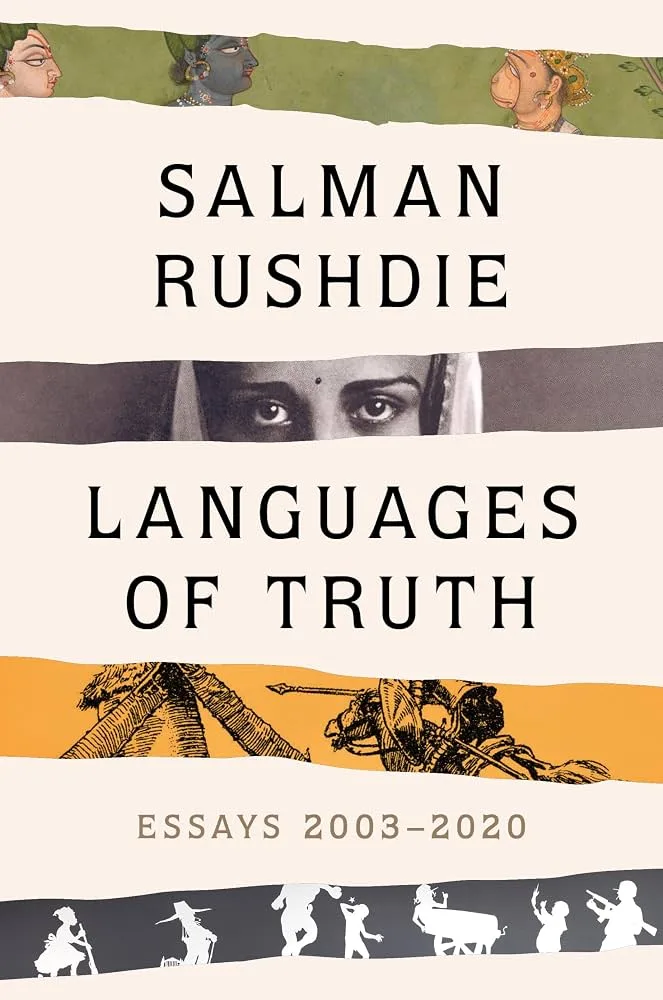
To me, Salman Rushdie is closer to my heart, not through his fiction (though I cherish it), but through Languages of Truth (2021). In Part III of the book, in the essay “Truth,” he concludes:
“In Germany, after World War II, the authors of what was called ‘rubble literature’ felt the need to rebuild their language, poisoned by Nazism, as well as their country, which lay in ruins. They understood that reality and truth needed to be reconstructed, needed to be rebuilt. I think we can learn from this example. We stand once again, though for different reasons, in the midst of the rubble of truth (as well as the rubble of our precious monuments, history, democracy and constitutional pillars, even the very Constitution). And it is for us-writers, thinkers, journalists, philosophers, dissenters- whom the Prime Minister, in his 80th Independence Day speech, termed ‘Urban Naxals’ in his characteristic Swayamsevak genealogy, to undertake the task of rebuilding, in reality, their faith in truth. And to do it with a new language, from the ground up.” (p. 214)
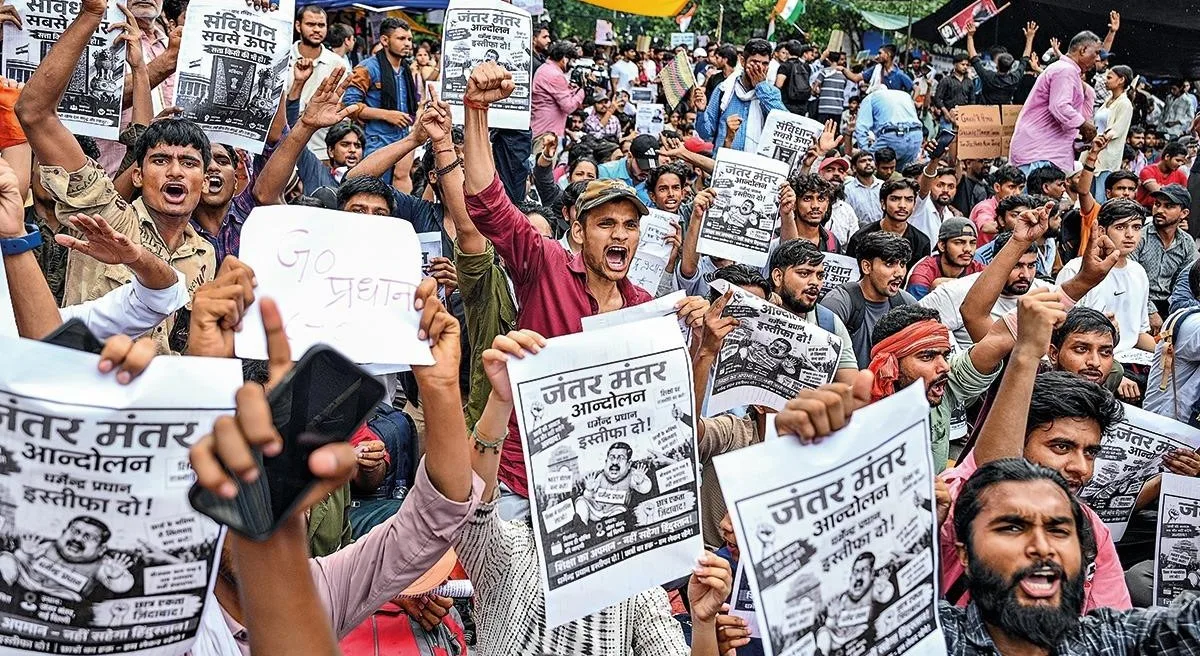
On July 20, 2026, the CJP movement by Gen Z tried to deconstruct the hard truths of the authoritarian regime being practised and hysterically propagated. I cannot say now how the conservative opposition will react to this or navigate it, leaving aside their past baggage of thinking and responding.
However, the Prime Minister caught the ramifications, along with his father figure, RSS Chief Mohan Bhagwat. Since July 23 (until that day, the PM had been in a hibernating shell and was trying to crush the movement with inhuman brutality, using armed forces well-orchestrated by his Home Minister), we have seen the same approach in Manipur, Shaheen Bagh, Ladakh, Jammu and Kashmir, Assam, Bengal, Haryana, Jharkhand and elsewhere, wherever people protest non-violently.
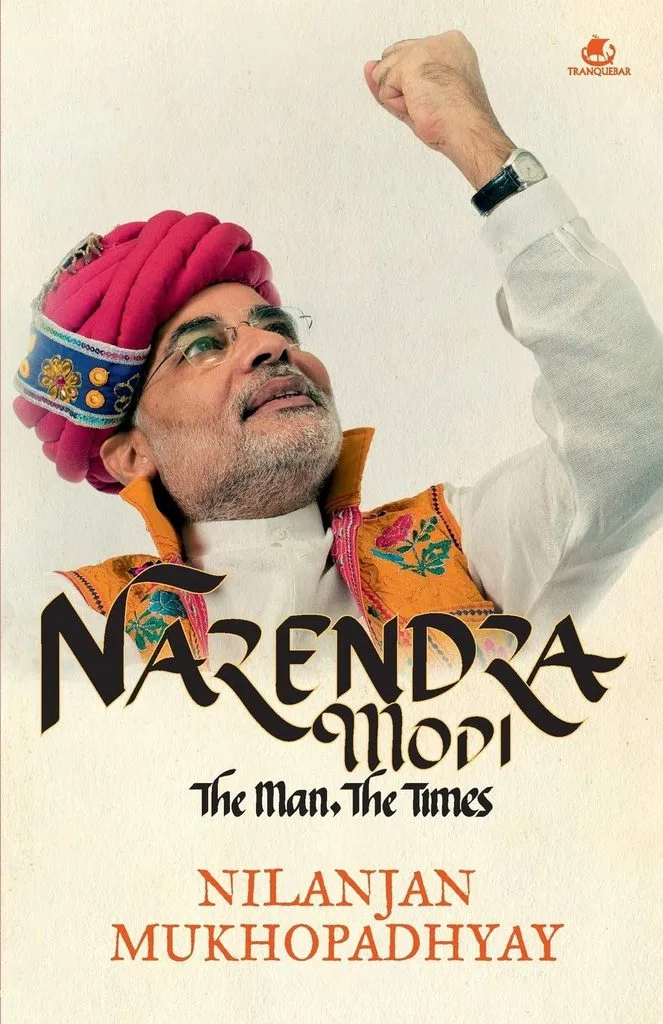
Of course, a couple of times he has bent, but not surrendered. Only in 2002, after the Gujarat ethnocide, when he was almost ordered to step down as Chief Minister, did he surrender, though Advani reinstated him. This, according to Nilanjan Mukhopadhyay, his truthful biographer, is embedded in his DNA. (In Narendra Modi: The Man, The Times (2013), Mukhopadhyay writes about his political personality.
To enter into dialogue, to decentralise and to respect diversity, he fears that he will lose his supremacist libido. He fears and, hence, scares his own citizens, including those who voted for him. Actually, fear is the power, and fear is also the element that makes the citizen powerless.
Nilanjan writes: “…he did not wish anyone … to see the dimension of his personality.” (p. 23)
As a child, Modi used to help his father, Damodardas, run a tea shop. The tasks were divided: the father would make the tea, and the son would take it in a kettle to sell it whenever a train came to the small Vadnagar station. (p. 28)
“Modi’s childhood home is a typical railway compartment-type room located upfront and then moving to other rooms in the same sequence. The house was poorly ventilated and had little natural light. When Narendra was growing up, the concept of electricity in towns and hamlets like Vadnagar was not even a distant dream. The kerosene lamp was lit virtually the whole day, adding to the smoke and grime inside the house, while cow-dung cakes and wood were used for cooking in the middle room. ‘The traumatic and often dark childhood had obviously weighed on Modi’s mind.’” (p. 28)
The same humiliating atmosphere of a kitchen filled with smoke I had experienced in another Gujarati, Mohan Das Gandhi, a Baniya who was comparatively well-off. In the unventilated, smoky kitchen, his mother struggled, and Gandhi recalls that one of their maids died of suffocation.
He also had a libido-not supremacist, but, luckily, a feminine one.
Definitely, I have always empathised with Modi, the child tea seller, and am proud that a tea-seller boy could become Prime Minister, only in a democracy. But my grief is that the same tea-seller boy could get moulded into a Zionist, according to my friend Dr K. Vinodchandran, and climb to the top.
To me, a tea stall and a small railway station are cultural hubs where all strata of people come and go. It is a Sarai, from where one can learn and unlearn different colloquial nuances of language, as well as cultures with porosity.
Can one forget the cultural interactions one had during childhood and adolescence and use abusive, at times filthy, language after being transformed into the Prime Minister of a nation?
He had hated the Congress from his early childhood; he was a true follower of the Maha Gujarat Janata Parishad. “The cornerstone of the political fraternity which spawned Narendra Modi believed that the social and political fundamentals pursued in India since it became independent were intrinsically wrong.” (p. 34)
It was the ideology of the RSS, founded in 1925. So, if I am correct, I feel Modi burnt off his childhood trauma into supremacist strongmanship and a nation—Akhand Bharat—of the RSS forefathers and founders.
His hatred towards Muslims, Christians, and intellectuals (Communists) comes from Golwalkar’s Bunch of Thoughts, and from Munje, Hedgewar and Savarkar, Guruji’s predecessors. Any unethical, unscrupulous act or duplicity can be executed to reach the goal. Religion, Gods, and anything else can be used to achieve this.
Here, command of the language becomes the language of command. In the RSS’s rule book, European models, especially those of Hitler’s Germany and Mussolini’s Italy, are the development patterns to be followed, while Vedas, Puranas and Bharatiya Sanskriti are repeated now and then.
If we take stock of the Modi years, there is nothing Bharatiya in the RSS or its leaders. Unfortunately, that has fallen into the abyss of MARKET and PROFIT as GOD.
“There is no other power than might,” the Dutch Viceroy Choen declared after exterminating all the inhabitants of Indonesia’s Banda Island to monopolise the world market for nutmeg. (Amitav Ghosh’s The Nutmeg’s Curse)
Childhood makes a human being; all famous writers and psychologists illustrate this. The darkness and smoke of childhood may take the form of revenge and hatred, as in the case of Hitler, while a lonely childhood led Indira Gandhi to the Emergency. But she wept at the feet of J. Krishnamurti, according to her biographer Pupul Jayakar (1915–1997) in Indira: An Intimate Biography.
In the case of our present Prime Minister, the revenge of childhood, fuelled by RSS ideology and his personal stubbornness, made his inner recesses dark and blind alleys instead of illuminating those of his unfortunate and helpless, mostly illiterate, brethren of India. Does he ever realise this simple truth?
The above is narrated as I read his responses after July 23 at midnight on reels. Modi is a son of the RSS, catapulted to the PM gaddi through WhatsApp and Godi media.
He built his supremacist image that India needs, especially since 2014, when he secured an absolute majority on his “own” through trolls, storm troopers, and, to be precise, ultra-techno tools, projecting himself as the saviour of the nation, democracy and even the planet, while subverting and destroying the diversity, dialogue and decentralisation that we call democracy.
Dissent is crushed, as in the story of Kafka’s Metamorphosis, where a human being is crushed into an insect, even without a spine, insignificant and helpless. Total dehumanisation. Annihilation of the self. Humanness itself.
He did not address the “cockroaches” (abused by the Chief Justice of India), the unemployed youth. Instead, the PM offered forgiveness to the “infants”. He was even ready to forgive the girl who abused him verbally, easily forgetting his plethora of much more serious abuses against his opponents.
He lamented that the children were politically immature. Indirectly, the patriarch in him sermonised their parents-fathers and mothers: nurture them in the right way, as shown by Guruji. To mothers, he indirectly admonished them to nourish and seed their wombs to deliver patriotic males.
This is the same rule played by Munje, Hedgewar, Savarkar, Golwalkar and other RSS “ideologues”. The Honourable President and all other women are freaks of the RSS.
As Devanoor Mahadeva, the Kannada writer, rightly pointed out, the RSS is an infant whose intellectual growth got stunted, but whose physical form expanded across India and abroad. But it is very adept at using ultra-techno tools, like a robot, without any emotions.
At the 57th Convocation of IIT Delhi, on August 8, 2026, the PM invited the children to “dissent, criticise and find solutions”, while police and paramilitary forces were deployed in multiple layers, with barricades and temporary metal detectors, as well as surveillance measures borrowed from the Zionists, probably.
The surrounding aerospace was heavily monitored using remotely operated unmanned aerial objects. What an anomaly! If you are found dissenting or criticising, the Zionist technology will catch you and put you in high-security prisons.
“Surveillance capitalists know everything about us, whereas their operations are designed to be unknowable to us, but not for us. They predict our futures for the sake of others’ gain, not ours.” (p. 11, 2019, The Age of Surveillance Capitalism, Shoshana Zuboff)
Let us hope and pray that our children deconstruct the patriarchal advice and reels more cautiously, irrespective of any party, religion, caste, gender or class, with non-violence as their creed and the Indian Constitution in their hands.
Let us hope they will go for Truth, using the language of Truth, as Rushdie underlined.
Featured Image: 2026 CJP/Gen Z protest at Jantar Mantar
K. Aravindakshan is a prominent contemporary writer from Kerala, known for works including the novel Gopa, which won the 2024 Odakkuzhal Award. He is recognized for his diverse literary contributions in Malayalam, with works spanning novels, short stories, and essays.