
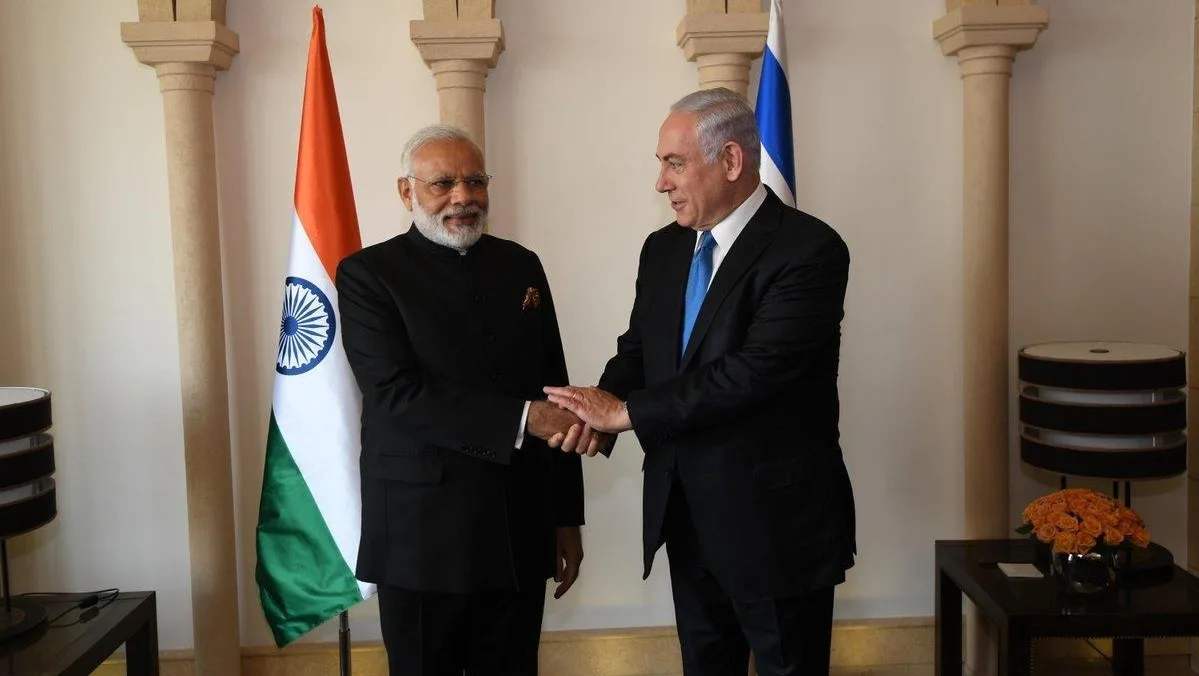
Rethinking Hinduthva in the context of the zionisation of Indian polity
Can Hindutva still be understood primarily through the framework of European fascism, or has it evolved into something different? In this provocative essay, political thinker K. Vinod Chandran argues that contemporary Hindutva has undergone a “Zionist” transformation, reshaping India’s politics, foreign policy, and treatment of minorities. Drawing connections between India’s growing relationship with Israel, the Gaza war, and domestic political developments, the article challenges prevailing academic interpretations and proposes a new framework for understanding Hindutva and resistance in the present moment.
After the US, the only country that still maintains silence about the genocide in Gaza is India. All major countries in the world, especially even US allies, have come forward to protest against Israel and to cut diplomatic ties. But the Indian state has done the opposite: it has backed Israel and has strengthened diplomatic, political, commercial, economic, and military ties with Israel even more than before.
Shocking reports are now coming out that after the US, it was India that gave the most support to Israel’s genocidal war. (Hajira Puthige, Profit and Genocide: Indian Investments in Israel: Centre for Financial Accountability, New Delhi, September 2025). All these studies make it clear that Israel has become a decisive force of influence in India’s strategic sectors — military, industrial, political, economic, and cultural.
What does this diplomatic and ideological friendship between India and Israel, this cooperation in political, economic, and military spheres, actually indicate? It points toward an international joint venture dominated by Israel, toward a racial corporate-political alliance.
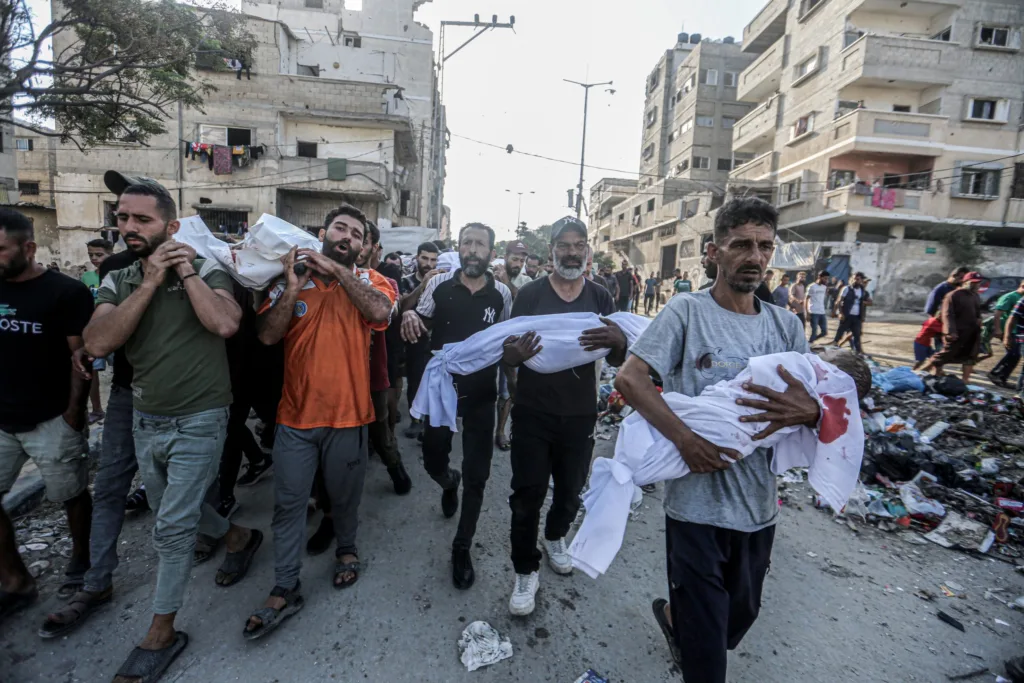
The Israelization of India
This investigation opens the door to the secret history of India’s Israelization. Among the policy shifts and moral failures during Modi’s rule, the most serious in my view is the Israelization of India. It is the source of all other failures. It is no coincidence that Adani’s industrial rise, Modi’s political ascendancy, and India’s Israelization are all happening at the same time. India, which was once a leader of the Non-Aligned Movement, is today openly in the US-Israel camp.
It is clear that the Israeli occupation of India is happening parallel to the rise of Hindutva. One can say that Hindutva is undergoing a mutation at this stage. Israel’s penetration into India’s political and military strategic core has become so strong that it can even determine policy decisions. Modi’s policy shifts also indicate that India’s relationship with Israel is one of dependence. The Gaza war exposes that Israel’s influence within the Indian state is occupation-like, to the point of even questioning India’s sovereignty. The permanent shifts that occurred in India’s politics and in diplomatic-industrial relations during Modi’s time must be seen as consequences of this occupation-like relationship.
The open hostility toward Muslims that is now displayed in India, and the rise in racial attacks, began after the Israeli model became fully acceptable to Hindutva. The demolition of Babri Masjid (1992) and the Gujarat riots (2002) both bear the stamp of the racial attacks Israel has been carrying out in Palestine. The same cunning strategy used by Jews to demolish Al-Aqsa Mosque to build Solomon’s Temple was followed by Hindutva when it demolished Babri Masjid (1992). Behind the Gujarat riots was also a corporate plan to drive Muslims out of their residential areas and out of urban centers where their industry, business, and enterprises had grown strong. Threats, attacks, looting, and massacres were all used as methods. They were planned projects for the racial elimination of Muslims. The Gujarat riots must be seen not as communal riots but as racial riots.
Then came the plan to “Gaza-fy” Kashmir. In 2019, the special constitutional status granted to Kashmir was revoked. Kashmir was divided into two and statehood was taken away. Hindutva became fully Zionized. The processes of division and racial uprisings now happening in Gujarat, Manipur, UP, and now Bengal can all be seen as applications of the model of racial elimination that Israel tested in Palestine. The Citizenship Amendment Act, SIR, and NRC were all devised with the secret aim of stripping Muslims of their citizenship rights.
In short, the Modi regime is securing its total domination in India through an internal “Gaza-fication.” For Hindu Zionists today, Muslims are the national and racial “Other.” The racial enemy who must be eliminated. The Hindu Zionist argument is that Hindus, like Jews, have been victims of genocide, and therefore it is justified to racially eliminate their opponents. It may seem paradoxical that Hindutva is drawn at the same time to both fascism, the politics of the ethnic cleansing of Jews and to Zionism, the genocidal enterprise launched by the so called victims of fascism. But although there are historical differences between Zionism and fascism, they share common ground: hatred, a thirst for genocide, and terror. Jewish historians themselves have revealed that during the Holocaust, instead of opposing fascism and protecting Jews, Zionists turned fascism into a golden opportunity for establishing a Jewish state. They used the victim narrative to claim the right to create new victims and to become perpetrators themselves.
The core Zionist weapon is the victim-theory that says: The Muslim is a terrorist, sub-human, animal-like, uncivilized, and therefore must be hunted. In that sense, Zionism is a continuation and mutation of Orientalist narratives. Zionist narratives were a war machine that justified and reproduced racial war. Edward Said called Palestinians “the victims of victims” — a paradoxical definition: The Palestinians as victims of Jews who were victims of fascists. Similarly, Muslims today are the victims of Hindus who have assumed the status of victims themselves. It is through stories of victimhood and revenge that Hindutva manufactures hatred and fear in Indian society.
Through racial rewritings of history and through victim narratives, Hindu Zionists have translated medieval Indian history as a history of genocide. In that way, they provide retroactive justification for the killing of Muslims. The film The Kashmir Files, made by Hindutva proponents, is a prime example of fake history-making and disinformation. This film, which spews racial poison by depicting Hindus as victims and Muslims as perpetrators and terrorists, shares the general character of Zionist sensibility and propaganda strategy. Hindu-Zionist historical narratives are poison factories that produce hatred and fear.
Hindutva and Zionization
Investigations into India’s role in the genocide in Gaza are shedding light on the most secretive yet decisive occupation relationship in modern Indian history. The hidden undercurrent of Zionization. The Israelization of culture and politics. The coexistence of the imperial dreams of “Greater Israel” and “Greater India.” The nexus with corporations. Ultimate Dependence.
Why were modern Indian historians, left political thinkers, and those resisting Hindutva unable to understand this Zionist undercurrent? Was it because they themselves had some friendly ties with Israel? Or because of an affinity toward Zionist principles? Whatever the reason, whether consciously or not, they found another historical model to cover up this undercurrent: Fascism. They established that the ideological origin of Hindutva was in European Fascism. There was certainly some truth in that. But they could not go beyond the simplistic and one-sided definition that “Hindutva is Fascism.” They missed the historical truth that the real origin of contemporary Hindutva lies in Zionism, which took root in Europe and America during the same period. Left historians like Romila Thapar and K.N. Panikkar all focused on the fascist character of Hindutva. They located Hindutva’s prototypes in Germany and Italy. They did not notice the mutation Hindutva underwent in its later phase.
But this article puts forward a different view: that the historical ground of the RSS and Hindutva is not Nazism or Fascism, but Zionism — a mutation of fascism.
The influence of Zionism is evident from the very beginning in Hindutva’s basic worldview and structure. The idea of a Jewish nation-state called Israel had taken root in V.D. Savarkar as early as 1908. By 1923, V.D. Savarkar had become enamoured of Zionist projects. Savarkar wrote: “If the Zionist dreams are realized, that is, if Palestine becomes a Jewish nation, we too will rejoice like our Jewish friends.” (V.D. Savarkar, Hindutva: Who is a Hindu? 1923). This is an indication that long before the establishment of the Jewish state, Hindutva’s religious-national outlook and the Zionist ideology that stands for a Jewish empire had already come into alignment.
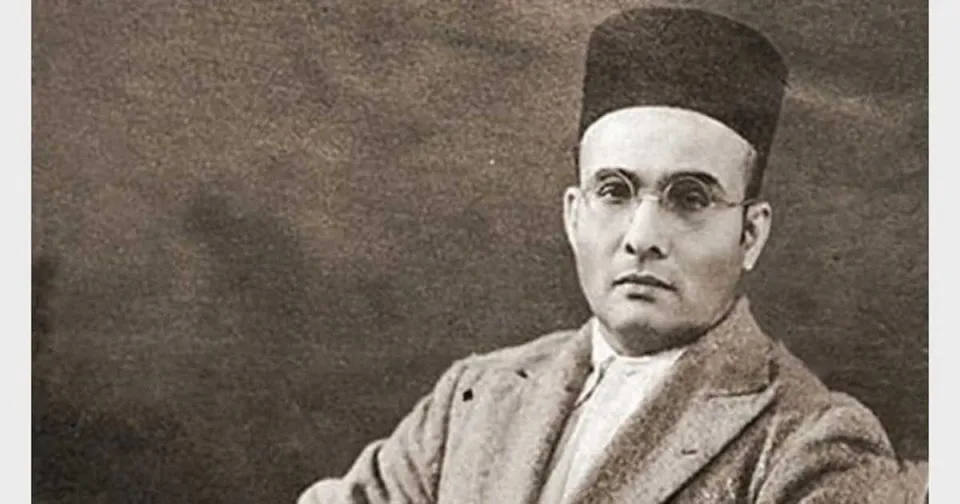
The state of Israel was established in 1948, at the same time as India’s Partition. Savarkar expressed complete satisfaction at the Jewish people “reclaiming their fatherland and holy land.” He was disturbed that India voted against the 1947 UN General Assembly resolution to partition Palestine and establish the state of Israel. Savarkar criticized this as an indication of the Nehru government’s “Muslim appeasement policy.” (V.D. Savarkar, Historic Statements, G.P. Parchure: Bombay, 1967)
Savarkar stated that the establishment of Israel justified Hindutva’s central concept of racial-national self-determination. RSS ideologue Guruji Golwalkar portrayed the Jewish experience as a model of national self-assertion. Golwalkar presented the making of the Jewish nation as the story of a dispersed people who had lost sovereignty, struggling to preserve their culture, language, and civilizational distinctiveness. Savarkar and Golwalkar followed the Zionist narrative tradition that hides the historical fact that Israel was built by expelling Palestinians from their own land, massacring them, and illegally seizing their land and wealth. The current RSS chief, Mohan Bhagwat, is also following the same path.
It was the very same Orientalist and Zionist notions about “Islamic terrorism” that Hindutva discourse propagated all over India. Narratives modelled on Zionism were constructed to create fear and hatred among Hindus, to justify the project of racial elimination, and to divide India internally. Muslim attacks in the medieval period were portrayed as racial attacks against Hindus. Indian history was rewritten to fit the Zionist script.
The ideological friendship with Zionists was nurtured by lies about “Islamic terrorism.” Zionist narratives promoted racial discrimination and racial enmity by portraying Arab and Palestinian communities in West Asia as security threats. The Islamophobia created by Zionism was imported into India by Hindutva.
The strange combination of Fascism — the ideology of the perpetrator — and Zionism — the theory of victim’s revenge — was already happening in Savarkar’s time. But in later years, the RSS, BJP, VHP, etc., all came to be fully under Zionist control. It may have been the ambiguity created by this strategically hidden strange combination that prevented historians like Romila Thapar, opposition parties engaged in anti-fascist struggles, and left movements from grasping the Zionistic thrust of Hindutva.
In 1964, historian Romila Thapar was a member of the Indian Friends of Israel Society. At that time, it was an organization of intellectuals who disagreed with Nehru’s political positions. In the 1950s and 60s, it was a collective of about a hundred writers and intellectuals who wanted India to recognize Israel and build strong cultural-diplomatic ties. Frank Moraes, Amrita Pritam, Khushwant Singh and others were members. They opposed Nehruvian foreign policy, which kept distance from Israel and expressed solidarity with Palestine.
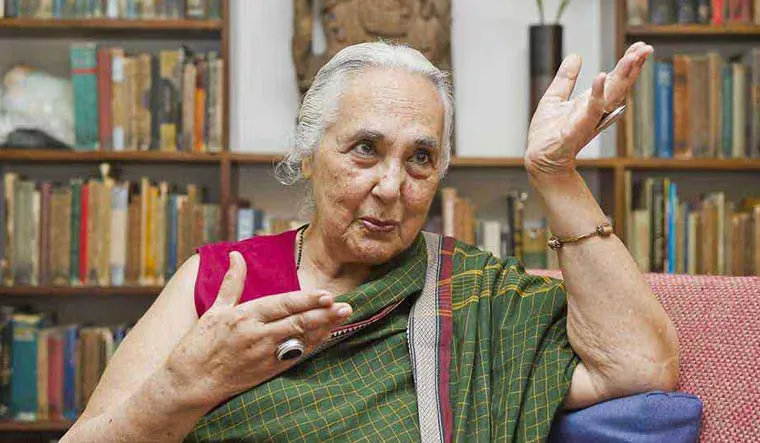
It is true that Romila Thapar and others later abandoned their friendship with Israel and took anti-Israel positions. In her autobiography Just Being, Romila Thapar does self-criticism about her pro-Israel stance. She writes in an apologetic tone that she later became a critic of Israel, abandoning her early pro-Israel positions. But the fact is that these changes of course did not lead to any conceptual self-examination or to questioning the relationship between Hindutva and Fascism. Romila did not attempt to redefine Hindutva by recognizing its Zionist under currents. She was not willing to make any significant change to her earlier assumptions about Hindutva.
This one-dimensional concept that “Hindutva is ultimately Fascism” cannot be dismissed as merely a conceptual problem. Its political implications are serious. These theses failed to touch the historical-political forces that shaped Hindutva. The fascist thesis only served to hide the truth that Hindutva is the Zionist form of Hinduism, and that it is the Indian version of a racial-imperialist movement defined by occupation and genocides that are even more terrible than fascism. Left intellectuals like Romila failed to recognize that Hindutva is not limited to religious or communal boundaries, and that it is fundamentally a Zionist project — the ideology of global Zionist-corporate occupation.
I see this conceptual blindness as a major factor in weakening the resistance that arose against Hindutva. The traits of occupation inherent in Jewish, Christian, and Hindu Zionisms fall outside the limits of the European concept of fascism. Though contemporary to fascism, Zionism is a totalitarian movement that grew through historical intervals in accordance with the monstrous outcomes of racial capitalism, and developed itself as both the ideology and the apparatus of genocide. It is not a model of the past like fascism. It is a globalized colonial-racial- war project that devours the present, the past, and the future alike. It is the paramount crisis and the great pestilence of the contemporary world. What we witness in Gaza, Lebanon, and in America’s (and Israel’s) attack on Iran, is the realization of that racial imperialist project. The racial attacks unleashed by the Hindutva state against Muslims in Gujarat, Ayodhya, Kashmir, UP, and Bengal could be seen as the Indian applications of it. These attacks cannot be described with the term “communal riot.” I believe the concept of “communalism” is incapable of capturing the racial and colonial implications of these state-made riots. They were racial riots planned with the goal of eliminating Muslims. Thus, the concepts of “Fascism” and “Communalism” became prejudices that diverted public attention away from Zionist racial terror and disoriented the struggles against Hindutva.
New Horizons of Resistance
These findings give a new direction and orientation to resistance against Hindutva. They help us locate the source of the global-national narrative factories that produce hatred and fear. With the genocidal war in Gaza, the division between national politics and global politics has become irrelevant. Resistance against Hindutva can only be complete through comprehensive resistance against global corporate Zionist occupation. Today’s multiple crises demand a new anti-occupation uprising where global and national resistances converge — a new freedom struggle that spreads cross the entire world.
Hindutva is the ideology and praxis of racial occupation. The epidemics of both Fascism and Zionism converge in it. Therefore, resistance against Hindutva ultimately demands a new process of decolonization. A decolonization process that extends into the past, the present, and the future. It includes de-westernization and “de-orientalization”. But above all, it is also urgently a process of de-Zionization.
To subject Hinduism, Indian history, media, and the educational, cultural, and political spheres to de-Zionization means to expose the poisonous narratives that produce hatred, fear, malice, and terror, and that portray racial discrimination and genocide as sacred acts. It also entails a creative process of countering stories of division, revenge, and elimination with stories of inclusion, care, compassion, confrontation, and unity. It severs all ties with racial dominance. In that sense it is both a self-struggle and a global struggle. A micro-politics of self-transformation. It creates a new global human agency that rises above all divisions of caste, communalism, racism, and hyper-nationalism.
“De-orientalization” does not only mean breaking the image of the “Oriental subject” that Westerners reconstructed as their racial Other. It also means deeply embracing Eastern essence.
Today’s challenge is to develop a new anti-racist vision of resistance grounded in Asian, African, and Latin American cultural perspectives. Just as important as resisting Israel’s political, military, and cultural occupation in India is resisting Hindutva’s project of internal “Gaza-fication.” The Gaza war has exposed not only the genocidal nature of global Zionist imperial Order but also the sheer terror of the Zionist occupation that now engulfs India.
Solidarity with Gaza is the first step in resistance against Hindutva and against the global genocidal empire. By joining the global people’s resistance movement that is rising against Zionist domination and declaring solidarity with Palestine, we are beginning a new freedom struggle. It is the beginning of a new political process that connects local and national resistances with global resistance. This can only happen by breaking the horizons of national and regional politics that operate only within national borders. The first step that resistance movements in India must take is to expand politics into transnational, planetary planes by breaking all borders — national, regional, religious, caste-based, and racial.
Doesn’t Palestine’s call to “Globalize the Intifada” (the resistance) indicate the arrival of just such a new earthly-ethical-politics?
Featured Image: Indian Prime Minister Narendra Modi shaking hands with Israeli Prime Minister Benjamin Netanyahu
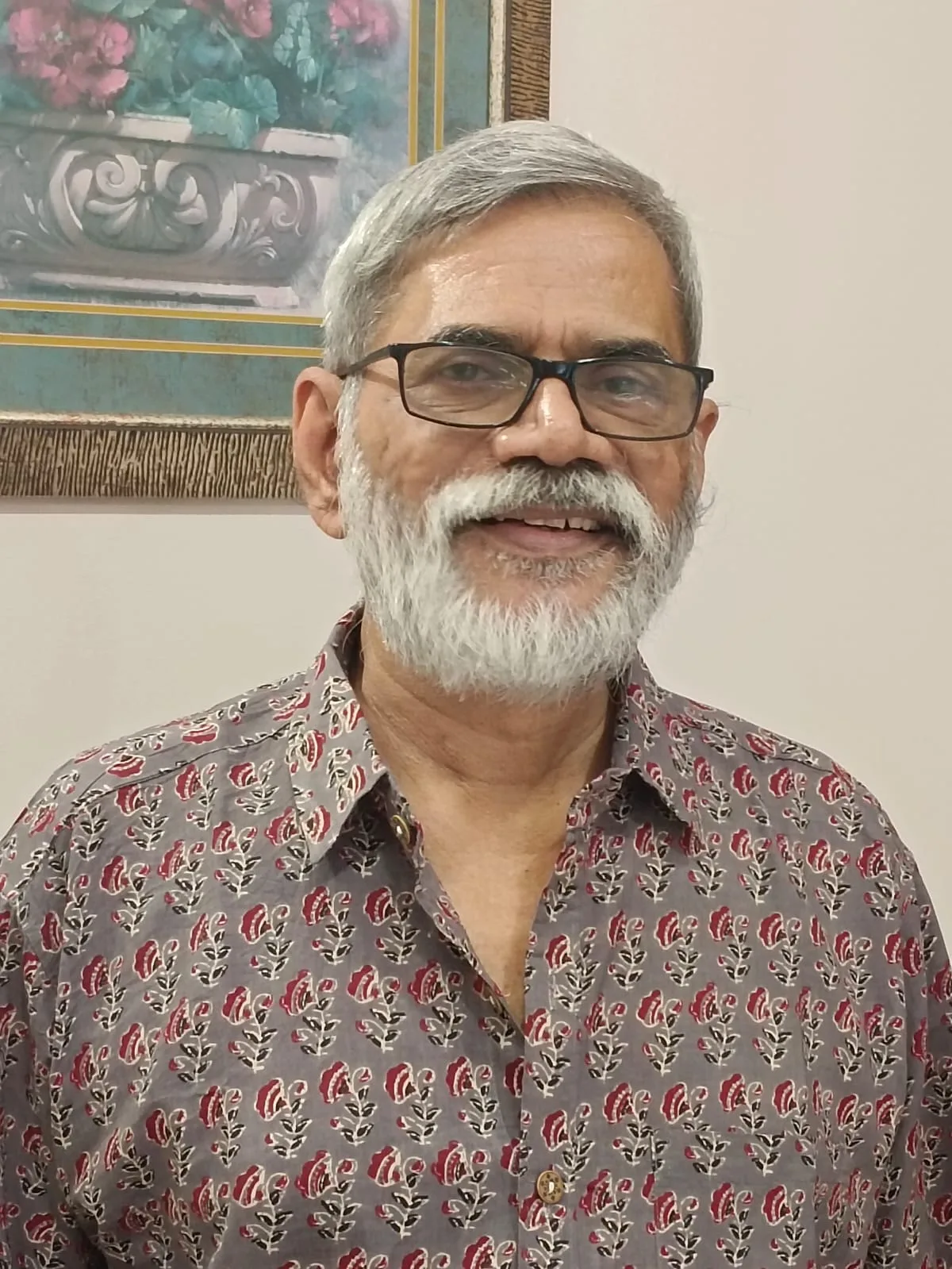
He earned his PhD in History from JNU in 2005. His research focused on an inquiry into narratives of power and identity in Kerala, based on the historical novels of C. V. Raman Pillai. He retired in 2011 while serving as the Head of the Department of History at Sree Kerala Varma College, Thrissur.He has written numerous papers and essays in both English and Malayalam in the fields of literary criticism, cultural studies, intellectual history, and philosophy. His book Gurunērangaḷ, published in July 2025 (Freelance Books, Thrissur), rethinks the Kerala Renaissance and the poetry and philosophy of Narayana Guru through a novel meta-historical perspective.