Beyond Polycrisis: Understanding the Global Crisis
Climate change, wars, economic instability, ecological collapse and political fragmentation are usually discussed as separate crises, each demanding its own solutions. But what if they are all manifestations of a much deeper civilisational predicament?
In this first part of an extended conversation, Sudhir Shetty, founder of the independent research initiative Global Crisis Response, introduces the Global Crisis Framework (GCF), a sensemaking and navigation framework developed over six years of independent research. Moving beyond conventional framings such as “polycrisis” and “metacrisis,” he argues that today’s overlapping crises originate from the structural limits of Global Industrial Civilisation itself.
The discussion explores why the current moment should be understood not merely as a collection of problems to be solved, but as a historical transition that demands new ways of thinking, organising and preparing for the future. It also introduces key concepts that will be explored throughout this interview series, including Global Industrial Civilisation, the distinction between problems and predicaments, and the need for a new framework for navigating an era of profound transformation.
NAVIGATING CIVILISATIONAL COLLAPSE
A Conversation with Sudhir Shetty — Part One
Before we begin, can you help our readers understand what you mean by ‘Global Crisis’? Many of them will be familiar with terms like Polycrisis, Metacrisis, Climate Crisis, and SDGs. Is GCF saying something different?
Something is wrong — and most people paying attention know it. Not in the specific, fixable way a broken machine is wrong. In a deeper way — the kind you notice when you step back from the daily news and let its individual stories blur into a pattern. Each crisis arrives packaged with its own explanation. Pandemic: a novel pathogen, managed eventually. Ukraine: aggression, sanctions applied. Energy prices: supply chain disruption, normalising. Climate: urgent, serious, being addressed through agreements and targets. Each crisis handed a narrative. Each treated as its own phenomenon with its own response.
And yet the pattern does not resolve. The crises compound. A persistent question forms that none of the official explanations quite answers: is this connected?
The answer is yes.
Various traditions have tried to name it. Polycrisis names the simultaneous occurrence of multiple interacting crises. Metacrisis locates the root in civilisational thinking and paradigmatic failures. Deep Adaptation accepts that disruption is inevitable and focuses on psychological preparation. SDGs, Net-Zero, and Green Growth frame the challenge as targets achievable within the existing system. Each captures something real. None of them fully names what GCF is pointing at.
The Global Crisis, in GCF’s usage, names two things simultaneously. First: the inevitable near-term simplification — and possible collapse — of Global Industrial Civilisation, the single integrated system connecting every national economy on earth through shared energy dependency, shared infrastructure, and shared growth logic. That system is now pressing against the physical limits of the planet it depends on across three primary dimensions simultaneously — Energy, Ecology, and Complexity. Second: depending on how that simplification unfolds, the possible longer-term collapse of the biospheric systems that make any complex human civilisation possible.
It is a predicament, not a problem. A problem has a solution within the existing framework. A predicament requires navigation — honest acknowledgement of where things are heading, combined with committed work to build what can survive and carry forward what is worth carrying. That navigation — what it requires, who can lead it, and what can actually be built in the time that remains — is what this series explores.
You keep referring to GIC — Global Industrial Civilisation. What exactly is this entity? Is it the same as capitalism, or globalisation, or the modern world economy?
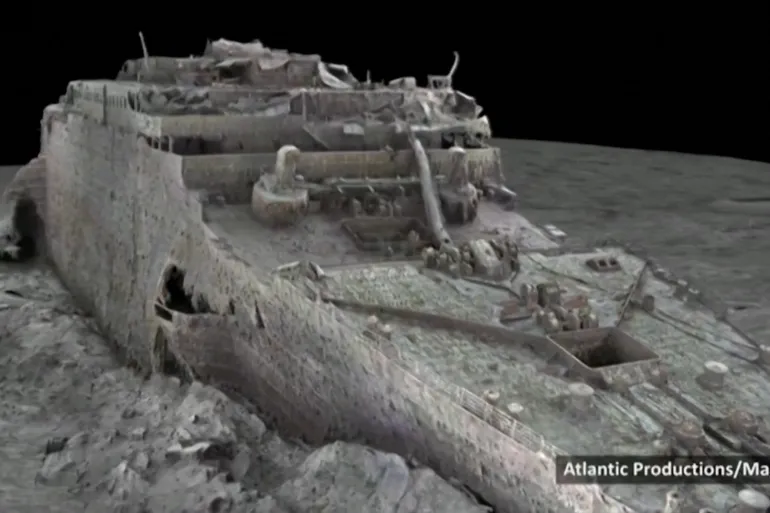
GIC is the ship. That is the most direct way to answer this. In GCF’s usage, the Titanic imagery as a metaphor appears repeatedly because it captures something comparable and precise. The ship is Global Industrial Civilisation: the single integrated system connecting every national economy on earth through shared energy, shared infrastructure, and shared growth logic. Capitalism is one of the ship’s operating systems. Globalisation describes how far it has extended its reach. The world economy measures how much cargo it carries. None of these is the ship itself.
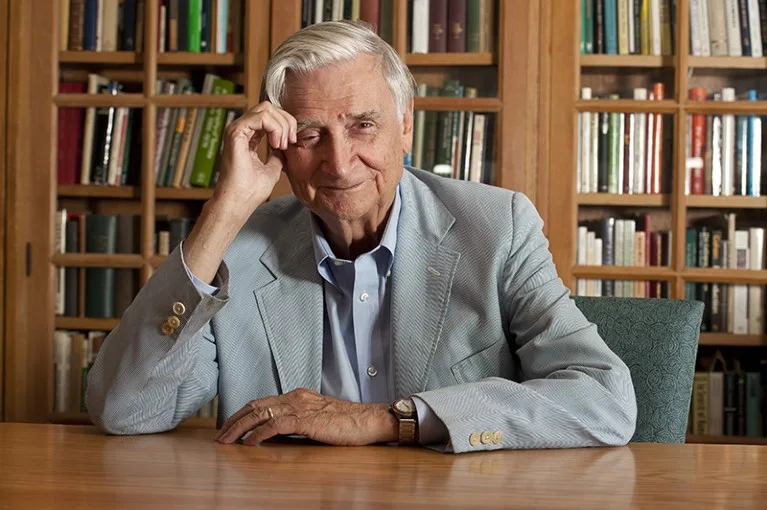
What makes GIC a representative of contemporary human civilisation rather than just a system is that it functions as a living superorganism — not metaphorically, but in the precise biological sense that ecologist E.O. Wilson established through his study of eusocial insects. Three thinkers developed this insight into an analytical instrument. Wilson gave it the biological foundation. Economist Nate Hagens applied it to GIC specifically, demonstrating that GIC consumes approximately 580 exajoules of energy per year — equivalent to roughly 500 billion human labour-hours of continuous work, or 60 to 100 energy slaves per person in industrialised nations. And physicist-risk-analyst David Korowicz mapped GIC’s specific anatomical architecture — the eight keystone hubs whose circular interdependencies create the fragility that makes GIC not just complex but acutely vulnerable to cascade collapse.
A superorganism has a metabolism, vital organs, and a growth imperative built into its architecture. So does GIC.
Its metabolism runs on fossil energy — those roughly 580 exajoules every year. Everything aboard — the food supply chains, the financial system, the hospitals, the internet, the governments — was designed assuming that energy would always be available. None of it has a plan for its absence.
Drawing on Korowicz’s foundational analysis of civilisational cascade dynamics — particularly his Trade-Off: Financial System Supply-Chain Cross-Contagion (2012) — GCF identifies eight keystone hubs whose circular interdependencies make sequential restoration structurally impossible once multiple hubs fail simultaneously: Energy Infrastructure, Banking and Finance, Critical Infrastructure (transport, communications, water treatment), Production Flows, Economies of Scale, Trust in Public Institutions, Food Systems, and Public Health Systems. Korowicz identified the first six; GCF adds the final two as distinct hubs with unique cascade dynamics. Each depends on all the others. This is what makes the ship genuinely dangerous — it is not a general hospital ward where patients recover if one system fails. It is an ICU: every life-support system is connected to every other, and failure in any one cascades through all the rest within days.
Its growth imperative is structural, not cultural. GIC must grow or begin to collapse — because its financial architecture is built on debt requiring growth to remain serviceable, because its employment systems require expansion to avoid unemployment, because its states require GDP growth to fund themselves. This is an architectural requirement as fundamental as the bicycle that must maintain forward velocity or fall over.
Capitalism is GIC’s most efficient institutional carrier in the current historical period. Globalisation is the geographic expression of GIC’s metabolic reach. But neither is the organism itself. Understanding GIC as an organism — rather than as a set of bad decisions by bad actors — is what makes the rest of this interview useful. You cannot reform an organism’s metabolism through better intentions. You can only build something genuinely different alongside it, before the organism’s collapse forecloses that possibility.
The ship is running. Most passengers believe it is unsinkable. The hull is degrading from within. It becomes pertinent that we examine the lifeboats.
Before we go further — how would you describe GCF itself as a type of work? If someone asked “what kind of document is this, what shelf does it belong?” — what would you say?
The wrong framing is one of the fastest ways to lose the right reader before they have opened the first page — so this is worth settling early.
The most natural category people reach for is “synthesis” — and it is not wrong. GCF draws from multiple intellectual traditions simultaneously: systems theory, energy economics, complexity science, ecological economics, collapse history, consciousness studies, political philosophy, and the Anthropocene sciences. No single discipline can see the full predicament. The argument is that the tools adequate to understanding civilisational-scale transformation already exist, dispersed across these traditions — what has been missing is their integration into a navigable whole.
But synthesis alone describes only what GCF does intellectually. It does not capture what GCF does with that synthesis. There is a large and genuinely important body of work — spanning fifty years, produced by some of the most rigorous thinkers in ecology, systems science, and complexity — that integrates evidence brilliantly, diagnoses the predicament accurately, and then largely leaves the reader with the diagnosis. GCF’s explicit purpose is to go one step further: from comprehension to the question of what communities can actually do in the window that remains. Most diagnosis frameworks are not navigation frameworks. GCF attempts to be both.
The description that fits most honestly is Sensemaking and Navigation Framework. If you have encountered Dave Snowden’s Cynefin framework — one of the most widely cited complexity frameworks in governance and organisational strategy globally — you will recognise what sensemaking means in a rigorous sense: not casual meaning-making, but the disciplined process of constructing an adequate map of a complex situation before action becomes possible. Cynefin helps institutions and communities understand what kind of problem they are facing before they attempt to respond. GCF attempts something structurally similar but at a different scale and with a different foundation: the scale is civilisational rather than organisational, and the foundation is thermodynamic and biophysical rather than purely epistemological and methodological. Where Cynefin tells you how to navigate complexity, GCF also tells you what you are navigating through — the specific thermodynamic trajectory of GIC — and why that trajectory is not optional regardless of how well institutions manage their decision processes. The two frameworks are complementary. GCF builds on the sensemaking tradition Snowden represents while grounding it in the material substrate that tradition has not yet fully reckoned with.
GCF is not a prediction. It is not a policy prescription. It is not a utopian vision. It stands on the shoulders of fifty years of serious scientific and analytical work by researchers far more credentialed than I am — and it attempts to do one specific thing that work has not yet done: assemble the diagnosis into a navigation instrument that communities, movements, thinkers, and individuals can actually use during the transformation window that is now open.
A compass, not a map. The compass reading is reliable. The map is the work that follows from using it.
You describe today’s ecological, economic and geopolitical crises as expressions of one “Global Crisis.” What made you move away from seeing them as separate crises?
It happened in stages, but one moment stands out.
In 2020, I was presenting a paper at a single-use plastic ban conference in Mumbai. The political will was there, public awareness was building, regulations were coming. During the Q&A, someone asked why virgin plastic production kept rising despite all of it. Trying to answer honestly produced a moment where something clicked that I could not un-see. Plastic, I realised, is not demand-driven. It is supply-driven. As long as Global Industrial Civilisation remains tethered to fossil energy, plastic is simply what that system produces. You cannot regulate your way out of a structural output. That single insight was enough to make me step back from my doctoral research entirely and begin asking a completely different set of questions.
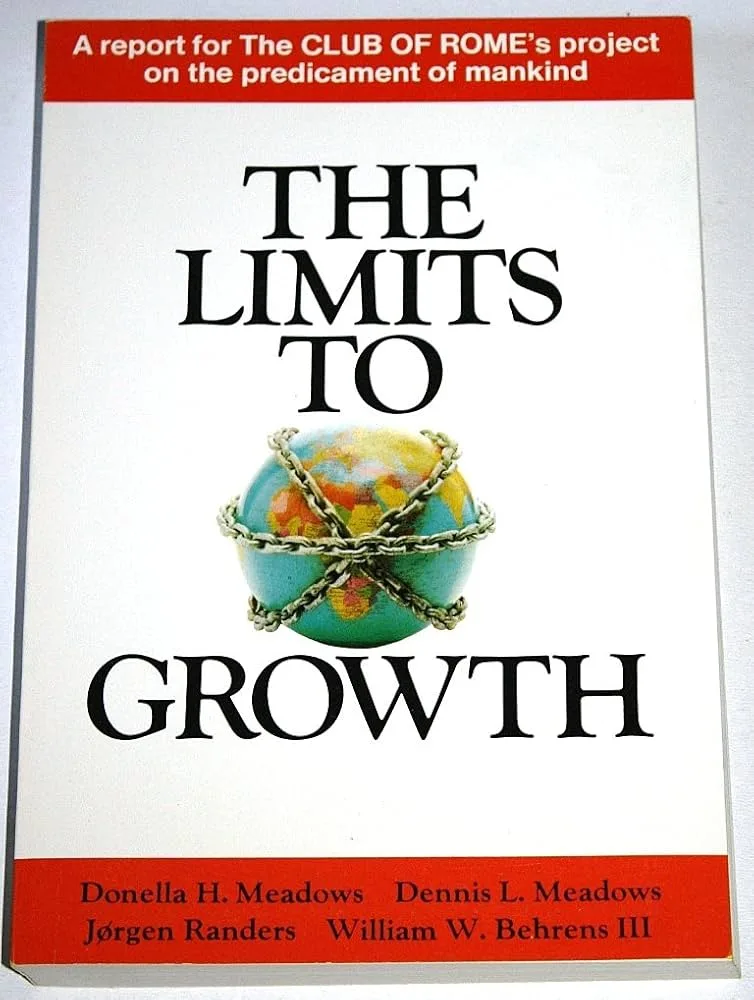
What followed was a sustained encounter with a body of literature — Limits to Growth, William Catton’s Overshoot, the Planetary Boundaries framework, William Rees on ecological footprint and biophysical economics, David Korowicz on supply chain fragility and cascade vulnerability, Joseph Tainter on complexity and civilisational collapse — each walking a different face of the same mountain, each arriving at a version of the same conclusion.
What I found, reading them together, was this: national economies are not independent systems — they are embedded within a single Global Industrial Civilisation tethered to three things simultaneously: exponential physical growth, increasing complexity, and cheap dense fossil energy. Stress one of those three and the structure wobbles. Stress all three together — which is what is now happening — and what you face is not a collection of separate problems amenable to separate solutions. You face a predicament: a single integrated condition expressing itself as many symptoms.
The reason this naming matters is not philosophical. It is strategic. Every unit of collective attention, funding and talent directed at treating symptoms separately is a unit not directed at understanding and navigating the underlying condition. And we are running out of the time that mistake requires.
You repeatedly distinguish a “problem” from a “predicament.” Why is this distinction so important?
The distinction is not semantic. It determines where scarce resources — time, money, talent, political will — actually go.
A fractured bone is a problem. You set it, you rest, it heals. The intervention works because the underlying system is sound. Terminal cancer is a predicament. It cannot be cured by the same logic — it must be navigated: understood clearly, managed honestly, prepared for with whatever time remains. Applying fracture-treatment to a predicament does not just fail. It consumes the resources that navigation requires.
This is precisely what is happening with climate change. The dominant “heat & burn” framing treats rising temperatures as the crisis, decarbonisation as the solution, and a 100% renewable energy transition as the destination. But climate change is not the crisis. It is one symptom of the crisis. The Planetary Boundaries framework identifies nine Earth systems that define the safe operating space for human civilisation. Seven of the nine are already in overshoot — climate stability is one of them. Even if we halted climate change entirely tomorrow, the other six would continue to deteriorate. The force pushing all of them past their limits simultaneously is GIC itself. Whether GIC runs on fossil energy or renewable energy, its metabolic demand — the exponential growth in physical throughput it structurally requires — is what is breaching every planetary boundary at once.
The predicament, stated plainly, is this: GIC will contract. The question is not whether but whether humanity experiences that contraction with preparation or without it. The Titanic image captures this most precisely — not the generic version but this specific one: corrupt officers, poor hygiene, and inadequate facilities aboard the Titanic are genuine problems, valid and worth addressing. But the moment the hull is breached, those problems are overridden by a new reality. Fixing the facilities will not save the ship. The predicament — stay with the ship or build lifeboats — demands a completely different category of response.
Navigation means building those lifeboats now, while the ship still has the structural integrity to support that work. It means constructing the successor system alongside the failing one — not waiting for the failure to begin before starting to build. That is not pessimism. It is the only strategy the remaining window makes rational.
Every unit of collective attention directed at solving symptoms separately is a unit not directed at navigating the underlying condition. That is why the problem-predicament distinction is the first thing GCF establishes and the last thing it will surrender.
Many climate scientists focus on emissions, economists on growth, and political scientists on institutions. Why do you believe all these disciplines fail to see the “whole animal”?
The short answer is that these disciplines are not failing — they are functioning exactly as GIC designed them to function.
Every major knowledge-producing institution — universities, research centres, think tanks, policy bodies — is funded by, embedded within, and accountable to the same Global Industrial Civilisation whose structural condition they are attempting to understand. GIC does not merely tolerate paradigm-conforming research. It actively rewards it: with funding, with peer recognition, with career advancement, with institutional access. And it punishes departure from paradigm with equal reliability — not always through dramatic suppression, but through the quieter mechanisms of professional isolation, shrinking audiences, and exclusion from mainstream media. The Limits to Growth modellers tracked reality with uncomfortable accuracy from 1972 and were dismissed for three decades. Jem Bendell’s “Deep Adaptation” paper was rejected by peer review for being “too pessimistic” — then downloaded over a million times when he published it independently. The pattern is consistent: the more honestly a scholar names the predicament, the less institutional support they receive.
This produces what GCF calls the Paradigm Trap — the structural condition in which the analytical tools available within any discipline were built inside a set of foundational assumptions, and therefore cannot interrogate those assumptions from within. The tools are extraordinarily powerful for addressing questions that fit inside the paradigm. But they cannot ask whether the paradigm itself is the problem — because the paradigm is the water the tools swim in. An economist whose models are built within the growth assumption cannot use those models to ask whether perpetual growth on a finite planet is possible.
The people who have succeeded in seeing the whole animal — Catton, Korowicz, Tainter, Rees, the LTG modellers — did so largely outside or at the margins of formal institutions, almost always at professional cost. That consistency is not coincidence. It is structural evidence for the argument.
There is one further dimension worth naming. Working on predicaments is not just institutionally unrewarded — it is psychologically unattractive. Atul Gawande’s Being Mortal documents how modern medicine, optimised entirely for cure, produces enormous suffering at the moment of inevitable decline — because it has trained itself to treat death as an enemy to be defeated rather than a reality to be navigated with dignity. The parallel at civilisational scale is precise: disciplines optimised for problem-solving self-select away from predicament work. GCF does not claim to be smarter than any of these disciplines. It claims to be positioned differently — built outside institutional dependencies, drawing on what each discipline has found, attempting to see the connections that no single discipline is structured to see.
Your framework introduces one of its most original analytical contributions — the Paradigm Affordance Pyramid, or PAP. Can you describe what it is, where the name comes from, and why it matters for understanding why so many well-intentioned reform efforts keep failing?
The name needs unpacking first — because both words are doing precise analytical work, not decorative work.
Affordance comes from the ecologist James Gibson, who observed in 1979 that environments do not simply exist independently of the organisms within them — they afford certain actions and foreclose others, depending on the organism’s size, capability, and relationship to that environment. A branch affords perching for a bird but not for an elephant. Donald Norman later extended this to designed objects: a door handle affords pulling or pushing depending on its design, shaping behaviour without explicitly commanding it. GCF extends this concept to civilisational scale: each layer of GIC’s architecture affords certain possibilities to the layers above it and forecloses others. Critically — and this is the diagnostic power of the concept — when the material conditions of a layer change, the affordances it offers change whether the layers above recognise it or not. Declining Energy Returns on Energy Invested (EROI) no longer affords the institutional complexity it once sustained, regardless of how confidently institutions continue to assume its availability. The affordance has changed. The perception has not caught up. That gap between changed material affordances and unchanged institutional and paradigmatic responses is precisely what PAP is designed to make visible and navigable.
Pyramid names the shape of the causal relationship between the three layers. The widest layer — the Base — is at the bottom: the thermodynamic and biophysical realities of EROI, planetary boundaries, ecological carrying capacity, and material availability. Everything else rests on it. The Base Layer is non-negotiable. No amount of institutional innovation or paradigm transformation can generate energy from nothing or reverse entropy. The middle layer is the Structure: the institutional architecture of GIC — finance, governance, agriculture, infrastructure, supply chains — designed for and dependent on specific Base Layer conditions. The apex is the Superstructure: the paradigmatic consciousness — the beliefs, values, and operating assumptions that determine what is conceivable, what counts as progress, and what crisis responses are imaginable.
The pyramid shape carries a precise analytical claim: the Base constrains the Structure, and the Structure constrains what the Superstructure can sustain. You cannot maintain a paradigm of infinite growth once the material conditions that made growth possible have been exhausted — regardless of how deeply that paradigm is institutionally embedded or culturally cherished.
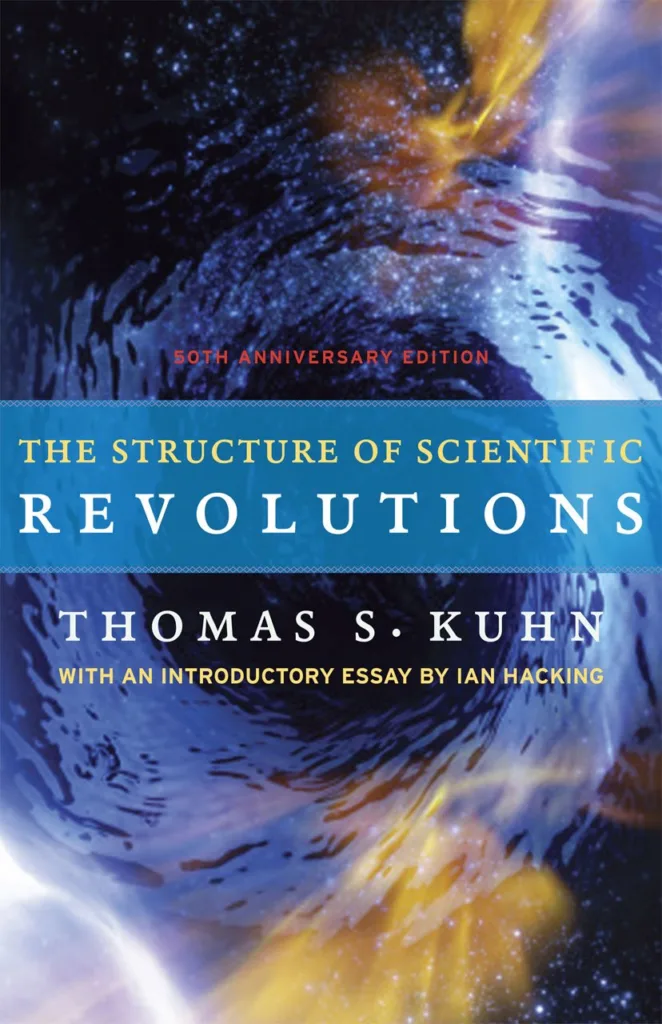
Two intellectual traditions give PAP its deepest analytical grounding. Thomas Kuhn’s The Structure of Scientific Revolutions (1962) showed that paradigms do not change through the gradual accumulation of evidence or rational persuasion. They resist anomalies. They reinterpret contradictory evidence to fit the existing framework. They change only through crisis — when anomalies accumulate to a tipping point and a gestalt switch becomes unavoidable. GCF applies this insight at civilisational rather than scientific scale: the growth paradigm is not going to be argued out of existence. It will be forced into crisis by the Base Layer conditions it can no longer deny. The question is not whether the paradigm shifts but whether enough people have prefigured the successor paradigm to navigate the shift rather than collapse under it.
The second tradition comes from cultural materialism — particularly Leslie White’s energy thesis that per capita energy consumption determines cultural complexity, and Marvin Harris’s Base-Structure-Superstructure architecture of cultural analysis. Harris arrived at a three-layer framework remarkably similar to PAP through anthropological rather than thermodynamic reasoning. GCF operationalises White through EROI metrics and extends Harris by adding the explicit navigation guidance that neither White nor Harris provided.
What PAP provides that no single tradition provides alone is the diagnostic of failure. Technology within the growth paradigm produces the Jevons Paradox: efficiency gains are consumed by expanded demand. Policy reform within the growth paradigm rearranges deck chairs — it adjusts parameters without changing the system’s fundamental operating logic. Personal lifestyle change reduces individual Base consumption without altering the structural compulsion that generates consumption at scale. Renewable energy within the growth paradigm delivers insufficient system EROI to maintain current civilisational complexity. Each of these is an intervention at the wrong layer — Structure tinkering or Base adjustment within an unchanged Superstructure. PAP makes this diagnostic precise: the reason reform fails is not insufficient political will or inadequate technology. It is that interventions calibrated to one layer cannot override the logic of a different layer. This is what GCF calls the Paradigm Trap — the structural condition introduced above — and PAP gives that trap its precise three-layer anatomy.
The navigational implication follows directly. Collapse proceeds bottom-up: Base degradation forces Structure failure, which eventually forces Superstructure crisis. Conscious transformation must proceed top-down. And at the apex of the Superstructure sits GCF’s deepest diagnostic concept: the distinction between two existential orientations that GCF calls BECOMING and BEING.
BECOMING is the civilisational operating system that treats reality as an infinite external frontier to be conquered — more is always better, limits are engineering problems, the present is always a means to a greater future, meaning comes from achievement and accumulation. GIC is BECOMING-optimised at every level. BEING is the orientation that treats reality as home: sufficiency within limits, meaning through relationship and community, depth rather than expansion. It is the orientation that is thermodynamically compatible with indefinite human civilisation.
Superstructure transformation must be BECOMING-to-BEING, not merely “green growth” or “sustainable development” — which maintain BECOMING orientation under ecological camouflage. Only that fundamental reorientation opens the possibility of conscious navigation rather than chaotic collapse.
PAP cannot tell you when the transformation will complete or what specific pathway it will follow. But it tells you the direction with high confidence — and in a predicament, direction is what matters most.
This is the first of six parts. Part Two — The Contested Ground — will be published shortly.
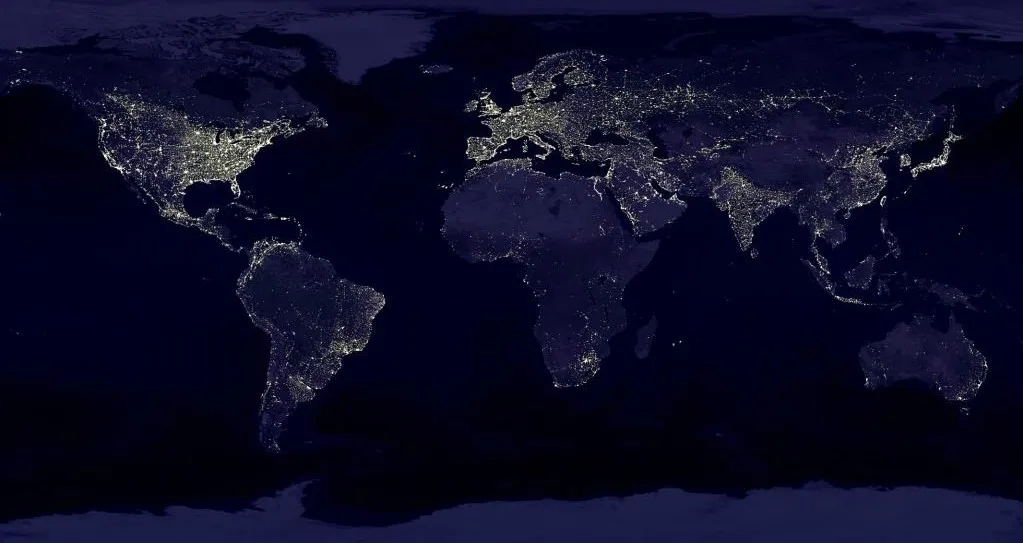
Featured Image: A nighttime satellite image of Earth. Courtesy: NASA Earth Observatory / Black Marble (Suomi NPP satellite).

Sudhir Shetty is the founder of Global Crisis Response, a Mumbai-based independent research organisation. Over six years of sustained work outside any institution and beholden to no funder’s agenda, he has developed the Global Crisis Framework — an integrated sensemaking and navigation system for the civilisational transformation that industrial society is now entering. This interview is Global Crisis Framework’s first extended public articulation in the Indian civil society space. He can be contacted at sudhir@globalcrisisresponse.org
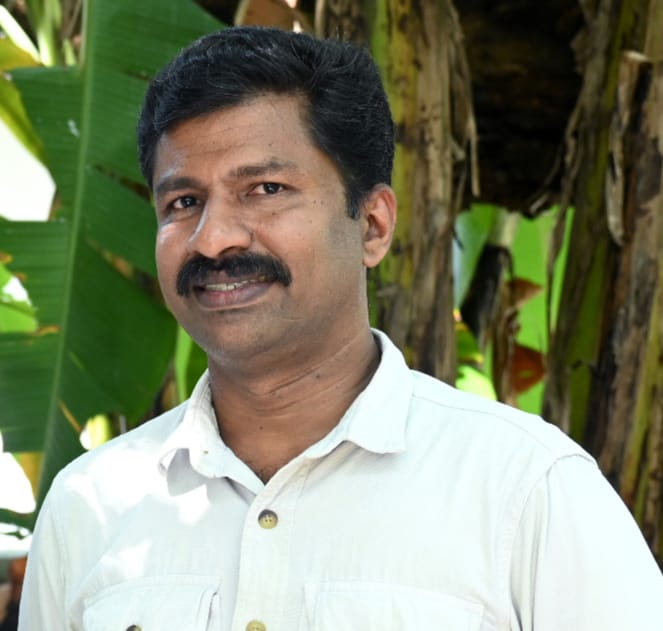
A.K Shiburaj began his journalism career in 2000 with the publication of Samvadam magazine from Kozhikode. He later worked as a teacher on the Maldives island and engaged in social work across North Indian states. He practiced organic farming for a time and served as the Assistant Editor of Keralayam Magazine (Web). He is now a freelance journalist and an advocate for civil society and social movements. He is a recipient of the Maja Koene Social Journalist Award in 2025.