
Beyond Certainty: Poverty, Justice, Faith — and What GCF Cannot Answer Adequately
In the previous five parts of this conversation, Sudhir Shetty has built an ambitious case — for the Global Crisis as a civilisational predicament rather than a collection of problems, for thermodynamic limits as the binding constraint on industrial civilisation, for the Third Force as the only actor capable of leading the transition, and for a BEING-oriented bioregional future as the only viable destination. In this sixth and final part, that case is submitted to its hardest tests. The questions that follow probe GCF’s most vulnerable claims: does it romanticise the poverty of marginalised communities, does it adequately engage the concerns of Dalit and Adivasi activists, is Kerala actually a model for Scenario III, how does GCF relate to spiritual traditions, and how confident can it actually be in its own probability estimates? This final part closes the series with the questions that any honest framework must be able to answer — including about its own limitations.
NAVIGATING CIVILISATIONAL COLLAPSE
A Conversation with Sudhir Shetty — Part Six
The communities you most admire — Adivasi communities, subsistence farmers, traditional fishers — are communities the system has most exploited. Isn’t GCF romanticising their poverty by suggesting their way of life is closer to the desirable future?
The concern is legitimate and deserves a direct answer.
GCF does not romanticise poverty. There is nothing desirable about Adivasi communities being excluded from healthcare, or subsistence farmers facing crop failure without any safety net, or coastal fishing villages losing their livelihoods to industrial trawlers. These are injustices produced by the same extractive system that GCF diagnoses — and they must be named as injustices, not reframed as lifestyle choices.
What GCF argues — distinct from romanticisation — is that the specific skills, knowledge systems, governance traditions, and ecological relationships that these communities have maintained are of extraordinary civilisational value in a world of declining energy and complexity. Not the poverty. Not the exclusion. The specific forms of community capacity maintained despite everything the mainstream development model has done to destroy them.
GCF’s vision of Scenario III is not that these communities remain as they are. It is that their ecological knowledge, governance traditions, and community relationships form the foundation on which genuinely improved and dignified lives can be built — lives that provide food security, healthcare, meaningful work, and community belonging without requiring the industrial supply chains that GIC calls development. The direction of movement GCF advocates is not “join Adivasi communities in their current condition of marginalisation.” It is: combine the ecological knowledge, governance traditions, and community relationships of communities closest to Scenario III with the medical knowledge, democratic governance theory, and scientific understanding that the industrial journey has also produced. Keep what the journey genuinely earned. Release the operating system that is destroying the conditions for its continuation.
The structural inversion at the heart of this question is what GCF takes most seriously. In GIC’s accounting — measured by GDP, formal employment, and consumption levels — these communities are the marginalised periphery. In GCF’s thermodynamic accounting — measured by food sovereignty, water security, ecological knowledge, community governance, and the practical skills that will matter during and after GIC’s simplification — these communities are among the most genuinely wealthy on the planet. GIC has spent two centuries telling these communities they are poor and marginal. The thermodynamic reckoning will reveal a different accounting — one in which their knowledge and practice places them in the driving seat of what comes next, not as victims of modernisation’s failure but as architects of its successor.
GCF does not ask marginalised communities to be grateful for their marginalisation. It asks that their knowledge be moved from the periphery to the centre — not as a romantic gesture but as a strategic necessity. And it insists that any transition pathway that does not place those communities in the driving seat of what comes next is neither thermodynamically viable nor ethically defensible.
Kerala is often held up as a development success story — high human development at relatively low per-capita income. Does GCF see Kerala as closer to Scenario III than other Indian states? And what would it take for Kerala to genuinely become a Scenario III society?
Kerala is genuinely interesting from a GCF perspective — and the honest assessment is more complicated than either its admirers or its critics suggest.
On the positive side, Kerala demonstrates something analytically important: that human well-being is not linearly dependent on energy throughput. Kerala’s literacy rates, healthcare access, and social development indices are among India’s highest at a per-capita income significantly below many other states. That partial decoupling of well-being from material consumption is a real and valuable data point. Kerala also carries institutional assets most Indian states lack: a cooperative tradition in agriculture, banking, and fisheries; a gram sabha culture with deeper democratic roots; the extraordinary biodiversity knowledge of Adivasi communities across Wayanad, Palakkad, and the Western Ghats; and the community water management traditions that once organised the region’s ecological relationships before centralisation dismantled them.
But the TERRA assessment is honest about Kerala’s limitations. Kerala’s well-being is significantly funded by labour export to Gulf states that are themselves fossil-energy dependent. Remove that remittance flow — which GCF’s thermodynamic analysis suggests is structurally vulnerable as Gulf economies face their own energy constraints — and the Kerala model faces immediate structural stress. Kerala’s food system is heavily import-dependent — it produces a fraction of what it consumes. Its coastline faces serious ecological stress — the 2018 floods, the 2024 Wayanad landslides — events whose causes lie at the intersection of climate change and development-driven deforestation, as the Gadgil Committee documented and as was explored in Part Two. And Kerala’s development narrative remains growth-oriented at its core.
In TERRA terms, Kerala sits in Quadrant II — and naming this honestly matters more than flattering a readership that includes many who admire Kerala’s achievements.
Quadrant II is the category of Sophisticated Impossibilities: societies that combine genuine social aspiration and progressive values with deep operational dependency on the very GIC infrastructure approaching systemic failure. Kerala fits this profile precisely. Its mainstream development narrative remains growth-oriented — Gulf employment as the aspiration, the credential economy as the measure of progress, infrastructure expansion as the mark of advancement. Its food system is heavily import-dependent. Its well-being is substantially funded by remittances from fossil-energy-dependent Gulf economies — a foundation that GCF’s thermodynamic analysis identifies as structurally vulnerable as those economies face their own energy constraints. The 2018 floods and 2024 Wayanad landslides are not anomalies — they are early expressions of what happens when a state with Kerala’s ecological sensitivity operates within GIC’s growth logic even while holding progressive social values.
This does not mean Kerala is equivalent to states with weaker social foundations. Kerala is a fairer, more democratic, more socially cohesive Quadrant II than most Indian states — and that matters enormously for how it would navigate simplification. Its cooperative traditions, gram sabha culture, literacy levels, healthcare systems, and civil society density give it significantly more capacity to absorb cascade stress than states with weaker social fabric. It is a better-positioned Quadrant II. But Quadrant II it remains, as long as its operational economy depends on the continuation of the GIC infrastructure it has not yet moved to replace.
What would the transition require? Three things. First, genuine food sovereignty — a deliberate investment in restoring the agroecological production systems that Kerala’s plantation economy and Green Revolution systematically replaced. The traditional paddy-jackfruit-coconut-homestead polyculture of Kerala’s midlands is not nostalgia. It is a sophisticated, highly productive, low-external-input food system that was producing genuine nutritional security before export monocultures replaced it. Second, community-governed water systems — restoring the watershed management, tank systems, and sacred grove traditions that once organised Kerala’s water relationships. Third, honest acknowledgement that the Gulf remittance model is not a permanent foundation — building alternative economic relationships that are bioregionally grounded and do not depend on the continuation of fossil-energy-funded Gulf construction.
Kerala has the cultural foundations, the institutional history, and the civil society ecosystem — of which Panthi is a part — to begin the transition from Quadrant II toward Quadrant III and eventually Quadrant IV faster than almost any other Indian state. The cooperative traditions are there. The gram sabha architecture is there. The Adivasi ecological knowledge is there. The civil society capacity is there. What is missing is the thermodynamic grounding and the honest acknowledgement that the Gulf remittance model cannot be the permanent foundation. Whether that reckoning happens through conscious preparation or through the stress of cascade is the political and cultural question that this readership is in a position to influence.
Your framework is grounded in systems science and thermodynamic analysis — a secular, empirical foundation. But the BEING orientation you advocate resonates deeply with many religious and spiritual traditions. How does GCF relate to faith and spiritual practice?
GCF is founded on empirical and scientific grounds — that is its epistemological base. But it would be a serious analytical failure not to notice the convergence between what the thermodynamic analysis points toward and what the deepest contemplative traditions of virtually every culture have always known.
The BEING orientation — sufficiency over accumulation, community over individual achievement, relationship with the living world over conquest of it — is the experiential heart of virtually every spiritual tradition. Buddhist right livelihood. Islamic khalifa. Christian monastic enough. Hindu santosha. Indigenous relationships of sacred stewardship with land. Gandhi arrived at the same civilisational diagnosis as modern thermodynamics in 1909 through Hind Swaraj — through contemplative and moral reasoning, not calculation. The convergence is not coincidental. Both paths are pointing at the same underlying reality.
But GCF’s relationship to religious and spiritual traditions is not one of simple endorsement — and honesty requires naming both directions in which religion can move.
Religious and spiritual traditions have historically been among the most powerful forces for both liberation and oppression. The same institutional structures that carry contemplative wisdom and community solidarity have also enforced caste hierarchy, enabled communal violence, justified the subjugation of women, and reinforced the dehumanising traditions that GCF’s BEING orientation must challenge, not replicate. In the current Indian context — where religious identity is being actively weaponised for political polarisation, where communal tension fractures exactly the social cohesion that Scenario III requires, and where certain institutional religious formations are accelerating Scenario II consolidation rather than resisting it — treating all religious tradition as a potential Scenario III asset would be naive and dangerous.
The honest GCF position is more precise: whether religious and spiritual traditions aggravate or catalyse the navigation depends on whether they develop what might be called predicament literacy — the capacity to understand the Global Crisis as a civilisational predicament and reorient their deepest resources toward navigation rather than reinforcing the BECOMING logic of their current institutional form.
When that reorientation happens — when a spiritual leader can name the thermodynamic predicament and connect it to their tradition’s deepest teachings on sufficiency, impermanence, and communal responsibility — the result is among the most powerful possible combination. The contemplative traditions that have always practised BEING orientation carry irreplaceable wisdom about what that orientation feels like from the inside, how it is sustained across generations, and how it holds communities together under conditions of grief and uncertainty. The decentralised infrastructure of religious institutions — temples, mosques, churches, gurudwaras, ashrams, sanghas — represents community gathering, mutual aid, and value transmission capacity that no government programme has replicated at comparable scale. Cultural institutions — festival, pilgrimage, storytelling, music — are the primary mechanism through which BEING can be made aspirational and beautiful rather than merely morally obligatory.
When that reorientation does not happen — when religious institutions remain captured by BECOMING logic, political power, or the hierarchical traditions that Scenario III must dismantle — they become obstacles rather than assets.
GCF’s practical conclusion: seek the predicament-aware voices within every tradition. Support the spiritual leaders who can connect their tradition’s deepest resources to the navigation challenge. And be clear-eyed about the institutional religious formations that are moving in the opposite direction. The interior transformation that Scenario III requires cannot be imposed from outside any tradition — but it can be catalysed by the people within traditions who are already living it.
You assign approximate probabilities to your three scenarios — Scenario I at 60-70%, Scenario II at 20-30%, and Scenario III at 5-10% baseline. These numbers seem remarkably precise for claims about civilisational futures. How did you arrive at them, and how confident are you in them?
The numbers deserve honest scrutiny — and the honest answer is that they are calibrated estimates rather than computed figures. They should be read as expressing an order of magnitude and directional relationship rather than precise calculations.
Scenario I — the default trajectory of GIC continuation and eventual chaotic simplification without adequate community alternatives — is assigned the highest probability because it requires nothing. No coordination. No decision. No departure from the existing trajectory. It is what happens if humanity collectively does what it is currently doing. The 60-70% figure expresses the assessment that inertia, the Paradigm Trap, and the structural impossibility of institutional self-transformation make this the most likely default outcome.
Scenario II — elite capture of remaining viable infrastructure — is assigned 20-30% because it is being actively and deliberately constructed right now by actors with significant resources, sophisticated understanding of what is coming, and strong motivation to ensure their own survival within it. The TESCREAL cluster, AI acceleration, sovereign wealth fund acquisition of agricultural land and water rights — these are documented present-tense processes. The 20-30% figure expresses the assessment that deliberate construction by well-resourced actors makes Scenario II significantly more likely than it would be if it were merely a possible outcome rather than an actively pursued one.
Scenario III is assigned 5-10% baseline because it requires the most — the most preparation, the most paradigm transcendence, the most departure from everything that GIC’s institutional architecture currently rewards. It is the hardest path precisely because it cannot happen by default.
But here is the most important claim in the entire probability architecture, and the one most easily missed: GCF assigns Scenario III a rising probability — to 30-45% — with adequate mobilisation during the preparation window. That gap between 5-10% and 30-45% is the entire strategic point. Scenario III is the only trajectory whose probability is uniquely sensitive to deliberate action. Scenario I proceeds automatically. Scenario II is actively funded. Scenario III only becomes more likely through the specific work of building community capacity, shifting cultural discourse, and positioning the Third Force for the windows that cascade events will open. Every community that builds genuine food sovereignty shifts the probability. Every framework that helps people see the predicament clearly shifts it. Every journalist who asks the questions this interview is asking shifts it.
How confident am I in these specific ranges? The directional relationships — Scenario I most likely, Scenario II more likely than most people assume, Scenario III possible but demanding — these I hold with high confidence. The specific percentage ranges I hold with moderate confidence — they could shift significantly based on cascade event timing, the pace of AI development, and the degree to which Third Force preparation actually accelerates. What I hold with high confidence is the structural claim: Scenario III’s probability is uniquely sensitive to deliberate action in a way that Scenario I and Scenario II are not.
The numbers are a tool for communicating relative probability and strategic significance in a way that motivates rational action. If they cause someone to invest in Scenario III preparation who would otherwise have assumed the outcome is either inevitable or hopeless, they have done their work.
What would you say to a young Dalit or Adivasi activist who responds to GCF by saying: your framework asks us to embrace what was forced on us, while the people who caused the crisis continue to live at industrial complexity. Why should we build lifeboats for a ship we were never allowed to board properly in the first place?
This is the question GCF takes most seriously in the entire series — and none of its justice claim deserves minimising.
The anger is legitimate. Entirely. The communities that GCF most admires are communities that the mainstream development project has systematically dispossessed, impoverished, and failed. And the specific injustice the question names is real: the communities least responsible for creating the ecological crisis are being asked to hold the knowledge and embody the practices that the transition requires, while those most responsible continue to benefit from the crisis. That is not a misreading of GCF’s analysis. It is what the thermodynamic and justice analyses together actually reveal.
The anger deserves redirecting, not arguing away.
The question contains an assumption worth examining: that building lifeboats primarily serves those who were comfortably aboard the ship. It does not. The communities that build genuine food sovereignty, water security, community governance, and ecological resilience during the preparation window are not building these things as a service to the global elite who created the crisis. They are building them for themselves — for their own survival, their own dignity, their own capacity to navigate what is coming on terms they have chosen rather than terms that have been imposed on them.
The structural reality that the thermodynamic analysis makes visible: the Adivasi community that has secured its forest rights, built genuine food sovereignty, maintained its ecological knowledge, and strengthened its community governance is more resilient against the cascade conditions of the coming decades than any urban middle-class community with financial assets and no practical skills. GIC’s virtual wealth metrics call these communities poor. The thermodynamic reckoning will reveal a different accounting — one in which their knowledge and practice places them in the driving seat of what comes next, not as victims of modernisation’s failure but as architects of its successor.
GCF does not ask these communities to abandon the justice struggle in order to build. The resistance to Scenario II — the active, deliberate capture of remaining viable infrastructure by those who currently hold power — is exactly the struggle that Part Four named as essential. What GCF adds to the justice tradition is the construction imperative: resist what destroys, build what sustains, simultaneously. You cannot defeat Scenario II by fighting it alone. You defeat it by making it irrelevant — by building communities so genuinely self-governing, so ecologically grounded, so socially coherent, that the elite capture logic has nothing left to capture and no one left to abandon.
The fruit trees our ancestors planted were planted under conditions of dispossession, colonial violence, and systematic exclusion. They planted anyway — because the act of planting was the responsibility to those who would come after, regardless of whether the planters would taste the fruit or whether the system surrounding them acknowledged the value of what was being built. That is the orientation GCF invites. Not gratitude for what was forced on us. Not the abandonment of justice for a future that may not arrive in our lifetime. The commitment to being among those who made the possibility of that future more real — by building, by resisting, by carrying forward what is worth carrying, despite everything.
We have now reached the end of this six-part conversation. For a reader who has followed the full journey — from the Global Crisis diagnosis through thermodynamic evidence, contested political terrain, community strategy, hope and agency, and now GCF’s own limitations — what are the three or four most important things you want them to carry away? And what would you ask of them?
The first and most foundational: the distinction between a problem and a predicament. A problem has a solution within the existing framework. A predicament requires navigation — honest acknowledgement of where things are heading, combined with committed work to build what can survive and carry forward what is worth carrying. GIC’s ecological and thermodynamic trajectory is a predicament, not a problem. Every intervention that treats it as a problem — however well-resourced, however technically sophisticated — directs collective energy away from navigation and toward solutions that the physical constraints make impossible. This single distinction, properly internalised, changes everything about how one reads the news, evaluates initiatives, and decides where to invest time and energy.
The second is the TERRA heuristic — not as a technical scoring system but as three questions applicable to any claim, any initiative, any policy proposal encountered in daily life: does this treat the crisis as a predicament requiring civilisational navigation, or as a problem to be solved within the existing system? Does it require more industrial complexity to deliver its benefits, or less? Who governs it, and who benefits when conditions get harder? Three questions. Five minutes. The ability to distinguish genuine navigation from sophisticated dead end is among the most valuable capabilities available in the current moment — and it requires no expert knowledge, only the willingness to ask.
The third is the inversion. In GIC’s accounting, the communities that hold the most valuable knowledge and capacities for what is coming — Adivasi communities, subsistence farmers, traditional fishers, seed savers, watershed managers — are measured as the poor and the peripheral. In the thermodynamic accounting that the coming decades will enforce, they are among the most genuinely wealthy people on the planet. GCF asks readers to begin practising this inversion now — not as a political gesture but as an accurate perception of what will matter. These are not communities who need to learn from us. They are communities we need to learn from, support, and refuse to allow to be displaced.
The fourth is the preparation window. 2025-2035 is GCF’s estimated decade within which the institutional capacity and energy surplus still exist to build the lifeboats while the ship still has functioning workshops. This is not a countdown to catastrophe. It is an invitation to the most meaningful work available — building the communities, the frameworks, the relationships, and the knowledge systems that will allow whatever comes next to be something worth inhabiting. The window is open. It will not remain open indefinitely.
What GCF asks of readers is not agreement and not conversion. It asks for the willingness to take the predicament seriously — to let that understanding motivate construction rather than paralysis. Build something. Learn something that will matter when supply chains are unreliable. Strengthen a community relationship. Support an initiative genuinely outside GIC’s logic. Ask the TERRA questions before the next donation or investment. The aggregate of those individual choices, made by enough people in enough places, is what shifts Scenario III’s probability from 5-10% toward 30-45%. That is not a small thing. That is the work.
After six parts of conversation, what do you think are GCF’s most significant weaknesses, blind spots, or areas of genuine uncertainty that you are still working to address?
This is the question I am most grateful to be asked — because no framework that cannot identify its own limitations deserves to be trusted.
The most significant is the absence of empirical validation. GCF is a synthesis framework built on fifty years of other people’s rigorous research. Its own distinctive contributions — IvLS, TERRA, the BFC institutional design, the Enabling Ecosystem Assessment — have not yet been tested in the field. There are no functioning BFCs. There are no communities that have adopted IvLS as a deliberate framework and been followed longitudinally. The framework’s operational claims are architecturally sound, intellectually consistent, and grounded in the best available evidence — but they remain untested in the specific form GCF proposes. That gap between analytical confidence and empirical validation is real and must be named honestly.
The second is the India-centricity of GCF’s positive civilisational lineage. The Gandhi-Kumarappa-Dharampal-Mukerjee lineage is genuinely rich and provides GCF with something that most Western collapse frameworks lack — a positive civilisational alternative grounded in demonstrated historical practice. But it is an Indian lineage, and GCF claims to be a universally applicable framework. The translation work — how the IvLS architecture applies in the specific conditions of sub-Saharan Africa, Southeast Asia, Latin America, or Europe — is genuinely incomplete. GCF acknowledges this gap and considers it among its most important research priorities.
The third is the treatment of population dynamics. GCF projects a stable bioregional population of 2-4 billion people as compatible with Scenario III’s thermodynamic requirements. This is a number derived from carrying capacity analysis under renewable energy conditions. GCF says very little about how that transition happens — through voluntary demographic change, through the casualties of cascade, through other mechanisms. This silence is partly deliberate (population discourse carries enormous risks of misuse) and partly a genuine analytical gap. It is territory that needs more rigorous treatment than GCF has yet provided.
The fourth is the BEING/BECOMING distinction itself. GCF uses this distinction as its deepest analytical driver — the civilisational operating system that determines whether transformation is genuine or superficial. But consciousness transformation is harder to measure, verify, and facilitate than physical preparation. GCF is clearer on what BEING-oriented community life looks like materially than on the inner journey that gets people there. The contemplative traditions that carry this knowledge are acknowledged as critical partners — but the specific integration of inner transformation work with IvLS community building is underdeveloped in the framework as it currently stands.
The fifth is uncertainty about timing. GCF’s 2025-2035 preparation window is derived from thermodynamic analysis and cascade modelling — it is a moderate-confidence estimate, not a precise prediction. If the window is longer than GCF estimates, the urgency of the framework may generate unnecessary alarm. If it is shorter, the preparation it calls for may already be too late in some contexts. GCF navigates this uncertainty through the asymmetric preparation logic — preparation is the dominant strategy regardless of precise timing — but the uncertainty itself should be named, not buried.
GCF is a first-generation attempt at something that has not been attempted before: a comprehensive sensemaking and navigation framework for civilisational transition, built outside institutions, grounded in thermodynamics, and oriented toward practical community action. First-generation attempts are always incomplete. The honest measure of GCF’s integrity is not whether it is complete — it is not — but whether it is honest about where it is incomplete and committed to the sustained intellectual work of addressing those gaps. That work is ongoing. It will not be finished in any document or any interview.
After six parts and more than forty questions, this conversation reaches its natural end — though the civilisational conversation it is part of is nowhere near its end. GCF is one contribution to that larger conversation: a sensemaking and navigation framework for a transformation that no individual, organisation, or framework fully understands or controls. What this series has attempted is not to provide answers but to provide a more honest and more rigorous set of questions — questions adequate to the actual scale and depth of the predicament humanity now inhabits.
The fruit trees have been planted. The harvest belongs to those who come after.
About Global Crisis Response
Global Crisis Response (GCR) is a Mumbai-based independent research initiative founded & funded by Sudhir Shetty, operating under the legal entity (Section-8 company registered in 2021) Orb-Tranz Research & Broadcasting Foundation. GCR develops the Global Crisis Framework — an integrated sensemaking and navigation system for the civilisational transformation that industrial society is now entering.
The GCR website (www.globalcrisisresponse.org) is currently under development. For all queries, collaboration proposals, or to access GCF publications, please write directly to Sudhir Shetty at sudhir@globalcrisisresponse.org
Featured Image: A view of the Western Ghats from Kodaikanal.Courtesy-romads.in
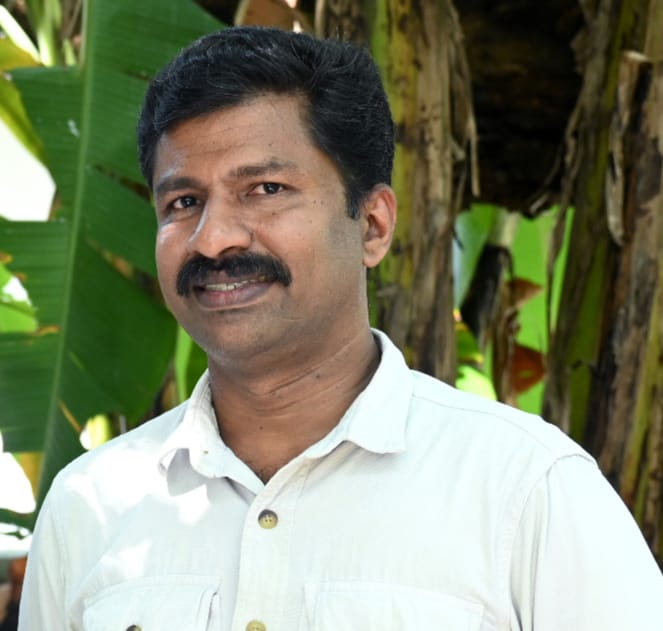
A.K Shiburaj began his journalism career in 2000 with the publication of Samvadam magazine from Kozhikode. He later worked as a teacher on the Maldives island and engaged in social work across North Indian states. He practiced organic farming for a time and served as the Assistant Editor of Keralayam Magazine (Web). He is now a freelance journalist and an advocate for civil society and social movements. He is a recipient of the Maja Koene Social Journalist Award in 2025.