
Kerala’s Dual Identity: Unraveling the Paradox of Humanitarianism and Mafia Culture
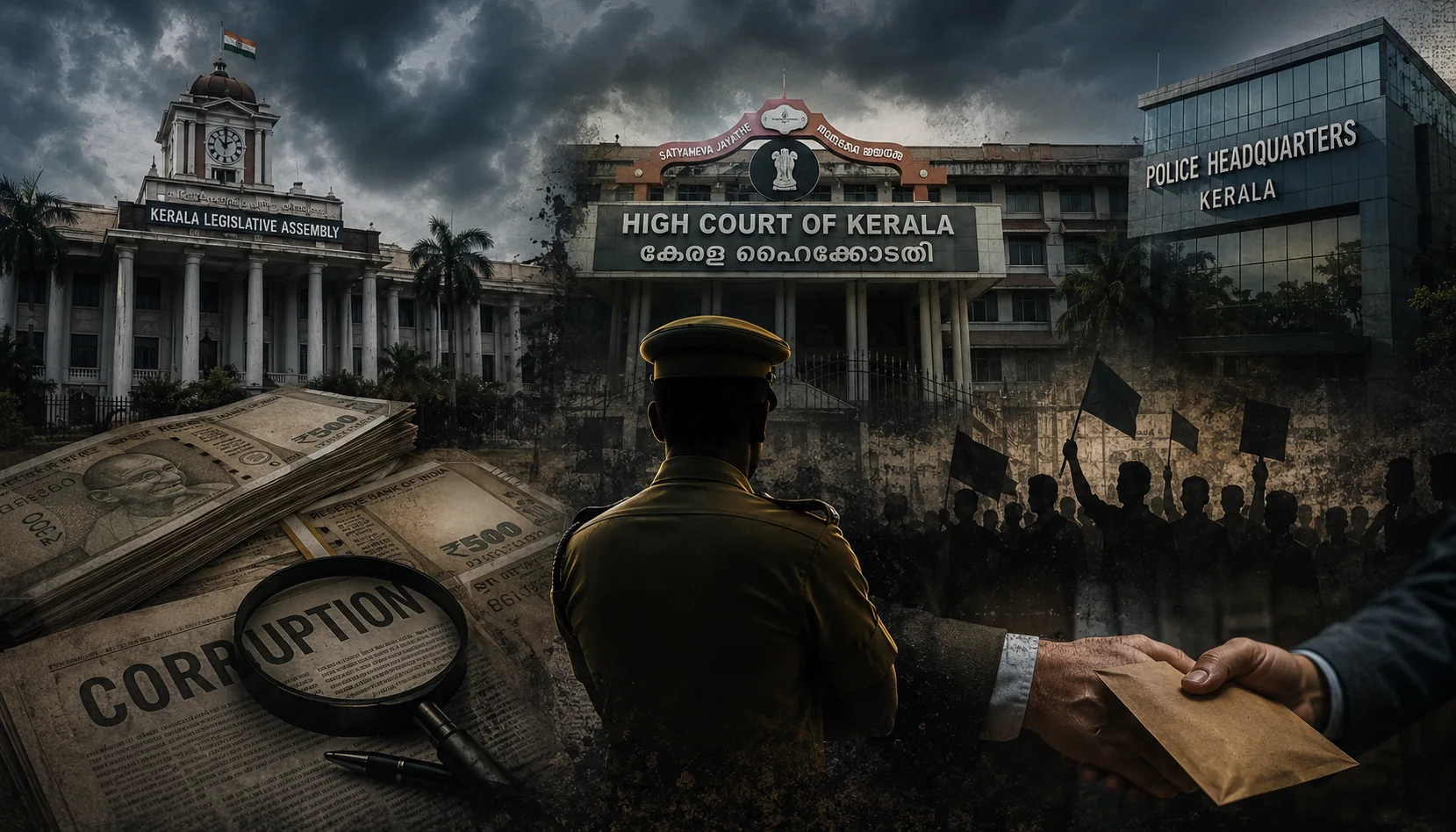
Kerala is celebrated for its high human development, social justice and collective resilience. Yet beneath this progressive image lies a troubling pattern of alleged institutional corruption, political patronage and intimidation. Through interviews with victims, whistle-blowers and leading scholars, this investigation examines how a growing “mafia culture” is affecting governance, public institutions and everyday life in Kerala.
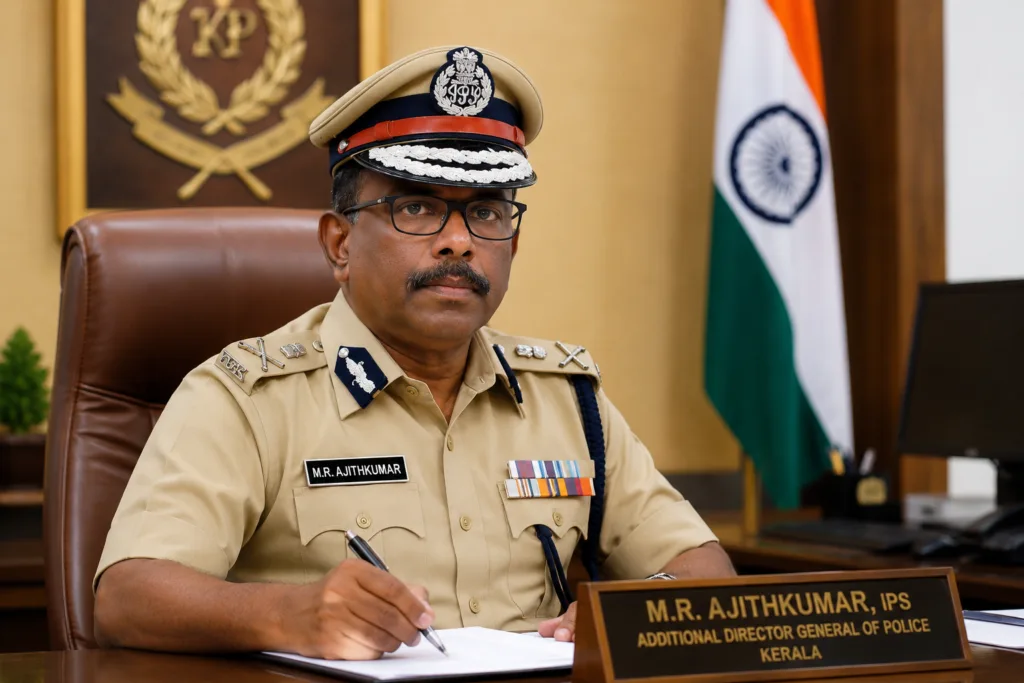
A deep-seated rot has taken hold of Kerala, brazenly subverting the state’s democratic norms and renaissance values. Allegations against top bureaucrats and police officers, including former LDF legislator P.V. Anvar’s explosive claim of a police nexus led by then ADGP (Law and Order) M.R. Ajith Kumar, point to a disturbing trend. In a latest incident, the State government on July 23 suspended Mr Ajith Kumar over allegations that he interfered in the investigation into the assault on Youth Congress workers by former Chief Minister Pinarayi Vijayan’s security detail in Alappuzha in 2023 giving credence to the allegations against the top cop. Then ADGP Law and Order while being suspended was Bevco MD. Similar allegations have surfaced in the Malayalam film industry, where an alleged power group is said to wield enormous influence. The moral policing controversy involving a woman journalist and a journalists’ union leader in Thiruvananthapuram, along with growing factionalism within religious organisations, reflects how this culture has spread across public life.
From politics, the legal profession, police, media and government services to social and family relationships, money and influence increasingly appear to dictate outcomes. Has this culture spread from one institution to another, or has it become contagious? Why has such a corrosive phenomenon become so pervasive in a state celebrated for its social development and high human development indicators?
Kerala also presents a striking paradox. The state’s extraordinary solidarity during the 2018 floods and the COVID-19 pandemic showcased its remarkable capacity for compassion and collective action. Yet this humanitarian spirit coexists with allegations of organised corruption, intimidation and abuse of power. Understanding this contradiction requires examining the intersection of socioeconomic conditions, cultural narratives and institutional failures that have shaped Kerala’s evolving public life.
As part of this investigation, we interacted with experts, whistle-blowers, victims and their relatives to understand how networks of influence create cultures of bullying, one-upmanship and institutional decay, making life increasingly difficult for honest individuals. Among the cases examined, the Malabar Cements corruption scandal stands out as one of the most revealing.
I spoke to Dr. V.Sanalkumar, younger brother of Saseendran, the former Company Secretary of Malabar Cements, whose death along with those of his two young children sent shockwaves across Kerala.
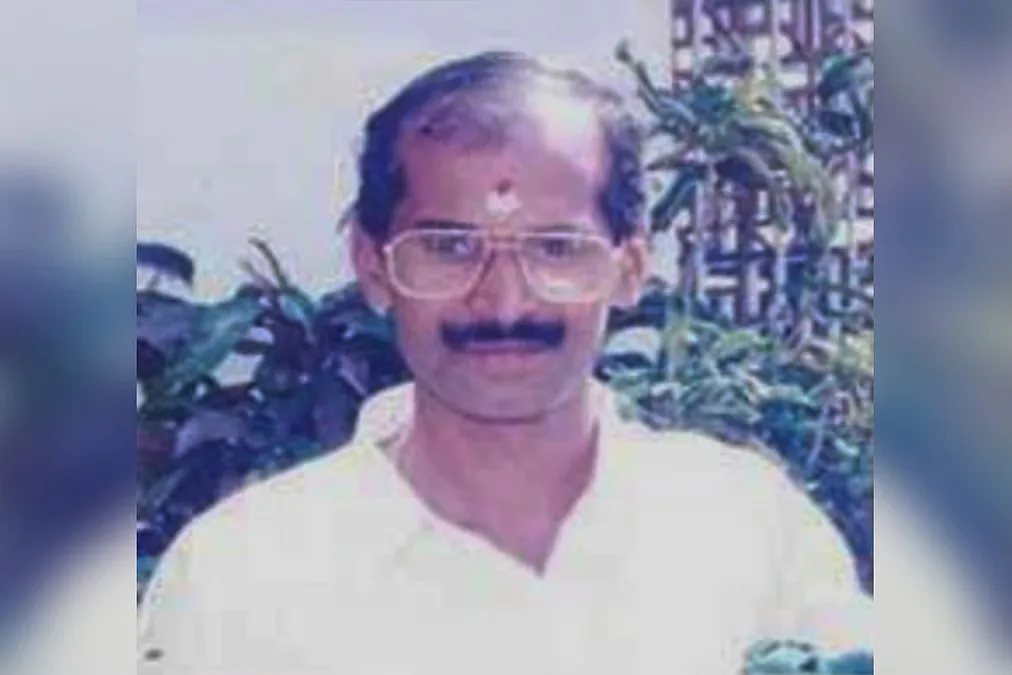
According to Dr. V.Sanalkumar, the Malabar Cements case exemplifies the unholy nexus between businessmen, bureaucrats and politicians that has undermined public institutions in Kerala.
“The Malabar Cements corruption case and the tragic deaths of Saseendran and his children are a prime example of how this nexus operates. Saseendran, a key witness in the corruption case, had resisted illegal tendering and other corrupt practices within the company. He and his two children were later found dead under mysterious circumstances,” he said.
Dr. Kumar said the CBI investigation uncovered an extensive network involving senior officials, politicians and businessmen. Former Managing Directors Sundaramoorthy and Isaac Varghese, among others, were allegedly involved in irregular tendering and bribery. He further alleged that CPM leader Elamaram Kareem and several officials, including John Mathai, N.R. Subrahmanyan and V.M. Radhakrishnan, figured in various stages of the investigation.
He cited statements recorded by the CBI from former Managing Directors Sundaramoorthy and Isaac Varghese, alleging that Saseendran was illegally removed from his post as Company Secretary under the influence of V.M. Radhakrishnan and others. According to these statements, meetings involving CPM leaders were allegedly held to protect Radhakrishnan’s interests and thwart Saseendran’s efforts to expose corruption.
Dr. Kumar also referred to Vigilance reports submitted before the Thrissur Vigilance Court in 2010 and 2011, which allegedly stated that businessman V.M. Radhakrishnan had influenced then Industries Minister Elamaram Kareem in matters relating to Malabar Cements. He further pointed to reports that documents and official seals belonging to Malabar Cements were recovered from Radhakrishnan’s properties in Palakkad and Coimbatore.
According to Dr. Kumar, although the Vigilance probe ordered during the tenure of Chief Minister V.S. Achuthanandan exposed serious irregularities, the investigation was subsequently delayed and weakened. He argues that the prolonged delay in bringing the accused to trial illustrates how political influence and institutional collusion have frustrated attempts to secure justice.
I also spoke to Thrissur-based political and social activist Joy Kaitharath, who has pursued the case relentlessly through legal proceedings, public campaigns and media interventions.
Joy has spent more than a decade seeking justice for Saseendran and his two sons, Vivek (10) and Vyas (8). Thirteen years after their deaths, he says, neither the corruption cases nor the criminal trial has effectively progressed.
Saseendran, then Company Secretary of Malabar Cements, was a crucial witness in the corruption investigation triggered by findings of the Comptroller and Auditor General (CAG). He and his children were found dead inside their home in Kuridikadu, Palakkad, in January 2011. Joy maintains that they were murdered because of Saseendran’s role in exposing corruption.
According to Joy, crucial evidence was deliberately destroyed soon after the incident. He recalled that then Chief Minister V.S. Achuthanandan personally contacted him expressing suspicion over the deaths, prompting him to travel to Kuridikadu and help form an action council demanding an impartial investigation.
Joy said that during the early stages of the inquiry, the local DySP, Pushparajan, privately told him that he was under immense pressure, sought a transfer, and believed Saseendran and his children had been murdered. He also alleged that the crime scene had been compromised, with unrestricted public access destroying vital forensic evidence, including fingerprints.
After Joy informed the Chief Minister of these developments, the investigating officer was replaced. However, fearing continued political interference, Saseendran’s family approached the Kerala High Court seeking a CBI investigation.
Although the CBI eventually filed a charge sheet, Joy says the destruction of evidence prevented investigators from pursuing murder charges, resulting instead in charges of abetment to suicide. He also claimed that several witnesses connected with the case died under mysterious circumstances, further fuelling suspicions surrounding one of Kerala’s most controversial corruption cases.
A series of mysterious deaths followed Saseendran’s demise. Another witness in the case, Satheendra Kumar, died after being run over by a private bus at Ukkadam bus stand in Coimbatore. The bus driver was later found dead as police intensified the investigation. Saseendran’s wife, Teena, also died under mysterious circumstances in 2018.
The deaths of witnesses, the killing of Saseendran and his two children, and the alleged nexus involving politicians, bureaucrats and businessmen surrounding Malabar Cements together represent what many consider one of the gravest miscarriages of justice in Kerala’s history.
Joy Kaitharath alleged that senior CPI(M) leader Elamaram Kareem, whom he described as a close associate of V.M. Radhakrishnan, influenced the police investigation. He further alleged that political interference delayed the trial for more than thirteen years and argued that stronger intervention by the Home Minister could have altered the course of the investigation.
Another striking example of institutional sidelining emerges from Kerala’s higher education sector.
The story of Dr. Deepa P. Mohanan, a Dalit scholar from Kannur, illustrates the hardships faced by students challenging entrenched power structures within academic institutions. She joined the School of Nanoscience at Mahatma Gandhi University in 2011 for her M.Phil. and completed her Ph.D. only after a thirteen-year struggle marked, she alleges, by discrimination, humiliation and institutional hostility.
According to Dr. Deepa, she and two other Dalit students faced discrimination from the outset. Trouble began when she sought approval for her M.Phil. project.
“Dr. Nandakumar Kalarickal was initially unwilling to supervise my project. I later completed it under another professor after Dr. Sabu Thomas intervened. But during the viva, Dr. Nandakumar rejected the work, saying he had not approved it. That marked the beginning of my fight for justice and dignity.”
Deepa alleges that caste prejudice lay at the heart of her ordeal.
“At one point he openly said the University’s academic standards could not be compromised for Scheduled Caste students.”
She further alleged that her project report was once thrown away, that she was locked inside the nanoscience laboratory, prevented from conducting experiments, and repeatedly isolated. Despite submitting numerous petitions and approaching student organisations, she says she received little support because of the professor’s political influence.
Rather than abandon her research, Deepa pursued legal remedies. She obtained favourable orders from the Kerala High Court on two occasions as well as from the Scheduled Caste Commission. However, she alleges these directives were not effectively implemented.
In October 2021, she launched an indefinite hunger strike demanding the removal of Dr. Nandakumar as Director of the School of Nanoscience. The protest ended on the eleventh day after her principal demand was accepted.
Deepa believes several research scholars abandoned their studies after facing similar treatment. She also recalled an incident in 2014 when Dr. Nandakumar allegedly interrupted her seminar presentation, accusing her of plagiarism before fellow researchers.
“I walked out of the seminar hall in tears. Some senior students boycotted the seminar in protest.”
Throughout the prolonged struggle, she says her parents, younger sister and daughter stood firmly by her. Completing her doctorate, she believes, became not merely an academic achievement but a victory for dignity and perseverance, offering hope to others confronting institutional discrimination.
I also spoke to P.E. Usha, a former non-teaching employee of the University of Calicut, who described what she characterised as a culture of intimidation after she became active in an independent trade union and women’s rights initiatives.
According to Usha, conflict with a CPI(M)-affiliated trade union leader intensified after an incident of sexual misconduct on a public bus.
“False stories were circulated claiming that I had supported a man who masturbated in front of me on a bus and protested only after others noticed. The real reason was my independent women’s activism, which frequently clashed with the union leadership.”
She alleges that when she approached the University Registrar with a complaint, she was warned against pursuing it. She also faced difficulties with her passport application, received threats against herself and her daughter, and endured sustained harassment until she was transferred.
Usha argues that her experience reflects a wider institutional culture where intimidation, retaliation and political patronage discourage victims from speaking out. She believes stronger accountability, transparent grievance mechanisms and effective whistleblower protection are essential if universities are to provide safe and equitable workplaces.
Another case that reflects institutional harassment is that of Aneeshya S., Assistant Public Prosecutor at Paravoor in Kollam, whose death shocked Kerala’s legal fraternity.
Her brother, S. Anoop, says that despite leaving behind a diary and voice messages naming those she held responsible for workplace harassment, justice remains elusive.
“It has been two and half years since my sister Aneeshya’s tragic death, yet the pain feels as fresh as if it happened yesterday. Despite the diary and voice messages naming those responsible, the system has failed to deliver justice. To our shock, the accused have returned to duty as though nothing happened.”
According to Anoop, Aneeshya was a conscientious Assistant Public Prosecutor who faced sustained harassment from colleagues and superiors.
“My sister’s story is not just about one woman’s tragic end. It reflects the deep-rooted problems within our institutions, where those who stand for integrity are often left without protection.”
Criminologist Dr. Febin Baby, Professor of Criminology, links the phenomenon to changing social values and rising pressures on younger generations.
“When society sets unattainable standards of success, frustration often pushes people towards deviant means of achieving their goals. Online platforms further reinforce this by glorifying gangsters and criminal figures as role models.”
He argues that social media has blurred the distinction between right and wrong by normalising violent and criminal behaviour, while decades of exposure to violent entertainment and intense competition have weakened moral judgement among young people.
According to Dr. Baby, addressing the problem requires promoting positive role models, strengthening value-based education and encouraging critical thinking rather than merely relying on punitive measures.
Professor Parameswaran M., economist at the Centre for Development Studies (CDS), traces the roots of Kerala’s changing social values to the widening economic inequality that emerged after the large-scale Gulf migration of the 1990s.
“While discussing this issue we cannot ignore the increasing economic inequality in Kerala. Greater economic inequality not only contributes to increasing social inequality, but also erodes societal values.”
He argues that Gulf migration created visible disparities in wealth, with many return migrants investing in houses and land rather than productive enterprises.
“Only a small section invested in industries or businesses that generated employment. Much of the Gulf wealth went into consumption and real estate, leaving a large section of society outside the new economy.”
According to Prof. Parameswaran, this growing inequality fuelled frustration among those unable to achieve similar prosperity, encouraging some to pursue wealth through unethical means. He suggests Kerala’s widening economic divide has become one of the structural forces contributing to the erosion of public values.
Professor Nissim Mannathukkaren, of Dalhousie University, argues that Kerala’s changing political economy has encouraged what scholars describe as “casino capitalism.”
“The increased networks of transnational capital, Kerala’s connections with the Gulf, and the transition towards speculative economies based on real estate and financialisation have all played a role.”
He also believes the ideological transformation of the Left has contributed to the problem.
“The CPM has become corporatised, with multiple business interests. Violence once deployed against feudal exploitation is now often used to advance the interests of the party, which are not necessarily the interests of the working classes.”
Referring to economist K.T. Rammohan’s concept of “lumpen accumulation,” Mannathukkaren argues that neoliberal reforms since 1991 integrated Kerala more deeply into the global economy, encouraging consumerism, speculative investment and luxury consumption alongside economic growth. He cites the murder of T.P. Chandrasekharan as an example of violence serving partisan rather than emancipatory political ends.
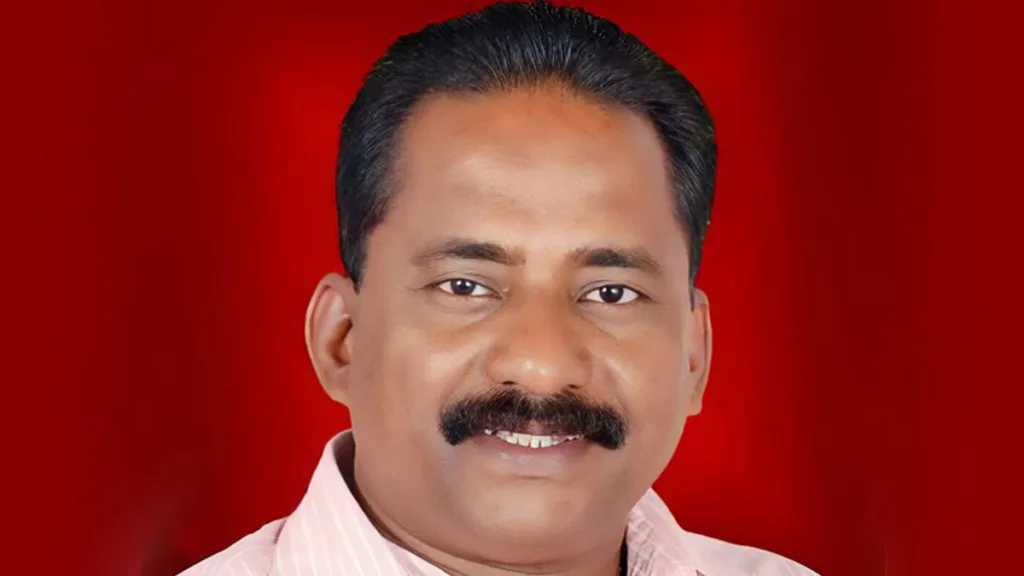
According to Dr TT Sreekumar, Professor of Media and Communication, it is more than obvious that Kerala is undergoing a profound political transformation. Once governed by the bipolar coalition system of the United Democratic Front (UDF) and Left Democratic Front (LDF), where voter loyalty was largely predictable, the rise of the Bharatiya Janata Party (BJP) has upset this balance. “The BJP’s growing vote share, which I anticipated years ago, has now become a pivotal factor in elections from local panchayats to the state assembly and parliament. This growth, especially evident since 1989, has disrupted the traditional alliances, making it clear that both UDF and LDF are struggling to address the BJP’s advance”, Prof Sreekumar maintained.
‘”The political coalitions seem lost in a game of mutual accusations, alleging each other of secret deals with the BJP, but these allegations have done little to prevent the rise of Hindutva forces. From top bureaucrats to ordinary constables, violence and corruption has entrenched itself deeply within Kerala’s public institutions.” He added
Kerala is facing an ethical collapse
Dr Sreekumar says that Kerala is facing an ethical collapse, and its much-celebrated renaissance values—compassion, tolerance, and the fight for justice—have withered. “This erosion is visible not only in political society but across civil society. The cultural degeneration is apparent in the mafia-like involvement of various sectors, from the Malayalam film industry to law enforcement, where power and money now reign supreme. Even Kerala’s historically strong higher education system has suffered, contributing to the overall malaise. The relentless social media attacks on poets, cultural figures, and environmental activists, coupled with an unquestioning support for developmentalism that sidelines discussions on climate change and sustainability, have become defining features of the evolving civil and political discourse in Kerala”, he pointed out.
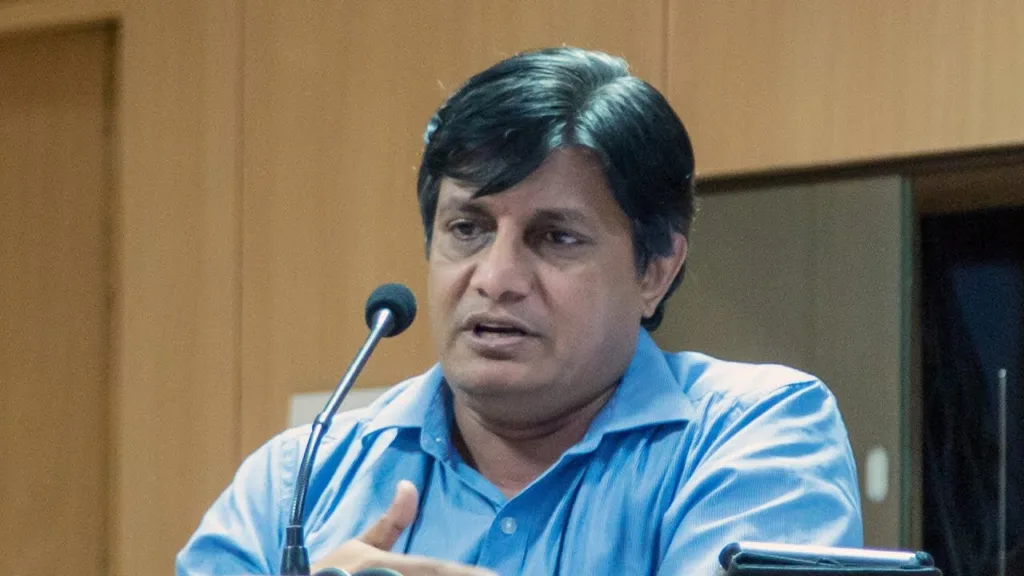
Dr Sreekumar strongly contends that Kerala now has a mafia culture. “This mafia culture is not an isolated trend but part of a broader collapse of Kerala’s socio-political fabric. The nexus between power, wealth, and criminality can be seen in religious institutions, the judiciary, and media, and even within family dynamics, indicating a systemic failure to address the fundamental crises of governance and ethics. Neoliberal policies have only worsened these issues by widening socioeconomic disparities, leaving many vulnerable to exploitation and corruption. The relentless pursuit of economic growth, unchecked by ethical considerations, has paved the way for a culture where money and influence supersede values and principles”, he emphasised.
According to the Professor of Pshychiatry, Dr Varghese C Punnoose, “The basic human nature is derived from animal instincts of domination vs submission and aggression vs fleeing away. Civilisations, religion, education and values have chiseled out these primitive instincts and turned Homo Sapiens into cooperative, tolerant and altruistic beings over several millennia. Sense of justice evolved and reigned the collective consciousness of the society. What we see is a regression from these progressive mind set. There is no one-word answer for the question “What are the factors which influence this regression”.
“Perhaps the first answer is the emergence of acquiring material wealth and power as the criterion for success. “Get money, fame and power by any means. Then you are a winner”
This has become the underlying guiding principle of Kerala society. may be influenced by the western materialism which permeated our conscious and unconscious world. That means Malayalee gradually embraced “the end (wealth, material possessions, power, sensual pleasures) justifies means” principle”, Professor Punnoose observes.
When the traditional gatekeepers of truth, justice and dignity (family, school, religion) failed, there were no replacements”, he maintained.
Noted cultural theorist J Devika thinks this is directly related to the rise of cronyism in Kerala politics — there can be little doubt that this is happening.” In the 1990s, the left in Kerala tried to counter the onslaught of neoliberalisation through local-level development — which expanded welfare but did not stimulate the economy. The economy came to be stimulated by sectors especially prone to speculation and mafia-like formations — real estate, construction, private finance, gold and yes, cinema, with its legacy of extreme feudal, opaque, alpha-male culture. Given the rapid ideological erosion of left (it had already happened in the Congress) and the rise of Hindu rightwing politics which thrived, nationally, on crony capital, these sectors have only expanded into criminal economies”, Dr Devika explained.

“What happens in its wake is the breakdown of institutions that defend democracy. Democracy does not mean elected government alone — it means that the people’s mandate is defended by a number of key institutions including the judiciary, welfare institutions dedicated to the protection of weaker sections of society, institutions that guard against corruption, scientific establishments and so on. Cronyism ends up infecting all these”, Devika pointed out.
How mafia culture is affecting peoples’ life
In an effort to mitigate the pervasive sense of insecurity, individuals are increasingly relying on various power structures to safeguard their well-being and protection. Many seek refuge in political parties or cultivate relationships with influential leaders, believing these alliances will shield them from an array of threats. This quest for security drives people to form alliances with those who wield power, whether through politics, community leadership, or social connections, in hopes of finding a sense of stability and protection in an uncertain world.
Mafia Culture manifested in politics too
According to the data compiled by the Association for Democratic Reforms (ADR), a good governance watchdog, 14 percentage of MPs elected in 2004 faced criminal cases (12 percentage faced charges of serious nature). This figure grew to 30 percentage in 2009(15 percentage serious) and climbed to 34 percentages (21 percentage serious) in 2014. The elected who face criminal charges are not limited to national political scenario alone. According to the statistics, 31 percent of the country’s elected state legislators (members of the state legislative assembly or MLAs) faced pending criminal cases with 15 percentage falling into the serious category. This normalization of criminality undermines democratic institutions and governance. The presence of lawmakers with serious charges, including crimes against women and murder, erodes public trust. Electoral reforms and stricter scrutiny are necessary to prevent individuals with questionable records from holding public office and ensure accountability.

A journalist with 18 years of experience Abhish K Bose was a staffer at The Times of India and The Deccan Chronicle - Asian Age. As a contributor, his interviews and articles have been published in Frontline magazine, The Wire, The Print, The Telegraph, The Federal, The News Minute, Scroll, The Kochi Post, The Leaflet, The Hindu.com, Outlook.com Countercurrents.org and the Asian Lite international published out of London