
One Step Ahead of Democracy: Indian State and the Jantar Mantar Protest (An Ode to MSS Pandian)
S. Santhosh, cultural theorist and faculty member at Ambedkar University Delhi, offers a striking philosophical reading of the recent Jantar Mantar protest. Moving beyond the immediate issues of paper leaks and recruitment delays, he argues that the movement transformed how democracy itself is experienced through bodies, perception, solidarity, and collective hope. This essay presents a rare theoretical perspective on one of India’s most significant youth-led protests in recent years.
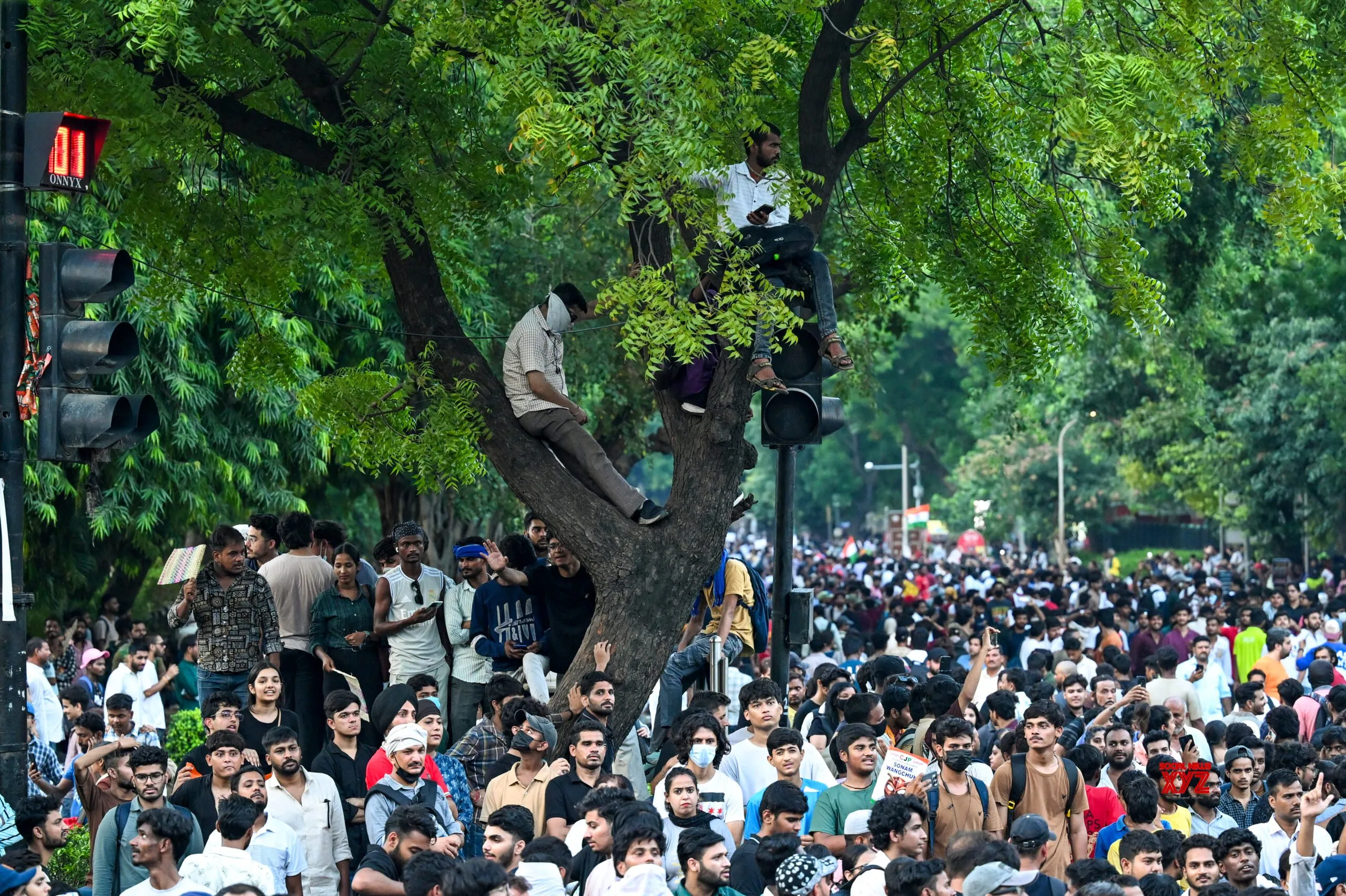
The images from Jantar Mantar over the last few days compel us to ask a larger question: how do we think democracy today? Neither democracy as a constitutional form, nor democracy as an institutional arrangement, but democracy as a mode of appearance—to think, sense and feel how bodies become visible to one another, how claims emerge before they are translated into demands, and how political life exceeds the vocabulary through which political theory has conventionally understood it.
In one sense, democracy has travelled much further than the concepts available to describe it. The inherited lexicon of liberal political theory, such as rights, representation, participation, deliberation, sovereignty and so on, remains indispensable. Yet these concepts increasingly appear inadequate for grasping what unfolds in moments of mass assembly. They tell us how institutions function, but less about how people become political before institutions recognise them. What has unfolded at Jantar Mantar cannot simply be reduced to the administrative failure that ostensibly occasioned the gathering. To explain the protest solely through the recurring scandal of examination paper leaks is to mistake the event for its trigger. By the time such an explanation is complete, the politics of the assembly has already exceeded it.
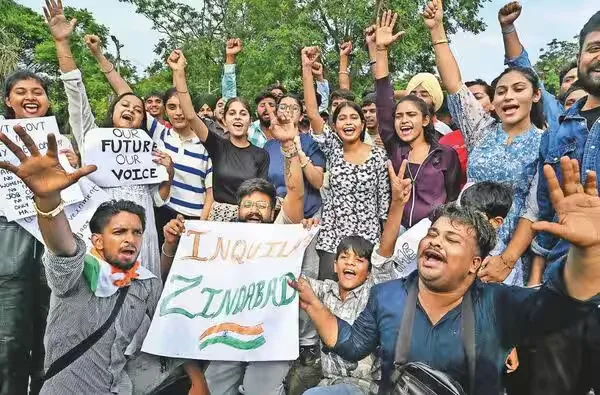
This is not to diminish the immediate grievances. Rather, it is to recognise that every enduring political moment exceeds the particularity of its cause. The assembly at Jantar Mantar speaks to a deeper historical condition: the cumulative experience of precarity, deferred mobility, institutional distrust, and the repeated production of hope through systems that continually postpone its fulfilment. The examination becomes more than an examination. Recruitment becomes more than employment. The state becomes more than an administrator. What gathers at Jantar Mantar is not merely dissatisfaction with procedure but a collective experience of suspended futures.
Many perceptive responses to this moment/movement have already appeared. Yet what struck me most was not simply the political content of the assembly but its sensory organisation. Walking through the crowd, I found myself increasingly dissatisfied with the language of observation itself. I hesitate to call the experience ethnography because ethnography often presumes a stable distinction between observer and observed, despite the catchwords of academia like participatory observation. The political force of the gathering lay precisely in dissolving that distinction. One does not stand outside such an event to describe it. One is gradually reorganised by its own perceptual logic.
Nicholas Mirzoeff’s notion of counter-visuality offers a productive way of thinking about such moments. Visuality, for Mirzoeff, is not simply the domain of images. It names the political order through which authority determines what becomes visible, intelligible, and governable. Counter-visuality therefore is not merely making the invisible visible. It is the production of another way of seeing altogether. It interrupts the state’s claim to organise perception. It refuses the distribution of visibility already authorised by institutions.
The protest at Jantar Mantar constituted precisely such a counter-visual milieu. What emerged there was not simply a crowd demanding recognition but a multitudinal reorganisation of public perception itself. The gathering altered the city before it altered policy. It transformed the meanings of proximity, vulnerability, endurance, and solidarity. Democracy here appeared less as representation than as the reorganisation of the sensible itself.
This immediately recalls Jacques Rancière’s proposition that politics begins when those who have ‘no part’ interrupt the existing distribution of the sensible. Politics is not simply disagreement over policy. It is disagreement over perception itself: who counts as a speaking being, whose suffering acquires legitimacy, whose future is considered worthy of collective investment. Assemblies therefore do not merely express political claims; they redistribute perception.
Walking through Jantar Mantar, this redistribution became palpable. The crowd differed noticeably from the urban publics that usually occupy Delhi’s visible political spaces. These were not bodies trained in the performative fluency of metropolitan activism. Their relationship to the city remained tentative yet remarkably self-assured. One encountered accents from distant districts, hesitant negotiations with Delhi’s geography, practical arrangements for food and sleep, and a quiet discipline that rarely sought spectacle. There was little desire to perform radicalism. The politics resided elsewhere, assuredly in persistence rather than proclamation.
Years ago, around 2011, the historian M.S.S. Pandian shared an observation during one of our walks through the JNU campus that has stayed with me. He remarked that winter reveals the social composition of the university with particular clarity. One begins to notice caste not through explicit declarations but through repetition: the repeated use of particular garments, the economies of care inscribed upon objects, the material rhythms through which everyday life unfolds. His insight was deceptively simple. Social difference is not merely represented; it is lived materially, repeatedly, almost imperceptibly.
Long before I encountered Fred Moten’s writings on hapticality and the social life of the undercommons, Pandian had already drawn my attention away from an understanding of vision as detached observation. The important political question was never simply who becomes visible. Rather, it was how material life exceeds institutional legibility. Institutions aspire towards transparency. They assume that social reality becomes governable once rendered visible. Yet lived experience continually escapes this fantasy. Material existence possesses textures that cannot be entirely translated into administrative categories.

This became strikingly evident at Jantar Mantar. What one encountered was not poverty displayed for sympathy nor marginality performed as authenticity. Instead, bodies carried histories sedimented within posture, gesture, movement, language, and everyday objects. These were not sociological markers waiting to be decoded. They constituted an embodied archive of unequal mobility. The city often reads such bodies through familiar stereotypes—provincial, unrefined, aspirational. Yet within the assembly those very characteristics acquired another political meaning. Their lack of metropolitan ease became the condition for another form of collective confidence.
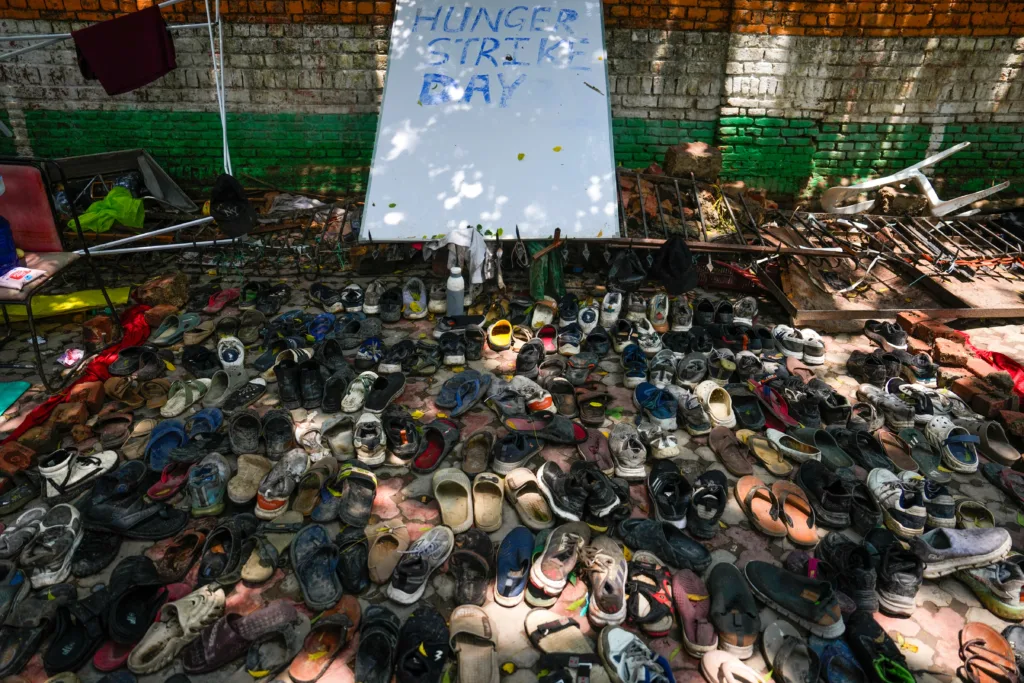
Shoes left behind after the July 20 police crackdown, collected and displayed at Jantar Mantar. Source: Caravan Magazine
Indeed, many existing sociological concepts too became insufficient to understand the protest. For instance, Pierre Bourdieu’s concept of the ‘habitus’ as embodying social history often explains reproduction of hierarchies through bodily disposition. Jantar Mantar however, revealed invention – how assembly exceeds both collective and individual dispositions by an aesthetics of affirmative life. Shared precarity generated new forms of association that institutional categories struggled to recognise. The multitude of individuals arriving from different regions, castes, religions, linguistic communities, and educational backgrounds produced a pluralizing public through the experience of waiting itself. Waiting for examinations. Waiting for recruitment. Waiting for appointments. Waiting for futures repeatedly promised but indefinitely postponed.
The temporal structure of the protest is therefore significant. This was not simply a politics of immediate demand. It was the politics of suspended time—of what Lauren Berlant terms ‘cruel optimism.’ Institutions continue to sustain attachments to futures that remain perpetually deferred. The examination promises employment. Employment promises dignity. Dignity promises citizenship. Yet each promise increasingly becomes another interval of waiting. The protest did not reject these aspirations. Rather, it exposed the exhaustion produced by their endless postponement.
Judith Butler has argued that assemblies are themselves performative. Bodies gathered together enact political claims prior to speech. Jantar Mantar demonstrated this with remarkable clarity. Long before memoranda are submitted or negotiations initiated, the assembly already constitutes an argument. It asserts that lives rendered statistically insignificant possess collective presence. Democracy therefore cannot be reduced to institutional participation alone. It also consists in the capacity of bodies to create spaces where political visibility is generated from below rather than granted from above.
This perhaps explains why I have increasingly come to think that justice cannot be understood only through the framework of injustice. Structural analysis remains indispensable. Caste, class, bureaucracy, capital, and state power organise the conditions under which injustice becomes reproducible. Yet justice itself first appears affectively. It emerges as the unsettling intuition/impulse that something about the existing order of perception has become intolerable. Before injustice is documented, justice already announces itself as discomfort. Before demands become policy language, justice exists as a shared sensibility refusing the normalisation of exclusion.
It is space-time to distinguish law from justice by insisting that law belongs to calculation whereas justice exceeds calculation. One might say that justice is not simply institutional correction but the preservation of forms of sociality that continually exceed institutional recognition. Democracy survives precisely because such excess remains possible.
The significance of Jantar Mantar, then, lies not merely in what the protest demands but in what it teaches us to perceive. Political theory has often privileged speech over sensation, representation over presence, institutions over practice. Yet democratic life may increasingly be unfolding elsewhere – in the affective infrastructures through which strangers recognise one another, in the fragile solidarities produced through prolonged uncertainty, and in assemblies that reorganise perception before they reorganise power.
Perhaps this is where democracy finds itself today, not only in India but across the world. Its crisis is not simply institutional erosion, though that is undeniable. Its crisis is perceptual as much as legible. Institutions increasingly fail to recognise the political forms emerging beyond their established vocabulary. Democracy therefore demands not only constitutional renewal but epistemic renewal. We require concepts capable of understanding assemblies not merely as reactions to events but as experiments in sensing otherwise.
Jantar Mantar may be a synthome of one such event or moment – or perhaps an incident that bleeds and breathes in our collective un/consciousness. It reminds us that politics begins long before institutions acknowledge it. It begins when bodies refuse to disappear into administrative abstractions. It begins when waiting becomes collective time rather than private despair. And it begins when perception itself becomes the terrain upon which democracy must once again be imagined.
This article was originally published on Kaari.online.
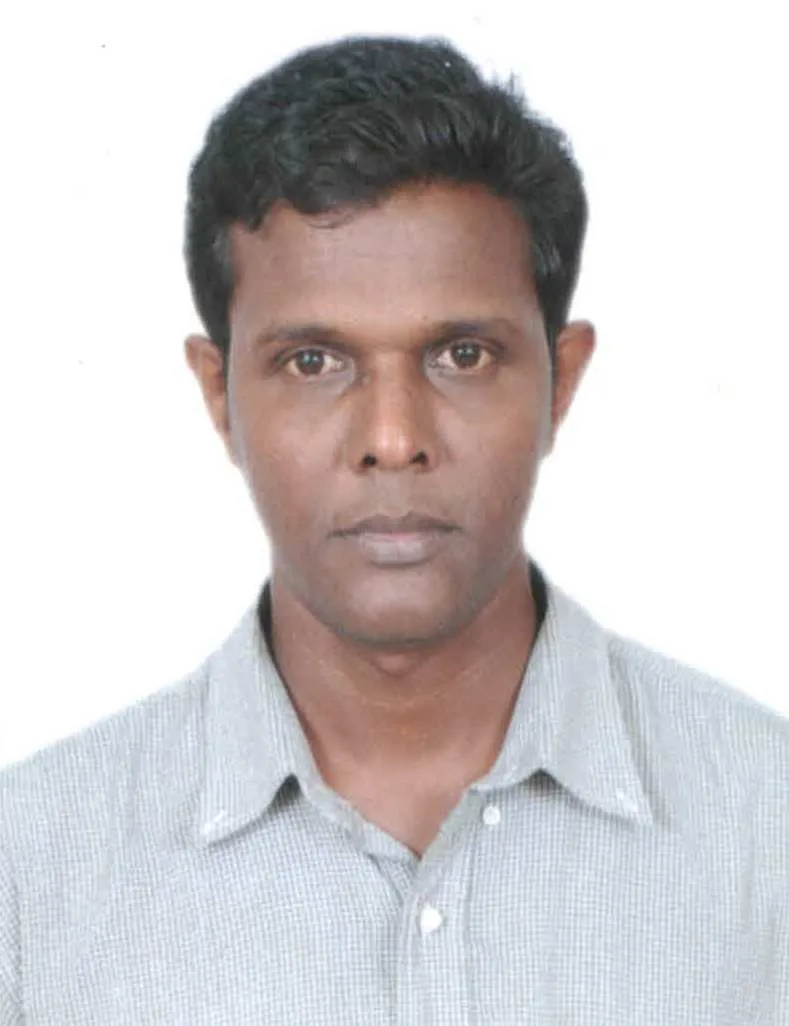
S Santhosh is a cultural theorist based in New Delhi, India. He teaches at the School of Culture and Creative Expressions, Ambedkar University Delhi, of which he was a co-founder. Drawing on his training in art history, his work critically examines the structural dynamics of the institutionalization of culture from a minoritarian perspective. He writes on contemporary cultural politics in India, with an emphasis on deconstructing technologies of visuality and the affective dimensions of the political.