
Mirage Economy – Part 1: Who Is Destroying the Planet?
This article is the first in Panthi’s serial publication of Mirage Economy, a book by T. Ramakrishnan (Ramki), originally published on the author’s blog. We are reproducing the series with permission to make these ideas accessible to a wider audience.
In this opening chapter, Ramki argues that the unfolding ecological crisis is not simply the consequence of human activity but the outcome of an unequal economic order driven by excessive consumption, extractive capitalism, and the lifestyles of a privileged minority. Drawing on scientific evidence and global research, he challenges the myth of shared responsibility and asks a fundamental question: Who is really destroying the planet?
Ecological Catastrophes
Due to rapid deterioration of the Earth’s environment, billions of poor people suffer harms including severe loss of nutrition, diseases (including vector-borne diseases and diseases due to water, land, and air pollution), homelessness, loss of livelihoods (education and jobs), and forced migration. Deaths due to natural disasters resulting from ecological damage are the final nail in the coffin.
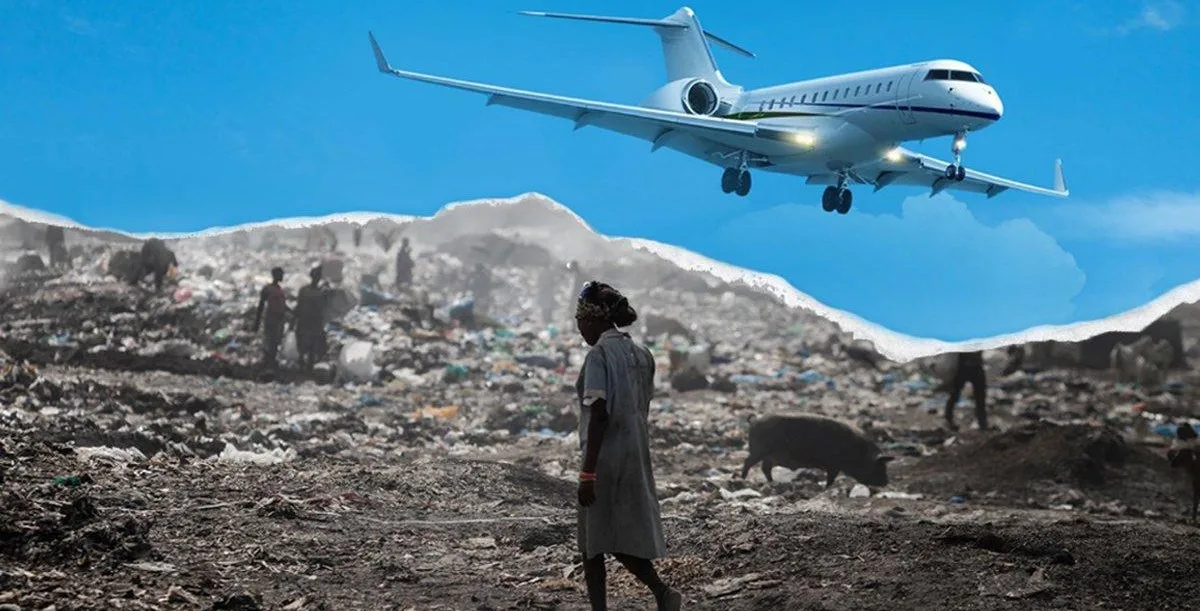
The ecological catastrophes staring us in the face result from human causes – hence the term Anthropocene, for example. But this masks the truth that much environmental destruction is due to the lavish lifestyles resulting in excessive consumption of resources and extractive economic activities of a very small percentage of humans[1]. “One doth the scath, one billion people have the scorn.”
Emissions vary across countries and across generations, but even more so across income groups[i].
In 2021, the average North American emitted 11 times more energy-related CO2 than the average African. Yet variations across income groups are even more significant. The top 1% of emitters globally each had carbon footprints of over 50 tonnes of CO2 in 2021, more than 1000 times greater than those of the bottom 1% of emitters. Meanwhile, the global average energy-related carbon footprint is around 4.7 tonnes of CO2 per person – the equivalent of taking two round-trip flights between Singapore and New York, or of driving an average SUV for 18 months. These large contrasts reflect great differences in income and wealth, and in lifestyles and consumption patterns.
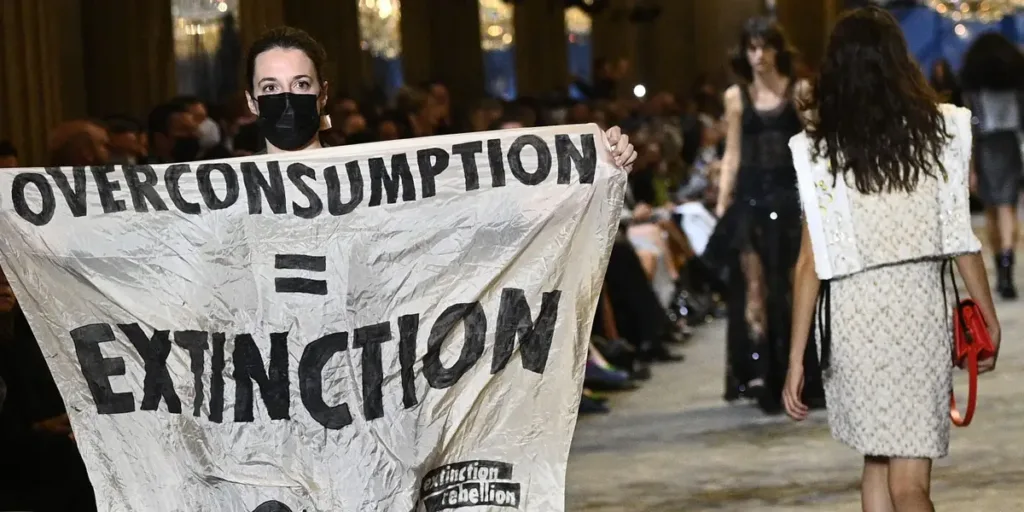
“Much of the world bears the brunt of consequences driven by the actions of a privileged few[ii]. … A recent study has identified just how unbalanced the contributions of the world’s wealthiest people are to crossing planetary boundaries. … This year Earth Overshoot Day occurred as early as August 1st! This means that in seven months, we used everything our planet can regenerate this year. We are currently using nature 1.7 times faster than our planet’s ecosystems can regenerate. … 31–67% and 51–91% of the planetary boundary breaching responsibility could be attributed to the global top 10% and top 20% of consumers, from both developed and developing countries.
Forty-three percent of carbon emissions came from the world’s wealthiest 10% of consumers. Similarly, 23% of human appropriation of net primary productivity (an indicator of land-system change), 26% of intentional nitrogen fixation, 25% of phosphorus fertiliser use, 18.5% of blue-water consumption, and 37% of mean species abundance loss were due to the top 10% of consumers.
The poorest 10% contributed a maximum of 5% to any of the six indicators.
Overall, the richest 10% exceeded all per-capita planetary boundary thresholds, ranging from 110% for freshwater use to 1700% for climate change (CO2 emissions). By contrast, the poorest 10% remained well within all boundaries.
“The global top 20% of consumers could adopt the consumption levels and patterns that have the lowest environmental impacts within their quintile, yielding a reduction of 25–53% in environmental pressure[iii]. In this scenario, actions focused solely on the food and services sectors would reduce environmental pressure enough to bring land-system change and biosphere integrity back within their respective planetary boundaries.”
In this chapter, we summarize key ideas and data related to ecological crises. Let us begin with excerpts from a review[iv] of ‘A Forest Journey: The Role of Trees in the Fate of Civilization’ by John Perlin:
For thousands of years, trees have been a principal [sic] fuel and building material of almost every society. Without vast supplies of wood, the great civilizations of Assyria, China, Mycenae, Greece and Rome, Western Europe, and North America would never have emerged.
And yet, people of all colors and cultures, Perlin wrote, have destroyed great stands of forest along with the indigenous peoples who lived there. The consequences of the headlong destruction of forests were known in 1989, and climate scientists were already sounding warnings. Unfortunately, most of those warnings were disputed and went unheeded. …
We don’t think of wood as the unsung hero of the technological revolution, but trees provided the material for fire that made habitation of cold climates possible; charcoal and wood made it possible to evaporate brine from saltwater to make salt; heat from wood fires melted potash and sand to produce glass. The list goes on and on. Consider the role wood played in transportation, from carts, chariots, and wagons to canoes and ships. Wood-based means of transportation were essential for exploration, trade, manufacture, and warfare. Wood was also central to the fossil-fuel age as large-scale coal mining depended on timber for props, supports, and rails.
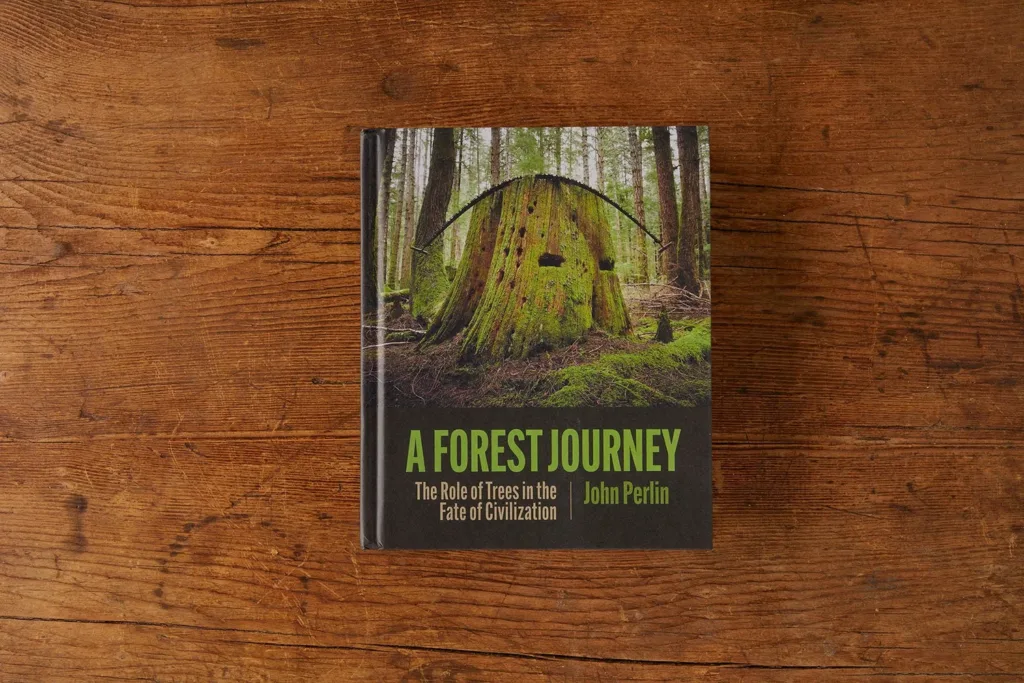
Perlin details a compelling case for the protection and preservation of the Earth’s forests, which not only remove carbon dioxide from the atmosphere, but also contribute to keeping the Earth temperate. He writes, “The leaves of trees also emit great amounts of water into the atmosphere, which, in the process of changing into vapor, absorbs heat.” Without the forest canopy in the Amazon basin, for example, seasonal temperatures there could rise by as much as 41 degrees. The canopy also protects the soil from wind, sun, and the erosive force of rain.
A Forest Journey is a reminder to us all that civilizations have crumbled when the land reached its limit. After all the destructive storms, floods, and fires of the past decade, we shouldn’t need reminding that we exploit the Earth at our peril. Forests are a gift.
Though humanity has, for long, been destructive of Nature, the scale of such destruction is an important factor. Capitalism, equipped with advanced machinery and trade networks, has caused, and is still causing, the greatest harm[v]:
Nature crimes generate hundreds of billions of dollars of illicit revenue while harming local communities and threatening critical ecosystems,” [U.S. Treasury Secretary Janet] Yellen said in a statement following the July 27 announcement [that a “group of six countries has agreed to work together to shut down money laundering operations tied to logging, mining and wildlife harvesting wreaking havoc on the rainforest”]. … “These crimes fuel corruption and destabilization wherever they occur,” she added.
In October 2023, a FACT Coalition report said that the U.S. had become a destination for the proceeds of environmental crimes, undermining global efforts to combat the climate crisis. The report identified “critical gaps” in the U.S. anti-money laundering system that were vulnerable to exploitation by criminal groups, including those behind the destruction of the Amazon. According to the FACT Coalition, the prevalence of abuse-prone shell companies and other secretive entities — which allow bad actors to anonymously stash dirty money in the U.S. and invest in real estate — is a key part of the problem. …
Earlier in 2023, ICIJ’s Deforestation Inc. investigation highlighted flaws in the U.S. sanctions intended to combat the import of timber of uncertain legal origin, such as that harvested in conflict zones. The investigation showed that timber traders in Florida, Maryland and other U.S. states continued to import teak from Myanmar — where the military regime controls the natural resources sector — despite 2021 sanctions against the state-run timber company, Myanmar Timber Enterprise.
Nations fencing their borders, as well as the increasing use of barbed wire (and other types of metal wire) fencing of private property worldwide, is mostly harmful to wildlife because it restricts their erstwhile free movement.
Amid a rising tide of nationalism, walls and fortified fences are proliferating around the world[vi]. These barriers pose a growing threat to wildlife — blocking animal migrations and threatening millions of species that will need to move to keep up with a changing climate. These may be in violation of international environmental laws, such as the Convention on Migratory Species, which requires migration routes to be protected.
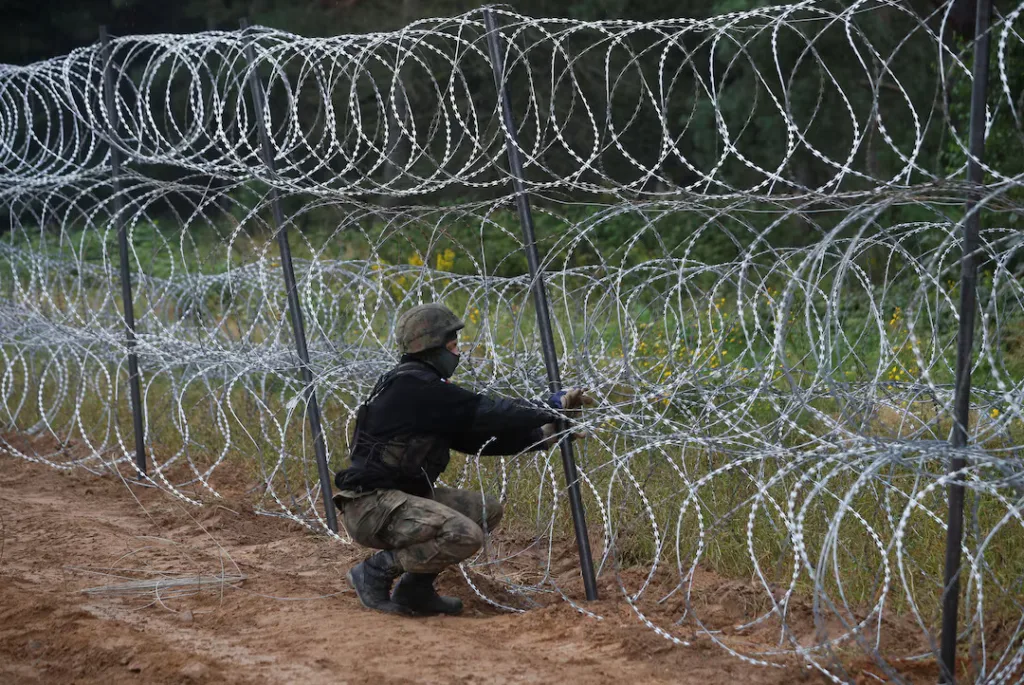
Elisabeth Vallet at the University of Quebec calculates that 74 border walls now exist across the globe, six times the number at the end of the Cold War. They extend for more than 20,000 miles.
Sometimes, border fences are intended to stop animals rather than people. China constructed a 2,900-mile fence along its border with Mongolia, through the Gobi Desert, partly to keep Mongolia wolves from preying on Chinese livestock. But it also blocked the seasonal migrations of wild asses. Botswana erected a 300-mile electric fence on its border with Zimbabwe to keep out cattle infected with foot and mouth disease. But the fence has had major impacts on the cross-border movements of some of the region’s most iconic wild species, including giraffes, elephants, and zebras.
International border barriers everywhere are harming wildlife by bisecting their habitats, disrupting their hunting and collecting patterns and preventing them from commingling[vii]. In some cases, the borders are causing so much harm that they could cause certain species to go extinct[2].
This harm compounds the negative environmental impact of using huge quantities of metal and stones for the fences themselves.
A high-level UN meeting[viii] on climate in 2019 warned that we have only until 2030 before irreversible damage from climate change takes hold. Here is how we should envision the unfolding ecological catastrophe[ix]:
“Many now argue that we should think about the previously unthinkable risks of climate change, including societal collapses and human extinction. Calamitous images of the future are not pathological or counterproductive: it is both necessary and valuable to imagine the worst-case scenarios of climate change. Critics of climate catastrophe often group together all visions of disastrous futures under labels like doomism or pessimism. This is unhelpful, and greater nuance is required. We need to distinguish between climate doomists (who see catastrophe as imminent and unavoidable) and climate risk realists (who see catastrophe as one potential future that should be avoided). We also need to split apart the different ways of envisioning climate catastrophe to understand their distinct strengths and weaknesses.”
Rapid climate change[3] caused by humanity is the overwhelming catastrophe that the world faces. Climate change refers to long-term shifts in temperatures and weather patterns[x]. It worsens global warming (global heating is a more apt term) due to reinforcing feedback loops, besides causing intense droughts, flash floods, calamitous wildfires, severe storms, rapid loss of biodiversity, water scarcity, melting polar ice and glaciers, and rising sea levels. These, in turn, lead to food shortages, imperiled health (of humans, livestock, plants, and wildlife), loss of livelihoods and habitats, and other economic and ecological losses.
It would be a gross understatement to say that we are in mortal danger[xi]:
A growing number of the planet’s “vital signs” have reached record levels due to climate change and other environmental threats, according to a stark report by a group of prominent researchers.
The researchers assessed 35 “planetary vital signs”, including the amount of heat in the oceans and the thickness of glaciers. The vital signs also include measures of the human factors driving many of those changes, such as meat production per capita and subsidies for fossil fuels.
Of those 35 metrics, the report finds 25 of them have reached record levels this year, most of them breaking records set in 2023.
The impacts of climate change have also reached record levels. There is more heat in the oceans and seawater is more acidic, while sea level continues to rise. Record amounts of mass were lost from Greenland’s ice sheet.
The concept of “Earth Overshoot Day[xii]” shows when a country or the entire world has used up Earth’s resources that would take the Earth one year to regenerate[4]:
Earth Overshoot Day marks the day when humanity’s resource consumption exceeds the Earth’s capacity to regenerate those resources for the year, a reminder of how unsustainable modern consumption patterns are and how these are adding immense pressure to our planet’s ecosystems.
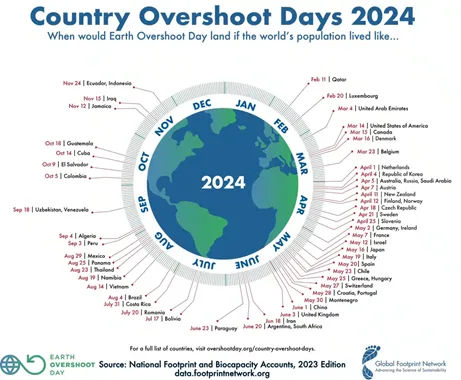
In other words, it marks the date when humanity has exhausted nature’s budget for the year. It means that for the rest of the year, we are expanding our ecological deficit by using up local resources and pumping greenhouse gases into the atmosphere. This year [2024], Earth Overshoot Day for all countries together falls on 1 August. Individual country Earth Overshoot days are shown in the following chart for several countries.
Mirage Economy and its accompanying slide presentations can be accessed on the author’s blog.
[1] This, in turn, is due to the economic system as we will see latter in this book.
[2] Sometimes fences help wild animals from being poached. Border fences along international boundaries may help shield animals from one side of the border from being infected by those on the other side.
[3] Adan Welz uses the term “climate breakdown” in place of what is usually referred to as “climate change” because the latter carries “an implication of reversibility”, which increasingly seems less likely to be achievable. [From Erica Goode, “The Ripple Effects of Climate Breakdown in Nature”, Undark, 2023 Dec 01, https://undark.org/2023/12/01/book-review-end-of-eden/]
[4] If such regeneration is at all possible!
Referecnces
[i] Laura Cozzi, Olivia Chen, and Hyeji Kim, “The world’s top 1% of emitters produce over 1000 times more CO2 than the bottom 1%”, International Energy Agency, 2023 Feb 22, https://www.iea.org/commentaries/the-world-s-top-1-of-emitters-produce-over-1000-times-more-co2-than-the-bottom-1
[ii] Jonathan Tonkin, “The wealthy contribute disproportionately to planetary decline”, Predirections, 2024 Dec 11, https://predirections.substack.com/p/the-wealthy-contribute-disproportionately
[iii] Peipei Tian et al., “Keeping the global consumption within the planetary boundaries”, Nature, volume 635, 2024 Nov 13, https://www.nature.com/articles/s41586-024-08154-w, pages 625–630 (referred to in Jonathan Tonkin, cited above).
[iv] Brian Tanguay, “Book Review | ‘A Forest Journey: The Role of Trees in the Fate of Civilization’ by John Perlin”, Santa Barbara Independent, 2023 Oct 25, https://www.independent.com/2023/10/25/book-review-a-forest-journey-the-role-of-trees-in-the-fate-of-civilization-by-john-perlin/
[v] Brenda Medina, “New US Treasury plan targets criminal groups profiting from the destruction of the Amazon”, International Consortium of Investigative Journalists, 2024 Aug 05, https://www.icij.org/investigations/deforestation-inc/new-us-treasury-plan-targets-criminal-groups-profiting-from-the-destruction-of-the-amazon
[vi] Fred Pearce, “Fenced In: How the Global Rise of Border Walls Is Stifling Wildlife”, Yale Environment 360, 2022 Nov 16, https://e360.yale.edu/features/border-walls-animals-climate-change
[vii] Jill Kimball, “Here’s why border fences are bad for wildlife”, Phys.Org, 2025 Apr 01, https://phys.org/news/2025-04-border-bad-wildlife.html (quotes study published in https://www.sciencedirect.com/science/article/abs/pii/S0006320724005226)
[viii] “Only 11 Years Left to Prevent Irreversible Damage from Climate Change, Speakers Warn during General Assembly High-Level Meeting”, United Nations General Assembly, Seventy-third Session, High-level Meeting on Climate and Sustainable Development 28 March 2019, https://press.un.org/en/2019/ga12131.doc.htm
[ix] Joe P. L. Davidson, Luke Kemp, “Climate catastrophe: The value of envisioning the worst-case scenarios of climate change”, WIREs – Wiley Interdisciplinary Reviews, 2023 Dec 12, https://doi.org/10.1002/wcc.871, https://wires.onlinelibrary.wiley.com/doi/10.1002/wcc.871
[x] https://www.un.org/en/climatechange/what-is-climate-change
[xi] James Dinneen, “Growing number of Earth’s ‘vital signs’ endangered by climate change”, New Scientist, 2024 Oct 08, https://www.newscientist.com/article/2450457-growing-number-of-earths-vital-signs-endangered-by-climate-change/
[xii] “Earth Overshoot Day 2024: What Is It and Why Is It Important?”, Earth.org, 2024 Aug 01, https://earth.org/what-is-earth-overshoot-day/

Ramki studied electrical engineering and worked for about a dozen years in VLSI Design Automation before quitting his job to (a) reduce his load on the environment and (b) try and do something useful for the society. He has put together six books in Tamil on social, economic, political, and environmental issues. He has translated six books from English to Tamil and one from Tamil to English, on socialism, agriculture, and education. Mirage Economy (an open-source online book) is the latest book that he has put together.