

The Bird, the River, and the Invisible Conservationist: Muslims and India’s Environmental Story
Mukul Sharma explores the largely overlooked relationship between Muslims and India’s environmental history from community-led conservation and ecological traditions to struggles against pollution and environmental injustice. Through stories from the Chambal, Chaliyar, Kargil, Kashmir and Delhi, the article challenges both the political portrayal of Muslims as environmental threats and the wider environmental discourse that has failed to recognise them as ecological actors.
On the sandbars of the Chambal river, a bird is making a comeback. The Indian skimmer – identified by its vivid orange bill and the low, precise arc with which it drags its lower mandible through water to catch fish – had declined to perhaps 400 individuals in the Chambal valley by 2017. Today, that local count stands at roughly 1,000. Nest survival rates have nearly doubled. The credit belongs, in significant part, to a community-based conservation model called ‘Guardians of the Skimmer,’ built and run by Parveen Shaikh, a research biologist at the Bombay Natural History Society.
Shaikh’s method is disarmingly simple: working with local people – farmers, seasonal labourers, former chowkidars – to monitor and protect nesting sandbars through the breeding season, day and night, for two months each year. Train them to identify nests, log chicks, keep dogs and cattle off the islands. The results have been transformative. In May 2026, Shaikh was awarded the Whitley Award – known informally as the Green Oscars – by the Whitley Fund for Nature, one of only six winners worldwide. The award money will now allow her to expand the model to Prayagraj, where the Ganga and Yamuna converge and where, amid pilgrimage traffic and boat disturbance, significant breeding colonies of skimmers survive.
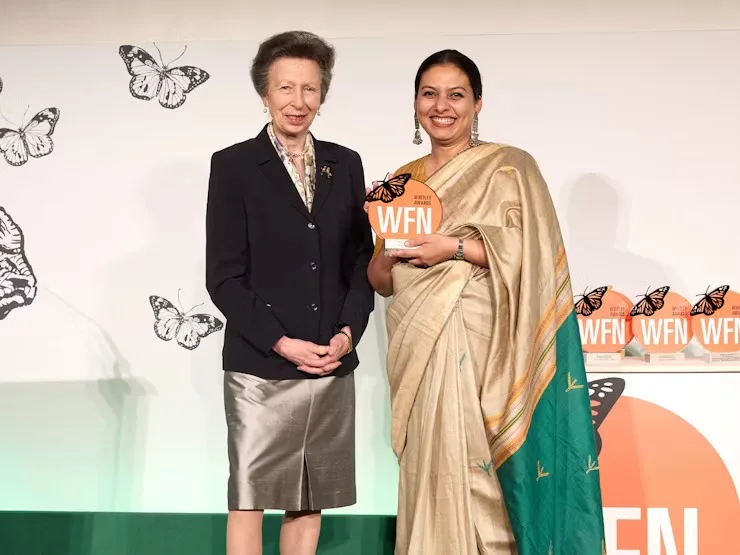
‘Local guardians help identify new sandbars, monitor nests, and prevent disturbance during the breeding season,’ Shaikh has said. ‘Some now proudly refer to the skimmers as ‘our birds,’ which reflects a growing sense of ownership. This change in perception from indifference to stewardship has been one of the most meaningful outcomes of the project.’
Parveen Shaikh is a Muslim woman. This fact is not incidental to this story – though in the coverage of her award, it has gone entirely unmentioned. In contemporary India, the dominant public narrative around Muslims and the environment runs in precisely the opposite direction: not stewardship, but desecration; not care, but threat; not conservation, but contamination. That gap – between a political discourse that constructs Muslims as ecological dangers and a reality in which Muslims are among India’s practicing conservationists – is what this article is about.

The Manufactured Threat: How Muslims Became an Environmental Danger
The term ‘flood jihad’ entered Indian political vocabulary in August 2024, when Assam’s Chief Minister Himanta Biswa Sarma attributed urban flooding in the state to deliberate Muslim agency – a claim that was factually baseless but politically useful. It was not a new idea, merely a new application for an old template. Over the past decade, a familiar grammar has emerged in Hindu nationalist politics through which environmental phenomena – water, disease, land, animals – are repeatedly made to carry the weight of communal accusation.
‘Corona jihad’ reframed the epidemiological spread of COVID-19 as a Muslim conspiracy. The phrase ‘love jihad’ had already conscripted romance into communal politics; ‘land jihad’ did the same to real estate. What is specific to the environmental variants of this vocabulary is that they transform the natural world into a site of Muslim threat. Floods are not the result of degraded catchments, encroached floodplains, and overwhelmed drainage systems – familiar consequences of unplanned urbanisation across Indian cities. They are, in this telling, the result of Muslim presence.
The beef ban – enacted with varying degrees of severity across multiple states since 2015 and enforced through both law and vigilante violence – operates in a similar register, though its ecological stakes are more concrete. It targets not abstract threats but actual livelihoods: cattle trading, slaughterhouse labour, the leather economy. These are sectors in which Muslim workers are heavily concentrated, and which perform real ecological functions in how India’s villages and cities manage animals, organic waste, and soil fertility. Research on Muslim communities in Mewat, the semi-arid landscape straddling Haryana and Rajasthan, has shown how the criminalisation of cattle trading has disrupted what was, in ecological terms, a sustainable circular economy – where the movement of animals across households maintained soil fertility through manure inputs and provided a mobile form of insurance against crop failure. The cow-protection laws have, paradoxically, helped dismantle a system of cattle stewardship.
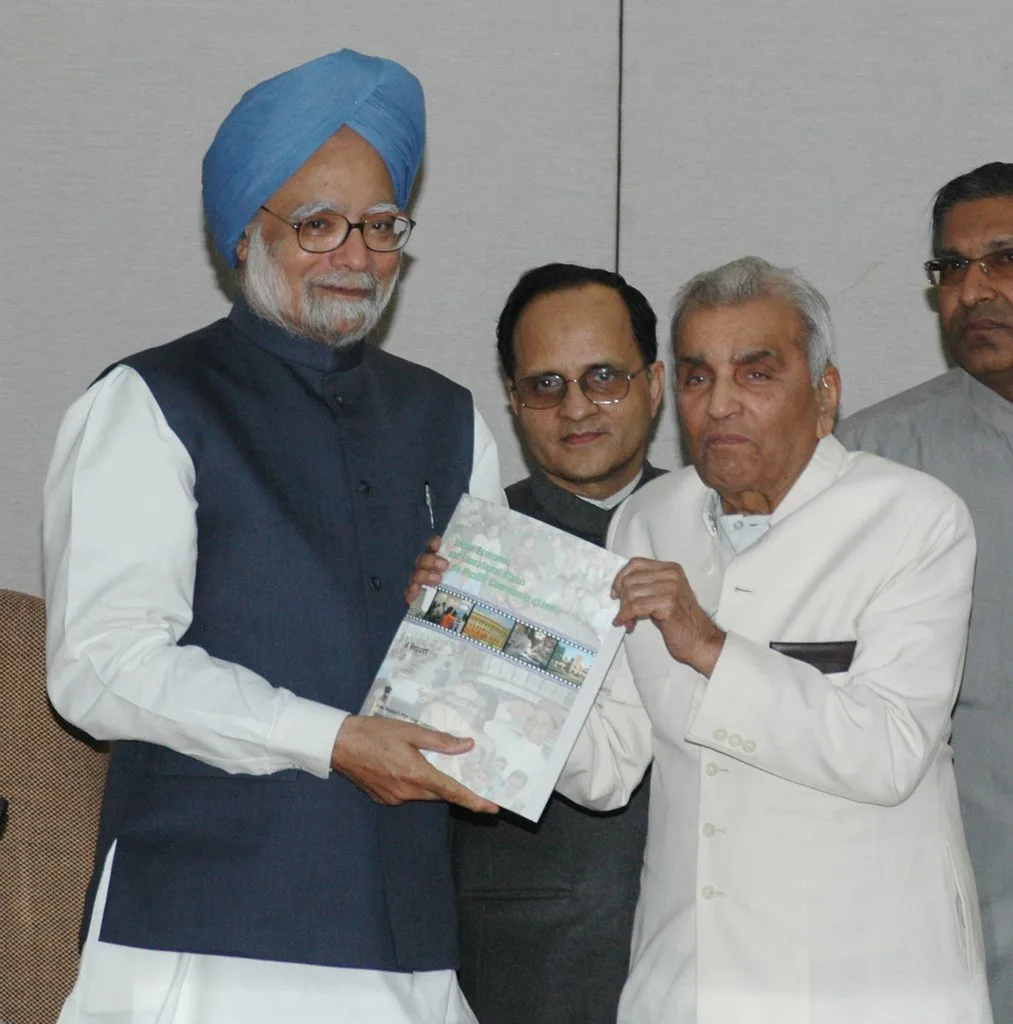
Underlying all of this is a deeper process that the sociologist Ghazala Jamil has analysed in her work on Muslim localities in Delhi: the systematic spatial relegation of Muslim communities to areas that are underserved by urban infrastructure, exposed to industrial effluents, and lacking in clean water and sanitation. The Sachar Committee Report of 2006 documented that Muslim households had the lowest rates of access to tap water among all religious communities in India. Studies in Aligarh have mapped a direct correlation between Muslim-majority neighbourhoods and inadequate water supply, dilapidated housing, and elevated indoor air pollution. In Okhla in Delhi, residents have complained for years about overflowing drains and unmanaged waste – complaints that go unaddressed.
What emerges, when you hold these facts together, is a double irony. Muslim communities are among the most ecologically vulnerable in India – concentrated in degraded urban spaces, displaced onto flood-prone river margins in Assam, exposed to industrial pollution without adequate infrastructure. And yet the dominant political discourse constitutes them not as victims of environmental injustice but as its perpetrators. The community that drinks the worst water is cast as the one fouling the rivers.
Guardians, Resisters, and Restorers: The Muslim Environmental Registers
Parveen Shaikh is not an exception. She belongs to a tradition of Muslim environmental agency in India that spans scientific conservation, community-based resource management, organised political struggle, and individual acts of ecological care.
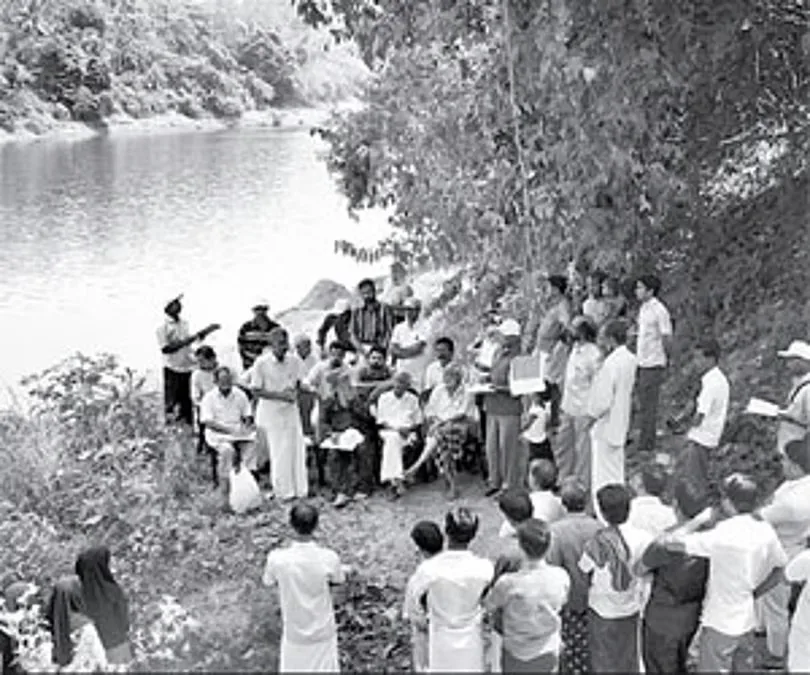
The Chaliyar river struggle in northern Kerala is perhaps the most significant and overlooked chapter of this tradition. From the early 1970s, communities along the Chaliyar mobilised against the toxic discharge of the Gwalior Rayons factory at Mavoor – a Birla enterprise whose effluents had destroyed fish populations, contaminated drinking water, and spread respiratory diseases through riverside villages. Researcher C. K. M. Nabeel analysed how the movement drew sustained organisational support from Islamic socio-religious bodies, including Jamaat-e-Islami and associated youth organisations, which framed environmental resistance in the language of Islamic ethics. One activist described the struggle explicitly: industrial pollution was a fasaad – corruption on earth, a term from the Quran – and opposing it was therefore an obligation of faith. Mobilising through long marches, hunger strikes, and an extensive print network, the movement sustained pressure for nearly three decades, ultimately contributing to the factory’s closure in 2000. This predates many of the environmental movements that feature in standard Indian environmental histories.
In Kerala, the Solidarity Youth Movement has developed what is arguably the most intellectually sophisticated instance of Muslim eco-political thought in India. Solidarity does not treat environmental issues as separate from questions of capitalism and inequality. Its publication on development, environment, and global capitalism argues directly that market-led development concentrates resources in few hands while producing ecological destruction – and that the Islamic concept of khalifa, stewardship of the earth, grounds a moral obligation to resist that destruction. This is environmental critique rooted simultaneously in structural political economy and theological ethics: a combination that neither secular environmentalists nor mainstream Islamic organisations have typically managed.
In the cold-desert landscape of Kargil in Ladakh, a very different form of Muslim environmental practice is documented by researchers Madhavi Peters and Zahid Hussain Khan. Here, Islamic ethical principles have become embedded in everyday resource management over generations. The felling of juniper trees – ecologically critical in the high-altitude environment – is restricted through community norms that resonate with Islamic teachings on stewardship. Water is treated as a common resource through collective irrigation arrangements that align with Islamic legal tradition’s refusal to allow private ownership of flowing water. Practices analogous to the concept of hima – protected areas of restricted resource use, an idea with deep roots in early Islamic governance – regulate access to common land without requiring formal law. This is ecological wisdom that operates through culture and belief.
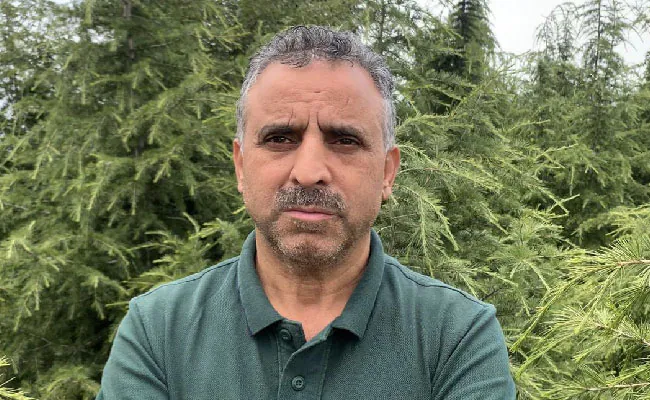
Then there are the individuals. In Budgam district in Kashmir, Abdul Hamid Bhat – known locally as the ‘Treeman of Kashmir’ – has spent three decades planting more than half a million trees in landscapes depleted by timber extraction, working largely with his own resources and the participation of local villagers, including former timber smugglers he helped redirect toward restoration. In Delhi, Mohammad Saud and Nadeem Shehzad have run a rescue clinic for injured black kites from a basement in Wazirabad for over two decades – a practice that began in childhood, when feeding kites was an act of household piety, and that became a sustained commitment to the lives of birds falling from the city’s increasingly polluted sky. Their story is told with great delicacy in Shaunak Sen’s documentary All That Breathes, which situates their work against the backdrop of communal violence, making explicit what the broader culture prefers to ignore: the same political conditions that make it difficult to be Muslim in Delhi also make it difficult to be a kite.
And then there is Parveen Shaikh, on the Chambal sandbars, building a network of nest guardians on local relationship at a time. One of those guardians is Jagdish, a former chowkidar who dropped out of school in the fifth standard and now monitors skimmer colonies day and night through the nesting season, negotiating with illegal sand miners who threaten the birds’ habitat. ‘The river is an integral part of my life,’ Jagdish told the reporter. ‘Even today, the whole village drinks Chambal’s water.’ He is not Muslim. The point is precisely that: Shaikh’s conservation model is not communally bound. It builds ecological stewardship across communities, in the most unlikely landscapes, through patience, trust, and sustained scientific commitment.
The Silence That Shapes the Story: What Indian Environmentalism Doesn’t See
Indian environmental scholarship has, over the past four decades, fundamentally transformed its understanding of who counts as an environmental subject. The pathbreaking work of scholars like Ramachandra Guha and Madhav Gadgil established that local, forest communities were not obstacles to conservation but its most effective practitioners – that forest rights and ecological health were inseparable. Subsequent scholarship extended this recognition to women, documenting their role as primary managers of natural resources in forest-dependent communities. More recently, some works have brought Dalit ecologies into focus – the ways in which caste determines environmental exposure, and how anti-caste movements have historically articulated an environmental politics of their own.
Muslims are conspicuously absent from this expanding canon. There is almost no research on Muslim environmental life in India – on their ecological vulnerabilities, their resource-management practices, their conservation traditions, or their environmental politics. The Chaliyar struggle does not appear in standard histories of Indian environmentalism. The Kargil water commons have not been studied by environmental scholars. The kite rescuers of Wazirabad are known to documentary film audiences, not to researchers. Parveen Shaikh’s Whitley Award was reported in Indian media – but no report mentioned her religious identity, and neither reflected on what her work might mean for how we understand Muslim communities and the environment.
This absence is not simply an oversight. It reflects a structural feature of Indian environmental discourse: a disciplinary blind spot that mirrors, in its own way, the political blind spot of Hindu nationalist rhetoric. Both, from opposite directions, deny Muslims the status of environmental subjects – the first by constituting them as threats, the second by failing to recognise them as anything at all.
The consequences are real in both directions. On one side, the political construction of Muslims as environmental dangers goes largely unchallenged because there is no counter-archive to draw on – no body of scholarly or journalistic work documenting Muslim ecological knowledge, Muslim conservation practice, or Muslim environmental vulnerability that might complicate the narrative. On the other side, environmental policy and conservation practice in India have developed without attending to the specific forms of ecological knowledge and community practice that exist within Muslim communities – knowledge that, in places like Kargil and the Chambal valley, has produced measurable conservation outcomes.
Connecting the Dots
In the spring of 2026, two things happened in quick succession. In Assam, the Chief Minister’s office circulated materials blaming Muslim encroachment for ecological degradation in the state’s floodplains. In London, at the Royal Geographical Society, Princess Anne presented a Green Oscar to Parveen Shaikh for saving a river bird on the Chambal. Indian media covered both. No one connected them.
That failure of connection is not trivial. It reflects something important about how Indian public culture understands – or fails to understand – the relationship between a religious community and the natural world. The Muslim communities of the Chambal valley, of Kargil, of the Chaliyar river towns, of the Kerala coast, of a basement clinic in Delhi: these are not peripheral footnotes to Indian environmental history. They are part of its main text. The nest guardian on the sandbar, the pir whose shrine shelters a rare turtle, the activist who frames industrial pollution as a violation of faith, the scientist who builds a conservation model out of local relationships and patient fieldwork – all of these are environmental actors, and all of them are Muslim.
Indian environmentalism has built some of its most enduring contributions on the recovery of perspectives that mainstream discourse had erased. The recognition that Adivasi communities were ecological stewards, not encroachers, transformed conservation policy and political mobilisation alike. A similar recognition – that Muslim communities in India have ecological histories, ecological vulnerabilities, and ecological agency – would similarly transform both the politics of the environment and the environment of politics.
Featured Image: Indina Skimmer- Image Courtesy: roundglasssustain.com

Professor Mukul Sharma teaches Environmental Studies at Ashoka University, Haryana. He works at the intersection of ecology, religion, politics, caste, and media in the making of environmental politics in India and South Asia. His scholarship on Hindutva and the environment includes Green and Saffron: The RSS, Modi, and Indian Environmental Politics (Permanent Black, 2024, a revised edition of his 2012 study), “Modi the ‘Solar Superman’: Hindutva, Climate Change and Renewable Energy” (India Review, 2025) and “Hindu Nationalism and Right-wing Ecology: RSS, Modi and Motherland Post-2014” (Studies in Indian Politics, 2023). In 2024 he additionally published Dalit Ecologies: Caste and Environment Justice (Cambridge University Press), examining caste, ecology, and environmental injustice through Dalit literature, culture, and lived experience.