
Whole Language, Whole Crisis: Kerala’s Literacy Debate in Global Perspective
The article examines the long-running debate over how children learn to read, placing Kerala’s literacy policies within a broader global history of the “reading wars.” Drawing connections between constructivist pedagogy, phonics-based instruction, global education policy, and social inequality, Asokakumar V questions whether Kerala’s approach to foundational literacy has adequately addressed the realities of language structure, classroom conditions, and educational justice.
Concerns about basic literacy skills are growing worldwide. From classrooms in Mississippi to villages in Kerala, the debate over how children learn to read has taken centre stage. At its core lies a long-standing conflict between phonics-based instruction and constructivist approaches like whole language. This essay traces Kerala’s journey through this pedagogical battleground, showing how global trends, postcolonial anxieties, and institutional dogmas have shaped—and sometimes distorted—the state’s commitment to quality education.
While multiple factors—including family background, individual differences, institutional quality, and language structure—shape the acquisition of basic skills, this essay focuses specifically on how learning methods influence the attainment of grade-level standards.
The Age of Primary Malayalam Textbooks without the Alphabet
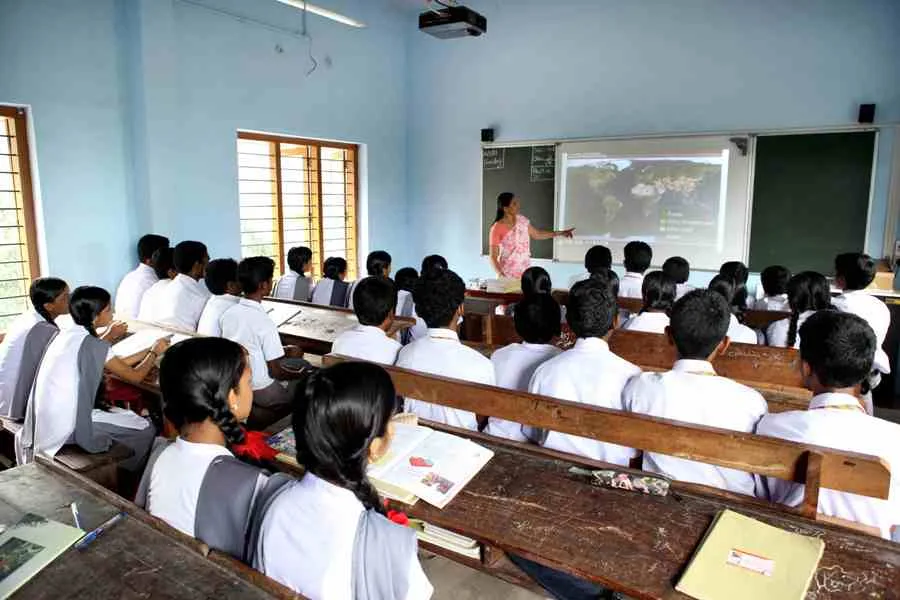
In 2022, Kerala’s Education Minister V. Sivankutty announced in the state assembly that the Malayalam alphabet would be reinstated in primary-level Malayalam textbooks. Following the educational reforms introduced in the early 1990s, the Malayalam alphabet was gradually phased out of primary-level textbooks. These reforms, driven by a shift toward constructivist pedagogy, promoted the “whole language method” for reading instruction, which de-emphasised explicit teaching of letters in favour of immersing children in complete texts. As a result, the Malayalam alphabet was effectively removed from the visual and instructional experience of young learners.
Over time, widespread concerns emerged about declining basic language skills among students. Concerned by this deterioration, prominent cultural figures across various fields voiced their anxiety and demanded the reintroduction of the alphabet in textbooks. This collective pressure led to the decision to reprint the Malayalam alphabet in primary textbooks—marking their return after nearly thirteen years of absence.
Many education reformists who championed the constructivist movement and the whole language approach have criticised the return of the printed alphabet in primary textbooks. To them, this shift represents a regression—a revival of what they view as a reactionary, unscientific, and authoritarian method of language
instruction that predates the democratic expansion of public education. Advocates of constructivist pedagogy contend that efforts to reintroduce alphabet-based instruction reflect not only outdated educational practices but also politically motivated attempts to discredit the public education system in favour of private alternatives.
Declining Language Skills: A Global History
The decline in basic skills among students is not an isolated concern in Kerala; it reflects a national and global crisis in education. According to the ASER Centre 2024 report, only about 21.5% of students in Standard II can read a simple Malayalam story at the Standard II level. This proportion increases steadily across grades, reaching around 85% only by Standard VIII—suggesting that foundational reading skills are acquired much later than expected. At the national level, foundational reading proficiency among Standard III students was 23.4% in 2024, an improvement from 20.9% in 2018.
This crisis also has a global history—it first emerged in the West and was later reproduced in the Global South, initially becoming visible in the domain of language learning.
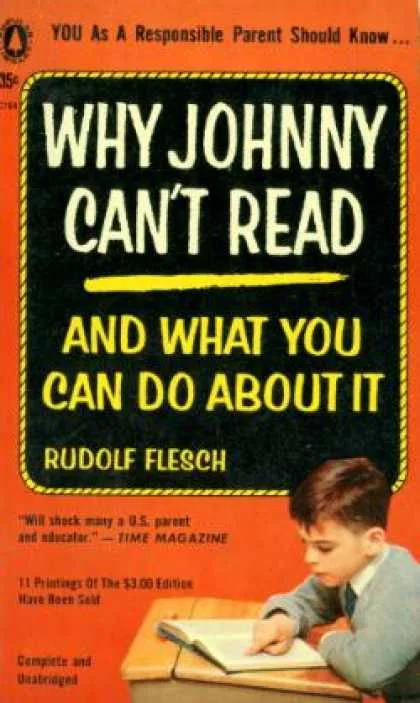
It was in the 1950s that the publication of Why Johnny Can’t Read by Rudolf Flesch (1955) drew nationwide attention to the decline of language skills among schoolchildren in the United States. This book also sparked a heated and long-lasting debate in the history of American education, commonly referred to as the “reading wars.” Why Johnny Can’t Read was a scathing critique of the “whole word” (or look-say) method of teaching reading, which had been widely adopted in US schools since the 1930s. This method, influenced by behaviourist psychology, emphasised memorising entire words as visual units rather than decoding them phonetically. Flesch argued that this approach had displaced the traditional phonics-based method, in which children first learn the sounds of individual letters and letter combinations before progressing to whole words. According to Flesch, abandoning phonics was a major reason for the alarming decline in reading skills among American students.
In 1956, UNESCO published a global survey of existing methods of teaching reading and writing, titled The Teaching of Reading and Writing, authored by William S. Gray—a renowned American educator and reading expert—as part of its broader cultural mission to promote literacy, particularly in newly independent countries. Gray’s work provided foundational data for global literacy campaigns,
focusing on instructional methods for both children and adults. His research was committed to improving reading instruction using content that would interest children and develop their word-recognition skills.
Gray played a leading role in the development of the Dick and Jane basal readers in the 1930s, which were grounded in the look-say approach, introducing children to words through repetition and visual recognition before systematic phonics instruction. While Rudolf Flesch’s book strongly criticised the Dick and Jane readers for contributing to declining literacy among American students, the look-say approach associated with such readers continued to receive international attention through UNESCO’s survey of reading methods conducted by William S. Gray.
By the late 1950s, the state of Kerala, known for its high literacy ambitions, undertook a major curriculum reform in early literacy. The Class I language textbook—the first Kerala Reader, published a year after the formation of Kerala State in 1956—was redesigned in accordance with the whole-word approach, whereby children were introduced to sight words accompanied by pictures rather than isolated letters and phonemes. In a note addressed to teachers, the book publishing committee wrote: “We are adopting a method of introducing letters by presenting pictures with their names written below. In the advanced lessons, until the child develops a firm understanding of letters, they are guided to identify the word with the help of the picture and then to locate the specific letter highlighted in red within that word.”
In the late 1950s, following the formation of Kerala State, teacher education was reorganised with the introduction of Teacher Training Certificate (TTC) programmes for primary teachers and Bachelor of Education (B.Ed.) programmes for secondary-level teaching. These restructured and increasingly centralised teacher-training institutions played a pivotal role in disseminating new approaches to reading instruction, including the look-say methods popularised by the Dick and Jane readers.
While in the United States three decades of public concern and critical inquiry into declining language skills among schoolchildren eventually culminated in the publication and widespread influence of Rudolf Flesch’s Why Johnny Can’t Read—a book that ignited the national “reading wars”—no comparable public outcry or intellectual backlash emerged in Kerala following the adoption of the whole-word method in the late 1950s.
The primary reason for the absence of a public backlash in Kerala—unlike the intense reaction seen in the United States—was the continuing presence of widespread traditional literacy institutions across the villages of the region. Before enrolling in formal elementary schools, children in Kerala typically attended local literacy centres known as Asan Kalaris (traditional village literacy schools), where they were taught to read and write using the alphabetic–phonemic method. These village-based Kalaris, led by an Asan (a traditional teacher), played a foundational role in early literacy. At the time, the acquisition of basic language and numeracy skills was largely credited not to the modern school system but to these local training centres. Even though the overall literacy rate in Kerala remained relatively low from 1950 to 1980—largely due to prevailing social and economic constraints—it was common for children to spend at least a year in an Asan Kalari before being admitted to a formal primary school. These traditional village institutions, focused on early reading and writing through the alphabetic–phonemic method, functioned as an informal but vital foundation for basic skill acquisition.
The Shift from Whole Word to Whole Language
Since the 1980s, the whole‑word method has been widely de‑emphasised and gradually displaced by the whole‑language approach introduced under the theoretical framework of constructivist pedagogy in the US and later adopted in other Western countries. Unlike the whole-word method, which begins with individual words, the whole-language approach introduces children to entire paragraphs expressing complete ideas.
The theoretical justification for presenting a paragraph first before teaching letters or words lies in the observation that human language learning in real-life situations does not occur through isolated units. Children naturally acquire language by listening to and understanding complete expressions of meaning. Constructivist pedagogy argues that replicating such informal, real-life learning methods in the formal classroom is psychologically sound, scientifically grounded, and, above all, democratically appropriate for teaching reading, writing, and other learning experiences.
Regardless of the theoretical basis for changes in reading instruction, there is substantial evidence of persistent concerns about basic literacy skills in the West—particularly in the United States and the United Kingdom. Public debate on this issue dates back to the mid-twentieth century, and large-scale assessments such as the National Assessment of Educational Progress have shown that reading achievement has remained uneven over time, with many students failing to reach proficiency. According to the National Assessment of Educational Progress, around 37% of fourth-grade students and 30% of eighth-grade students performed below the basic reading level in 2022, with only about one-third reaching proficiency. These figures reflect a long-standing pattern of uneven reading achievement, with recent years showing further decline.
In the West, where democratic debate is more open both within civil society and between civil society and the state, the decline in basic skills—and the reasons behind it—has been a subject of public discussion for at least the past seventy years. As a result, in response to the growing anxiety and outcry from parents and educators, governments in the West have been compelled to formulate and implement special programmes aimed at ensuring equity, equality, and improved standards in basic skills within the public school system.
At the same time, recognising the importance of the issue, researchers in educational psychology have also been urged to investigate the scientific validity of the whole-language approach as well as the abandoned traditional phonics method. This forms the background of the ongoing ‘reading war’ between whole-language theorists and phonics theorists in the United States. However, many educationists have supported the empirical validity of the phonics approach as an appropriate and effective method for teaching reading and writing efficiently.
Recently, some states in the United States, notably Mississippi, have achieved remarkable improvements in student literacy by reintroducing the age-old alphabetic or phonics-based method. Mississippi, once ranked among the lowest in national reading scores, has seen significant gains in early literacy following a statewide reform that emphasised systematic phonics instruction, intensive teacher training, and early intervention. These results, often referred to as the ‘Mississippi miracle’, have drawn widespread attention from educators and policymakers.
In addition to Mississippi, several other American states such as Florida, Arkansas, North Carolina and Tennessee have recently undertaken reforms to restore phonics-based reading instruction, following mounting concerns over declining literacy rates. Florida was among the first to implement structured literacy reforms in the early 2000s, combining systematic phonics with regular assessments and accountability measures, which led to a measurable rise in reading scores. These reforms mark a growing recognition across the United States that the abandonment of traditional methods, such as phonics and alphabetic instruction, contributed to the literacy crisis, and that restoring these techniques is vital to improving basic skills.
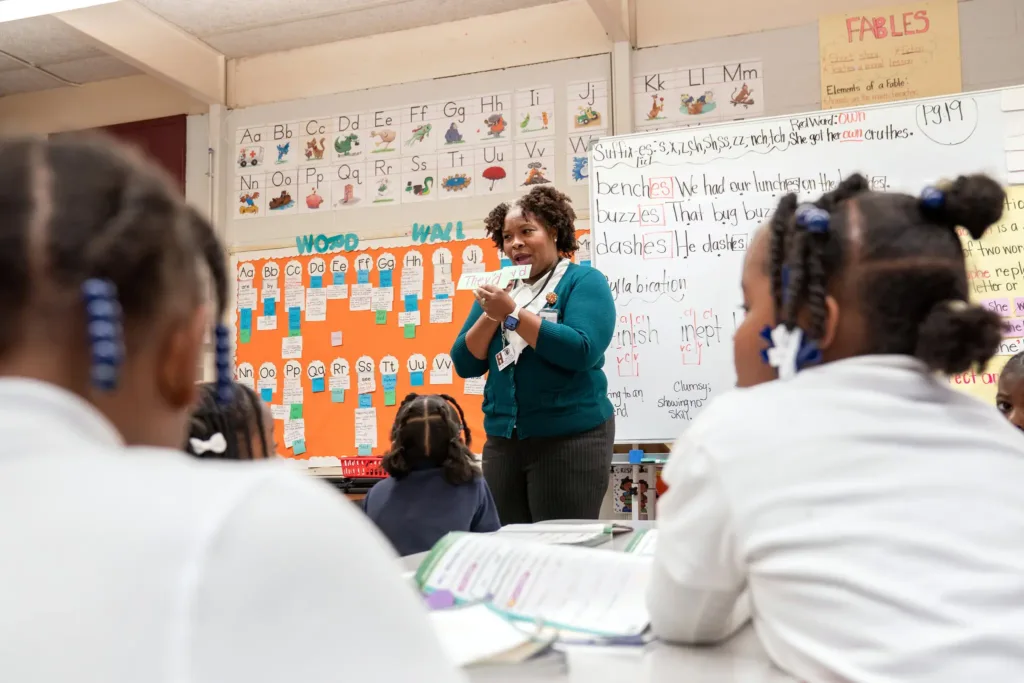
The United Kingdom, particularly England, has also undertaken significant reforms to re-establish phonics-based instruction at the core of early reading education. Influenced by the Clackmannanshire study in Scotland, which demonstrated long-term advantages of synthetic phonics, the UK government commissioned the Rose Review in 2006. This landmark report concluded that systematic phonics should be the primary method for teaching reading, leading to nationwide curriculum changes.
A sceptical reader might point to Finland, where constructivist, meaning-first approaches have produced world-class literacy outcomes without systematic phonics drills. Does this not disprove the case against whole language? The answer lies in four crucial differences between Finland and Kerala. First, orthographic transparency and script type: Finnish uses an alphabet with a shallow (highly regular) letter-sound correspondence.
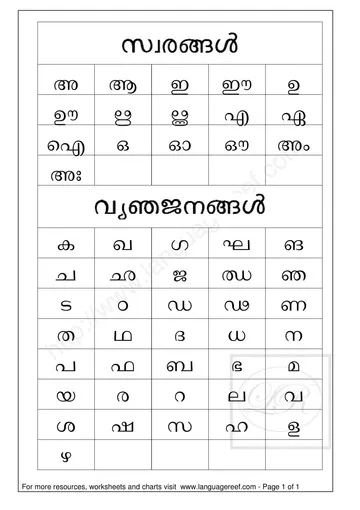
Malayalam, by contrast, belongs to a different script family: it is an alphasyllabary (or abugida), where the basic unit is the syllable—consonants carry an inherent vowel and are modified by diacritics. Unlike English, Malayalam has highly consistent sound-symbol correspondence; once a child learns the syllabic system, decoding is reliable. The challenge is not irregularity but volume: with over 500 distinct glyphs, memorising whole words without understanding the structural rules is cognitively overwhelming. Systematic, explicit instruction in how consonants combine with vowel diacritics is therefore essential—precisely what whole language de-emphasises.
Second, teacher quality: Finnish primary teachers hold master’s degrees with extensive training in reading development. Kerala’s government school teachers have received limited preparation for implementing whole language with fidelity, especially in large classrooms.
Third, class size: Finland averages twenty students per teacher; Kerala often has forty to fifty. Fourth, assessment culture: Finnish assessment is low-stakes and formative, while Kerala operates within a high-stakes, examination-oriented system that tests discrete decoding skills. Finland’s success does not invalidate the critique of whole language in Kerala; it merely shows that the method requires specific conditions that Kerala does not meet. Thus, for Malayalam‑learners, explicit phonics‑informed instruction in syllabic‑structure is not regressive, but pedagogically necessary.
It is important to note that the term ‘evidence-based learning’ is now widely used instead of simply referring to a method as ‘traditional’ or ‘phonics-based’. This shift in terminology reflects a broader understanding that the validity of a teaching method does not depend on whether it is old or new, but rather on the strength of the empirical evidence supporting its effectiveness in practice. Additionally, this does not mean that age-old methods should be implemented in the exact manner they were used in the past, without any refinement. The real challenge lies in rejuvenating the phonics approach by integrating current insights from educational psychology while also respecting the values of a democratic classroom environment.
Promoting Whole Language to the Global South
Another notable but worrying paradox is that, while the intensifying ‘reading wars’ in the West during the 2000s triggered growing demands to re-evaluate the efficacy of the whole-language method—leading to renewed comparative research in language learning, the reinstatement of the phonics approach with timely and appropriate modifications, and measurable improvements in basic language skills—the Global South was simultaneously being encouraged to adopt that very same whole-language method in some policy contexts. It was promoted as a scientific and child-friendly approach to language acquisition in classrooms, intended to enhance both the quality and quantity of basic skills.
This raises important questions about the role of international agencies such as UNESCO, the World Bank, and other development funding organisations from the Global North in supporting the implementation of the highly contested whole-language approach—and its underlying theory of constructivism—in the name of child-centred education and the right to education.
Over the past three decades in Kerala, debate over the efficacy of the whole-language approach has often remained limited, with its proponents continuing to present it as a progressive and internationally validated pedagogy. Critics who highlight concerns about declining basic skills or emphasise the importance of phonics have, at times, been characterised as defending outdated or traditional methods. As a result, discussions around early literacy instruction have tended to become polarised, making it difficult to sustain an evidence-based inquiry into which approaches are most effective for developing foundational language skills.
Another interesting aspect of the arguments in favour of new methods is the claim that, since the inception of formal schooling, Kerala had already adopted the whole-word approach as a pedagogical strategy for teaching reading and writing in primary classes. The proponents of this modern method have even submitted a copy of a textbook printed in 1937 for Class I, as evidence that the whole-word method was adopted early in Kerala’s schools. What is particularly striking, however, is the foreword to the textbook—authored by the renowned editor, publisher, and literary figure Maman Mappila—which contains the prophetic statement: “This method is now widely accepted as a true method in the Western countries, and all our countries will adopt the same method in future.”
The textbook published in 1937 reflects not only the global circulation of emerging reading methods from the United States, but also the ways in which educational practices in the Global South were shaped by developments in the West. As a result, methods that were later questioned or revised in their original contexts sometimes continued to influence classroom practice elsewhere. This pattern highlights the uneven circulation of educational ideas, where shifts in policy and research do not occur simultaneously across different regions.
Questions about the effectiveness of the whole-language method in all contexts compel us to rethink what we mean by a ‘child-centred’ approach. A pedagogy cannot be considered truly child-centred merely because it entertains children. If a method fails to help children acquire essential skills and knowledge, it cannot be considered truly centred on the child. A genuinely child-centred pedagogy must be one that meets educational goals—ideally in an engaging and enjoyable way. In that sense, a method that both delivers learning outcomes and respects the learner’s experience can rightly be called child-friendly. The real challenge of a child-oriented approach lies in finding a path between mere entertainment and harsh external pressure.
The Class I textbook published in 1957, after the formation of Kerala State, reflects a pedagogical emphasis on introducing the Malayalam alphabet from the outset, even as it incorporated elements of the picture-based look-say method. In contrast, the policy shift that began in the early 1990s, associated with programmes such as DPEP and SSA, marked a decisive move toward the de-emphasis of alphabet learning.
The primary victims of basic skill deprivation resulting from the removal of alphabet instruction from textbooks are children from families with limited prior exposure to written language. This pattern is clearly evident in the United States,
where functional illiteracy is disproportionately concentrated among historically marginalised racial and ethnic groups. The same pattern can be observed in Kerala, where basic literacy levels among children are lower in socially and educationally disadvantaged communities such as SCs, STs, and OBCs.
Pedagogy is not a neutral force; its effects vary across different social and institutional contexts. Before implementing a revolutionary change in reading pedagogy, it is imperative to analyse the interaction between social hierarchy, the structure of the language itself, and instructional methods. The apparent success of the whole-language approach may be context-specific, linked to Finland’s highly developed welfare system and exceptional orthographic transparency rather than to the method itself.
Although widespread demand forced the education department in Kerala to reintroduce the alphabet in primary-level textbooks, the reformed instructional approach based on whole language remains largely unchanged. If Kerala seeks to replicate outcomes similar to the “Mississippi Miracle,” the previously abandoned alphabetic approach would be most effective if systematically integrated into child-friendly primary-level learning environments—rather than being reduced to the mere reprinting of the alphabet in textbooks.
Featured Image Courtesy: digitallearning.eletsonline.com
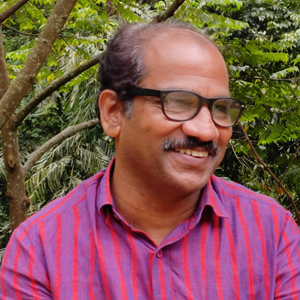
He was a teacher at the Marancheri Government Higher Secondary School in Malappuram district. He is involved in and writes on environmental and social issues. He was the editor of the magazine One Land One Life. He has published the books Green Revolution: The Fruit of the Fruit of Evil, White Rice that Gives Disease, Environmental Action at Home and School, Disease-Spawning Chemical Fertilizer, and the Political Psychology of Neo-Liberalism and Universal Worship in Malayalam and the book Disease-Spawning Chemical Fertilizer, published by Other India Press in English. He writes articles in periodicals that focus on cultural politics in the post-colonial context. He is active in Kerala Bio-Agricultural Committee and Good Food Movement-Ponnani.
- child-centred education
- constructivist pedagogy critique
- Early childhood education
- education policy Kerala
- Evidence-based learning
- Foundational literacy
- Kerala education crisis
- Kerala school education
- Literacy crisis
- Malayalam language education
- Malayalam literacy
- Phonics instruction
- Public education Kerala
- Reading wars
- Whole language approach