
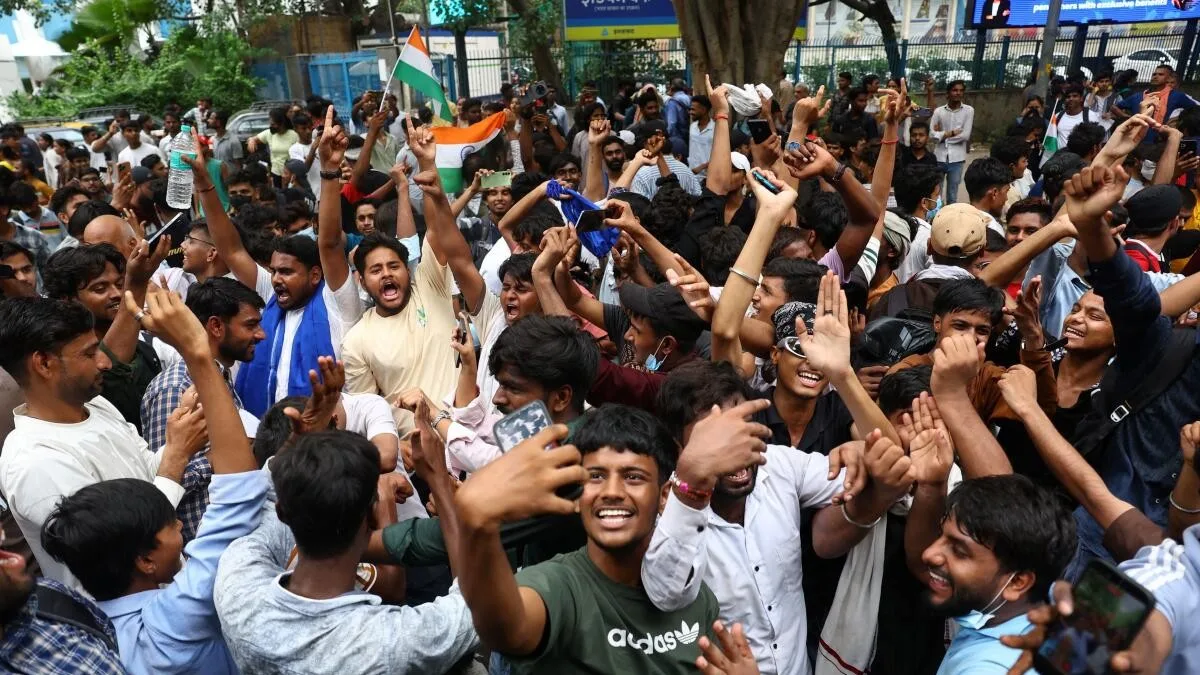
Jantar Mantar and the Future of India’s Democracy- Voices from Across the Spectrum
What remains after the slogans fade and the crowds disperse? Victory, disappointment, hope, caution or all of them at once?
The Jantar Mantar movement has generated one of the most significant public conversations in recent years. In this special feature, Panthi brings together a diverse group of journalists, economists, writers, activists and artists to reflect on the movement’s legacy. Their voices differ in emphasis and opinion, but together they explore a larger question: what does Jantar Mantar tell us about the future of democracy, dissent and youth politics in India?
Beyond a Minister’s Resignation- How Jantar Mantar Politicised a Generation
Binu Mathew
More than the immediate victory represented by the resignation of Union Education Minister Dharmendra Pradhan, the Jantar Mantar movement achieved something far more significant: it politicised an entire generation of Gen Z.
The minister’s resignation was not simply the result of the protest led by the Cockroach Janata Party at Jantar Mantar. It reflected the fact that the movement spread across the country, drawing thousands of students and young people into collective action. What began as a protest at one site evolved into a nationwide democratic mobilisation.
For years, much of India’s student community—apart from politically active campuses such as JNU and Jamia Millia Islamia—remained largely detached from public politics. This movement taught young people that they have a direct stake in the future of Indian democracy and that through organised, peaceful collective action they can compel those in power to respond to their demands.
Equally important, the movement revived the idea of solidarity. It showed that students can become part of a broader democratic coalition. That spirit of solidarity must now be strengthened through closer engagement with workers, farmers, Dalits, Adivasis, minorities and the wider civil society.
The most enduring lesson of the Jantar Mantar movement is not the fall of a minister but the awakening of a generation. It reminded us that another India is possible.
Here is an article I wrote on June 9, when the Cockroach Janata Party emerged “The Cockroach Janata Party and the Search for a Politics of Solidarity”
Binu Mathew is the Editor of Countercurrents.org
Why Ending the Protest Was a Historic Mistake?
Ayana
This is the first time I saw the otherwise politically neutral, “happy to enjoy privilege” Savarnas come out of their shells and join the movement, along with others. I truly did see people from different classes, creeds, and castes join the movement. But I cannot help but wonder: had the CJP avoided the whole “apolitical” act, would this mobilisation have happened?
I am a communist. Not a member of an organisation yet, but I am warm to SFI, Azad Party and AISA. What I noticed on the 20th is that the Azad Party, Bhim Army and AISA were the ones who gave people the ground support they needed to keep the movement alive and bustling.
Why were they not given the same stage? There was a vertical hierarchy set by the CJP leadership, and that was suspicious to me.
And the first betrayal happened on the 20th, when, at Sansad, they first used tear gas and asked us to move. Then, when we all reached there a second time, they lathi-charged us. Where was the CJP leadership? There are multiple answers they can give, but what I felt was that all of us were sent to be sacrificed. Bhim Army and AISA activists bore the brunt, along with civil society.
In all of this, I did feel a real, real sense of solidarity among the people: sharing food, helping others in the heat, aiding those who were hurt, distributing pamphlets with the truth, etc. Social media was booming with what I’d call “protest aesthetics.” I am not an academician, but what I understood by it was that somehow being associated with, or being around, the protest was seen as cool, desirable, sexy. But I felt that everyone is needed at the protests, from the serious activists to the kids making memes. The government was being mocked—left, right, and centre. The power of Meta-owned applications in the hands of the public was truly evident when the police and the right-wing people were getting exposed at a rate I had not seen before.
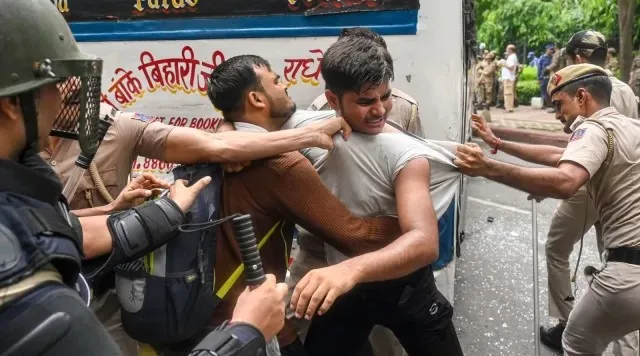
The CJP tried to tone-police the movement, but by that time it had grown larger than them. They tried to ban Azaadi slogans, and they tried to stay as safe as they could. But people did not relent, and I found that beautiful.
HOWEVER, CJP’s withdrawal is a HUGE mistake according to me. It is a betrayal of all the sacrifices made by the protestors. You left after the State provided you with a lollipop?
And the liberal Savarnas posting aesthetic celebratory photos and reels with the hashtag #itsawrap. Is it? They are bringing another RSS member to the same position. I don’t even know if DP’s resignation has even been accepted yet.
This is what it takes to get a change equivalent to moving a feather on the State’s wing. Withdrawing right now is a huge blow, because when can we be assured of a similar kind of mobilisation again? We surely know that people have protested and agitated much harder before the CJP protests, for much more serious issues, and no one batted an eyelid.
I find it hard to think that this is a dent, or that this was a victory. It is a symbolic victory, sure, but the State on the other side is a cunning strategist, and I feel people barely understand that. However, this is the beginning of the end of the Modi Cabinet. People do not respect them. Fear and psy ops are not going to work the same way anymore. Perhaps that’s the only lasting impact I see from this.
I hope this snowballs into a larger movement for the criminalisation and banishment of the RSS, and the dismantling of its tentacles across every institution of the Indian State. For now, many more fights remain, and it remains to be seen whether the memer upper-class, upper-caste Gen Z (or any generation) will demand justice as readily as they did over the NEET issue.
Ayana is a trans musician living in Delhi
Let Every Dissenting Mind Be a Jantar Mantar
Parakala Prabhakar
What happened in Jantar Mantar is a great victory to the democratic movement launched and led by our youth.
While celebrating this victory I feel one should not now rest on our oars. This should be the beginning of many larger battles to reclaim the Republic.
It is not fair to expect our children to take up and fight every battle. Other sections should draw inspiration from the Jantar Mantar experience and expand the agenda to reclaiming all our constitutional values.
The biggest achievement of our youth is to show the rest of the country that this regime is not invincible. And that it will retreat in the face of a determined ‘feet on the ground’ agitation.
Jantar Mantar is not merely a physical space in Delhi. Every place of protest anywhere in the country is a Jantar Mantar agitation.
Let there be thousands and thousands of Jantar Mantars in the country. Let every dissenting mind be a Jantar Mantar.
Parakala Prabhakar is an Indian economist and political commentator.
Beyond One Resignation: A Democratic Inflection Point — If History Is Any Guide
Venkitesh Ramakrishnan
Unlike earlier mobilisations, this movement did not begin under the leadership of established political parties or nationally recognised personalities. It emerged from the lived experience of young people confronting repeated examination failures, paper leaks, shrinking employment opportunities and growing institutional unaccountability. The protests grew through horizontal networks, digital communication and sustained grassroots mobilisation rather than conventional party structures.
The resignation of Dharmendra Pradhan therefore represents more than ministerial accountability. It establishes, however tentatively, the principle that sustained democratic mobilisation can compel governments to respond to public pressure. In recent years, accountability has increasingly appeared subordinate to political majorities. The movement has challenged that assumption.
Equally striking has been a psychological shift that is difficult to quantify but impossible to ignore. For nearly a decade, the Modi government cultivated an image of political invincibility reinforced by an atmosphere of fear. That aura now appears to have weakened. A Prime Minister who once seemed beyond public ridicule has increasingly become the subject of satire and irreverent social media humour. Even his carefully choreographed midnight selfie videos have attracted widespread trolling rather than unquestioning admiration. Democracies often change not only when governments lose elections but when citizens lose their fear of those in power. The present movement appears to have contributed to precisely such a shift in public mood.
Equally significant has been the political education of an entire generation. For millions of young Indians, this has been their first sustained engagement with democratic politics. They have experienced police repression, arrests, intimidation and institutional hostility. At the same time, they have also discovered that collective democratic action can produce tangible political outcomes. That lesson may prove far more enduring than any immediate policy concession.
The examination crisis itself is only the visible expression of deeper structural anxieties. Behind the protests lies a generation confronted with persistent unemployment, precarious work, declining public investment in education, widening inequality and an economy that has failed to generate adequate opportunities despite impressive macroeconomic claims. The frustrations of educated youth have accumulated over years, making the paper leak controversy the spark rather than the cause of the mobilisation.
The movement has also expanded beyond educational concerns. Questions of democratic rights, constitutional governance and equal citizenship have increasingly entered its discourse. Opposition to arbitrary state action, concerns over electoral processes and resistance to attempts at communal polarisation have all found expression alongside demands for educational reform. In doing so, the protests have reaffirmed an essential democratic truth: governance failures cannot be separated from the health of democratic institutions.
This broadening of the agenda also explains why the movement has unsettled the political establishment. It is no longer merely about examinations. It is about accountability.
The questions that now arise are necessarily political. Should the movement evolve into an organised political platform? Should it remain an issue-based democratic coalition? Can it reshape existing opposition politics without being subsumed by it? These are questions that cannot be answered in the heat of mobilisation. They require careful democratic deliberation.
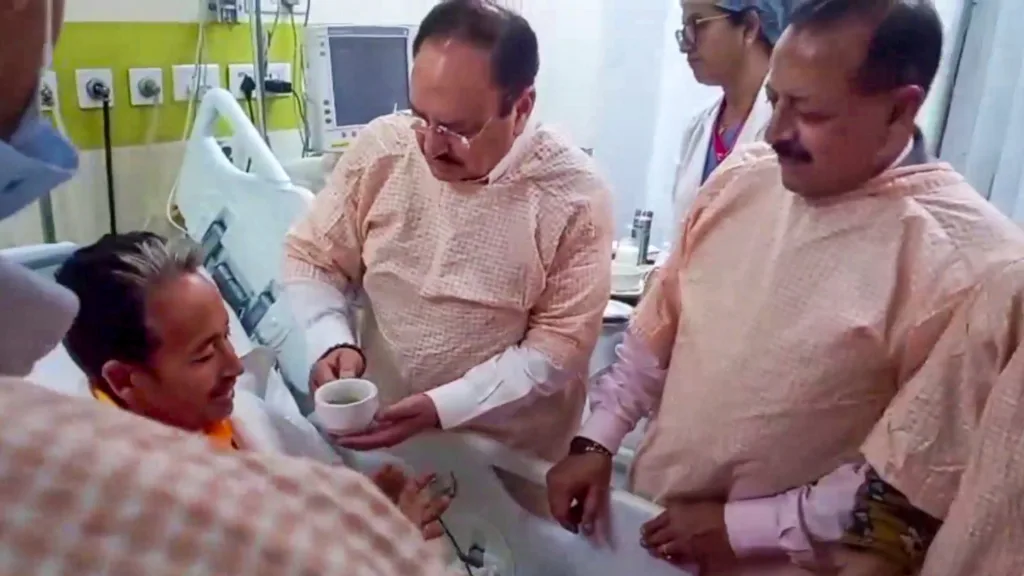
At the same time, one caution emerging from within the movement itself deserves equal attention. Student leader Dipke warned against elevating any individual into the face of the struggle, remarking, “We are suffering because we made one-person hero.” It is a simple observation with profound democratic significance. Independent India has repeatedly seen public movements become invested in charismatic personalities rather than enduring institutions. If this mobilisation is to leave behind a lasting democratic legacy, it must resist that temptation. Its strength lies in its collective leadership, decentralised organisation and shared commitment to constitutional values.
One conclusion, however, already appears inescapable. Dharmendra Pradhan’s resignation is not the culmination of a protest. It is the opening of a new democratic phase. Whether that phase ultimately strengthens India’s constitutional democracy—or becomes yet another moment appropriated by forces seeking majoritarian consolidation—will depend on whether this generation succeeds where previous democratic mobilisations faltered: sustaining the struggle for accountability without allowing it to be diverted into the politics of polarisation, and without replacing one cult of personality with another. That is the real test history has placed before India’s young citizens.
Read the full article here
Venkitesh Ramakrishnan is the Managing Editor of The AIDEM. A Delhi based political journalist with four decades of experience.
The Future May Be Red
Revati Laul
It’s funny that we live in times when I cannot spell out clearly the one winning protest signboard from Jantar Mantar’s barricades without asterisks. “F*** Fascists,” it said, loud and proud. The one thing that can be said without disguise, though, is this: what the right wing is most scared of—and rightfully so—is the left. Therefore, on the streets of Jantar Mantar, what I saw, beyond Sonam Wangchuk and Abhijit Dipke, was the steely and effective presence of the ideological Left. The only reason a student could brandish a “@@@@ fascists” banner is because members of the Student Federation of India, the All India Students’ Federation and the All India Students Association—21 of them—were on hunger strike for over 20 days. Their tents, in a quiet corner, were fronted by banners of Bhagat Singh and Che, alongside pamphlets and circulars on the New Education Policy, revolutionary ideals and ideas that have stood the test of time.
I was at the protest one day before D-Day. There were over a lakh people, and it was the most beautiful and civilised sight imaginable. It was managed by well-heeled Left cadres. By “well-heeled”, I refer to ideological commitment. They had paper and plastic fans. They spotted grey-haired people and started fanning us, passing around bottles of water and chana to eat, forming queues, making way for one another, writing slogans, being considerate and waiting for others to pass.
But peace, in draconian times, is an ideal that only the ideologically scared, unsure or wavering will uphold as a first principle. When your skull is cracked and you are still staring down the police officer, this is not the definition of peace. It is a war by the State against the people. Peace cannot be upheld as the only ideal. It is also the badge of status quoists too fearful of barricades, commitment and the laying down of life.
And this is where students have shown that they are thirsting for commitment and ideological grounding. They’re coming to Jantar Mantar with copies of the Constitution and posters of B. R. Ambedkar. This is a commitment to an ideology first, and at any cost. It’s not about tepidly made promises to turn the other cheek. There are memes and photographs that speak of students tired of having nothing to hold on to and nowhere to go. I asked a policeman yesterday whether, in his heart, he wasn’t committed to the students. He looked away, then ahead at his boss standing some distance from us, and said quietly, “I’ll answer that question when I’ve taken off my uniform, madam.”
Read the full article here
Revati Laul is a journalist, activist and author of the non-fiction narrative The Anatomy of Hate, published by Westland Books. She lives and works in Shamli, Uttar Pradesh.
How the CJP protests have shaken Modi’s stranglehold over India
Neha Dixit
Many have pointed out its similarities to the recent wave of Gen Z-led protests across Southasia and the world. Students in Bangladesh sparked a revolt in 2024 that toppled the autocratic government of Sheikh Hasina. Protests broke out in Indonesia, the Philippines and Nepal – where the entire old political order was swept away in 2025 – and more followed in the Maldives, Madagascar and beyond. These movements shared grievances over inequality and corruption, public accountability and government impunity, and the erosion of democratic rights. The CJP protests have swelled with similar anxieties.
The Jantar Mantar protest site, reclaimed after the 20 July crackdown, has turned into a cultural space for resistance, solidarity and understanding. There is artwork, music and langar sewa – a community service to feed and care for the protesters. Much of this echoes the best of the earlier protest movements: community kitchens and langar sewa were a big part of the farmer protests, and the protest site at Shaheen Bagh came to resemble a streetside art gallery. Another echo of those earlier protests is how participants are openly criticising the BJP’s ties to big-money corporations such as the Adani Group and Reliance Industries, and speaking out against the godi media. There are calls for unity with farmers and workers, discussions on issues of caste and class.
There are other solidarities too. There is empathy for Manipur, the northeastern state where the government’s apathy has let communal violence run on for three years, and for Kashmir. Women and queer people have posted reels on how the protest site is a safe space. People of multiple faiths and backgrounds have been visiting the site in solidarity, support and concern.

There is solidarity with gig workers on the delivery apps, many of whom are also part-time students. “Gig workers represent the lack of social security and decent work available to young people once they enter the labour market,” Nitesh Kumar Das, the organising secretary of the Gig Workers Association, told me. “Through these protests, there are conversations to ensure that young people not only have pathways into work but also access to work that is sustainable, secure and dignified.”
A wall of shame at Jantar Mantar documents police brutality. Graffiti adorns the surrounding walls. One wall reads, “A whole protest because a manchild won’t take hint.” Another demands a ban on the RSS, raises the Ambedkarite call “Jai Bhim”, and declares “Jal jangal zameen and jobs hamari hain”, asserting the people’s ownership of jobs in addition to the water, jungles and land long claimed by India’s beleaguered tribal communities.
There are slogans of “Modi is a diva”, and “Jab jab Modi darta hai, Hindu-Muslim karta hai” –Each time Modi is scared, he starts dividing Hindus and Muslims.
Read the full article here
Neha Dixit is an independent journalist and author who writes on the intersections of politics and social justice in Southasia.
The Dawn Is Theirs
R. Rajagopal, former journalist
How will an uncle like me assess the spectacular phenomenon that we witnessed at Jantar Mantar? I don’t have the language or the expertise for that. What I do know is that a large section of my generation badly let down the new generation.
I must not meddle now. I must not imagine that I can analyse, assess or judge them. I must let the youngsters continue on this glorious journey, unhindered by my generation’s baggage and timidity. They don’t need my advice. They are far better informed than I am.
At best, I can try to do what the Opposition leaders did: support the youth, underscore the issues that affect them, and take care not to steal their glory.
I should do what Sanjay Hegde wrote in the National Herald on Saturday: “I watched the footage from Jantar Mantar again last night. Bandaged heads, borrowed megaphones, the anthem sung off-key and wholeheartedly. I thought of Wordsworth, watching another generation storm another old order: ‘Bliss was it in that dawn to be alive, but to be young was very heaven.’ The dawn is theirs. The rest of us should have the grace not to stand in its light.”
A New Language of Fearless Protest
Namrata Neog, Artist
Gen z showed a new language of protest and fearlessness, never seen before in a very long long time. They truly gave hope and glimmer of light of possibilities. A huge gratitude for CJP for laying the foundation of future.
This Gen Z will not go down so easily
It appears that competitive exams are being controlled by the corrupt—for the benefit of the corrupt.
The NEET paper leak, the launch of the CJP, and the subsequent protests highlight a deeper socio-economic malaise confronting the youth—rising unemployment. A study by Azim Premji University, released earlier this year, reveals that 40 per cent of individuals aged 20-25 are unemployed, and a mere 7 per cent of graduates secure permanent employment. Furthermore, a staggering percentage of young graduates who claim they are ’employed’ are actually in temporary positions or engaged in gig work, such as delivery executives.
It’s clear that the divide between the educated workforce and those who are gainfully employed will only widen. Companies are using AI as a scapegoat while they downsize and eliminate jobs, as evidenced by the recent layoffs at major tech firms in Bangalore, Mumbai and Chennai. Instead of investing in their employees, these companies are resorting to salary cuts to mask their financial woes.
Moreover, the small-scale manufacturing sector is facing a dire situation, crippled by insufficient fiscal support and the rise of monopolies that threaten their existence. The outlook for young professionals is undeniably grim, and immediate action is necessary to address these challenges.
Whether the CJP achieves its objectives or not, its protest has successfully united a significantly massive segment of young voters who recognise they have been treated so unfairly. They should also understand that they must actively fight for their right to live with dignity in a world dominated by inequality.
In a democracy, public outrage must be confronted with dialogue, not with police and paramilitary forces unleashed to viciously assault its young citizens with batons, tear gas, lathis embedded with nails and electric current, and pellet guns.
Some girls were sexually assaulted and evidence is all over Social Media. A senior police officer was even caught on video striking a girl who could easily be his daughter. The peaceful woman protester walking alone was intentionally slapped by none other than a senior Additional DCP of the Delhi Police. One particular cop, reportedly an SHO, who sexually assaulted a girl with a lathi has also been identified. Their profiles are also on Social Media.
Read the full editorial here
protest without punctuation a call to arms from unarchy
Sajai Jose
dear boss
six weeks the children built a nation out of cardboard and called themselves what every landlord calls me a cockroach too small to stomp too many to count and boss it turns out that is not an insult it is a superpower
they did try to stomp us first week boots tear gas the whole big show but a boot only ever finds one roach at a time and we were legion so they put the boot away and tried a smile instead ha a smile never scared anybody who has already survived a boot
so smile all you like old men we got a scalp this time a real one a minister down that is not nothing that is a start and yes the papers are still for sale in some drawer somewhere and yes the front door is still stuck shut but boss a door has hinges and hinges rust and roaches have all the time in the world we are not tired we are multiplying see you at the next crack in the floor
unarchy the not so lovey dovey cockroach who believes in protest but not in punctuation
(With apologies to the late great Don Marquis)
Sajai Jose is a journalist, researcher and communication professional.
Victory at Jantar Mantar Must Become a Democratic Movement
Prof. Roop Rekha Verma, Social activist from Uttar Pradesh
As I see it, the major fight was fought by those resident Indian youths and their sympathisers who had faced the brunt of repeated paper leaks and empty promises. The non-resident Indian youth of CJP gave the movement a name and a start but, as I see it, major battle was fought by thousands of those who had suffered and this was the major strength of the protest. Added to this were those young activists who had already developed an understanding of democracy and commitment to democratic values.
The major gain of the whole chain of events is to make it seem possible what was seen as impossible, viz, making this very rigid government bow down. As human history has shown, greater the suppression, bigger explosion. Government brutalities strengthened the desire to assert, to fight back. Our youth and support from some sensible senior citizens and opposition alliance together made the regime bow down.
However, coming out of the euphoria of “victory”, let us examine to what extent this victory is going to change the shape of the country vis-a-vis our educational system and dying democracy. 1. The credentials of the new education minister do not leave any scope of hope for any better change in education system. In fact, the talk of his involvement in honouring Biliks’s rapists, if true, makes us fear worse results. His qualifications and background too do not leave any scope of hope.
Democracy, as such, was not even in the immediate agenda of the protest, whereas I feel that the multi-faceted deterioration and shameful state of affairs in every aspect of the nation’s life cannot be stopped by darning it in patches. Total overthrow of the regime which is divisive, anti-humanity, corrupt, anti- national, superstitious and fascistic is the only way out of the mess in which the nation has landed.
Therefore, having gained some confidence through the recent protest, the next agenda must be: Return of Democracy and thereby re-livening of our Constitution and the establishment of a judiciary which respects the Constitution and the country’s law.
It is vast and heavily loaded agenda. But the damage done in the past decade and a little more is also vast, deep and heavy.
Students, Justice, and the Fight to Reclaim Public Education
Harsh Kinger
The student protests triggered by the comments made by the Chief Justice of India brought out the underlying anxiety and distress of young people related to how the education system is failing them in realizing their aspirations. Education, as Dr. B.R. Ambedkar emphasized, still remains the most powerful tool for transforming individual lives and challenging inequality. And these structural challenges like paper leaks & privatization of education arrested the potential of this transformation which affected individual lives.
The organized way in which the papers of important examinations are leaked and the collective frustration and helplessness got channelized in these historic protests led by fearless student/youth leaders culminating into the resignation of the Education Minister. This has set an important precedent for other movements and people’s organization to seek accountability through mass protests & demonstrations. We hope that this is not an end but a beginning in challenging the structural problems and inequalities brought to the fore by the first victim of discriminatory examinations like NEET.
Harsh Kinger is a lawyer
Beyond the Protest: Building Movements That Last
Jay Vyas
The recent student protests across India have been a powerful reminder that courage and hope still exist in abundance. Thousands of young people stepped onto the streets without hiding behind anonymity, putting their faces, names and futures on the line for what they believe in. Despite intimidation, arrests and serious human rights violations—including violence against students—many continue to face severe consequences simply for exercising their democratic rights. Yet city after city rose with remarkable resilience. What stood out was not just the scale of the protests, but their spirit—a sense of solidarity, music, art, slogans, conversation and collective celebration of democratic participation. That energy deserves to be protected and nurtured. The challenge now is to move beyond moments of mobilisation and build movements that can sustain themselves over time, supporting those who bear the costs of speaking out while creating structures that keep people engaged long after the protests end. That is how lasting social change is built.
Jay Vyas is activist and musician working with Indian Hawkers Alliance

This symposium was curated by Panthi and brings together reflections from journalists, academics, artists, activists and public intellectuals. The opinions expressed are those of the respective authors.