
Hey Congress (and the Left), It’s Time to Listen to the Cockroaches
B. Rajeevan argues that the sudden popularity of the Cockroach Janta Party is not merely an online phenomenon or a youthful joke, but a political expression of deeper frustrations among India’s younger generations. Drawing connections between digital-era protest movements, global democratic uprisings, and contemporary Indian politics, the article urges Congress and other opposition forces to recognize this emerging youth energy as a transformative democratic force rather than dismiss it as a passing trend.
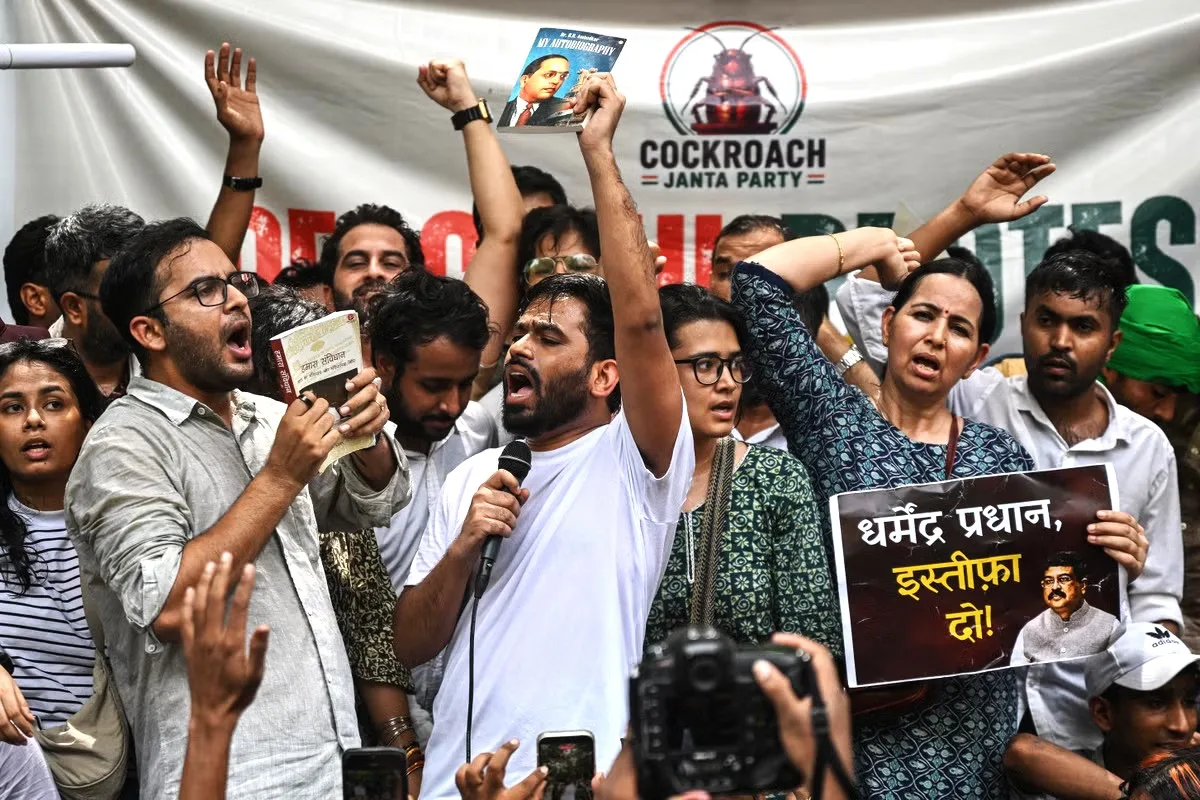
The thunderous influx of young people into the Cockroach Janta Party, formed in protest against Chief Justice Surya Kant’s contemptuous remark about Indian youth, has quite literally shaken the citadels of power.
Within a week of its birth, the CJP had overtaken the subscribers of the BJP’s Instagram account. No sooner was this announced than the government froze the CJP account. Soon after, a new account appeared on X under the name “The Cockroaches Have Returned”, carrying the declaration: “Cockroaches do not die.”
Is this upsurge, as many suppose, merely the work of immature young minds emptied of political ideology? Certainly not. The regime that governs India today, led by the spokesmen of an antiquated ideology, has failed to speak to the life-world and imagination of the new Indian youth. The void created by that failure, joined with the denial of employment, caste discrimination, and the ruin of the educational sphere, has produced among India’s students and youth a psychic condition of unbearable despair.
This despair had already broken out through isolated suicides and revolts, only to be suppressed. Now it has begun to burst its banks against the state. Yet this youth upsurge cannot be imprisoned within, or reduced to, the despair of youth alone. The history of student and youth rebellions that began as manifestations of such despair and then transformed the world warns us against such a reduction. If so, this youth revolt into which millions are gathering from moment to moment may be the manifestation of India’s own profound historical despair. Perhaps that is what these cockroaches in flight are telling us.
Therefore, we must enter into the being, force, and political relevance of this phenomenon that many dismiss as ideologically vacant or merely temporary.
They seize the Chief Justice’s insult, “cockroach”, and turn it into their own identity. Through satire, irony, and an almost festive act of inversion, they overturn the identity imposed upon them. In doing so, they step out of the republic of power relations and rituals founded upon the supposed inviolability of modern state power. They become cockroaches, self-exiled beings.
For this reason, the cockroaches now rising into the sky of Indian politics may be understood as the symbols of a postmodern biopolitical revolution: a revolution that casts aside the disciplinary fear-machines and strategies of the modern state, and with them the old political parties fashioned in the image of that state.
Thus, this political phenomenon may be understood, with clarity, as the Indian form of the multitude-democratic alternative power that has emerged across the world since the beginning of this century, outside the fortresses of sovereign-centred modern politics.
This form of multitude politics, which rose beyond formal respectable civil society under names such as “leaderless struggle” and “Occupy struggle”, has now spread its wings into a digital organisational form that expands across the earth without borders. Through it, democracy, long locked inside the iron cages of statist political categories, has broken those cages and risen into the sky of the digital multitude.
In that sense, this Cockroach Janta revolution, now spreading like wildfire through the youth, is the newest Indian form of those multitude uprisings in which people have descended into the streets en masse and forced dictators to flee from their palaces.
In recent times, we have seen this in our neighbouring countries of Sri Lanka, Bangladesh, and Nepal, where people came down directly in their multitudes and forced dictators, who ruled under the cover of liberal democracy, to run for their lives. Now that force has arrived in India too. It has surely already cast fire into the hearts of the dictators who rule our country today after rising to power through the formal rituals of liberal democracy.
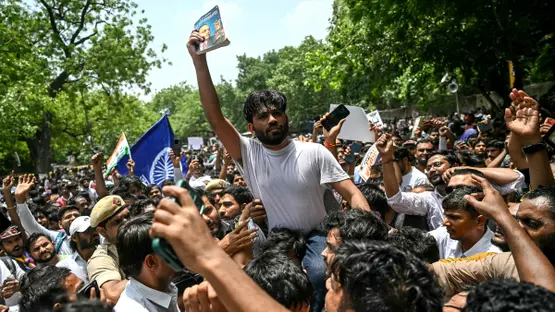
This agitation, spreading across the country through millions of followers, has placed before the state certain demands that must be fulfilled without delay. In truth, these demands are powerful enough to tear away the democratic mask of the Narendra Modi government. They are also the intensified and elevated expression of accusations that the opposition, in recent Indian politics, has repeated with relative weakness. This manifesto of the cockroaches exposes and challenges the fascist techniques of rule: electoral sabotage, the misuse of the media, and the stupefying of the judiciary.
Therefore, to state it in the briefest possible terms, the popular upsurge that has emerged today is the newest face of a subaltern class-based alternative democratic politics rising from the depths of India against the neo-fascist broker-regime that has placed India for sale in the global corporate capitalist market.
This new digital multitude-democratic agitation erupting today through the youth is also the new continuation and elevation of the powerful struggles led in India by students, Dalits, farmers, women, contract workers, and others for democratic rights and minority rights.
Seen in this way, what appears in this new agitation is the signal-light of a historical shift: the resistance of India’s subaltern masses moving away from old statist political forms and toward a digital multitude-based alternative democratic politics.
Since the beginning of this century, multitude-democratic movements have indeed succeeded in making dictators run for their lives. But they have not yet succeeded in raising an alternative minority-oriented structure of life-power in place of the sovereign order of the state. In other words, in the place of an imposed transcendent sovereignty, the political structure and institutions of immanent life-authority have still not taken shape.
It is by entering and operating within this void that reactionary forces seize, suppress, or drive backward these multitude-democratic movements. Yet, against this pattern, one example of a multitude-based alternative democratic politics attempting to move beyond this void is our neighbouring country, Sri Lanka.
What happened in Sri Lanka?
The Rajapaksa government opened all of Sri Lanka to the plunder of corporate capital.
As a result, world-class airports and ports came into being, but the people were hurled into terrible poverty and despair. People had to stand in queues even for food, petrol, and water. Hundreds of human beings died standing in those very queues.
Against this condition, students, workers, and other sections of the people gathered in their thousands. While the army stood by as a spectator, they occupied public spaces and continued the struggle for months, until the Rajapaksa family rule ended and they fled. In the election that followed, the National People’s Power alliance of 27 parties, led by the
Marxist-Leninist party Janatha Vimukthi Peramuna, which had been reduced to merely three seats in Parliament, leapt in one stroke to 159 seats and came to power. Even they would not claim that this leap was the result of the victory of the revolutionary political strategy of the Janatha Vimukthi Peramuna. What happened there was something else: the Janatha Vimukthi Peramuna, though extremely weak at the time, showed the courage to recognise, take up, and give concrete political form to the popular anger that had blazed against the evil forces ruling the country.
Likewise, in the Latin American countries that the United States chose at the beginning of this century as the first laboratories of neoliberal economic and political order, the explosions that occurred were caused by the new multitude uprisings that emerged there.
In all those places, traditional left parties abandoned their old revolutionary formulas and, through these uprisings, spread their wings as new democratic movements.
Therefore, for the Indian people to let slip the opportunity now placed before them would be a great tragedy for the liberation dreams of an India that has once again fallen into servitude. This is especially true in an age when global corporate rule has transformed old liberal democracy into the protective armour of its fascist brokers, and when old revolutionary political movements have either become obsolete or have been beaten back by the revolutionary strategy of capitalist development.
That is why the opposition parties in India must recognise the political significance of this moment, when the cockroaches of liberation politics are taking flight, and must rise as creative forces. The party that must stand at the front in taking up this historically decisive responsibility is the Congress, which leads the opposition.
For today’s Congress is not the old Congress that was the party of India’s ruling classes. It is not the Congress that was once the party of the old forces of the national capital. With Indian national capitalist capital merging into the system of global corporate capital, and with a new class arising as its brokers, Congress today is being transformed, as it was during the freedom struggle, into the party of the freedom hopes of millions.
For that reason, Congress must hear the collective flute-call of these flying swarms of cockroaches, a call that resounds like the dawn trumpet of India’s second freedom struggle. The left parties and socialist parties in the opposition must also hear this collective call and awaken.
Thus Congress must sincerely take up this youth power, which may otherwise be rendered orphaned or futile in the hands of the giant forces of global capital, and transform it into a force deployed in political battle.
Certainly, Congress has not yet fully freed itself from the grip of the remnants of old political decay. But if Congress lets this precious golden moment slip away, it will become an unforgivable historical crime: the abandonment of India to the savage plunder of the corporate-fascist alliance.
If, on the contrary, Congress rises to this moment, then the unity of opposition parties, now disintegrating under the weight of political unimaginativeness, will awaken as a great force. Congress will then transform itself, as Gandhi once said, from the force of Parliamentary Swaraj into a new revolutionary force capable of leading India toward Purna Swaraj, complete self-rule.
Featured Image: Cockroach Janta Party (CJP) founder Abhijeet Dipke (C) takes part in a protest over alleged irregularities in the country’s major examinations, in New Delhi on June 6, 2026. Courtesy: (AFP)
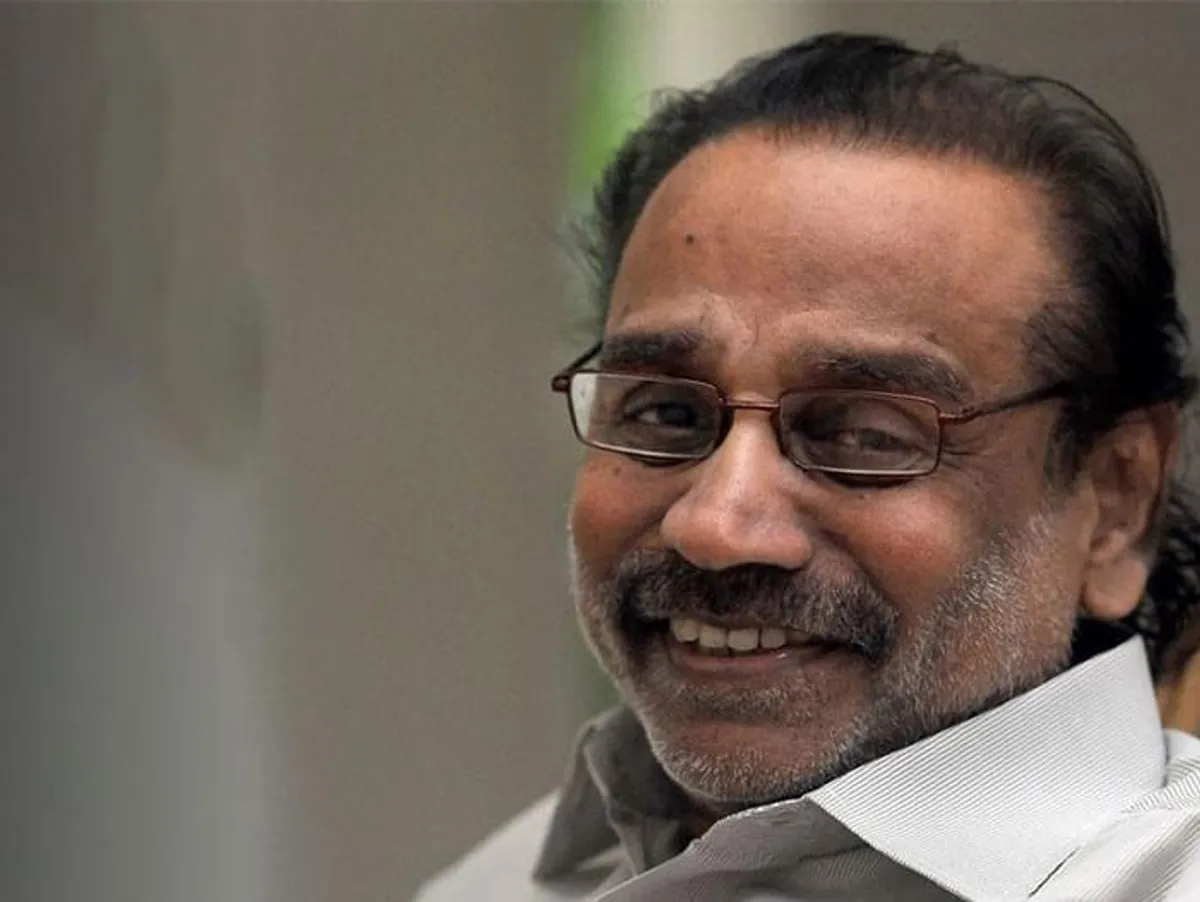
B Rajeevan began his career as a teacher in various government colleges in 1971 in Kerala. In 1975, he took part in protest against the Emergency, during which he was detained and subjected to torture. Since 1969, he has published numerous essays and books on a wide range of subjects, including philosophy, politics, aesthetics, history, cinema, and literature, earning him several prestigious awards.