
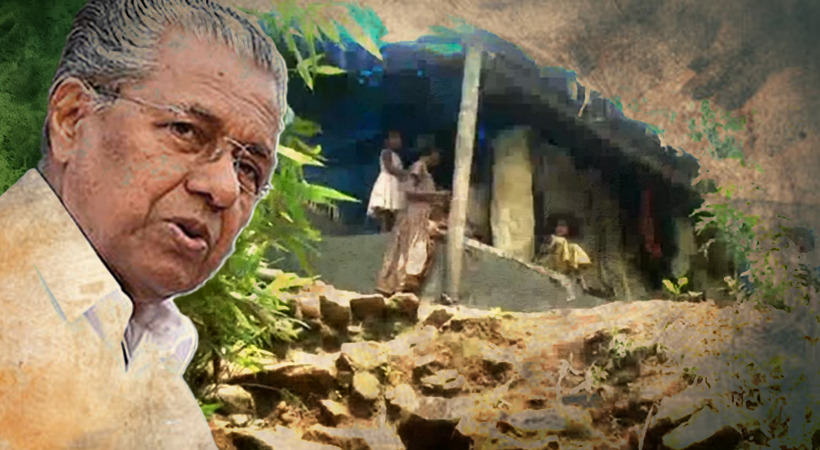
Extreme Poverty Eradicated? Experts and Tribals Question Kerala’s Big Claim
5 Minutes Read Kerala formally declared that it has eradicated extreme poverty, with Chief Minister Pinarayi Vijayan making the announcement at the special State Assembly session on the occasion of ‘Kerala Piravi’ on Saturday (November 1, 2025). The state described the moment as a milestone in achieving the UN Sustainable Development Goals (SDGs), making it the first Indian State […]
5 Minutes Read
Kerala formally declared that it has eradicated extreme poverty, with Chief Minister Pinarayi Vijayan making the announcement at the special State Assembly session on the occasion of ‘Kerala Piravi’ on Saturday (November 1, 2025). The state described the moment as a milestone in achieving the UN Sustainable Development Goals (SDGs), making it the first Indian State to make such a declaration.
Extreme poverty, as defined by the World Bank, refers to living on less than ₹180 per person per day. India’s Multi-Dimensional Poverty Index (MPI) adds further indicators such as nutrition, housing, sanitation, education, and access to basic services. According to NITI Aayog’s 2023 MPI report, only 0.55% of Kerala’s population is multidimensionally poor, the lowest in the country. The announcement follows the Extreme Poverty Eradication Project (EPEP) launched by the state government in 2021.
Demand for Transparency and Data Disclosure
Ahead of the declaration, a group of economists, statisticians, social activists, and former senior officials issued an open letter urging the government to release the full study and methodology behind its claim. The letter questioned the process by which 64,006 families were identified and declared lifted out of extreme poverty through a survey-based programme initiated in 2021.
The experts sought clarity on the criteria used to classify extreme poverty, the agency that conducted the survey, and whether the data and study report would be made public. Citing the National Food Security Act, 2013, they noted that 5.92 lakh households in Kerala continue to hold yellow ration cards under the Antyodaya Anna Yojana (AAY), the “poorest” category entitled to free food grains. The sharp discrepancy between this figure and the government’s claim of 64,006 extremely poor families has raised doubts.
“If these families are no longer considered extremely poor, does that mean the AAY category and its central support are being phased out?” the letter asked.The signatories also pointed out overlaps between the state’s definition of extreme poverty and the “destitute households” identified under the Ashraya Scheme, launched in 2002, which had listed 1,18,309 families and won the Prime Minister’s Award in 2007. They questioned how that number had now dropped to 64,006, and whether the new programme was a continuation of Ashraya or an entirely new initiative.
The letter further highlighted inconsistencies in tribal data. According to the 2011 Census, Kerala has 1.16 lakh tribal families (4.85 lakh people), yet only 6,400 tribal families, or about 5.5%, are now listed as extremely poor. The experts asked what interventions had led to such a steep reduction and whether these families were reclassified under other categories such as AAY or “destitute”.
They also sought information on whether a comprehensive survey report exists for all vulnerable groups, what methodology was used, whether names were simply recommended by local bodies, and whether informal workers such as ASHA workers earning ₹233 per day were included. They asked if the state’s Statistical Department and Planning Board were consulted while determining the economic criteria.
Stating that poverty remains India’s most serious socio-economic challenge, the letter cautioned that extreme poverty eradication should not become a publicity exercise. The group urged the government to provide transparent and evidence-based responses to these questions before announcing an “extreme poverty-free Kerala” on Kerala Piravi Day.
Local Bodies Flag Practical Issues
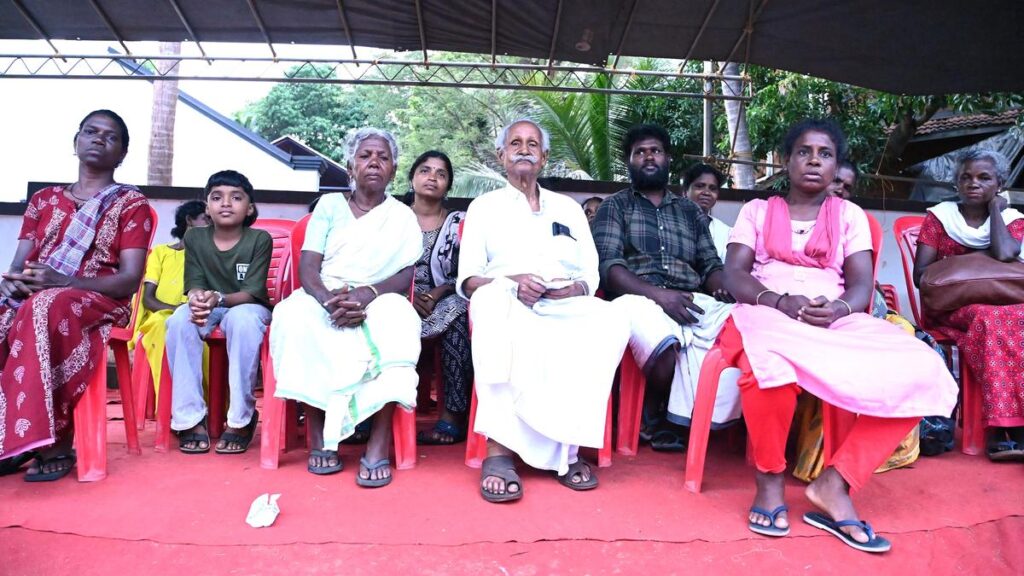
At the local level, the Maradu Municipality Council in Kochi observed that the government’s guidelines for identifying extreme poverty were not practically applicable. In its meeting, councillors noted that the criteria failed to reflect actual living conditions and the social factors influencing deprivation. As a result, they said, many genuinely poor families were excluded.
Tribal Groups Call the Declaration a ‘Fraud’
The Adivasi Gotra Maha Sabha (AGMS), a tribal rights organisation founded in 2001 to advocate land rights for landless Adivasis, has called the November 1 declaration “a deception” aimed at gaining political mileage.
“The government is misleading the public by turning the declaration into a spectacle,” AGMS said in a statement, criticising the involvement of film stars such as Mohanlal, Mammootty, and Kamal Haasan in the event. “Hundreds of poor families are being deceived by celebrities who know nothing about their struggles,” it added, urging the actors to withdraw from the programme. According to AGMS, the claim hides the reality of continuing poverty, hunger, landlessness, homelessness, unemployment, and malnutrition across Kerala. In the government’s data, only 5% of the 64,000 “extremely poor” families are Adivasis, 20% are Dalits, and 75% belong to other groups, a distribution the Sabha called “highly questionable.”
Ground Realities in Wayanad and Attappadi
In Wayanad, where several tribal communities such as Paniya, Adiya, Kattunayka, and Vettakuruma reside, most families remain landless, homeless, and unemployed. Many live in leaking huts along riverbanks, forest fringes, and remote hamlets. Studies continue to show alarming levels of malnutrition and disease.
A 2020 study (Sabu etal) found that 59% of tribal children were underweight and 52.3% malnourished. Another study published in the International Journal of Community Medicine & Public Health (LUCMPH, 2022) reported that 54.8% of children under five in Wayanad were malnourished. The loss of agricultural jobs, especially for women, due to mechanisation of agriculture activities and migrant labour has deepened poverty and food insecurity.
The situation in Attappadi remains equally grim. A study by the National Institute of Nutrition covering 20 villages found that 48% of children were underweight, 40% stunted, and over 90% of children and adolescent girls anemic. Around 10% of households were landless.
Beyond tribal areas, Dalits, fisherfolk, plantation workers, and low-wage social sector workers such as ASHA employees continue to face severe economic distress. Many families have also been pushed further into poverty by natural disasters and climate change.
A Call for Real Action, Not Celebration
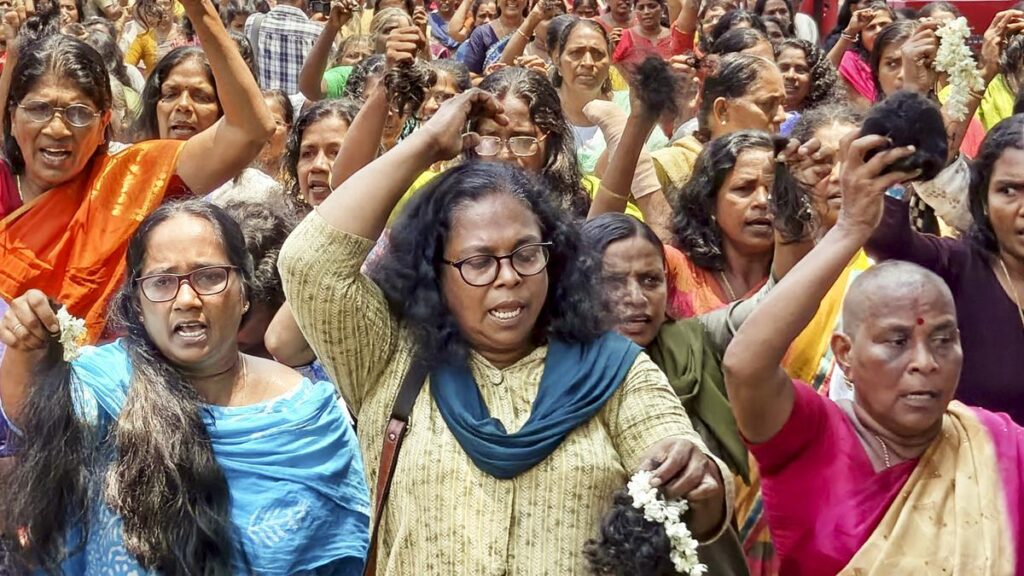
Critics argue that the declaration of an “extreme poverty-free Kerala” risks diverting attention from these ongoing struggles. They warn that symbolic milestones can obscure structural inequality and weaken the urgency for continued welfare measures. “The government should conduct a comprehensive survey on the social and economic conditions of all vulnerable groups, and implement real plans to overcome backwardness instead of declaring victory too soon”AGMS said
While the declaration of a “Kerala without extreme poverty” may project an image of progress, it risks masking the persistent deprivation faced by thousands who remain invisible to official surveys. By prematurely closing the chapter on poverty, the government may weaken future welfare initiatives, silence the struggles of the marginalized, and erode the urgency needed to address deep-rooted structural inequalities in the state.
A.K Shiburaj began his journalism career in 2000 with the publication of Samvadam magazine from Kozhikode. He later worked as a teacher on the Maldives island and engaged in social work across North Indian states. He practiced organic farming for a time and served as the Assistant Editor of Keralayam Magazine (Web). He is now a freelance journalist and an advocate for civil society and social movements. He is a recipient of the Maja Koene Social Journalist Award in 2025.