
Economy of Happiness in an Age of War and Ruin
At a time when war, ecological collapse, and economic distress define our global reality, the very idea of “happiness” seems distant, even irrelevant. Yet, as the documentary Economics of Happiness powerfully argues, this crisis is not accidental. It is the direct outcome of a global economic system driven by profit, growth, and corporate power. Drawing from Helena Norberg-Hodge’s reflections and the transformation of Ladakh, this article critically examines how globalisation erodes community, deepens inequality, and disconnects us from nature, while exploring localization as a radical alternative for a more just and sustainable world.
The world today stands at a paradoxical threshold. On one side, there is unprecedented technological advancement, wealth accumulation, and global connectivity. On the other, we are surrounded by war, ecological collapse, deepening inequality, and a pervasive sense of anxiety. From West Asia’s continuing conflicts to the aftershocks of the pandemic, humanity is pushed into a condition where even imagining “happiness” feels almost inappropriate.
Yet, this very condition forces a fundamental question: who benefits from this crisis-ridden world?
Wars generate profits for the global arms industry. Pandemics become opportunities for pharmaceutical monopolies. Climate disasters open new markets for extractive industries. Beneath the language of “development” and “growth,” a system thrives on instability, turning human suffering into economic opportunity. The crisis, therefore, is not accidental; it is systemic.
It is in this context that the documentary Economics of Happiness by Helena Norberg-Hodge becomes profoundly relevant. It does not merely critique the present; it invites us to imagine an alternative world order rooted in ecological balance, community, and human well-being rather than profit.
Globalisation and the Manufacture of Crisis
The dominant narrative presents globalisation as inevitable and beneficial as it is a force that brings prosperity, connectivity, and progress. However, as the documentary shows, this is a carefully constructed myth.
Globalisation is not simply about the movement of goods, people, or ideas. It is a political-economic project that systematically dismantles local economies to make way for transnational corporations. Its roots lie in colonial expansion, when European powers destroyed self-reliant communities and reorganised them into extractive economies. Today, colonialism continues in a subtler form through debt, trade agreements, and corporate dominance.
Far from alleviating poverty, globalisation has intensified inequality, ecological degradation, and social fragmentation. It has created a world where wealth concentrates in the hands of a few global corporations and local livelihoods are destroyed in the name of efficiency. Moreover, cultural identities are eroded by homogenised consumer culture and communities are replaced by competitive, individualised societies. This is not a failure of globalisation but it is its logic.
The Ladakh Lesson: From Contentment to Crisis
One of the most compelling parts of Economics of Happiness is Helena Norberg-Hodge’s experience in Ladakh. Before its integration into the global economy in the 1970s, Ladakh was a self-reliant society with strong community bonds and a deep connection to nature.
There was no visible poverty in the modern sense. People lived with dignity, supported by local production systems and cultural cohesion.
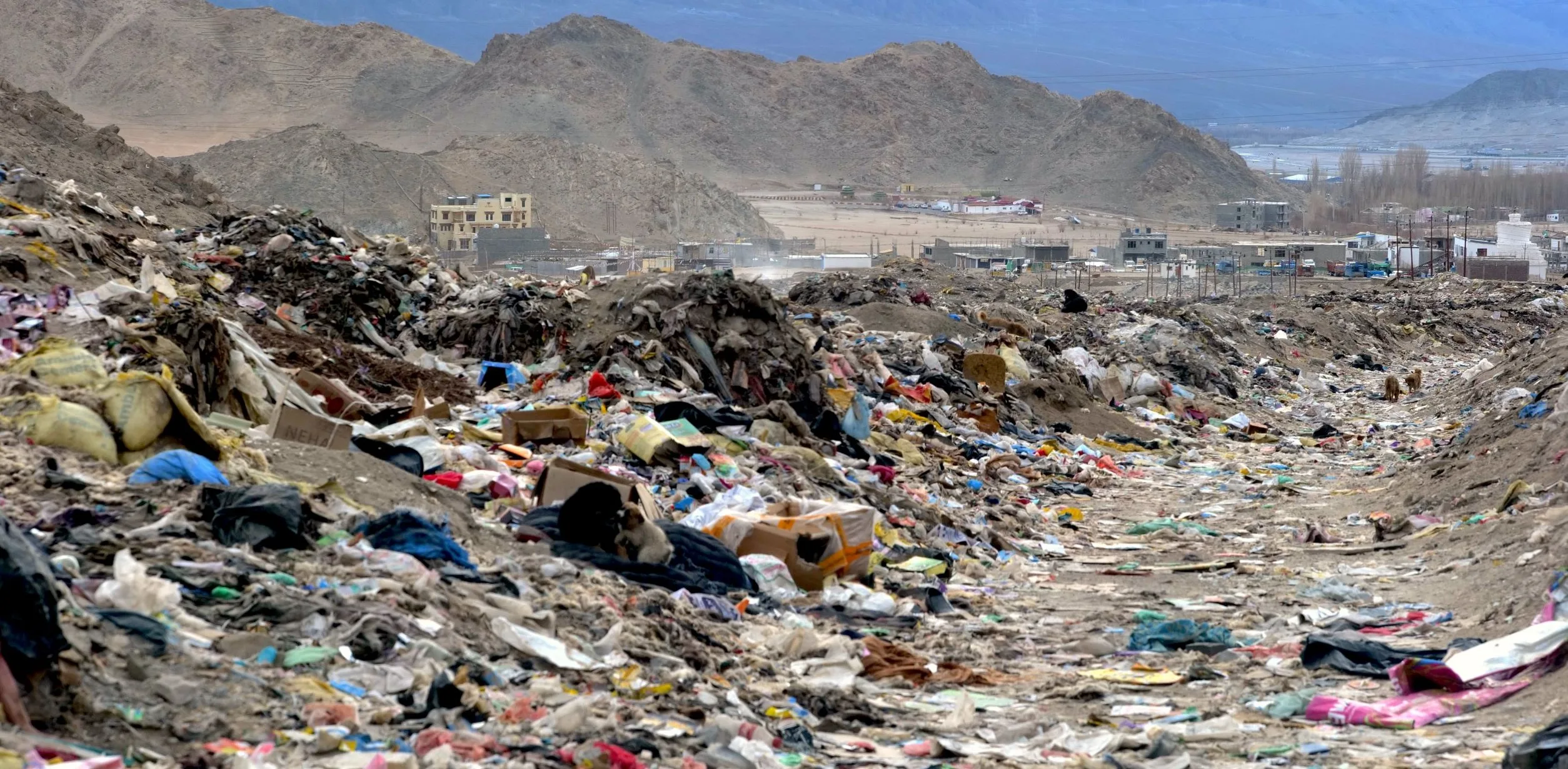
However, with the introduction of subsidised imports, infrastructure geared toward tourism, and aggressive promotion of Western lifestyles, Ladakh underwent a rapid transformation. Local agriculture declined, traditional knowledge systems were devalued, and consumer culture took root.
The consequences such as rising unemployment, widening economic inequality, environmental degradation, water scarcity were devastating. Social divisions and psychological distress also were part of it.
Perhaps most tellingly, people who once could not identify a “poor” household began to describe themselves as poor to satisfy the expectations of tourists.
This shift reveals a crucial insight: poverty is not only material, it is also socially constructed through comparison and cultural dislocation.
The Psychological Violence of Consumerism
One of the most insidious effects of globalisation is not economic but psychological.
The global consumer culture thrives on dissatisfaction. Through advertising and media, it creates unrealistic standards of success, beauty, and lifestyle. Individuals are constantly made to feel inadequate, pushing them into endless cycles of consumption.
The result is a deeply alienated society with rising depression and anxiety, breakdown of community relationships, loss of identity and belonging and increasing loneliness.
Even in the wealthiest societies, happiness indicators have declined despite rising incomes. Material abundance has failed to produce emotional or social well-being.
As the documentary suggests, true happiness is rooted in relationships, community, and a sense of belonging, not in consumption.
Ecological Collapse and the Madness of Growth
At the heart of the crisis lies the ideology of endless economic growth. Governments across the world treat GDP growth as the ultimate measure of progress. Yet this metric counts everything that generates monetary exchange-even war, pollution, and disease as positive contributions.
This is what the documentary calls “false accounting.” Oil spills increase GDP because they require cleanup, pollution boosts GDP through bottled water sales and war fuels economic activity through arms production.
Such a system is fundamentally irrational. It ignores the depletion of natural resources, the destruction of ecosystems, and the erosion of social well-being.
On a finite planet, infinite growth is not just impossible and it is catastrophic. The environmental consequences are already visible in multiple forms. Climate change driven by long-distance trade and fossil fuel dependence, resource depletion caused by overconsumption, urbanisation increasing energy and water demands, industrial agriculture destroying soil and biodiversity are some of the visible impacts. Therefore, the current model is not sustainable. It is leading us toward ecological collapse.
Globalisation as Dispossession
Another critical dimension of globalisation is its impact on livelihoods. Small farmers, artisans, and local producers are systematically displaced by large-scale industrial systems.
In India, this process has been particularly brutal. The push toward urbanisation, combined with the decline of agriculture, has created massive unemployment and migration. Farmers are driven into debt, often leading to tragic consequences, including suicides.
The documentary highlights a painful truth: when people lose their connection to land, they lose not just their livelihood but their dignity and identity.
This dispossession is not incidental, it is necessary for the functioning of global capitalism, which depends on cheap labour and resource extraction.
The Illusion of Free Markets
Globalisation is often justified in the name of “free markets.” However, this is deeply misleading.
The global economy is heavily subsidised—but not for the benefit of ordinary people. Governments provide massive financial support to large corporations through subsidies, tax breaks, and deregulation.
At the same time, small producers face increasing bureaucratic barriers, local businesses struggle to compete, and public resources are diverted to support corporate expansion. This is not a free market but a system designed to favour the powerful.
Reimagining the Economy: Towards Localization
If globalisation is the problem, what is the alternative?
The documentary proposes localization as a systemic response. Localization is not isolationism. It does not reject global cooperation. Instead, it seeks to reorganise economic life around local needs, resources, and communities.
Key principles of localization include prioritising local production for local consumption, strengthening small-scale, diversified economies, reducing dependence on long-distance trade, encouraging renewable, decentralised energy systems, and revitalising local knowledge and cultural practices.
Localization brings production and consumption closer together, making economic systems more transparent and accountable. It also has tangible benefits such as stronger local economies, greater employment opportunities, reduced environmental impact, and enhanced community cohesion.
As studies show, money spent in local businesses circulates within the community, creating multiple layers of economic benefit.
Beyond GDP: Rethinking Progress
A crucial part of this transformation is redefining how we measure progress.
Countries like Bhutan have introduced the concept of Gross National Happiness (GNH), emphasising well-being over economic output. Similarly, the Genuine Progress Index (GPI) attempts to account for social and environmental costs.
These alternatives challenge the dominance of GDP and open up new ways of thinking about development. They remind us that economic growth is not an end in itself and well-being cannot be reduced to material wealth. Furthermore, sustainability and equity must be central to policy.
Resistance and Possibility
Despite the overwhelming power of global corporations, the documentary offers a hopeful message: change is possible. Across the world, movements are emerging towards a different world order. We can find Transition Towns rebuilding local economies, Farmers’ Movements advocating food sovereignty, emergence of Community-supported agriculture and local markets and Renewable energy initiatives at the grassroots level
These are not isolated efforts as they are part of a growing global resistance to corporate capitalism.
Crucially, the documentary emphasises that the power of corporations ultimately depends on public consent. If people withdraw their legitimacy, these structures can be transformed.
Conclusion: Breaking the Chains
We live in a world where crisis has become normalised. War, ecological destruction, and inequality are treated as inevitable. But they are not. They are the outcomes of a specific economic system that prioritises profit over life.
Economics of Happiness challenges us to break free from this system. It asks us to imagine an economy that values connection over consumption, community over competition, and sustainability over growth.
The path forward is not easy. It requires dismantling entrenched power structures and rethinking deeply held assumptions. But it is also necessary.
Because in the end, the question is not whether we can afford to change the system. It is whether we can afford not to.
Featured Image: Ladakh’s serious waste management problem- Image courtesy: Mongobay

A.K Shiburaj began his journalism career in 2000 with the publication of Samvadam magazine from Kozhikode. He later worked as a teacher on the Maldives island and engaged in social work across North Indian states. He practiced organic farming for a time and served as the Assistant Editor of Keralayam Magazine (Web). He is now a freelance journalist and an advocate for civil society and social movements. He is a recipient of the Maja Koene Social Journalist Award in 2025.