

Beyond Rectification: A Marxist Appraisal of the CPI(M)’s Review of the Kerala Assembly Election
The CPI(M)’s review of its defeat in the 2026 Kerala Assembly election is unusually candid about the party’s political, organisational and administrative failures. But does acknowledging these failures go far enough? In this critical Marxist appraisal, Jos Chathukulam and A. M. Jose argue that the party’s review remains largely a document of “rectification”, focusing on organisational correction, discipline and communication rather than questioning deeper changes in Kerala’s social and political landscape. The authors examine the erosion of mass politics, the growing distance between party and civil society, the substitution of administration for political mobilisation, questions of moral legitimacy, minority alienation and the changing composition of Kerala’s working people. They argue that the Left needs not merely organisational repair, but a broader democratic and ideological reconstruction suited to a transformed Kerala.
A Candid Review, but of What Kind?
The Communist Party of India (Marxist)’s Review of Assembly Election Results, adopted by its Central Committee in July 2026, is an important political document. The public text summarises the Kerala state committee’s assessment and criticism gathered from lower committees. It does not minimise the electoral disaster. The Left Democratic Front’s vote share fell from 44.44% in 2021 to 37.44% in 2026 and its Assembly strength from 99 to 35; the CPI(M)’s own vote share declined from 25.38% to 21.77%, its lowest in four decades, and it won only 26 seats (Communist Party of India [Marxist], 2026; Election Commission of India, 2026).
More significant is the breadth of self-criticism. The review acknowledges the over-personalisation of the campaign, minority alienation, unresolved livelihood grievances, bureaucratic high-handedness, weakening mass organisations, cadre apathy, corruption and nepotism allegations, defective candidate selection, and insufficient representation of women, minorities and youth (Communist Party of India [Marxist], 2026).
This candour deserves recognition. Communist traditions of criticism and self-criticism require organisations to identify errors and rectify them. Yet a Marxist evaluation cannot stop at asking whether the review is honest. It must also ask what conception of crisis structures the review. Is the defeat understood as a deviation from an otherwise adequate political line, or as evidence that the inherited relationship among party, class, state and society has itself become inadequate? The published review moves substantially beyond routine blame-shifting, but it remains predominantly rectificatory: it identifies failures in execution, supervision, discipline, communication and political education more readily than contradictions in the underlying model of governance and organisation.
External Pressures and Internal Contradictions
The review begins with a hostile external environment: fiscal and political pressure from the BJP-led Union government, the role of corporate media, opposition campaigns, communal mobilisation and the use of state institutions. These factors cannot be dismissed. A Marxist analysis must locate Kerala within the national balance of class and political forces. Fiscal constraints, centralising federal practices and the expansion of Hindutva organisations materially shaped the terrain on which the LDF fought.
The problem is that external pressures are not consistently integrated with internal contradictions. A dialectical explanation should ask why opposition narratives became persuasive and welfare achievements did not stabilise consent. Propaganda is politically effective only when it attaches itself to prior doubts, lived grievances or a declining relationship of trust.
The review itself provides evidence for such reading. It concedes that workers, agricultural labourers and poor peasants moved away; that pensions, traditional-sector problems, cooperative failures, mining conflicts and wildlife damage generated dissatisfaction; and that the party failed to assess ground sentiment because people were no longer willing to speak frankly to cadres (Communist Party of India [Marxist], 2026). These are not merely campaign failures. They point to a weakening of the social relations through which the party once interpreted and organised popular experience.
From Welfare Performance to Political Hegemony
One of the review’s most important admissions is that the campaign emphasised development and welfare without placing politics at the centre. This insight should be taken further. Gramsci’s concept of hegemony distinguishes political leadership from the distribution of benefits alone. A durable hegemonic project combines material concessions with moral and intellectual leadership, a persuasive interpretation of society, and institutions through which subordinate groups become active participants in political life (Gramsci, 1971).

Kerala’s Left governments made substantial contributions to welfare and public services. But in a state with a long history of social provision, benefits are increasingly regarded as rights rather than gifts and do not automatically generate loyalty amid employment insecurity, agrarian decline and unequal opportunity. Rammohan (2026) describes this as diminishing electoral returns to targeted welfare when transfers are detached from a credible governance and development narrative.
The 2025 local government elections had already supplied a grassroots warning. The UDF advanced across rural and urban local governments, while the NDA’s breakthrough in the Thiruvananthapuram Corporation indicated the emergence of a more competitive and potentially tripolar field. Contemporary analyses connected that reversal to centralisation, weakening participatory democracy, economic distress and loss of secular credibility (Chathukulam & Joseph, 2026; Rammohan, 2026). The Assembly defeat therefore did not arrive without prior evidence. It followed the 2024 Lok Sabha and the 2025 local verdict, suggesting cumulative erosion rather than a sudden communication breakdown.
The deeper question is whether the CPI(M) continues to be experienced as an organisation through which people interpret their conditions and imagine collective futures. Welfare administration can sustain legitimacy only when it remains connected to political participation and social struggle (Chathukulam, 2026). When citizens appear mainly as beneficiaries, party workers as intermediaries of schemes, and government as the primary source of political initiative, a movement can retain administrative capacity while losing hegemonic depth.
The Missing Political Subject
The review remains party-centred even when it is self-critical. The principal subject is the organisation; “the people” appear mainly as beneficiaries, targets of misinformation or voters to be won back. A Marxist analysis requires a different starting point. Marx’s proposition that human beings make history under inherited conditions directs attention to both structural constraint and active social agency (Marx, 1852/1963). The people are not an electoral object external to the party; they are differentiated historical subjects whose experiences and aspirations change.
Kerala’s social formation has altered substantially. Migration and remittances have transformed households and consumption; the service sector and urbanisation have expanded; agrarian and traditional-sector employment have weakened; higher education and digital connectivity have widened expectations; demographic ageing has accelerated; and young people increasingly evaluate politics through employment, mobility and quality-of-life aspirations (Kerala State Planning Board, 2026; Rajan, 2024). Women’s work and environmental and infrastructure conflicts have also created new sites of social contestation.
These shifts do not abolish class. They recompose it. The contemporary working people of Kerala include organised workers and agricultural labourers, but also precarious service workers, platform workers, ASHA and waste-management workers, migrant-dependent households, educated unemployed youth, fisher communities, small cultivators, return migrants and women carrying large burdens of paid and unpaid work. A review that seeks only to restore older organisational routines may miss the need for a new concrete analysis of class composition, social aspiration and political consciousness.
Party, State and the Substitution of Administration for Mass Politics
The review’s strongest passage concerns the relationship between government machinery and party activity: cadres felt everything revolved around administration, while mass organisations left people’s issues to officials. During a decade in office, sustained struggles and autonomous mass intervention were neglected, weakening the party’s identity as a defender of its basic classes (Communist Party of India [Marxist], 2026).
This is more than an organisational lapse. It is a structural contradiction of a movement party exercising prolonged governmental power. Poulantzas (1978) cautioned against treating the state as a neutral instrument: its institutional selectivities also shape those who govern through it. Long participation in government can therefore transform the party as much as the party transforms government.

Kerala’s Left historically derived strength from social mobilisation, trade unions, local associations and democratic decentralisation (Heller, 1999, 2005; Nossiter, 1982). When administrative delivery displaces independent political work, the party risks moving from society towards the state. This resembles the wider tendency identified by Katz and Mair (1995): parties become increasingly embedded in public institutions while their organic connections with civil society weaken. For a communist party, the danger is particularly acute because governmental performance can begin to substitute for collective agencies.
The review’s proposed remedies—better monitoring, cadre training, improved communication and revived mass work—are necessary but insufficient if the party and its mass organisations remain subordinated to governmental priorities. Rectification must restore the capacity of unions, peasant organisations, women’s organisations, youth movements and local committees to articulate grievances, including against a government led by the party itself. Otherwise, “mass work” risks becoming the transmission of official policy rather than the autonomous production of political knowledge from below.
Knowledge-Based Development without a Democratic Developmental Coalition
Kerala’s turn towards a knowledge-based economy raises a question that is largely absent from the election review: not merely whether the policy was adequately communicated or efficiently implemented, but through what social coalition and institutional architecture it was expected to succeed. Knowledge-intensive development cannot be constructed by the government or party apparatus alone. It requires sustained cooperation among the state government, local self-governments, universities and research institutions, private enterprises, cooperatives, trade unions, professional associations, social movements and civil-society organisations. From a Gramscian perspective, such a project must become part of a negotiated social and developmental bloc rather than remain a technocratic programme designed above society. The review criticises bureaucratic functioning and weakening mass organisations, but it does not sufficiently examine whether the development strategy itself lacked participatory institutions capable of reconciling innovation with employment, social justice, regional balance and ecological sustainability (Gramsci, 1971; Heller, 1999, 2005; Törnquist, 2021; Kerala State Planning Board, 2026).
The limitation is therefore simultaneously one of policy and governance. A knowledge-based development strategy centred on digital infrastructure, start-ups, higher education, advanced services and global investment may be ambitious and necessary. Yet, without democratic partnership governance, it can remain socially narrow and bypass workers in agriculture and traditional industries, women engaged in care and informal work, small producers, fisher communities and regions outside the principal urban growth centres. The Marxist question is not whether Kerala should reject knowledge-based development, but who defines it, who participates in shaping it, whose knowledge is recognised, who bears its costs and how its gains are distributed. Strategic renewal would require the CPI(M) to construct a broad developmental alliance and institutionalise multi-level forums through which economic actors, workers, local governments and social organisations can deliberate upon policy, participate in implementation and hold the government accountable. Without such a coalition, knowledge-based development risks becoming an administratively impressive but politically and socially thin project.
Collective Leadership and Democratic Centralism
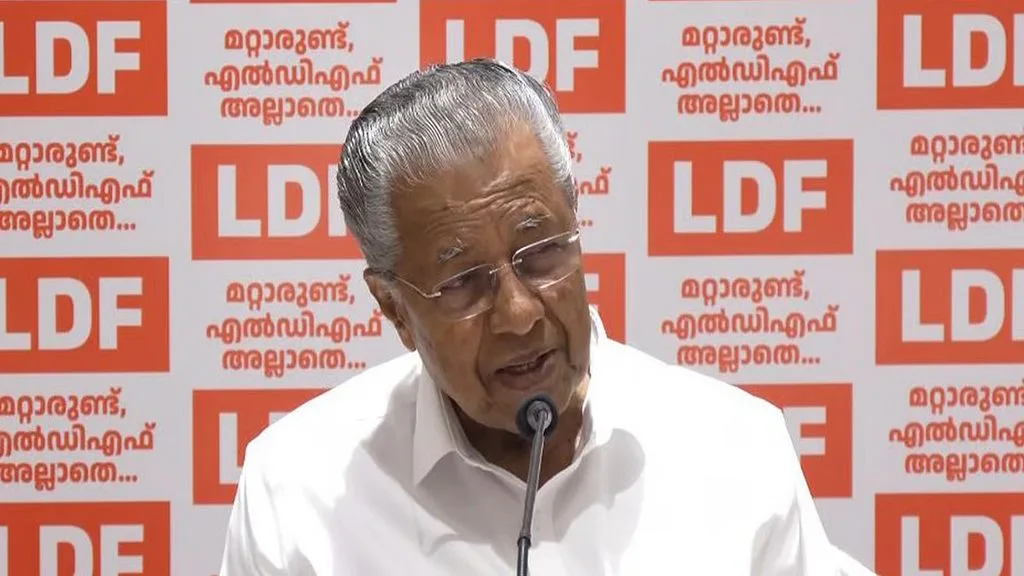
The review accepts that the campaign’s personalisation around Pinarayi Vijayan created an opportunity for the opposition to convert the election into a judgment on one leader. This is rightly identified as a political error. Yet personalisation is not merely a campaign technique; it can be the visible outcome of a longer concentration of organisational authority.
Michels’s (1911/1962) “iron law of oligarchy” and Weber’s (1978) analysis of bureaucratisation remain relevant because large organisations produce specialised leadership, informational asymmetries and dependence on professional apparatuses. Marxist parties are not exempt from these tendencies. Their norms of discipline can contain factionalism and enable coordinated action, but can also discourage disagreement when loyalty to collective decisions becomes indistinguishable from deference to leadership.
The review calls for the proper practice of democratic centralism, but the answer cannot be more centralism alone. Lenin defended disciplined strategic action, while Luxemburg warned that centralisation becomes bureaucratic when it substitutes committee judgment for working-class self-activity (Lenin, 1902/1961; Luxemburg, 1904/2004). The contemporary question is therefore whether deliberation genuinely shapes decisions before unity is required, whether lower committees can transmit unwelcome realities upward, and whether dissenting cadres are treated as sources of political intelligence rather than organisational threats.
The victories of three former CPI(M) figures contesting as independents in traditional strongholds cannot be explained only as parliamentary opportunism. The review is correct to condemn opportunistic defection, but it also recognises that these victories exposed a gap between leadership and rank and file (Communist Party of India [Marxist], 2026). A dialectical analysis must hold both aspects together: individual ambition may be real, while the social conditions that made rebellion electorally credible reveal organisational failure.

Moral-Political Legitimacy
The review’s acknowledgement of arrogance, nepotism, corruption allegations, cooperative irregularities and lifestyles beyond visible means is among its most consequential sections. It correctly recognises that even limited instances can damage the reputation of a party historically identified with struggle against privilege. Yet the issue is not merely “public perception.” It concerns the possible development of differentiated interests within a party closely connected to state institutions, cooperative resources, contracts and local systems of mediation.
This is an interpretive question, not a basis for unsupported general allegation. Yet Marxist self-criticism must investigate whether prolonged institutional power has produced privilege, brokerage and social distance. Ethical legitimacy is not ornamental to communist politics. The visible distinction between public service and private accumulation has historically been part of the Left’s moral claim. When that distinction becomes uncertain, welfare achievements cannot compensate for the loss of credibility.
The same principle applies to candidate selection. The review accepts failures in Kannur, insufficient inclusion of women, minorities and youth, and the adverse public perception surrounding constituency decisions (Communist Party of India [Marxist], 2026). Rectification cannot mean only selecting more electorally attractive candidates. It requires transparent principles of political recruitment, renewal of collective leadership, and a wider distribution of authority across gender, generation, class location and social experience.
Minority Alienation and the BJP’s Hegemonic Project
The review is more candid than earlier official responses in acknowledging actions that damaged the CPI(M)’s secular image: the handling of the Global Ayyappa Sangamam, inadequate responses to anti-Muslim statements, the PM-SHRI controversy and failures to consult LDF allies. Yet its explanation still places substantial weight on disinformation and opposition mobilisation. Such campaigns mattered, but they became effective because they resonated with an emerging credibility deficit.
Minority alienation cannot be repaired only by intensifying propaganda against opponents. It requires consistency between secular principles, public rhetoric, alliance management and everyday political conduct. Similarly, the BJP cannot be understood solely as the electoral expression of communal polarisation. The review itself notes the RSS’s temple networks and targeted mobilisation among women. The 2025 local elections and the 2026 Assembly election indicate that the BJP is attempting to construct a broader political bloc through religious institutions, welfare narratives, caste alliances, digital communication and urban aspiration (Chathukulam & Joseph, 2026; Rammohan, 2026).
A Gramscian strategy must therefore contest not only communal ideology but the material and organisational relations through which it becomes common sense. The defence of secularism must be joined to struggles over livelihood, gender dignity, local democracy and public accountability. Without such integration, the Left risks treating Hindutva as a propaganda problem rather than a rival hegemonic project.
Beyond Rectification
The CPI(M)’s review is valuable because it opens questions that official party documents often avoid. It recognises that the crisis is political, administrative, organisational and ethical. But its dominant remedy is rectification: correct deviations, train cadres, improve supervision, sharpen communication, restore discipline and re-establish contact with the people. These measures may repair organisational functioning, but they do not by themselves answer whether the party’s political line and institutional form correspond to contemporary Kerala.
Moving beyond rectification requires five shifts: systematic investigation of changing class composition and social aspirations; autonomy for mass organisations to articulate grievances even against a Left-led government; credible internal channels for dissent and accountability; a political-economy project connecting welfare with employment, decentralisation, ecological security and dignity; and the construction of a broad democratic developmental coalition capable of governing Kerala’s transition towards a knowledge-based economy through participation and social partnership.
The distinction is between restoring an organisation to its earlier form and reconstructing political leadership under changed conditions. The former is rectification; the latter is strategic renewal. Gramscian hegemony cannot be rebuilt through communication alone. It requires a new relationship between intellectual and mass activity, party and civil society, administration and participation, leadership and popular initiative.
Conclusion
The published election review demonstrates a capacity for self-criticism that should not be underestimated. It records the severity of the defeat and acknowledges failures extending from campaign strategy to leadership culture, mass organisation, ethics and candidate selection. Its limitation is not a lack of honesty, but the boundary of its explanatory framework. It largely asks how the existing party can function better; a Marxist appraisal must also ask whether existing political and organisational forms are adequate for a transformed society.
Kerala’s working people remain the potential basis of Left renewal, but they cannot be approached as a fixed constituency awaiting remobilisation. They must be understood in their contemporary diversity and treated as producers of political knowledge. The future of the CPI(M) will depend less on whether it can restore electoral machinery than on whether it can recover the capacity to learn from society, democratise internal power, preserve an ethical distinction from dominant political practice, and articulate a credible project joining equality, freedom, livelihood and democratic participation. Only then can criticism and self-criticism move beyond correction of errors and become a process of political reconstruction.
The authors thank Professor Emeritus Olle Törnquist, University of Oslo, for his valuable comments on an earlier draft, particularly concerning knowledge-based development, broad developmental alliances and democratic partnership governance. The usual disclaimer applies.
References
Chathukulam, J., & Joseph, M. (2026). Local government election results in Kerala: Towards a tripolar polity. Economic and Political Weekly, 61(9), 16–19.
Chathukulam, J. (2026). From Mass Line to Managerialism: A Marxist Assessment of the 2026 Assembly
Election Results and the Necessity of a ’CPI(M) Plenum in Kerala’. Mainstream Weekly. Vol 64. No 13
Communist Party of India (Marxist). (2026). Review of Assembly election results: Adopted at the Central Committee meeting, July 11–13, 2026. https://cpim.org/wp-content/uploads/2026/07/20260725_Assembly-Election-Review-Adopted.pdf
Election Commission of India. (2026). General election to Assembly constituencies: Trends and results, May 2026—Kerala. https://results.eci.gov.in/ResultAcGenMay2026/statewiseS111.htm
Gramsci, A. (1971). Selections from the prison notebooks of Antonio Gramsci (Q. Hoare & G. Nowell Smith, Eds. & Trans.). International Publishers.
Heller, P. (1999). The labor of development: Workers and the transformation of capitalism in Kerala, India. Cornell University Press.
Heller, P. (2005). Reinventing public power in Kerala. Economic and Political Weekly, 40(6), 530–535.
Katz, R. S., & Mair, P. (1995). Changing models of party organisation and party democracy: The emergence of the cartel party. Party Politics, 1(1), 5–28. https://doi.org/10.1177/1354068895001001001
Kerala State Planning Board. (2026). Economic review 2025. Government of Kerala. https://spb.kerala.gov.in/economic-review/ER2025/index.php
Lenin, V. I. (1961). What is to be done? Burning questions of our movement. In Collected works (Vol. 5, pp. 347–530). Progress Publishers. (Original work published 1902)
Luxemburg, R. (2004). Organizational questions of the Russian Social Democracy (R. Taylor, Trans.). In P. Hudis & K. B. Anderson (Eds.), The Rosa Luxemburg reader (pp. 248–265). Monthly Review Press. (Original work published 1904)
Marx, K. (1963). The eighteenth Brumaire of Louis Bonaparte. International Publishers. (Original work published 1852)
Michels, R. (1962). Political parties: A sociological study of the oligarchical tendencies of modern democracy (E. Paul & C. Paul, Trans.). Free Press. (Original work published 1911)
Nossiter, T. J. (1982). Communism in Kerala: A study in political adaptation. University of California Press.
Poulantzas, N. (1978). State, power, socialism (P. Camiller, Trans.). New Left Books.
Rajan, S. I. (2024). Migration and development: New evidence from the Kerala Migration Survey 2023. Migration and Development, 13(2). https://doi.org/10.1177/21632324241306512
Rammohan, K. T. (2026). Local verdict, larger message: Civic polls in Kerala. Economic and Political Weekly, 61(9), 12–15.
Törnquist, O. (2021). In search of new social democracy: Insights from the south – implications for the north. Bloomsbury Academic.
Weber, M. (1978). Economy and society: An outline of interpretive sociology (G. Roth & C. Wittich, Eds.). University of California Press.


Prof. (Dr.) A. M. Jose is Professor and Head, Amity School of Economics, Amity University Haryana, India. With over 42 years of academic experience, he specialises in Development Economics and Managerial Economics. He previously served at Kerala Agricultural University as Associate Director of the MBA in Agri-Business Management Programme, and at the National University of Rwanda. He is an alumnus of ISEC Bengaluru, IIM Ahmedabad, and York St John University, UK.