
“Now They Are Scared of Us”: The Women-Led Adivasi Revolution in Bom
Hidden in the forests of Sonbhadra, Uttar Pradesh, the village of Bom has become the center of a quiet but extraordinary people’s movement. Led by fearless Adivasi women, indigenous communities have reclaimed their ancestral forests and farmland through years of peaceful resistance against state repression and dispossession. In this deeply reported ground narrative, Amit Sengupta traces the history, resilience, and revolutionary spirit of a struggle rooted in dignity, land rights, and collective survival.
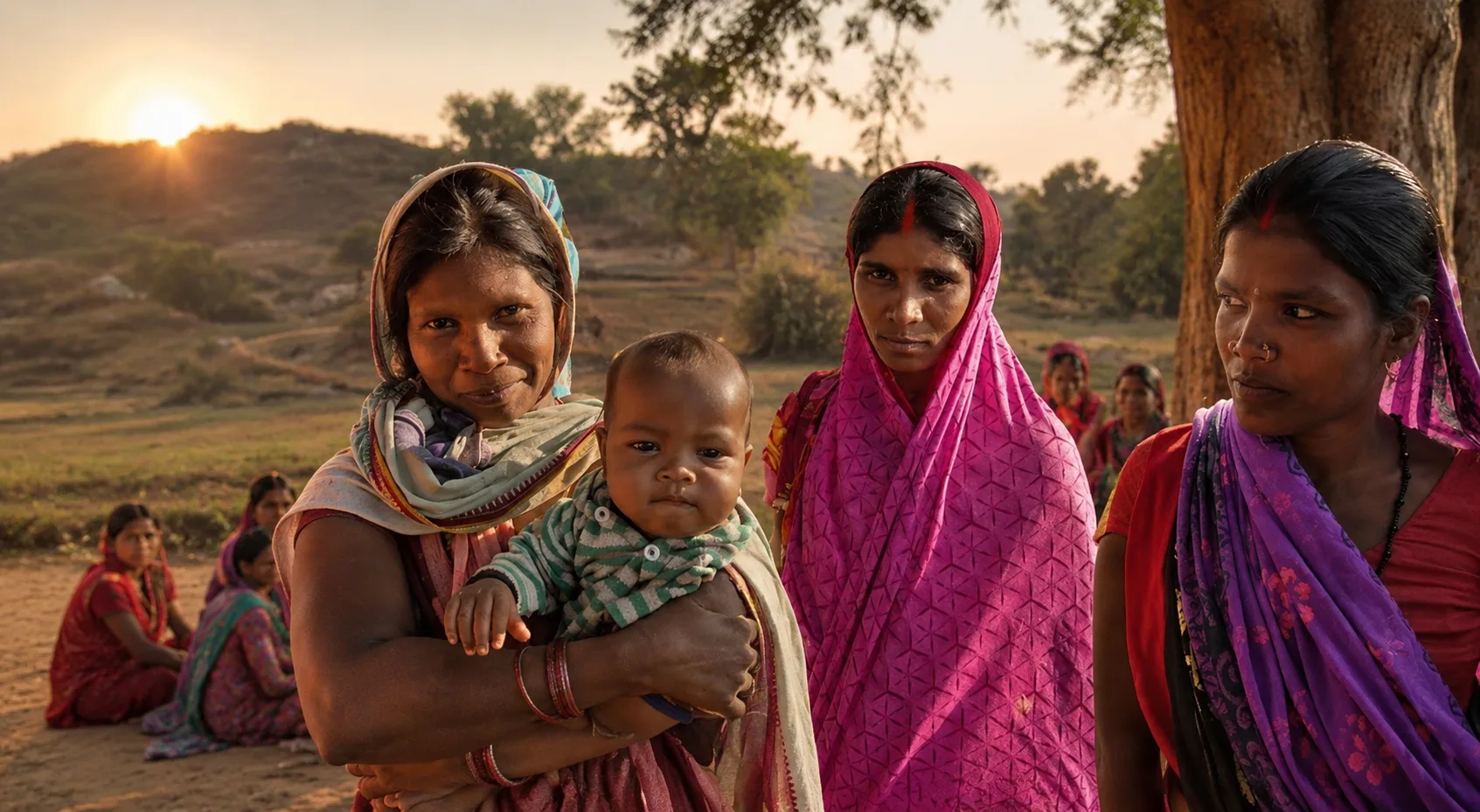
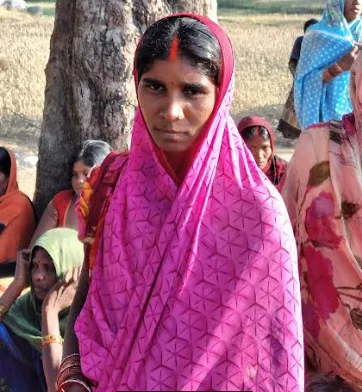
She was young, dark, wearing a cotton sari. Phooleshwari lazily walked with me uphill in the undulating, muddy lane, surrounded by a sunshine-yellow landscape of mustard flowers.
It was the winter of 2022. We were in Bom, a pristine tribal village in the heart of India.
We walked to a big tree at the top of the hill where hundreds of women, silent in their stoic stillness, waited along with men and children. The tree was surrounded by tall trees and paddy fields, which moved into a rocky terrain beyond, into the green density of the forests and the hills.
Behind us was a procession of Phooleshwari’s people, walking in a thin line in the narrow lane. The procession was led by the All India Union of Forest Working People.
“Are you taking us to the thana (police station)?” Phooleshwari jokingly asked me.
“Why,” I asked. “Are you scared of the thana?”
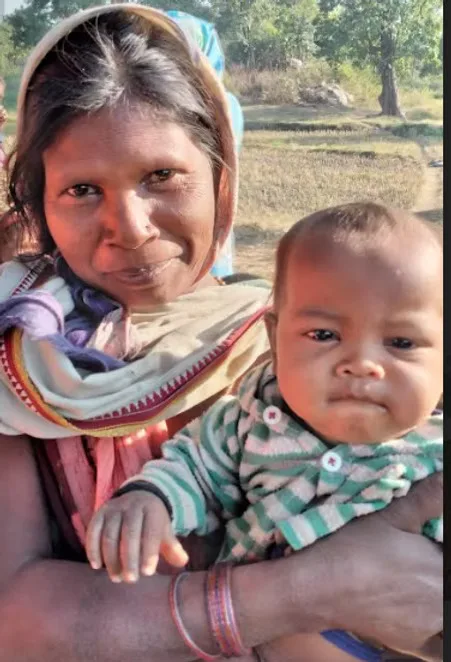
“I used to be,” she laughed. “Now, no more. Now they are scared of us.”
Undefeated
Phooleshwari is one of the vanguards of the non-violent tribal uprising in Bom. Tribals here have reclaimed thousands of acres of fertile land and forests, earlier captured by the Forest Department. For centuries, these forests belonged to the indigenous communities. Even the British could not snatch away their land.
Ironically, after Independence, they have been engaged in a long, hard fight with an insensitive administration to keep their lands. Their struggle remains largely invisible to India’s mainstream media and political class.
A revolution has already unfolded here. A peaceful, protracted, non-violent revolution. With fearless, resilient women as vanguard.
The British called it the Central Provinces, this vast expanse of dense forests, rugged and green hills, mountain rivers, water bodies, wildlife flora and fauna – and infinite deposits of minerals.. The area stretches for thousands of miles across several states in the heart of India — from the Uttar Pradesh-Madhya Pradesh border, to Chhattisgarh, Western Orissa, West Bengal, Jharkhand, Andhra Pradesh and Telangana.
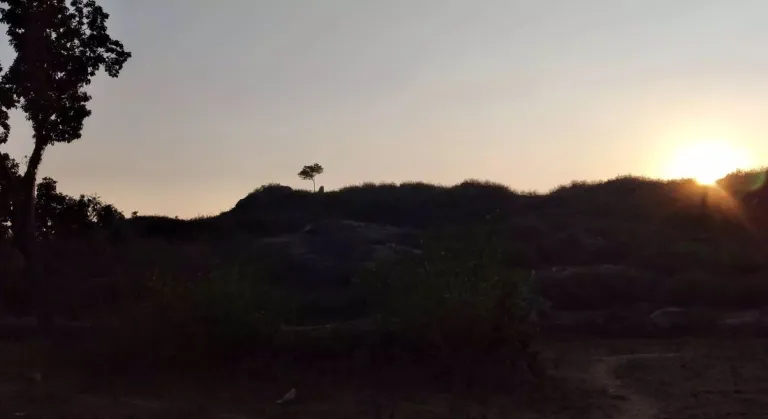
An endless terrain, deep in the interiors, mostly cut off from the mainline urban civilisation. There are often no roads, electricity, drinking water, public distribution systems, primary health care or schools. Why?
Because the adivasi (indigenous people) here, the brave Gond, Kol and other native and proud residents of this hidden zone for thousands of years, love their forests and their homeland. Armed with bows and arrows, they have refused to allow any ‘outsider’ to capture their precious homeland.
This has been the pattern across the geographical terrain of the tribals across most parts of India, where multiple uprisings have rocked this beautiful landscape. The most famous was the Santhal Uprising in the 1850s, when young Santhal leaders, Sidhu and Kanhu Murmu led the Hool (revolt) starting on 30 June 1855 against the Diku (outsiders), with their brothers, Chand and Bhairav, and sisters, Phulo and Jhano.
More than 10,000 Santhals joined the fierce struggle against a repressive and violent British regime. The sisters themselves were known to have fought in the front and killed armed British soldiers.
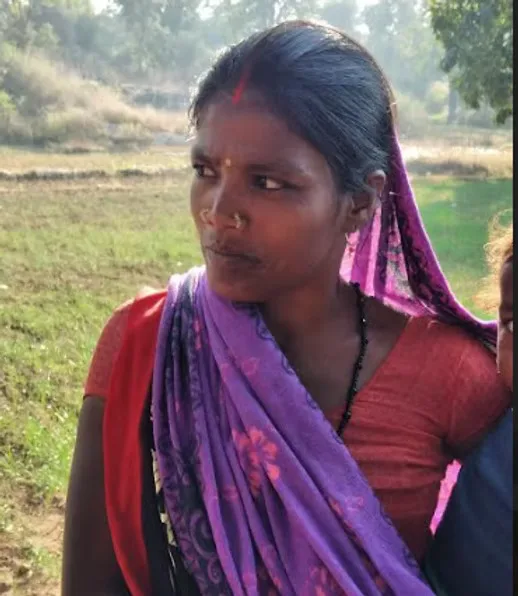
Village Bom, like much of the tribal areas in India’s Central Provinces, inherited this heady oral tradition of the Murmu brothers and sisters, and the great legacy of Birsa Munda, who, in his early 20s, mobilised thousands of tribals across Jharkhand, underground and travelling on foot, using guerrilla-style operations. A charismatic leader and speaker, he was betrayed by local police informers, captured, and almost immediately murdered in prison, perhaps poisoned to death. Many of his comrades were killed, or shackled and sent to the ‘Kala Pani’ and torture chambers of the Andaman prison.
Another major uprising has been taking place in what is now Jharkhand since the year 2000, in the erstwhile Bengal province in pre-partition East India.
Both uprisings were directly linked to their land being captured by outsiders – zamindar (landlords), money-lenders, traders and others, backed in the old days by the British and now by local governments comprising non-tribals.
The indigenous populations have suffered back-breaking forced labour, often in their own land, everyday exploitation and stark poverty, in a self-sufficient land with incredible natural resources.
Serene beauty
Bom lies hidden amidst the serene beauty of Sonbhadra, Robertsganj, cities in Sonbhadra district in Uttar Pradesh, close to Madhya Pradesh. Their organic struggle is in symphony with nature. Women are the anchors, the silent warriors.
“The women seem shy and silent, reluctant to speak out. But never underestimate them. The administration knows their power,” Sokalo Gond told me during one of our frequent conversations.
Gond leads the Kaimur Kisan Mahila Sangharsh Samiti, a collective of women farmers in Birsa Nagar, the Jharkhand village at the heart of this peaceful revolution.
The Sangharsh Samiti is integral to the All India Union of Forest Working People, led by the formidable Roma, who spent years walking on foot from village to village, hounded by the cops. She was eventually imprisoned along with Gond. Both, now in their late 50s, are the respected icons of the movement.
Liberation
Bom has become iconic, standing alongside Birsa Nagar as an epicenter of the movement. Both have been “liberated” — a term the community uses to describe reclaiming vast forest lands after years of struggle and state repression.
In a dark irony, the Forest Rights Act 2006 constitutionally guarantees indigenous communities access to food, fodder, and resources, the implementation of which local authorities resist. Residents believe the forest department and district administration intentionally stall the law to maintain their decades-long power and continue exploiting tribal labour.
Despite enduring beatings and imprisonment for exercising their legal rights, the community remains committed to this peaceful struggle for their ancestral heritage.
“Now we want our fundamental constitutional right to the forest, our agricultural land and community resources, forest produce, water bodies, rivers, fishing rights,” said Amrawati, in her 40s when I visited Bom in the winter of 2022.
“We want our dignity and democratic freedoms, and a quality of life which is not relentlessly trapped in eternal exploitation and oppression. The struggle is on, and it’s a long way, but we are not going back anymore. We want a new life.”
She described the struggle of reclaiming their forests and land. The village, in an unprecedented move, gave an advance notice to the district administration that they will reclaim their land one day. A huge posse of cops and officials arrived to forcibly block this move.
“The village elders marked the area which was liberated, to be equally shared by individual families. The cops moved in. One village elder was saved from the clutches of the police, because I physically blocked the police jeep which had picked up our men. He escaped,” recalled Amrawati.
“The women joined me. Kill us, but we will die for our ancient land. Kill us, but we will not accept the denial of our community rights to the forests, the women said in chorus.”
‘Not allowed’
The administration backed off. The village put up a notice at the entrance: “Police and administration not allowed”.
The administration then cut off drinking water or electricity. Schools and health centres were not allowed. The locals could not dig a well, store water in a pond, or dig a tube well for their cattle, their cultivated land or for their families. They defied that diktat.
When I visited Bom again recently, I saw that they now have a proper well in the village, which they collectively share. Another water body has been created. The village is flourishing, and the landscape is blooming with the products of their labour.
In the last three years, Bom residents have filed claim forms for the land which is historically theirs, and legitimate and legal under the Forest Rights Act 2006.
Significantly, and for the first time in India, the new owners will all be women. The men have no objection.
To welcome this reporter, they had prepared a lovely meal of delicious local rice, chicken and vegetables. The chicken was extraordinary, cooked on steam with slow wood fire, marinated with pepper and spices, something they seem to have inherited from Awadhi-Mughal cuisine in the area surrounding them – Mughal Sarai, Varanasi, Allahabad, Lucknow.
I complimented the women, and asked: “Where did you get the recipe from?”
“From our grandmothers,” they replied.
Ironically, they live in such remote zones, and are so content to share this beautiful collective space outside the trappings of the cities, that they have never heard of the Taj Mahal in Agra, one of the seven wonders in the world, only 500 kilometers away from their village.
There was no internet, but I managed to show them an image of this majestic monument dedicated to love: The fifth Mughal emperor Shah Jahan’s gift to his departed wife Mumtaz Mahal.
“Taj Mahal!” they said in chorus. “A monument of love? We have to go there now.”
This is a Sapan News syndicated feature Published at Independent Ink. All photos by: Amit Sengupta

Amit Sengupta is an editor at independentink.in, a media organisation created by journalists, with no political and corporate links. He has worked in senior editorial positions in the mainstream English media in India: Pioneer, Economic Times, Hindustan Times, Asian Age, Outlook, Tehelka, Financial Chronicle, Hardnews. He is based in Delhi.