

Why the Caste Census Can Become a Political Trap
In this second part of the interview, Anand Teltumbde argues that caste inequality in India persists not because of a lack of data, but because social justice has been reduced to managerial fixes detached from universal welfare and redistribution. He critiques the caste census as a potentially technocratic tool that can depoliticise caste, hollow out reservations, and legitimise inequality under neoliberal governance, warning that without a structural challenge to power, enumeration risks becoming a pathway to the controlled withdrawal of justice rather than its realisation.
Part Two
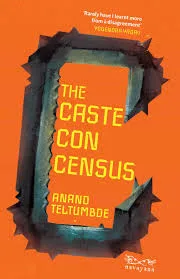
In your book The Caste Con Census you argue that the Indian state abandoned universal measures of empowerment such as quality education, healthcare, housing, and livelihood security while political parties instrumentalised reservations (p. 122). Are you suggesting that universal welfare, combined with but not replaced by affirmative action, would have addressed caste inequality more effectively?
Yes—without qualification. The central claim is that universal capability-building constitutes a necessary precondition for the effectiveness of any targeted redistributive policy, if needed. Had India pursued such a strategy, it would have addressed caste inequality far more substantively than the path it actually chose—and, over time, made the annihilation of caste also possible.
Even within the narrow framework of reservations, caste inequality is reproduced primarily through unequal starting conditions, not merely through discrimination at the point of selection. Access to quality schooling, adequate nutrition, healthcare, secure housing, and stable livelihoods determines who is even capable of competing for reserved positions. This is a banal but decisive fact. Yet the post-colonial Indian state largely ignored it, preferring instead to expand reservations without constructing the universal social infrastructure that alone could have rendered them broadly effective.
The situation worsened after the adoption of neoliberal reforms in the 1990s. As the state withdrew from what limited universal provisioning it had undertaken, crises emerged across social classes, generating competitive demands for reservations from groups previously outside their ambit. Reservations increasingly became instruments of political mobilisation rather than components of a coherent egalitarian strategy. The outcome was predictable: a thin stratum of beneficiaries emerged, while a vast majority—disproportionately Dalits themselves—remained structurally excluded from meaningful social mobility.
This dynamic had further corrosive effects. The visibility of a small beneficiary class, abstracted from the continuing deprivation of the majority, enabled dominant castes—now themselves experiencing economic precarity—to frame reservations as undue favour. The resulting resentment has repeatedly translated into violence against Dalits, who themselves faced exclusion.
Political parties found this arrangement expedient. Universal welfare threatens entrenched economic interests and demands sustained public investment, administrative capacity, and political commitment. Reservations, by contrast, can be endlessly recalibrated, expanded, or symbolically defended without disturbing underlying class relations or property structures. They thus functioned as a substitute for structural reform, allowing the state to abdicate its responsibility while converting social justice into a zero-sum contest between caste groups.
A genuinely effective anti-caste strategy would have taken a fundamentally different form: common, high-quality public education; robust and accessible public healthcare; integrated housing; employment guarantees; and strong labour protections—alongside reservations to counter inherited disadvantage and ongoing discrimination. Such a model would have progressively reduced the depth of caste inequality across generations, rather than merely redistributing a small number of positions within an otherwise unchanged and unequal social order.
What India pursued instead was a minimalist, managerial conception of justice. The consequence is not the intrinsic failure of affirmative action, but its isolation from the universal foundations that alone could have transformed caste annihilation into a material and historical possibility.
When the BJP came to power in 2014, it inherited the raw data of the Socio-Economic and Caste Census conducted in 2011 under UPA-II. Why do you think the Modi government selectively released the economic data while suppressing the caste component?
Because releasing the caste data would have blown apart the BJP’s core political architecture—ideologically, electorally, and economically. The suppression was not bureaucratic hesitation; it was a calculated political decision.
First, caste data threatens the myth of a post-caste Hindu society, which is central to Hindutva politics. The BJP’s project depends on collapsing internal hierarchies into a unified Hindu identity, with Muslims positioned as the primary “other.” Disaggregated caste data would have re-centred inequality within Hindu society—exposing the disproportionate concentration of wealth, land, education, and power among upper castes. That would have fractured the carefully cultivated majoritarian consensus.
Second, the data would have destabilised the BJP’s OBC narrative. Modi’s self-projection as an OBC leader rests on symbolic identity, not redistributive politics. Once hard numbers are available, symbolic representation becomes insufficient. Caste data would inevitably raise demands for recalibration of reservations, expansion of quotas, and scrutiny of who actually benefits from state policy. That opens a Pandora’s box the BJP has consistently tried to keep shut.
Third, caste data directly collides with neoliberal governance. Once inequality is empirically mapped by caste, demands for redistribution—jobs, education, land, credit—gain moral and political force. The BJP’s economic model relies on shrinking the welfare state while protecting capital. Caste enumeration would have exposed how “economic criteria” systematically mask inherited social advantage and would have made purely income-based welfare politically indefensible.
Fourth, there is a control issue. Data is power. The Modi regime has shown a consistent pattern: release data that flatters governance, suppress data that exposes structural failure—whether on unemployment, consumption, hunger, or education. Caste data is uniquely dangerous because it cannot be spun as a temporary fluctuation or policy lag. It reveals structural injustice—precisely what the regime wants to depoliticise.
Finally, the selective release reflects a deeper ideological move: economic deprivation can be individualised; caste inequality cannot. Poverty can be addressed through targeted schemes and slogans. Caste demands collective political reckoning. The former fits managerial governance; the latter demands structural change.
In short, the caste data was suppressed because it would have shifted the axis of Indian politics—from cultural nationalism to social justice, from identity spectacle to material inequality, and from moral rhetoric to redistributive conflict. That shift is fundamentally incompatible with the BJP’s political economy and ideological project.
Rahul Gandhi brought the demand for a caste census to the national stage during the Congress Working Committee meeting in Udaipur in November 2022. Do you see this as a genuine ideological shift within the Congress, or as an electoral strategy after its loss of power in 2014? What are the major conceptual flaws in the Congress’s articulation of the caste census demand?
It is primarily an electoral strategy, not a deep ideological shift—though it carries the potential to become one if the Congress is forced to confront its own contradictions. As it stands, the caste census demand emerged less from a rethinking of social justice than from political marginalisation after 2014 and the BJP’s success in consolidating a post-caste Hindu narrative.
The Congress did not arrive at the caste census through introspection about its historical role in preserving caste hierarchies. For decades, it resisted caste enumeration precisely because it was invested in an abstract, upper-caste–inflected universalism that treated caste as socially embarrassing but politically inconvenient. The sudden embrace of caste data coincides with the party’s loss of upper-caste dominance, erosion among OBCs, and the rise of regionally rooted social justice politics. In that sense, the move is reactive.
That said, dismissing it as mere opportunism would also be incomplete. The demand reflects a political reality the Congress can no longer evade: redistribution cannot be argued without data, and social justice cannot be articulated against a regime that weaponises Hindu unity unless internal inequalities are foregrounded. But this insight remains shallow and under-theorised within the party.
The conceptual flaws are serious.
First, the Congress treats the caste census largely as a technocratic exercise, not as a challenge to existing power relations. It speaks of “counting” without clearly stating what the data will be used for. Will it recalibrate reservations? Revisit the 50 percent cap? Restructure public expenditure? Address private-sector exclusion? On these questions, the party remains evasive.
Second, it frames caste enumeration within a language of welfare targeting, not structural transformation. This risks reducing caste to a poverty variable rather than recognising it as a system of inherited advantage and exclusion. Such framing allows caste to be absorbed into managerial governance instead of becoming a basis for redistributive politics.
Third, the Congress has not reconciled the caste census with its long-standing commitment to neoliberal economic policy. Data without redistribution only sharpens frustration. Unless the party is willing to rethink growth, privatisation, and fiscal restraint, caste data will at best rearrange benefits at the margins.
Fourth, and most damaging, the Congress avoids confronting upper-caste dominance within its own organisation. A caste census without internal democratisation risks appearing cynical. The party wants to enumerate caste in society while leaving its own power structure untouched.
Finally, there is an ideological incoherence. The Congress simultaneously invokes social justice and a vague idea of national unity, without explaining how equality is to be achieved through redistribution rather than moral appeal. This ambiguity allows opponents to portray the caste census as divisive while the Congress lacks a principled rebuttal.
In sum, the caste census demand marks a political opening, not a transformation. Whether it becomes the latter depends on whether the Congress is willing to abandon its comfort with abstraction, confront caste as a material structure of power, and align data with a genuinely redistributive agenda. So far, it has not.
You argue that a caste census, by itself, can never bring equality. Does this imply that India’s dominant understanding of social justice itself requires a radical rethinking?
Yes—unequivocally. A census produces data. Data by itself does not produce equality. Equality requires political will, and as we experienced over seven decades, that will has been conspicuously absent. If such will existed, a census would not be necessary in the first place. Inequality in India is so stark that no enumeration is required to recognise it or to design policies for its elimination.
The caste census is projected as an instrument of social justice, primarily to ensure representation. But social justice in India has long been reduced to a compensatory logic: identify the disadvantaged, allocate quotas or schemes, and claim moral closure. Inequality is treated as a deficit suffered by certain groups rather than as a system that continuously produces privilege for others. A caste census fits neatly into this framework—it promises better targeting while leaving intact the structures that generate inequality.
Caste, however, is not a problem of misallocation; it is a regime of power. Counting caste does not alter land ownership, capital concentration, educational stratification, residential segregation, or institutional control. Without interventions at these levels, data becomes an instrument of governance, not transformation. Worse, it risks legitimising inequality by rendering it administratively manageable.
One must understand that the renewed demand for a caste census stemmed from the devastation unleashed by neoliberal reforms over the past three decades. These reforms dismantled public goods, concentrated wealth, and forced people across classes to fall back on caste networks for survival. Dominant castes began claiming backwardness; reserved categories demanded sub-classification. Both were reactions to neoliberal dispossession, articulated through caste because other avenues of redistribution had been foreclosed.
Several misconceptions underpin the caste census. First, caste is treated as a fixed, measurable entity, when it is still fluid and contextual. Second, the census is imagined as neutral, whereas data production is always political and can be deployed for agendas contrary to social justice. In fact, politics can influence the later phases of data analyses and alter outcomes. Third, there is the illusion that reservations can be proportionately extended to all castes. The 50 per cent cap imposed by the Supreme Court may become a formidable constraint, unless the BJP wanted it lifted. The sub-classification merely redistributes scarcity without expanding the domain of justice. It can never resolve the problem of inequality.
Inequality clearly exceeds the scope of a caste census. Even if conducted honestly, it operates within a reservation-centric framework that substitutes targeted compensation for universal provisioning. This framework is deeply flawed: it privileges early movers, reproduces advantage, and increasingly works against the weaker sections it claims to protect. No amount of sub-classification can correct this unless the framework itself is radically rethought. Compounding the problem, the material base sustaining reservation discourse—public employment and higher education—has itself shrunk drastically. Caste census discourse conveniently ignores it.
The central flaw of the reservation policy is its separation from a universal project of capability-building. Targeted measures cannot succeed in a landscape where the foundations of equality—quality schooling, healthcare, housing, and secure work—remain inaccessible to most. These are not charitable add-ons; they should function as non-negotiable social rights. Without that baseline, reservations operate like corrective patches on a structurally defective system.
A moral reorientation is just as essential. India’s social justice discourse swings between symbolic inclusion and electoral bargaining, avoiding any direct reckoning with privilege as a material and political structure. Ambedkar’s warning was explicit: democracy cannot coexist with entrenched social and economic inequality. Today’s political class performs the rhetoric of equality while safeguarding hierarchy through markets, selective notions of merit, and procedural neutrality. The result is a system that gestures toward justice but is architecturally aligned against it.
So yes—the caste census exposes the inadequacy of the existing framework. It should force a reckoning with the fact that justice cannot be achieved through enumeration, representation, or redistribution alone, but only by transforming the conditions through which caste continually reproduces itself. Without that shift, social justice will remain a project of managed inequality, not emancipation.
Nearly eight decades after Independence, caste-based discrimination and economic inequality remain deeply entrenched. In this context, how do you assess the relevance and limits of caste-based reservations today?
Caste-based reservations remain relevant, necessary, and non-negotiable—but they are also structurally insufficient and operationally flawed. Holding both truths together is essential if we are to avoid either tokenism or complacency.
Their relevance is obvious. Caste continues to determine access to education, employment, housing, credit, and social dignity. Discrimination has not disappeared; it has merely changed form—becoming subtler, institutionalised, and increasingly mediated by markets. In such a context, withdrawing reservations would not produce equality; it would consolidate inherited advantage under the language of merit. Reservations remain one of the few instruments that directly interrupt caste monopoly over public resources and positions of authority.
But the limits are obvious. Reservations intervene at the final stage of selection, not at the stages where inequality is actually created. They do nothing to equalize schooling, nutrition, healthcare, or basic living conditions. Consequently, they lift only a narrow slice of the oppressed—those already positioned to compete—while the majority remains structurally shut out. The paradox is bleak: the benefits skew upward, enabling relatively better-off sections to access opportunities in the name of the weakest. Critics then weaponize this outcome, painting reservations as elite capture, while the state quietly retreats from its primary obligation—universal provisioning of capability and dignity.
Bottom of Form
Politically, reservations have been transformed into a substitute for social justice rather than one component of it. Parties negotiate quotas while avoiding questions of land redistribution, labour rights, housing integration, and public education. This has turned reservations into a permanent site of social conflict, precisely because they are forced to do work they were never meant to do.
There is also a danger of depoliticisation. When reservations are framed as benevolent concessions rather than as democratic correctives to historical injustice, they appear contingent and negotiable. This weakens their moral and constitutional foundation and makes them vulnerable to judicial caps, economic criteria, and administrative dilution.
The way forward is not to discard reservations but to situate them inside a broader redistributive framework. Their scope must expand into the private sector—perhaps not through rigid quotas, but through enforceable, tightly monitored affirmative action linked to hiring, higher education, and emerging labour markets. This must be paired with strong universal systems that erode inherited disadvantage across generations. Without that structural foundation, reservations will remain caught in a paradox: essential for survival, yet permanently insufficient for justice.
In short, reservations remain indispensable as a defensive mechanism against caste domination. Their necessity is not in dispute; what is at issue is the terrain on which they are made to function. Neoliberalism has hollowed out the very foundations that give reservations meaning, making the two fundamentally incompatible. An order built on privatization, market entitlement, and state withdrawal cannot coexist with a serious commitment to social justice; dismantling that regime is a precondition, not a postscript. At the same time, reservations alone cannot deliver equality. Treating them as the end point of social justice is not merely an analytical mistake—it ensures the persistence of the very inequalities they are meant to confront.
You caution that the caste census could be repurposed to justify the dismantling of caste-based reservations, aligning with the Sangh Parivar’s long-standing project of erasing caste through technocratic rationality (p. 154). Could you elaborate on this danger?
The BJP’s sudden embrace of a caste census—after opposing it in a 2021 Supreme Court affidavit and attacking it during the 2024 campaign, with Modi even branding it an “Urban Naxal” idea—signals calculation, not conviction. The near-loss of power in 2024 exposed fractures in its social bloc: the upper tier of the OBCs, better educated and more able to see through the rhetoric, began drifting away, while the lower strata still needed to be retained through the promise of long-delayed recognition. Bihar’s electoral arithmetic, coupled with dependence on Nitish Kumar—a consistent advocate of caste enumeration—added pressure. The announcement also worked tactically to blunt the opposition’s agenda before it hardened into a rallying point.
But the stakes run deeper. A caste census could serve as the pretext for dismantling caste-based reservations—the RSS’s long-standing objective. If affluent upper-caste groups opt out or underreport, as figures like Sudha and Narayan Murthy have already suggested, their structural advantage will vanish on paper. Statistically, they begin to resemble the rest, enabling a narrative that caste-based reservations have “failed” and must be replaced with purely economic criteria. What looks like data collection can become a political Trojan horse.
Once caste is reduced to numbers, the language shifts: from historical injustice to “efficiency,” “adequate representation,” “proportionality,” and eventual “sunset clauses.” Reservations stop appearing as constitutional correctives and start looking like temporary distortions. This aligns perfectly with the Sangh’s ideological line: acknowledge caste culturally, deny it politically, and dissolve it administratively without altering who holds power. Technocratic rationality does the work—caste is converted from a lived hierarchy into a statistical category, and the declaration of its “abolition” can be made without any redistribution.
The judiciary only sharpens this risk. Courts have already moved to cap quotas, demand quantifiable data, and privilege economic criteria. A census without an explicit redistributive agenda can supply precisely the data needed to narrow entitlement, fragment beneficiaries, and legitimate exclusion. In that scenario, data is not a pathway to justice but a tool for retrenchment.
The ideological payoff is enormous: the regime can claim to have confronted caste “scientifically” while neutralizing the only mechanism capable of unsettling caste monopoly over opportunity. It creates a paradox in which caste is acknowledged everywhere in statistics but nowhere in politics.
This is why treating the caste census as inherently progressive is naïve. Without an explicit commitment to expanding affirmative action, strengthening universal public institutions, and confronting caste privilege head-on, enumeration becomes the prelude not to justice but to its controlled withdrawal.
Featured Image: Posts by the BJP’s social media handles on the caste census. The text in Hindi in the first image says ‘religion was asked, not caste’, referring to the Pahalgam terror attack in Kashmir in April 2025. Image Courtesy: Scroll.in
(to be continued)

A.K Shiburaj began his journalism career in 2000 with the publication of Samvadam magazine from Kozhikode. He later worked as a teacher on the Maldives island and engaged in social work across North Indian states. He practiced organic farming for a time and served as the Assistant Editor of Keralayam Magazine (Web). He is now a freelance journalist and an advocate for civil society and social movements. He is a recipient of the Maja Koene Social Journalist Award in 2025.