
Wages or the Womb? How Sugarcane Workers Are Forced to Choose Between Livelihood and Health
In Maharashtra’s sugarcane fields, the struggle for survival has taken a devastating toll on women’s bodies. Faced with exploitative labour conditions, wage losses during menstruation and mounting debt, hundreds of women have undergone hysterectomies to continue working. Examining the recent cases in Jalna and the disturbing history of similar surgeries in Beed, Vikas Parasram Meshram exposes the intersection of labour exploitation, gender injustice and the failure of public healthcare and labour protection systems.
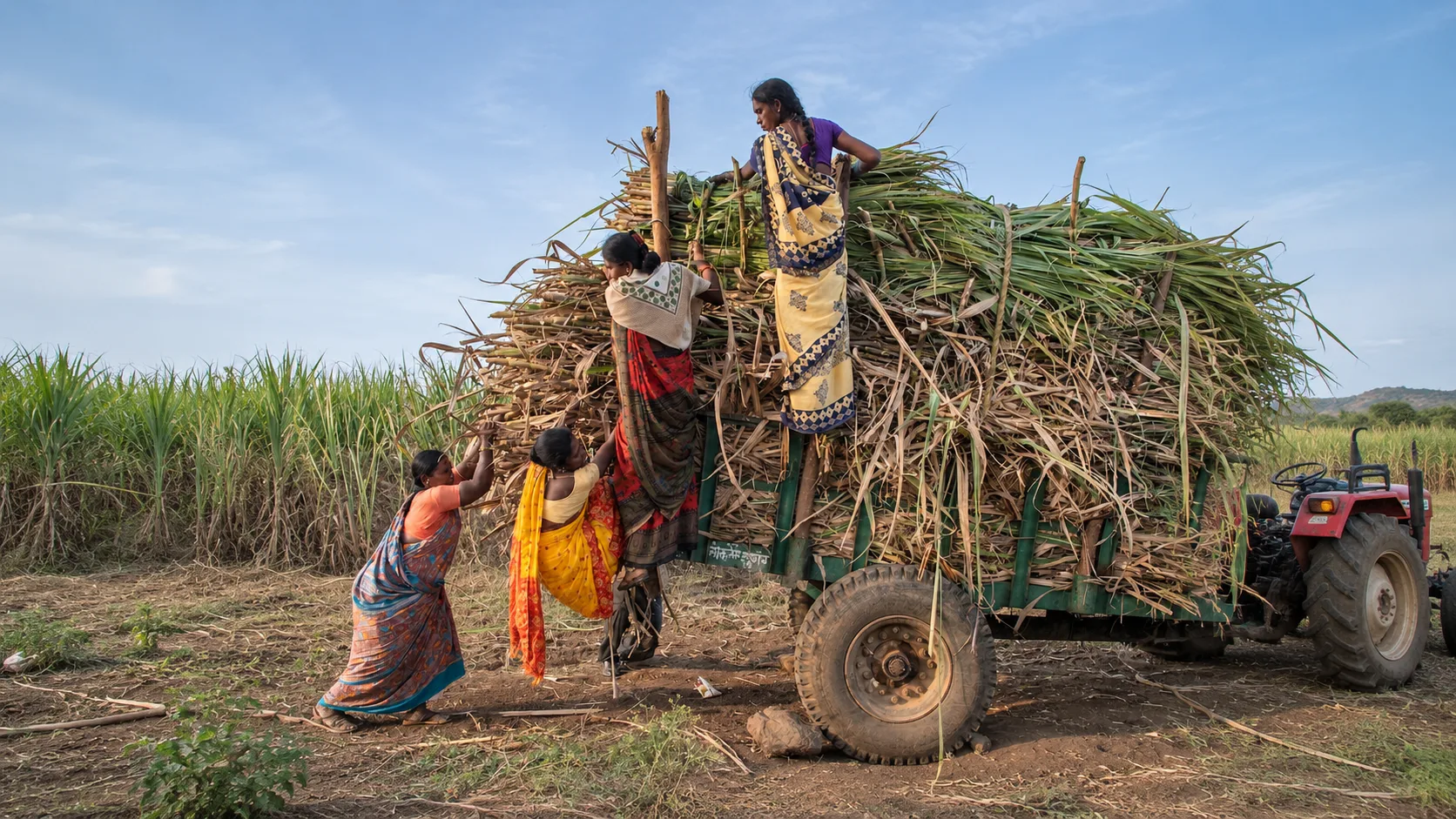
The story of Maharashtra’s sugar industry is usually told through factory chimneys, crushing-season figures and the price of sugar. Behind that sweetness, however, lies the bitter reality of the lives of lakhs of men and women who step into the fields with a sickle in hand. A recent incident from Jalna district bears witness to this. A total of 107 sugarcane-cutting women, 63 from Ghansawangi taluka and 44 from Partur taluka, had their wombs removed so that menstrual pain would not cost them their wages. These surgeries are said to have taken place over fourteen months, from 1 August 2025 to 25 October 2026. An angry question is now being asked: how did the health department remain unaware of this while it was happening in village after village? The question is valid, because this is not an incident confined to one family or one village. It is the failure of an entire system, and a shameful one.
To understand these women’s decisions, one must look at the economics of sugarcane cutting. Even before the season begins, the mukadam, the labour contractor, gives a working couple an advance. Sometimes it is a few thousand rupees; sometimes it runs to a lakh or so. This advance is no help at all; it is a chain that binds the workers for the entire season. Husband and wife are counted as a single “jodi”, or unit, and together they must cut a fixed tonnage every day. If the wife does not go to work for a day, the unit remains incomplete, and the shortfall is deducted from their wages. A couple is expected to cut two to three tonnes of cane daily. In such circumstances, the four or five days of menstruation are no longer just days of physical suffering. They become days that wipe out income and add to the burden of debt.
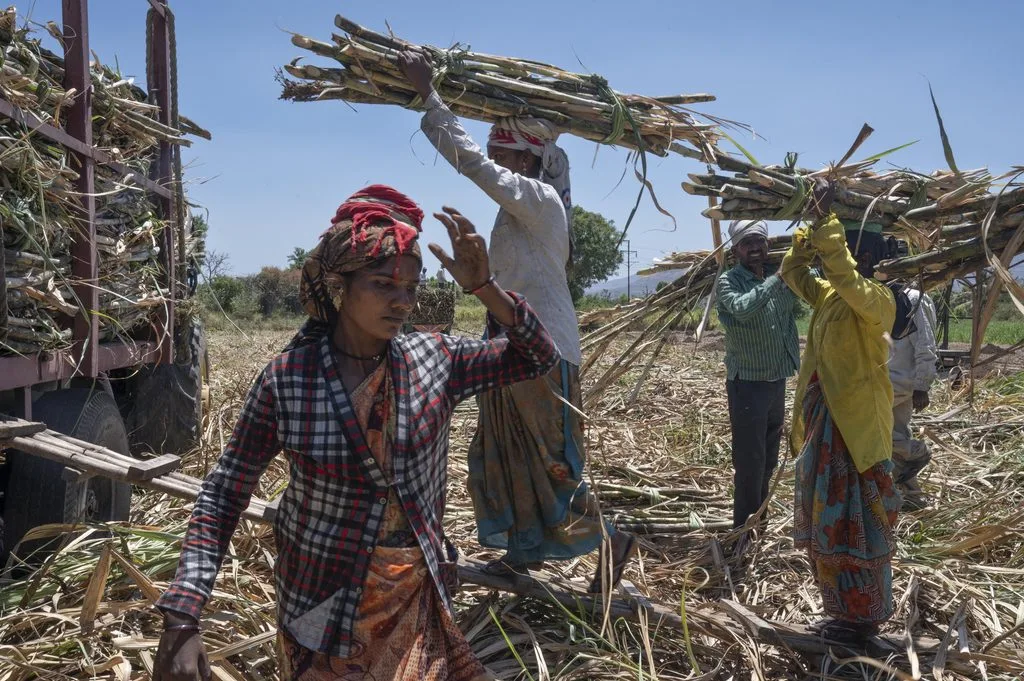
Conditions in the fields make this ordeal worse. The workers live near the cane fields or on factory premises, in tents or makeshift huts. There are no bathing facilities or toilets, and when a woman’s period arrives, her difficulties multiply. A shortage of drinking water, difficulty in obtaining sanitary pads, fourteen to fifteen hours of work a day, and a bundle of cane weighing twenty to forty kilograms on the head: all of this has to be endured even while cramps tear at the abdomen. The women who had their wombs removed because of abdominal pain say that eight to ten days’ wages were being lost during their menstrual periods. To avoid that loss and to be free of the pain, they underwent surgery in private hospitals on the advice of private doctors. In making this decision, the women appear to be exercising their own choice. But the question remains: how free was this choice? If, caught between starvation and debt, only one door appears open, then walking through that door cannot truly be called a choice.
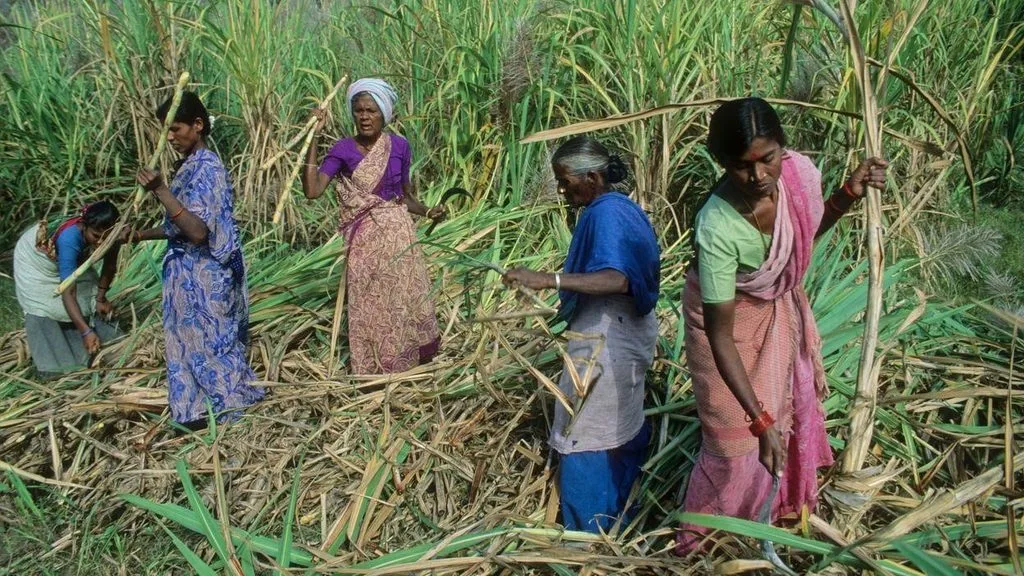
The Jalna incident is not new. It is the next link in a tragic chain that has been running for years in Beed district. It is estimated that around ten lakh sugarcane workers migrate from Marathwada every year, and nearly half of them are from Beed. In 2019, the issue first drew statewide attention. According to a state government report that year, of roughly 82,300 sugarcane-cutting women in Beed, more than 13,800, nearly sixteen per cent, had had their wombs removed over the previous ten years. Many of them were in the thirty-to-thirty-five age group, that is, in the prime of life. The National Commission for Women then sent a notice to the Chief Secretary of Maharashtra. The matter was debated in the Legislative Council. The then health minister announced that permission from the District Surgeon would be made mandatory before a womb could be removed. In the years that followed, more than six hundred further surgeries came to light. More recently, in the Legislative Council, MLC Uma Khapre called the government to account, stating that about 843 women in Beed had had their wombs removed between 2019 and 2025. The High Court has also instructed that pregnant women should not be sent to cut sugarcane. After so much discussion, so many committees and so many announcements, if the names of 107 women are surfacing in Jalna today, one can see how deep the gap is between declarations and actual implementation.
We must examine who benefits most from this gap. Many scholars and journalists have pointed to the role of private hospitals. Rural health workers say that women with limited education who seek help for complaints of abdominal pain, back pain or occasional bleeding are frightened with warnings about cancer and advised to have their wombs removed. The head of one health organisation has observed that doctors link every complaint to the uterus. As a result, the women do not receive treatment for their underlying illnesses, and instead find themselves facing new health problems. Some women even take an advance from the mukadam to pay for the surgery. In other words, a surgery undertaken to save wages pushes them deeper into debt. This double burden on worker families serves the interests of both the contractors and the private healthcare system.
Do women’s lives improve after the surgery? Most of the time, they do not. When a hysterectomy is performed at a young age, particularly if the ovaries are also removed, it can lead to early menopause. The consequences include hormonal imbalance, brittle bones, a heightened risk of heart disease, weight gain, joint pain, irritability and depression. The woman who underwent surgery to free herself from pain may find that back pain and fatigue make working in the fields even harder. For lack of money, she cannot afford further treatment. Some women in Beed have said exactly this while recounting their own experiences: they had the surgery, but the pain did not stop and their health continued to deteriorate. Today, they are telling their daughters and daughters-in-law not to choose this path. Their testimony is as important as government reports.
This is not a problem of Marathwada alone; it is a problem of the whole country. According to the National Family Health Survey (NFHS-5), about three per cent of women aged fifteen to forty-nine in the country have had their wombs removed. But the picture differs greatly from state to state. The proportion is about nine per cent in Andhra Pradesh and about eight per cent in Telangana, whereas in the north-eastern states it is around one per cent. It is no coincidence that the proportion appears higher in regions where migrant labour, particularly in sugarcane cutting, is widespread and private healthcare networks are extensive. About seventy per cent of the women in the survey who had their wombs removed underwent the surgery in private hospitals. There are also allegations that unnecessary surgeries are performed to claim money from government health insurance schemes. Dr Narendra Gupta filed a public interest petition in the Supreme Court alleging that such practices had occurred in Bihar, Rajasthan and Chhattisgarh. In 2023, the court directed all states to implement the Central government’s guidelines within three months. Under these guidelines, every district is to have a monitoring committee; private and government hospitals are to submit a monthly list of women who have had their wombs removed; the reasons for surgeries on women under forty are to be recorded; and alternative treatments are to be suggested first. In Karnataka too, in 2015, a case came to light in which the wombs of about 2,200 women from marginalised communities had been removed, and four hospitals were involved.
A comparison noted by the court gives pause for thought. In developed countries, hysterectomy is usually performed on women nearing menopause, that is, those above forty-five. In India, however, studies show that it has become more common even among young women aged twenty-eight to thirty-six. In the medical world, this surgery is considered a last resort. The accepted norm is that it should be considered only after medicines, hormonal treatment or less invasive methods have failed. Here, though, it is being used as a “quick fix” for financial hardship. Unless we understand that this is not simply a health problem but a consequence of labour exploitation, we will not find the answer.
The subject has also drawn attention at the international level. The story of the surgeries on sugarcane-cutting women in Beed was brought to international attention by media outlets such as Britain’s The Guardian, and a social media post by a French outlet based on the story was viewed by several crore people. Climate Home News travelled through the sugarcane belts of Maharashtra and Uttar Pradesh to report on the conditions of these women, highlighting the link between this migration and climate change, erratic rainfall and drought. Farming remains idle for eight to nine months, and there is no alternative employment, so families turn to cane cutting. When temperatures rise by six or seven degrees, the health of a woman wielding a sickle for ten to twelve hours in the sun is endangered even further. A 2020 study by researchers at Symbiosis University in Pune concluded that the living and working conditions of these women violate basic human rights. India has signed the United Nations Convention on the Elimination of All Forms of Discrimination against Women (CEDAW). Under this convention, the state is obliged to ensure that women have safe working conditions and access to healthcare. The International Labour Organization’s concept of decent work also includes a safe environment, fair remuneration and non-discriminatory treatment. How the sugarcane fields measure up against these standards is a question that could embarrass India, a sugar exporter, even in the global market. Today, consumers and investors around the world have begun to scrutinise the ethics of labour in supply chains. This pressure is visible from cocoa plantations to garment factories. It could come to bear on Indian sugar as well.
So what is the solution? The first step is to stop viewing this problem as a “wrong decision by women”. A woman who makes this decision is under pressure imposed by the system. Responsibility therefore falls on the factories, the mukadams, the private hospitals and the government. The demand to bring sugarcane cutting under a separate law and to make written agreements between factory owners, mukadams and workers mandatory is an old one. It has been raised in the Legislative Council too. The agreements must guarantee relief during menstruation, sick leave and maternity leave, minimum wages, interest-free advances and safe housing. The government has hinted at considering a separate compensation scheme so that women do not lose their earnings. If it is actually implemented, there will be no reason for women to have their wombs removed simply to avoid losing wages during their periods. That would strike at the root of the problem.
The second step is to ensure vigilance and accountability in the health system. We must check whether the district-level monitoring committees mentioned by the Supreme Court are actually working rather than existing only on paper. The medical reason for every surgery on a woman under forty, along with the name of the doctor who advised it, should be recorded. Private hospitals should be audited for such surgeries, and claims under insurance schemes should be examined. In the hospitals where the 107 surgeries in Jalna took place, it must be investigated whether every patient was informed about alternative treatments before surgery, whether written consent was obtained, and whether the consent was genuinely informed. At the village level, ASHA workers and other health workers should be made responsible for following up with women during the sugarcane-cutting migration season. Alongside seasonal hostels, providing mobile health teams, toilets, drinking water and free sanitary pads in the fields is not expensive; it can be done quickly and at low cost. Some women workers have themselves become health ambassadors and have guided fellow women in experiments of this kind. Such initiatives should be expanded.
The third step is to promote awareness and education. The misconception that surgery is the final answer to menstrual problems must be dispelled. Women must be told, in their own language and by people they trust, that medication and less invasive options exist for menstrual pain, heavy bleeding or fibroids. We must also break the cycle in which girls’ education is interrupted once they begin menstruating and they are married early. If education and alternative employment are available, the next generation will not inherit the sickle and the advance as a legacy of debt.
Finally, this question is a moral test of our society. We use sugar in our tea, in our sweets and in the sweetness of our festivals. If the price of that sugar is being paid by a woman’s body, can we stomach that sweetness? The story of the 107 women of Jalna asks us this question again. In 2019, some steps were taken in response to the warning that came from Beed, but they proved inadequate. Now the same warning has come once more. This time, concrete and concerted action is needed at four levels: investigation, law, compensation and basic facilities in the fields. Menstruation is a natural process of the body. The minimum that any civilised society must ensure is that no one loses her livelihood because of it, and that no one is forced to cut her own body out of fear of it.
Vikas Parashram Meshram is a development professional, writer, and grassroots storyteller with extensive experience in rural livelihoods, community development, and social-sector programmes. His work focuses on documenting grassroots innovations, sustainable livelihoods, women’s empowerment, agriculture, natural resource management, and rural development. Through his writing, he brings the experiences and voices of rural communities to a wider audience, highlighting practical solutions and stories of social and economic transformation.