
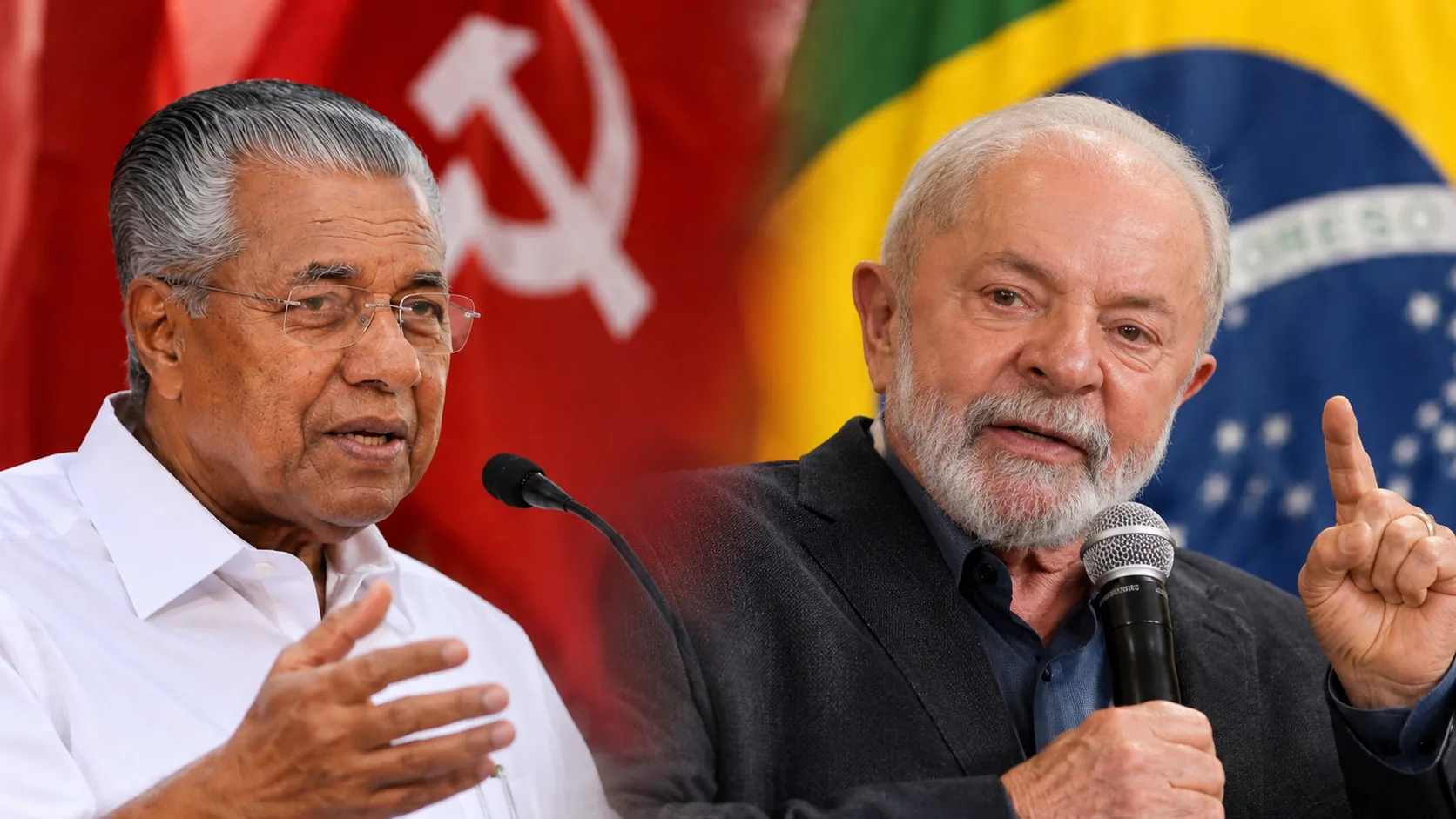
The Crisis of the Left: Lessons from Kerala and Brazil
Why do progressive political movements lose their connection with the people they claim to represent? Examining the experiences of Kerala and Brazil under Lula, Jos Chathukulam and A. M. Jose argue that the crisis of the Left extends beyond electoral defeats and organisational failures. They explore how the growing emphasis on government administration, the weakening of independent mass organisations, and the changing realities of working people challenge the Left’s capacity for political mobilisation. The authors argue that democratic renewal requires rebuilding popular participation, strengthening grassroots organisations, and reconnecting political movements with the aspirations of working people.
1. Introduction: The Crisis Beyond Electoral Politics
The study by Adrian Gurza Lavalle and José Szwako (2026), Upon These Terrible Ruins: Social Participation and Participatory Institutions in Brazil During Lula’s Third Administration, offers an important perspective on the challenges facing progressive governments attempting to reconstruct participatory democracy after a period of authoritarian and conservative dismantling. The Brazilian experience is particularly significant because the Workers’ Party (PT), during its earlier governments under Lula and Dilma Rousseff, developed an extensive architecture of participatory institutions. These included national policy councils, participatory conferences and various mechanisms through which civil-society organisations and popular movements could influence public policy.
However, the Bolsonaro administration (2019–2022) systematically weakened many of these institutions. When Lula returned to power in 2023, he inherited the difficult task of rebuilding a participatory democratic framework under substantially changed political and institutional conditions.
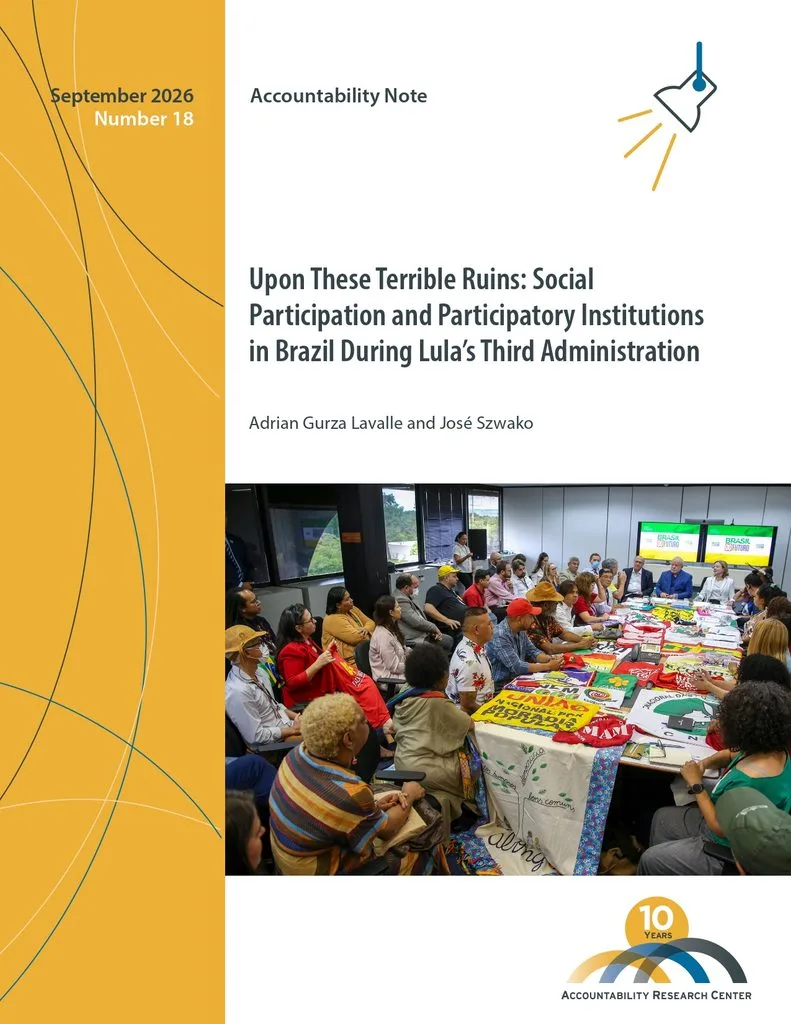
Lavalle and Szwako examine this process through three interconnected developments:(i) the reactivation of previously existing institutions, (ii) the introduction of new participatory arrangements, and (iii) the government’s tendency to evade or postpone certain participatory commitments when confronted with competing political and legislative priorities. The importance of their analysis, however, extends beyond the institutional question of restoring participatory mechanisms. It raises a more fundamental issue concerning the relationship between progressive governments, political parties, popular movements and civil society.
This question becomes particularly relevant when we compare Brazil with Kerala, where the Left has historically drawn its strength from mass organisations, working-class struggles, decentralised planning and popular participation (Heller,1991).
The recent electoral defeat of the Left Democratic Front (LDF) in Kerala in the 2026 Assembly election, and the subsequent critical assessment in our article (Chathukulam and Jose, 2026, Chathukulam, 2026), “Beyond Rectification: A Marxist Appraisal of the CPI(M)’s Review of the Kerala Assembly Election”, provides an important framework for extending the Brazilian discussion. Read together, these experiences suggest that the contemporary crisis of the Left is not simply a crisis of electoral support, organisational efficiency or governmental performance. It is increasingly a crisis of the relationship between political organisations and the social forces they were historically built to represent.
2. The Brazilian Experience: Reactivation, Innovation and Evasion
One of the principal contributions of Lavalle and Szwako (2026) is the distinction between three processes through which Lula’s government has approached the reconstruction of participatory democracy.
Reactivation refers to the restoration of participatory institutions that had been weakened or dismantled under Bolsonaro. This demonstrates that institutional arrangements, once embedded in public administration and connected to organised civil society, can retain a degree of resilience even under hostile political regimes.
Innovation concerns the development of new participatory mechanisms and the adaptation of existing arrangements to contemporary political and social conditions. This is important because restoring the institutions of an earlier period does not necessarily address the new challenges facing Brazilian society.
Evasion is perhaps the most politically significant aspect of the analysis. It refers to the government’s reluctance to advance certain participatory commitments when doing so could generate political conflict or jeopardise other legislative priorities.
The tension between participatory commitments and the immediate requirements of governmental survival raises an important question: can a progressive government maintain its commitment to democratic participation when parliamentary stability and political pragmatism increasingly dominate its priorities?
This is not merely a Brazilian problem. It reflects a wider contradiction confronting progressive governments that seek to transform society while operating within existing state institutions and political structures. The restoration of participatory institutions is undoubtedly important. However, the more fundamental question is whether these institutions can reconstruct the independent political capacity of popular forces or whether they become increasingly incorporated into the administrative machinery of the state. This distinction provides the starting point for a comparative examination of Brazil and Kerala.

3. From Institutional Restoration to the Crisis of Mass Politics
A significant limitation of an exclusively institutional approach to participatory democracy is that it can underestimate the changing relationship between political organisations and society. Institutions such as policy councils, participatory conferences and consultation mechanisms can provide opportunities for social engagement. But the existence does not necessarily indicate that popular organisations possess the political autonomy or organisational strength required to influence the direction of government.
Participation can gradually become a procedural activity rather than a process of popular empowerment. This is where the arguments advanced by Chathukulam and Jose in the Panthi article becomes particularly relevant. Our assessment of the CPI(M)’s review of its 2026 Kerala Assembly election defeat, the authors argue that the party’s self-criticism, although unusually candid, remains largely within the framework of organisational rectification. The review acknowledges failures in leadership, communication, cadre functioning, mass organisations and administrative practices. However, the authors question whether correcting these organisational shortcomings is sufficient to address the deeper transformation of Kerala’s social and political landscape.
The central argument is that the Left requires not merely organisational repair but a broader process of democratic and ideological reconstruction. This is an important insight for understanding Brazil as well. The problem facing the PT is not simply how to restore the participatory institutions dismantled under Bolsonaro. It is also how to rebuild the social relationships, political networks and popular organisations that originally gave those institutions’ democratic significance.
Similarly, Kerala’s electoral defeat cannot be understood simply through questions of leadership, candidate selection, campaign strategy or communication. The deeper issue concerns the weakening of the relationship between the party and the social forces that historically constituted its political base. In both cases, therefore, the crisis is not merely institutional. It is a crisis of mass politics.
4. The Substitution of Government Administration for Political Mobilisation
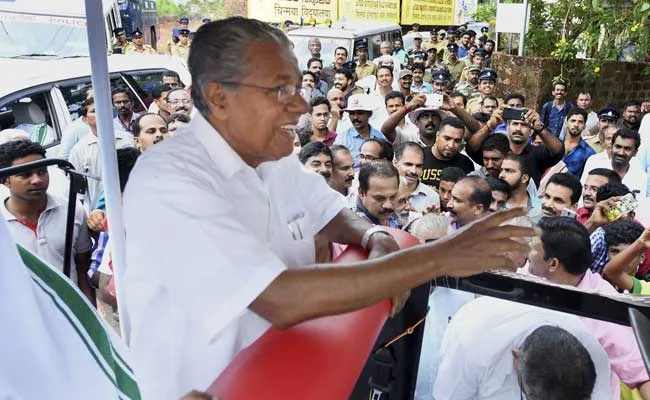
One of the most important arguments in Chathukulam and Jose’s (2026) analysis concerns the growing substitution of administration for political mobilisation. Kerala’s Left historically developed through a close relationship between the party, trade unions, agricultural labour organisations, peasant movements, women’s organisations, student movements and various forms of local collective action. These organisations were not simply instruments for implementing government programmes. They constituted the social and political foundations of the Left. However, prolonged participation in government can gradually transform this relationship (Poulantzas, 1978). The party may increasingly become identified with the administration of the state, while its mass organisations become more concerned with defending governmental policies than independently articulating the grievances and aspirations of party members. This creates a fundamental contradiction.
The government is required to administer the state, negotiate competing interests and operate within institutional constraints. The party, however, must retain its capacity to organise society, represent popular demands and articulate struggles that may sometimes conflict with government policies. When these two functions become increasingly indistinguishable, the party risks losing its independent political identity.
Chathukulam and Jose (2026) argue that this tendency was visible in Kerala, where administrative activity increasingly overshadowed sustained mass mobilisation and autonomous political intervention. This argument has considerable relevance for Brazil. The PT’s earlier strength was rooted in its relationship with organised labour, progressive religious movements, community organisations and popular struggles. Its participation in government created new opportunities for social policy and institutional participation, but also generated tensions concerning the autonomy of social movements.
The challenge for Lula’s government is therefore not simply to reopen participatory institutions but to rebuild the independent organisational capacity of the social forces that once sustained them. A participatory council cannot substitute for a vibrant trade-union movement. A national conference cannot replace sustained grassroots political mobilisation. Nor can government consultation compensate for the weakening of independent popular organisations. The fundamental issue is whether participation strengthens the capacity of society to influence the state or merely extends the administrative reach of the state into society.
5. The Changing Composition of the Working Class
Another important contribution of Chathukulam and Jose (2026) is that the Left must reconsider its understanding of the changing composition of Kerala’s working population. The traditional organisational structures of the Left emerged in a historical context shaped by agricultural labour struggles, industrial employment, trade unions and community-based political movements.
However, Kerala has undergone substantial social and economic transformation. Migration, remittances, urbanisation, the expansion of the service sector, higher education, digital connectivity and demographic ageing have altered the structure of society and the expectations of working people. The contemporary working population includes not only organised industrial and agricultural workers but also:
- Precarious service-sector employees.
- Platform-based and informal workers.
- ASHA and waste-management workers.
- Educated unemployed young people.
- Women engaged in paid and unpaid care work.
- Small cultivators and fishing communities.
- Migrant-dependent households and return migrants.
These groups do not necessarily find adequate representation within the traditional organisational structures of the Left. The authors’ argument is important because it challenges the tendency to treat the working class as a fixed social constituency that can simply be remobilised through established organisational practices. The same challenge exists in Brazil, where informal employment, precarious work and platform-based labour have substantially altered the composition of the working population.
Traditional trade-union structures cannot automatically represent these emerging social groups. The crisis of the Left is therefore also a crisis of political representation. The task is not simply to restore older organisational forms but to develop new forms of collective organisation capable of understanding and representing the changing experiences of working people (Törnquist, 2021).This requires a new political engagement with young people, women, informal workers, migrants and other social groups whose aspirations and grievances are not adequately articulated through traditional party structures.
6. Welfare, Development and the Crisis of Political Hegemony
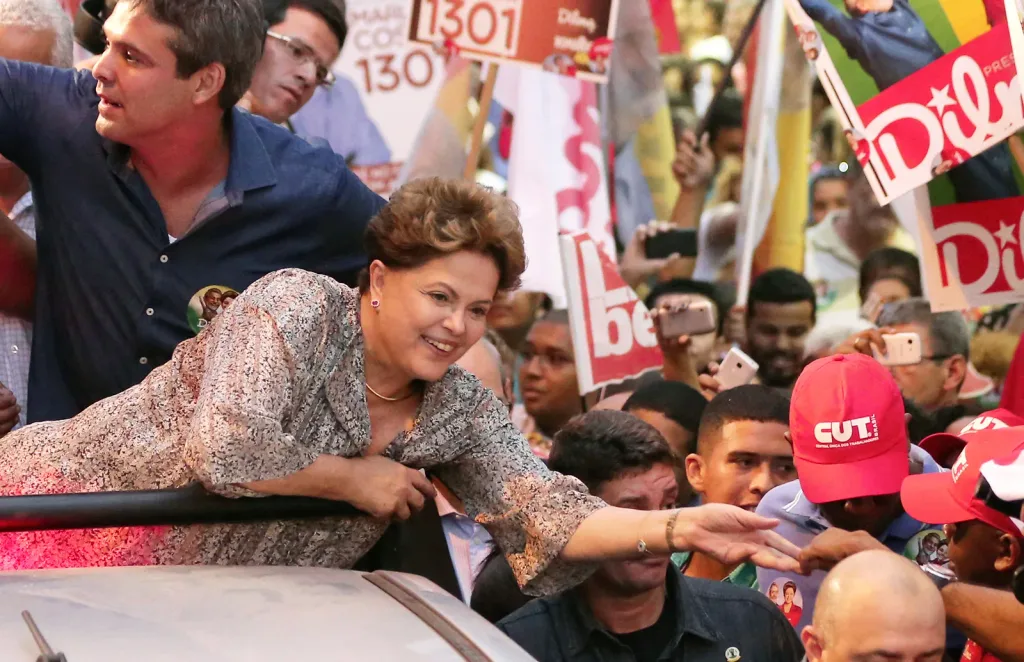
One of the most important questions emerging from the Brazilian and Kerala experiences concerns the relationship between welfare delivery and political legitimacy. Both Brazil and Kerala have substantial achievements in social welfare and public provision. The Left in Kerala has historically contributed to land reforms, public education, healthcare, decentralised development and social security. Similarly, the PT governments in Brazil significantly expanded social programmes and improved the material conditions of large sections of the population. However, welfare achievements do not automatically generate durable political support.
Chathukulam and Jose (2026) make an important point in arguing that the Left’s emphasis on development and welfare cannot substitute for a broader political project.This argument can be Clearly understood through Antonio Gramsci’s concept of hegemony (Gramsci, 1971). Hegemony involves more than the distribution of material benefits. It requires political leadership, moral and intellectual influence, the ability to articulate collective aspirations and the development of institutions through which subordinate social groups can participate in shaping society. Welfare programmes can improve people’s lives, but they cannot independently sustain a political movement if the relationship between the party and society becomes increasingly distant.
Indeed, when citizens are treated primarily as beneficiaries of government schemes, political participation may gradually become reduced to the receipt of public services. This is a significant danger for progressive governments. The challenge is to connect welfare and development with the political agency of the people themselves.
In Kerala, this means revitalising democratic decentralisation and ensuring that local self-government institutions remain spaces of genuine political deliberation rather than merely administrative implementation. In Brazil, it means ensuring that restored participatory institutions become connected to sustained grassroots organisation and popular mobilisation. In both cases, the objective should be to transform welfare beneficiaries into active participants in the political process (Lavalle & Szwako, 2026)
.
7. Political Autonomy, Democratic Centralism and the Problem of Leadership
Chathukulam and Jose (2026) also raise important questions concerning the centralisation of political authority and the weakening of internal democratic processes. The discussion of the CPI(M)’s electoral defeat suggests that the personalisation of political leadership cannot be treated merely as a campaign strategy. It may reflect a deeper concentration of organisational authority. This raises an important question concerning democratic centralism.
Discipline and collective decision-making are essential features of communist organisation. However, democratic centralism loses its democratic content when the process of deliberation becomes increasingly restricted and the opinions of lower-level committees and ordinary cadres have little influence on decisions. The ability to communicate unwelcome political realities to higher levels of leadership is essential for organisational renewal. If criticism is discouraged or treated as organisational disloyalty, the party gradually loses its capacity to understand changes taking place in society.
The experience of Brazil raises a related question. The PT’s transformation through prolonged participation in government has generated tensions between its earlier movement-based political identity and its contemporary role as a governing party operating within a complex institutional environment (Lavalle & Szwako, 2026).
In both cases, the challenge is to maintain collective leadership and internal democratic practices without allowing governmental authority or organisational hierarchy to suppress independent political thinking. A progressive party cannot remain politically dynamic if its members become primarily implementers of decisions taken at the top.
8. Moral Legitimacy, Minority Alienation and the Challenge from the Right
The Kerala experience also highlights the importance of moral and political legitimacy. Chathukulam and Jose draw attention to allegations of corruption, nepotism, bureaucratic arrogance and the growing distance between political leadership and ordinary people.(Chathukulam &Jose, 2026) Our argument is that these issues cannot be dismissed as matters of public perception alone.
For a political movement historically associated with equality, social justice and opposition to privilege, ethical credibility is an essential component of its political identity. When the distinction between public service and private privilege becomes uncertain, welfare achievements cannot necessarily compensate for the loss of public trust. The authors also examine minority alienation and the weakening of the Left’s secular credibility. This has wider implications for the comparison with Brazil.
In both countries, progressive political forces face the challenge of responding to the growing influence of conservative religious networks and right-wing political mobilisation. In Brazil, conservative evangelical networks have established significant influence among sections of the working population (Lavalle & Szwako, 2026). In Kerala, the political consolidation of minority communities and the expansion of the BJP’s influence among particular social groups have altered the electoral landscape (Chathukulam and Joseph, 2026) The challenge is not simply electoral competition over religious identities.
It concerns the wider capacity of the Left to maintain a moral, cultural and political presence in everyday community life. The defence of secularism must therefore be connected to questions of livelihood, social dignity, gender equality, democratic accountability and popular participation. A purely electoral or communication-based response to right-wing mobilisation is unlikely to be sufficient. The Left needs to reconstruct its broader social and ideological presence.
9. Knowledge-Based Development and the Need for a Democratic Developmental Coalition
One particularly interesting contribution is our discussion is its examination of Kerala’s transition towards a knowledge-based economy. They argue that such a transition cannot be achieved through government administration or party organisation alone (Törnquist, 2021). It requires cooperation among state institutions, local self-governments, universities, research institutions, private enterprises, cooperatives, trade unions, professional associations and civil-society organisations.
This is a significant extension of the debate on participatory democracy. Development cannot remain a technocratic programme designed and implemented from above (Törnquist, 2021). The people affected by development policies must participate in defining priorities, shaping implementation and evaluating outcomes.
A knowledge-based development strategy that concentrates primarily on digital infrastructure, start-ups, higher education and global investment may generate economic opportunities. However, without democratic participation, it risks excluding traditional workers, small producers, women in informal employment, fishing communities and economically marginalised regions. The central question is not whether Kerala should pursue knowledge-based development. It is who defines the development agenda, whose knowledge is recognised, who participates in decision-making, who bears the costs and how the benefits are distributed.
This argument can also enrich the Brazilian discussion. The reconstruction of participatory institutions should not be restricted to social policy consultations. It should extend to the formulation of economic and developmental strategies. Participatory democracy must become an integral part of the political economy of development.
10. Beyond Rectification: Towards a New Democratic and Political Reconstruction
The most important contribution of Chathukulam and Jose (2026) is the distinction between organisational rectification and strategic political renewal. Rectification involves correcting organisational mistakes, strengthening discipline, improving communication, training cadres and restoring contact with the people. These measures are necessary. But they are insufficient if the underlying relationship between the party, government and society remains unchanged.
Strategic renewal requires a much deeper transformation. It involves:
- Reconstructing the social base of the Left: Developing new forms of organisation among informal workers, precarious employees, young people, women and other emerging social groups.
- Restoring the autonomy of mass organisations: Enabling trade unions, farmers’ organisations, women’s movements and other popular organisations to articulate independent demands, including demands that challenge government policies.
- Democratising political organisations: Strengthening internal deliberation, collective leadership and the ability of lower-level committees to influence political decisions.
- Reconnecting welfare with popular participation: Moving beyond the treatment of people as beneficiaries towards the active involvement in defining development priorities and public policies.
- Building a broad democratic developmental coalition: Bringing together local governments, workers, civil-society organisations, professional groups, educational institutions and economic actors to shape a socially inclusive development strategy.
These arguments are relevant not only to Kerala but also to Brazil. The challenge facing Lula’s government is not simply to restore the participatory institutions of the PT’s earlier period. It is to reconstruct a broader democratic relationship between the state and society under contemporary conditions (Lavalle & Szwako, 2026).
Similarly, Kerala’s Left cannot address its electoral crisis simply by returning to the organisational practices of an earlier period. Both experiences require a reconsideration of how political organisations relate to contemporary society and how popular forces can exercise independent political agency.
11. Conclusion: Can the Left Recover Its Capacity to Organise Society?
The Brazilian experience under Lula and the recent electoral defeat of the Left in Kerala point towards a common political dilemma. Progressive governments may achieve significant improvements in welfare, public services and development. They may also establish participatory institutions and expand opportunities for civil-society engagement (Lavalle & Szwako, 2026). Yet these achievements do not necessarily guarantee the continued strength of the political movements that originally brought them to power.
Over time, the party may become increasingly identified with the administration of the state, while its independent relationship with popular organisations and social movements becomes weaker. This is perhaps the most important lesson emerging from the comparison. The crisis of the Left cannot be addressed simply through better electoral strategies, more effective communication or organisational rectification. It requires a fundamental reconsideration of the relationship between party, government, class and society (Törnquist, 2021).
Chathukulam and Jose (2026) demonstrate the difficulties involved in rebuilding participatory institutions after the systematic dismantling, take the argument further by questioning whether organisational rectification is sufficient to address the deeper crisis of the Left in Kerala. Read together, our arguments suggest that institutional restoration and political reconstruction are two different processes. The former concerns the restoration of democratic mechanisms. The latter concerns the reconstruction of the social forces, political relationships and collective capacities that give those mechanisms for democratic meaning.
Ultimately, the most important question is not whether the Left can regain electoral support or restore its previous organisational strength. It is whether the Left can rediscover its capacity to organise society, articulate the aspirations of contemporary working people and create democratic spaces in which people exercise meaningful political power.
Perhaps the most fundamental question emerging from the Brazilian and Kerala experiences is this: Can the Left rediscover its capacity to govern by first rediscovering its capacity to organise society? And, more importantly:
Can a progressive political movement transform the state without itself being transformed into an establishment increasingly detached from the people it was historically built to represent?
The future of the Left in both Brazil and Kerala may depend on how seriously these questions are addressed. Electoral recovery is certainly important. But the more enduring task is the reconstruction of popular political agency, democratic participation and the independent organisational strength of working people. That is the difference between merely returning to government and rebuilding a transformative political movement.
Note :The article is prepared mainly with the critical review of the two documents: (i) Adrian Gurza Lavalle and José Szwako’s “Upon These Terrible Ruins: Social Participation and Participatory Institutions in Brazil During Lula’s Third Administration”,Published by Accountability Research Centre (ARC), 2026,and (ii) Jos Chathukulam ., & Jose, A. M’s “Beyond Rectification: A Marxist Appraisal of the CPI(M)’s Review of the Kerala Assembly Election” . Panthi, September 7, 2026.
References
1. Lavalle, A. G., & Szwako, J. (2026)Upon These Terrible Ruins: Social Participation and Participatory Institutions in Brazil During Lula’s Third Administration.
2. Chathukulam, J., & Jose, A. M. (2026). Beyond Rectification: A Marxist Appraisal of the CPI(M)’s Review of the Kerala Assembly Election . Panthi, September 7, 2026.
3. Chathukulam, J., & Joseph, M. (2026). Local government election results in Kerala: Towards a tripolar polity. Economic and Political Weekly, 61(9), 16–19.
4. Chathukulam. J. (2026). From Mass Line to Managerialism: A Marxist Assessment of the 2026. Mainstream Weekly, 64(13).
5. Gramsci, A. (1971). Selections from the Prison Notebooks. International Publishers.
6. Heller, P. (1999). The Labor of Development: Workers and the Transformation of Capitalism in Kerala, India. Cornell University Press.
7. Poulantzas, N. (1978). State, Power, Socialism. New Left Books.
8. Törnquist, O. (2021). In search of new social democracy: Insights from the south – implications for the north. Bloomsbury Academic.

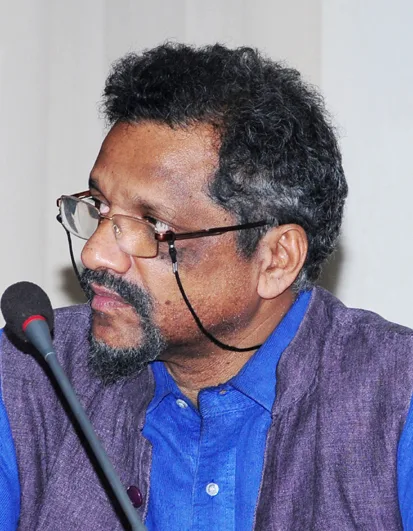
Jos Chathukulam is a Professor of Political Economy and Director of the Centre for Rural Management (CRM), Kottayam, Kerala. His academic work focuses on public policy, decentralisation, public finance, local governance, development studies, and political economy in India, with a special emphasis on Kerala. Prof. Chathukulam has authored and edited several influential books and research papers, and has served as a policy advisor to governments and international agencies. He is widely recognised for his critical engagement with development paradigms and for advocating sustainable, people-centred alternatives in economic and governance practices.