
Religious Hate in India Is No Longer a Fringe Problem, It Sits at Your Dinner Table
This powerful essay examines how religious hatred in India has moved beyond isolated incidents to become deeply embedded in everyday life. Through recent events, institutional patterns, and media narratives, the article argues that communalism today is sustained not only by organised violence but also by silence, complicity, and normalization within society. It calls for confronting hate not as a distant problem, but as something that has entered our homes, relationships, and moral choices.
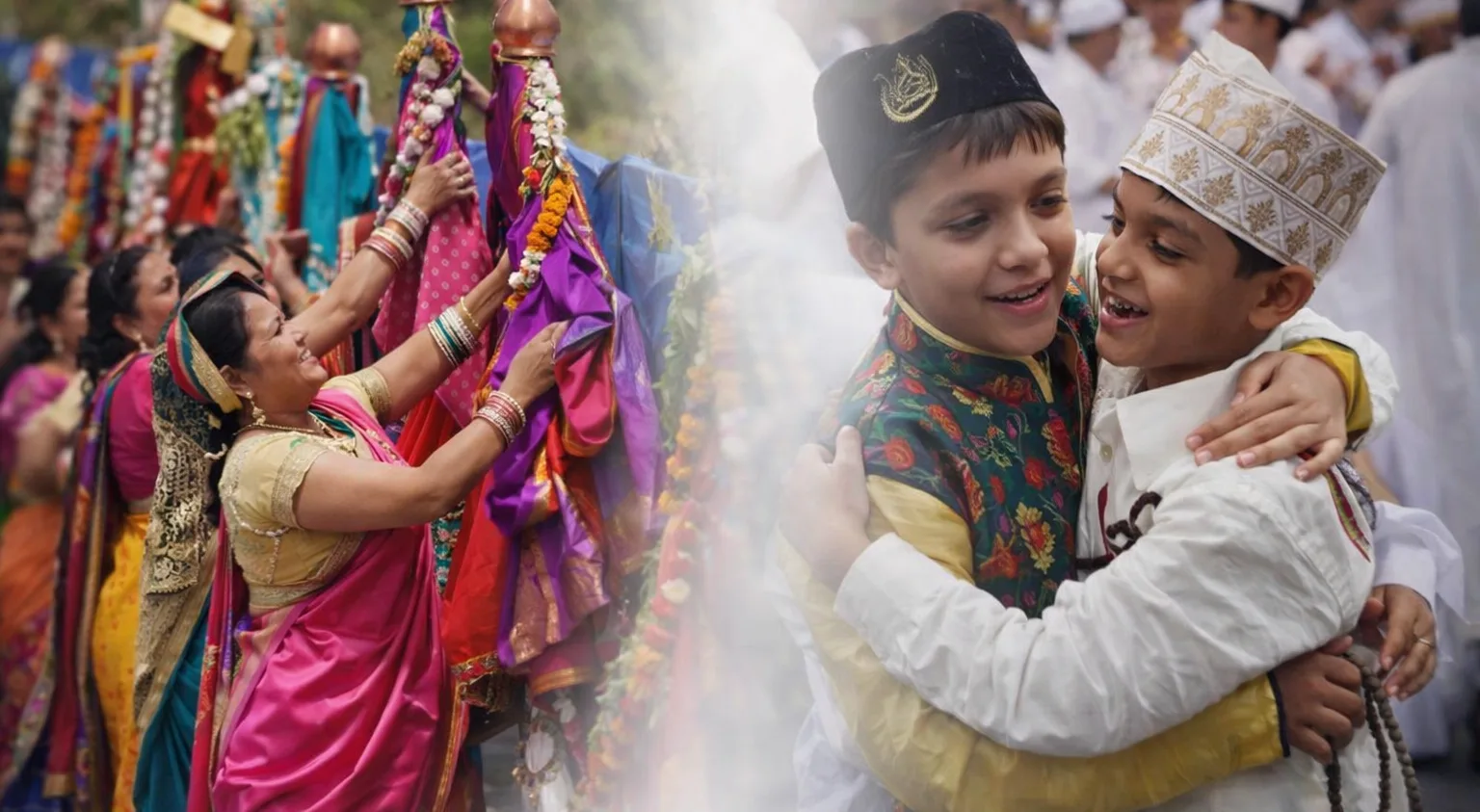
Last week saw a rare, beautiful convergence of the joy of two communities. Eid and Ugadi fell together. The streets smelled of sevaiyan and neem flowers simultaneously in some places. In other places, families celebrated the two festivals with a shared wall between their homes. This is not some utopian fantasy. This is the India that has always existed. A place where lives, languages, festivals and festivities have been intertwined without the need for walls. But today, it is the very same India that is being systematically dismantled.
What India Tells the World
Addressing the United Nations on 17 March, the International Day to Combat Islamophobia, India’s permanent representative to the UN, Ambassador Harish Parvathaneni, stated that India strongly condemns the violence and hatred committed in the name of religion and emphasised the nation’s long tradition of religious coexistence. He invoked Sarva Dharma Sambhava and reaffirmed India’s commitment to a world free of religious hatred.
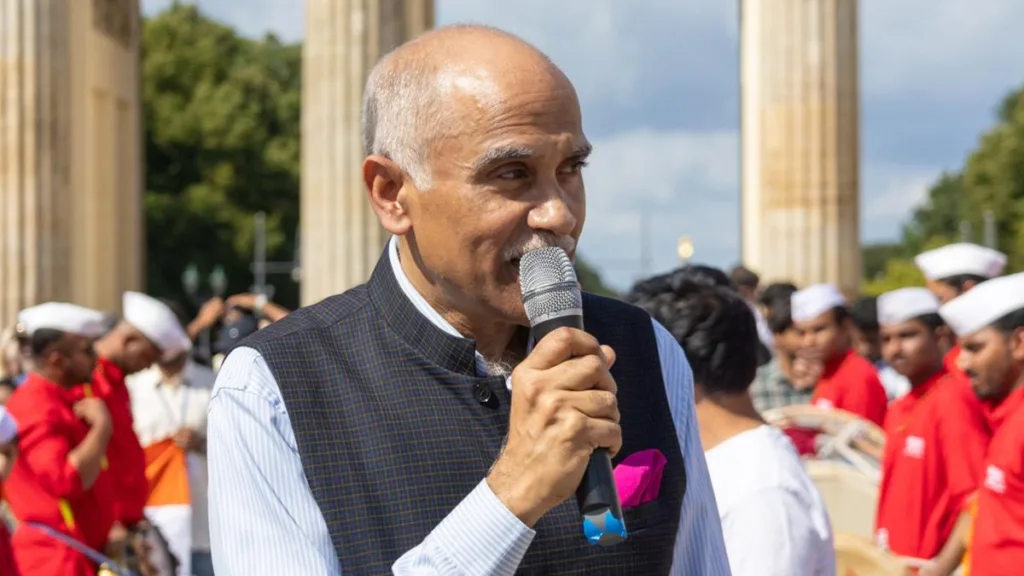
Great words. While Ambassador Parvathaneni was uttering these words, little did he know that back in the national capital, in the same week he reaffirmed India’s commitment to a religious hatred-free world, religious hate was being spewed openly.
What India Does at Home
During Holi celebrations on 04 March, a long-standing family rivalry turned tragic when Tarun Kumar, a 26-year-old was killed in New Delhi’s Uttam Nagar. It was confirmed by other residents that the incident happening on Holi was a coincidence. The police found no communal angle. This nuance was instantaneously buried.
Right-wing Hindu organisations swarmed in, giving the death a communal character. A member of one of these groups even called for the massacre of Muslims in Uttam Nagar. He even demanded that “khoon ki holi” be played.
What followed was “Aakrosh Sabhas” in Delhi where violence against Muslims was openly incited through inflammatory speeches. Extrajudicial killings, social boycott and economic boycotts were advocated. Economic boycott is violence without visible wounds. It is a tactic that has been deployed with increasing regularity across states. And it destroys lives just as much as the speeches that encourage it.
This call for violence spread an atmosphere of fear in Uttam Nagar where several Muslim families left their homes after speeches started circulating on social media warning them that they would not be allowed to celebrate Eid and that “khoon ki holi” would be played on that day.
Same Product. Different Packaging
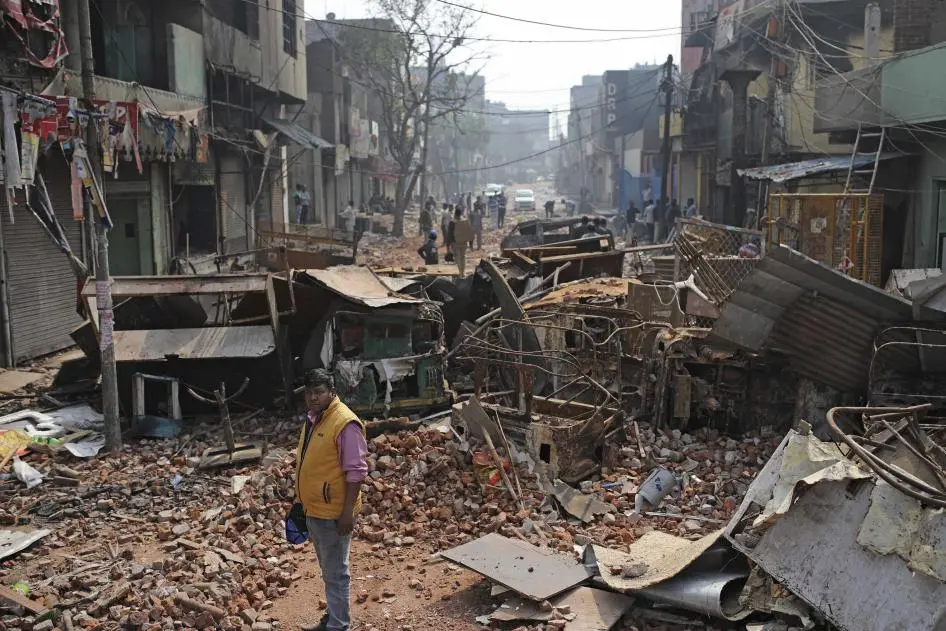
The 2020 Delhi riots were not spontaneous. What happened in the national capital has been called a pogrom by multiple researchers and human rights organisations. Over 53 people, mostly Muslim were killed as the Delhi Police stood by or in some documented cases, participated. The same pattern can be found in Palghar, Manipur, Hapur and Alwar. Different states. Different years. Same impunity.
The incident in Manipur happened on 04 May, 2023. It was the day after ethnic riots broke out between the mainly Hindu Meitei and predominantly Christian Kuki-Zo tribes. Two women from the Kuki-Zo community were paraded naked through the street as men groped and assaulted them. A video of it went viral after two months of the occurrence. The incident was reported to the police in May. There were no arrests made until the video went viral.
The Manipur narrative matters because it clearly shows this is not just about Muslims. It is about the India that has a selective relationship with human dignity. The Manipur victims were Christian. They had to wait two months for the Prime Minister to find words. Well, they had to wait until the video went viral, only after which the Prime Minister found words.
The Infrastructure of Hate
Street violence cannot sustain itself. When enabled with architecture, it thrives.
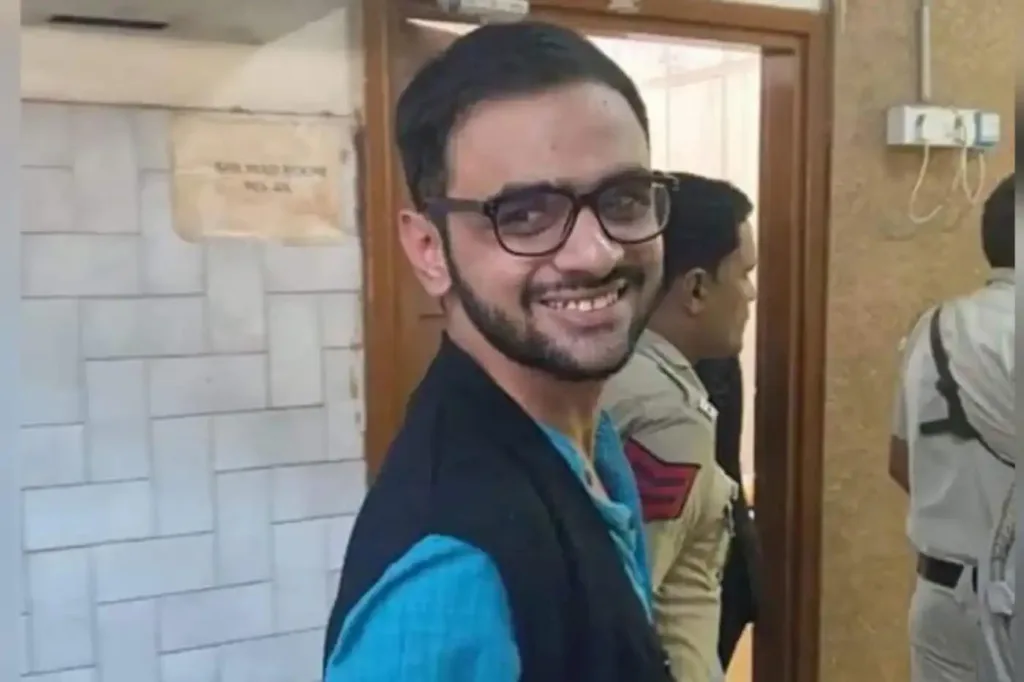
While mob perpetrators walk free, protestors and documenters face the wrath of legal instruments used with extraordinary precision. Let’s consider Umar Khalid. He was booked by the Delhi Police under the UAPA as an alleged co-conspirator in the Delhi riots case. In December 2022, a Delhi court acquitted him in the case involving rioting, property damage and vandalism. Yet, on 05 January 2026, Khalid was denied bail by the Supreme Court in the Delhi riots larger conspiracy case. He has now spent over 5 years in the Tihar jail. He is arguably the symbol of the broad suppression of dissent under the current government. The law is not absent. It is pointed in the wrong direction.
Prime time television is not just the reflection of the current climate; it is the creator. In 2020, Sudarshan News ran a show alleging, “UPSC jihad.” The Modi government had allowed the programme to air saying that it could not pre-censor television programmes. Oh! The irony. A caution was eventually issued when the Supreme Court restrained its telecast. The anchor faced zero consequences of substance. India ranked 151st out of 180 countries in the 2025 World Press Freedom Index. This is not a free press crisis. It is a captured press crisis.
Multiple states ruled by the BJP have passed laws criminalising interfaith marriage when one partner is Muslim, under the garb of “love jihad.” The bulldozer has become the latest prop in the arena of political tomfoolery. Property demolition by bulldozers even before any trial is concluded is a pattern that has become so normalised that it has attained its own vocabulary, called the bulldozer justice.
Delhi police, which directly is under the purview of the Union Home Ministry, has displayed selective toothlessness when it comes to their targets. Their actions against those they target are swift and aggressive, e.g. Umar Khalid while showing what can only be described as structural unwillingness to act against Hindu nationalist outfits.
The infrastructure of hate is not only targeting the present but also the future. NCERT removed material highlighting the achievements of the Mughal emperors from class VII history books. From class XI political science books, chapters on the Delhi Sultanate were deleted and references to Maulana Abdul Kalam Azad, India’s first Education Minister, a Muslim freedom fighter, were removed. NCERT also removed mentions of the Babri Masjid from textbooks in 2024. Chapters discussing discrimination against Muslims were removed from class VI textbooks. An entire generation of children is being taught a version of Indian history with 800 years of history, architecture, culture and literature just wiped out. The removal of a community from historical memory is often a precursor to something worse.
The Silent Enabler
The apolitical Indian who considers themselves above communal politics. The apolitical Indian who shares memes and watches cricket. The person that went quiet when the bulldozers came. The person who washes off their moral dilemma by saying, “but there is violence on both sides.” Just saying or believing your apolitical stance does not balance the conversation. It tilts it in the favour of the hatemongers.
This article is not a comprehensive survey of all communal incidents. It is about the dominant pattern of institutional and mob violence.
Silence is not neutral. It is structural support for what keeps happening. That silence is counted on. The speeches given in Uttam Nagar were not in front of strangers. The attendees of the Aakrosh Sabhas went back home to their families. The biggest consumer of prime time hate television is the Indian middle class. Calling it “bold journalism” makes you a participant. Switching off the TV to go to bed doesn’t absolve you of anything.
Atithi Devo Bhava – No Matter if They Hate You, But as Long as They Hate Muslims
American far-right activist and self-described journalist Laura Loomer was recently invited to India to participate in a conclave. Social media posts of Loomer resurfaced ahead of her visit where she had openly spewed hate against Indians, calling us “third world invaders,” claiming our average IQ to be 76, etc. Those posts were deleted prior to her visit. But she made one thing crystal clear at the conclave. She declared that “Islam is a cancer to the world” and “Islamophobia is a hoax.”
This is not about Laura Loomer. This is about what her presence says. A person who brazenly despises Indians will be welcomed with open arms as long as they hate Muslims. The logic is purely transactional. A stark one at that. Hatred supersedes everything. Racism is negotiable. Islamophobia is prime time gold. This is how far the rot has gone.
The People that Built India
The India that hate speeches claim to defend is the India that was built by Hindus, Muslims, Sikh, Christians and many more. The self-appointed Dharm Rakshaks, who roam around demanding proof of loyalty and patriotism do not hold a candle to the contributions made by the very people they question. APJ Abdul Kalam, Zakir Hussain, Maulana Abdul Kalam Azad, Sam Manekshaw, E. Sreedharan are all people that come from Muslim and Christian communities. These are the people among many others who gave modern India its spine. The Muslim soldiers martyred at Kargil, those memorials bear their name too.
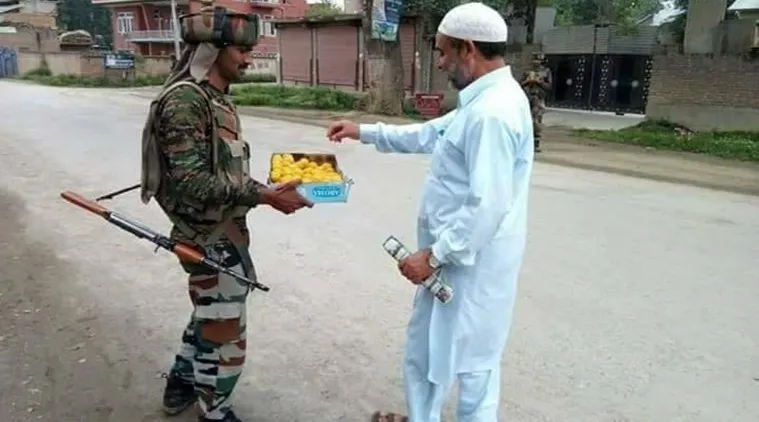
They are all Indians. By birth, by history, by choice and by constitutional right. And so is every single Indian. Nobody can question their “Indianness.”
The Hatemonger Tax
The argument is not just moral. It has real world, practical consequences. India has aspirations to be a global economic superpower. However, the foundations of being a global economic superpower are a social contract of stability, rule of law and institutional trust. Diplomatic partners read press freedom indices. Investors read USCIRF (United States Commission on International Religious Freedom) reports. Talented Indian youth, irrespective of their religion look at what’s going on and ponder about their futures. The USCIRF has repeatedly flagged India for state-level religious freedom violations. The reputational cost is real. The brain drain is real.
The gap between what happens in Uttam Nagar and what India says at the UN is visible to the world. We are being watched. It is being documented.
Look Around, Spread Empathy
The people who called for khoon ki holi in Uttam Nagar are people with families. And kids. So are those that attended the Aakrosh Sabhas. So are those that shared incendiary videos. Those who smiled satisfactorily as Muslims left their homes and abandoned their businesses. They are all somebody’s friend, colleague, neighbour, family.
Condemnation is easy. But fixes nothing. The hard part is to look them in the eye and make them feel. Not shame. But empathy. That person is not living freely. They are consumed by hatred. They are rotting from the inside. They have reduced their entire existence to a single manufactured grievance. They are being exploited for somebody else’s political arithmetic.
Calling someone out is necessary, but easy. Try to reach them. The India that needs saving is not just in Uttam Nagar or Manipur or Palghar or Hapur or Alwar. It is all around us. And it starts from our own dinner tables.
Eid and Ugadi were simultaneously celebrated this year. Maybe even together in some parts. That India exists. That is the India that is worth fighting for.
This article was originally published on Substack

Karthikey Sirdeshpande is the author of Beneath the Surface, a Substack newsletter that goes beyond the headline to explore why things matter, spanning Indian politics, policy, society, culture and sport. He has covered subjects as varied as gerrymandering, demonetisation, media, sex education and religious pluralism, bringing a consistent curiosity and civic seriousness to each.