
Not a People’s Mandate: The SIR-Money-Adani Triad Behind NDA’s Sweep
In this interview, CPI(ML) General Secretary Dipankar Bhattacharya offers a sharp and grounded analysis of the 2025 Bihar assembly election. He explains how the SIR machinery, women’s cash transfer schemes, and the growing influence of the Adani-led corporate ecosystem shaped the NDA’s sweeping victory, one he argues does not reflect a genuine popular mandate.
Did you expect the NDA to achieve such a huge victory while working among the people as part of the India Front?
The Nitish government had barely recovered from its setback in the 2020 elections. Its credibility was already very low. Since then, governance in Bihar had remained almost stagnant. High crime rates, corruption, poverty, unemployment, and migration for jobs continued to rise. The government remained focused only on infrastructure projects such as expressways, flyovers, and a few airports. But it showed no interest in improving facilities in rural areas or ensuring essential services for villagers.
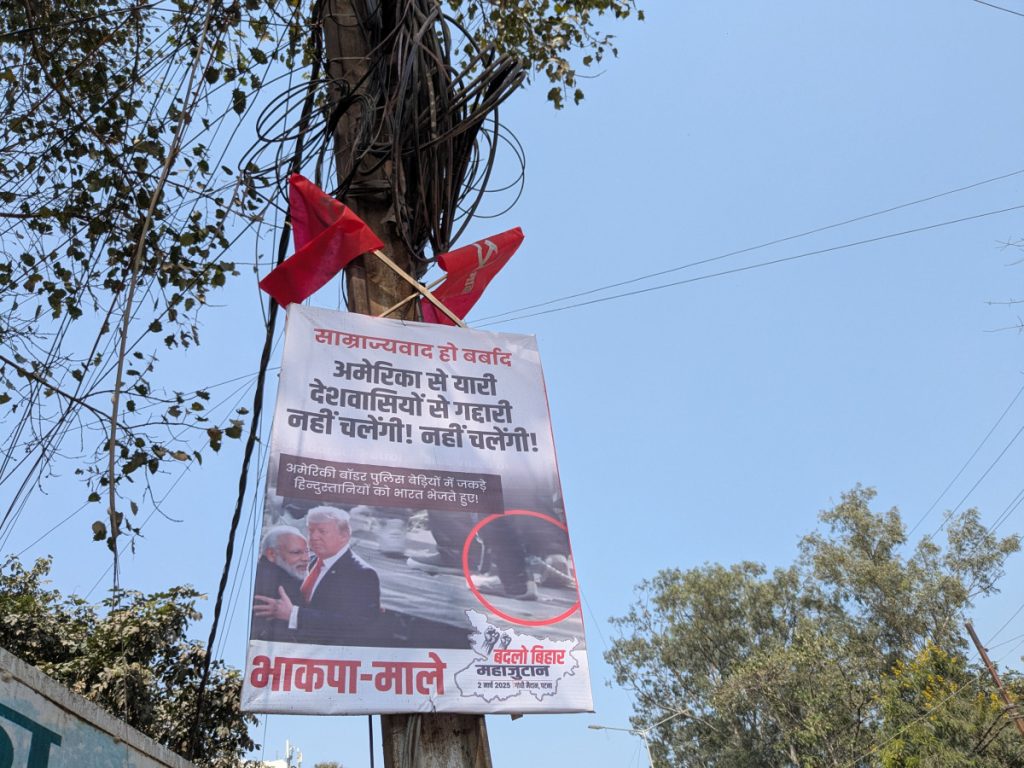
Political activists like me believed that the dream of a new government—which the people were unable to achieve in 2020 before the SIR—would materialise this time. As part of this, the CPI (ML) led the ‘Badlo Bihar’ march. In addition, protest programmes were organised to pressure the government to implement the schemes it had already announced. The government had promised to provide ₹2 lakh each to 94.5 lakh families whose monthly income was below ₹6,000. It did not keep this promise, even though it was made on the floor of the Assembly. The Special Intensive Revision (SIR) programme began amid rising protests over this issue.
Why are the opposition parties not accepting the Bihar Assembly election results? What is unusual about the NDA’s victory?
Contrary to popular expectations—and even the predictions of most exit polls—the outcome of the Bihar elections has turned out to be as astounding as the Maharashtra landslide. In some ways, it appears to be a reenactment of the 2010 election, when Nitish Kumar’s NDA secured an unbelievable 206 seats in Bihar’s 243-member Assembly and the main opposition, the RJD, was reduced to just 22 seats.
But that was a time when Nitish Kumar was at the peak of his popularity and the Modi era had not yet begun in Delhi. A repeat of the 2010 outcome—this time with a united opposition pushed down to only 35 seats—after fifteen long years, after the government had barely survived the previous election, and after the BJP lost its independent majority in the 2024 Lok Sabha elections, can only be considered highly unnatural.
Can you tell me how the ruling parties secured this victory?
The result must be seen against the backdrop of two unprecedented state interventions designed to shore up the declining electoral prospects of an increasingly non-performing and unpopular government.
A surgically executed Special Intensive Revision of the electoral rolls struck off close to 6.9 million electors and added more than 2.5 million new voters. In addition, more than 3 lakh voters were mysteriously added after the SIR process was completed and elections were announced. Together, these changes drastically altered the electoral balance across the state. The deletions and inclusions carried out through SIR exceeded the opposition’s 2020 victory margins in most constituencies. The post-SIR inclusions further tilted the balance in nearly a dozen marginal seats.
The SIR also triggered widespread anxiety and fear not only about losing the vote but also about the possible loss of citizenship and allied rights and benefits. Bihar recorded the highest voter turnout in its electoral history, boosted by organised transfers of non-resident voters, including special trains arranged to ferry pro-NDA voters back to the state. The administration, displaying open bias, enabled widespread organised pro-government false voting.
The extra votes, whether synthetic or organic, boosted the NDA’s vote share, and under the anomalous first-past-the-post system, this translated into a disproportionately high seat tally. Figures also show that large crowds voted in the final hour of polling, as seen in several other states. A logical explanation for the 8–10% increase in voter turnout after 5 p.m. has not yet been found.
The result is an incredible 202 seats for the ruling coalition far surpassing even the boldest exit poll predictions.
Wouldn’t transferring ten thousand rupees into women’s accounts have had a major impact?
Definitely. The second state intervention came in the form of an unprecedented amount of direct cash transfer issued right on the eve of, and even during, the elections. Three particular measures were designed to defuse the mounting anger of the people against a callous, non-performing government: an increase in old age and disability pensions from a paltry ₹400 to ₹1,100 per month; free distribution of up to 125 units of electricity per month; and, most significantly, a one-time transfer of ₹10,000 to nearly 15 million women associated with self-help groups managed by the rural livelihood mission, known in Bihar as Jeevika.
The new scheme, farcically named the Mukhyamantri Mahila Rozgar Yojana (which should more accurately be called the Mahila Karzdar Yojana or women’s indebtedness scheme), was launched just days before the announcement of the poll schedule, and disbursements continued during the elections. In an interview, Amit Shah described the ₹10,000 transfer as seed money for a potentially larger loan in the coming days. Realising that women in Bihar were angry over coercive microfinance loan recovery campaigns, a worried Nitish Kumar rushed to clarify that the ₹10,000 instalment was not a loan and would not have to be returned. To ensure that the disbursement translated into votes and the intended electoral harvest was reaped, 1,80,000 Jeevika “volunteers” were deployed on poll duty, as noted in the post-poll press note issued by the Election Commission of India.
Are you saying that voters were influenced through cash transfers, which helped the ruling parties overcome strong anti-incumbency?
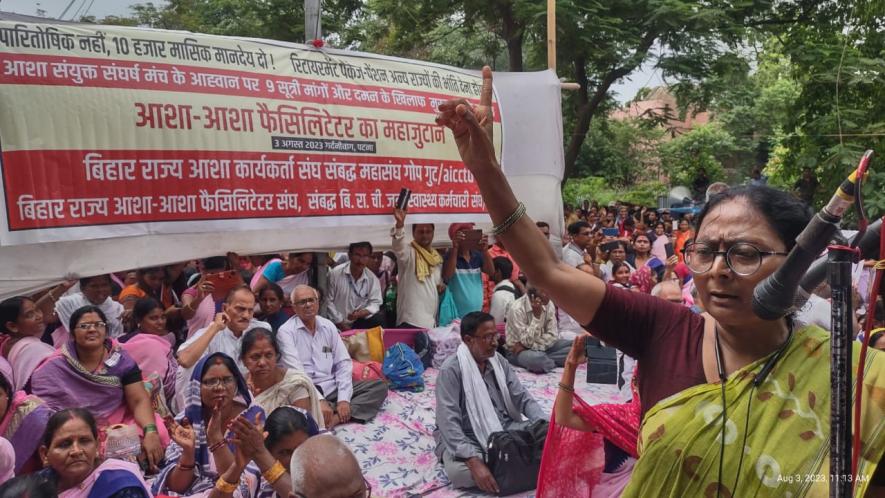
Of course. That is exactly what happened. Anti-government sentiment among women was very strong in Bihar. ASHA workers, Anganwadi workers, school midday meal workers, and women associated with the Jeevika scheme had been on continuous strike, raising various demands. The government was not even willing to talk to them. All these strikes were suppressed, and money was distributed at the last minute, fully aware that women were likely to vote against the government.
Along with this, Bihar has been made into a laboratory for implementing SIR at the national level, effectively introducing the National Register of Citizens through the back door. Never before in India has the voter list required proving one’s citizenship. The usual practice of universal enrolment has now been subverted. It is part of a larger plan to exclude certain sections of people from voter lists. Therefore, SIR is not merely a programme to clean up the electoral rolls.
Doesn’t what happened in Bihar reinforce the argument that India has become an electoral autocracy?
Of course. The assembly elections in Haryana and Maharashtra, as well as the 2024 Lok Sabha elections, demonstrate this clearly. Earlier, they tried to distort the real will of the people through electoral bonds. Now, they are trying to override public sentiment by restructuring the electoral arena itself. Changing the method of appointing the Election Commission is also part of this. We are heading towards a situation where only one party remains. If this continues, the most essential element of democracy, the opposition, will cease to exist.
Do you think the opposition began its protest against SIR too late, or that it could not take the movement forward effectively?
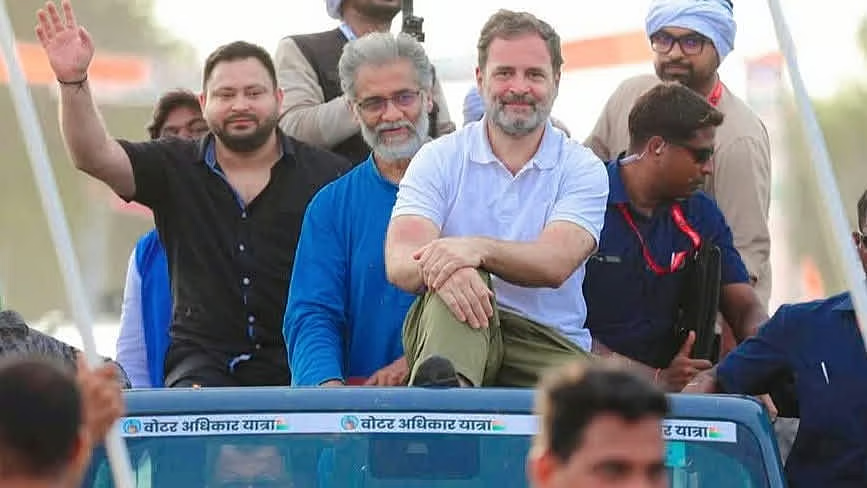
Bihar organised the Voter Adhikar Yatra as part of the protest. It was a very strong intervention. The legal battle in the Supreme Court was also very robust. Had these efforts not been made, the situation would have been even worse. This movement has also created awareness among people in other states.
Was the message of the Voter Adhikar Yatra able to reach ordinary people in the villages?
The march was well attended. It reflected concerns about the problems that would arise once SIR was implemented and a strong desire for a change of government. We saw people who were determined to defend their right to vote. But the fact remains that 10% of voters were excluded from the list, and they were unable to protest against it.
What was the issue you raised regarding the voter list count, and what response did you receive?
The Election Commission had stated that the total number of voters in the electoral rolls as of September 30, after the completion of SIR, was 7.42 crore. However, the electoral roll used in the actual election process contained 7.46 crore voters. This means that more than three lakh people were added to the rolls after SIR was completed. The explanation given was that the Election Commission added names up to ten days before the filing of nominations began. This explanation is not credible.
Moreover, the number of people who voted in the first phase was released only after a long delay and only when the second phase was already underway. The Election Commission does not provide reliable answers to any questions—even on basic issues of transparency.
Will the CPI (ML) demand a review of the election results?
The India Front is going to ask the Election Commission for Form 17C, 5% VVPAT verification with EVMs, and CCTV footage. This will help us understand how such a huge last-minute turnout occurred and what the ‘Jeevika’ volunteers were doing inside the booths.
You also mentioned that Adani’s Pirpainti Power Project influenced the election. Can you explain how?
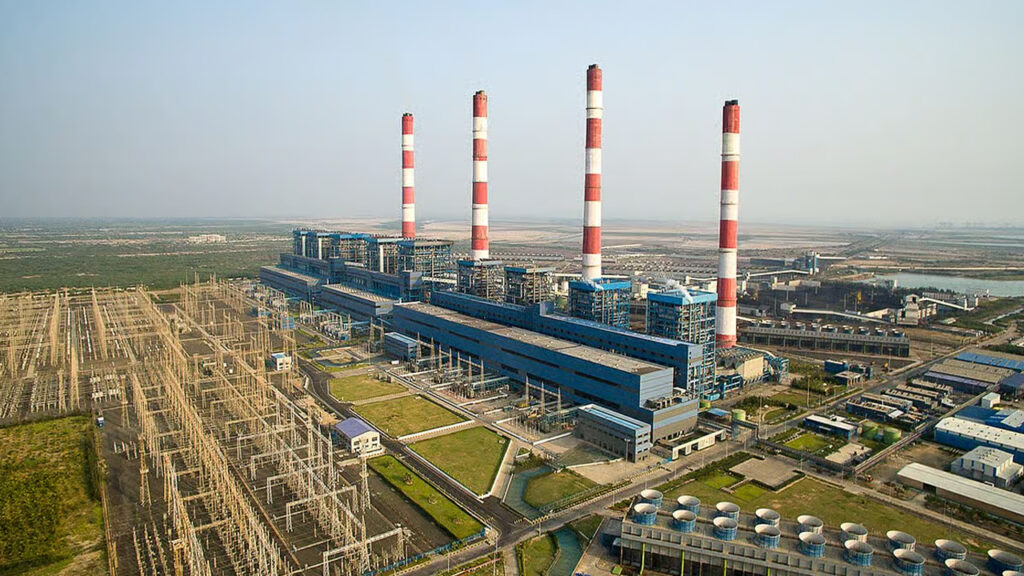
A third major election-time development, which did not receive due media attention, was the announcement of the Pirpainti Adani power deal. Under this deal, Adani received 1,050 acres of land for a token annual lease of just ₹1, along with an assured electricity purchase price of more than ₹6 per unit. Former energy minister in the Modi cabinet and two-term BJP MP from Ara, R.K. Singh, alleged a ₹620-billion scam and demanded a CBI probe. That demand led to his expulsion from his own party. While scrapping Electoral Bonds as unconstitutional, the Supreme Court had raised concerns about quid pro quo between corporate donors and political beneficiaries.
How might the contract given to Adani have influenced the election?
One naturally wonders what role the Adani Group played in the Bihar elections in return for the Pirpainti power deal. We perhaps caught a glimpse of this through the corporately funded political expedition led by Prashant Kishor’s Jan Suraj Party, as well as the massive use of money power by the BJP and its allies. In the coming days, Bihar will have to confront not only renewed feudal coercion and intensified communal hate and violence, but also heightened corporate plunder. The discourse on development in Bihar, which has long been disconnected from jobs, earnings, amenities, and the rights of working people, will become even more infrastructure-centric with Adani’s growing penetration in the state.
What are the far-reaching consequences of the way the NDA handled the Bihar elections?
In many ways, the outcome of the 2025 Bihar Assembly elections has echoed the pattern and scale of the Maharashtra elections of November 2024. In Maharashtra, the MVA was reduced to 50 seats out of 288; here, the INDIA coalition has only 35 in a house of 243.
The electoral roll updating exercise has now been weaponised as a systematic, countrywide electoral purge. The cash transfer tool of electoral engineering has been taken to the next level. Bihar also saw a hyped corporate-funded attempt to prevent the consolidation of anti-incumbency anger in the form of the Jan Suraj Party, which ultimately failed spectacularly but dominated the media space throughout the pre-poll period.
What explains why traditional Muslim voters of the RJD and Congress in regions like Seemanchal did not support the opposition?
The under-representation of Muslims in the electoral arena, coupled with the failure to project any Muslim leader as a potential Deputy Chief Minister, deeply upset Muslim voters. As a result, AIMIM once again emerged as a major force in Muslim politics in Bihar, winning all five seats it had secured in 2020.
But the NDA’s landslide has also produced the lowest-ever Muslim representation in the Assembly — only 11 members, down from 19 in the outgoing House. In 2010, when the NDA won 206 seats, the JD(U) had seven Muslim MLAs and the BJP even had one. This time, the NDA has only a single Muslim MLA from the JD(U); the remaining ten Muslim MLAs belong to AIMIM, RJD, and Congress.
Another significant reversal is that upper/general caste MLAs (69) now outnumber OBC MLAs (66) in the NDA camp. Notably, the BJP’s list of 101 candidates included not a single Muslim from the state’s 16-odd percent Muslim population, while the 10.7 percent Hindu upper-caste population secured 49 representatives.
The CPI (ML) Liberation, which won 12 seats in the last assembly elections, has been reduced to two this time. What happened?
The CPI (ML) contested twenty seats in these elections but could win only two—sharp contrast to the twelve seats it won five years ago, even though its vote share fell only marginally. The party lost four seats by very narrow margins of less than three thousand votes, including one by just 95 votes. The party will of course review the results closely, draw necessary lessons, and take corrective measures.
The INDIA coalition as a whole will also have to undertake an in-depth review — exposing and challenging the full range of administrative manipulations, electoral malpractices, and abuses of the election machinery, beginning with the arbitrary and partisan role of the Election Commission of India. Equally important, INDIA must learn from its own lapses and overcome its weaknesses.
A government with a strong BJP presence is about to take power in Bihar. What changes do you foresee?
More than ever before, the fifth term of the Nitish Kumar government is going to be dominated by the BJP, and the Sangh brigade has made no secret of its intent to turn Bihar into a laboratory of bulldozer raj. Governments with abnormally high majorities have often unravelled quite rapidly, and an NDA government returning to power with an abnormal majority despite a strong popular mood for change is unlikely to be an exception.
But having retained Bihar, the Sangh–BJP establishment will now focus on Assam, West Bengal, Tamil Nadu, and Kerala , the four states going to the polls by May 2026 , and on Uttar Pradesh, where elections are due by February 2027.
What lessons does the Bihar election offer the INDIA alliance about working more effectively and maintaining clarity on campaign issues?
The alliance could not sustain the enthusiasm generated by the Voter Adhikar Yatra. Crucial time for campaigning was lost due to several factors. Seat-sharing issues should have been resolved much earlier. Cyclone Montha and the subsequent rains hampered the campaign. It was also not possible to clearly announce that the Deputy Chief Minister would be from both the Dalit and Muslim communities. Such mistakes must not be repeated. The friendly competition between parties within the alliance also caused harm.
Did the position taken by Mukesh Sahni’s VIP and the rise of parties like AIMIM and Jan Suraj significantly split the traditional MGB vote?
AIMIM drew votes that the opposition should have secured. This is very unfortunate. Mukesh Sahni’s party, unlike in the Lok Sabha elections, could not win a single Assembly seat. Jan Suraj is a corporate political intervention; it is not a normal political party. It succeeded in mobilising a section of anti-government votes.
What must people who believe in democracy do to ensure free and fair elections?
For the constitutional foundations of democracy to survive, India must urgently reverse the trend of centralisation of power around a single party and the concentration of wealth in increasingly fewer hands — a trend that has reached alarming proportions after the Bihar elections. The battle lines between fascist consolidation and democratic revival now stand out in even sharper relief, and progressive forces across India must not allow the Bihar outcome to weaken their unity, resolve, or strength.
Originally published in Malayalam on Keraleeyam Web
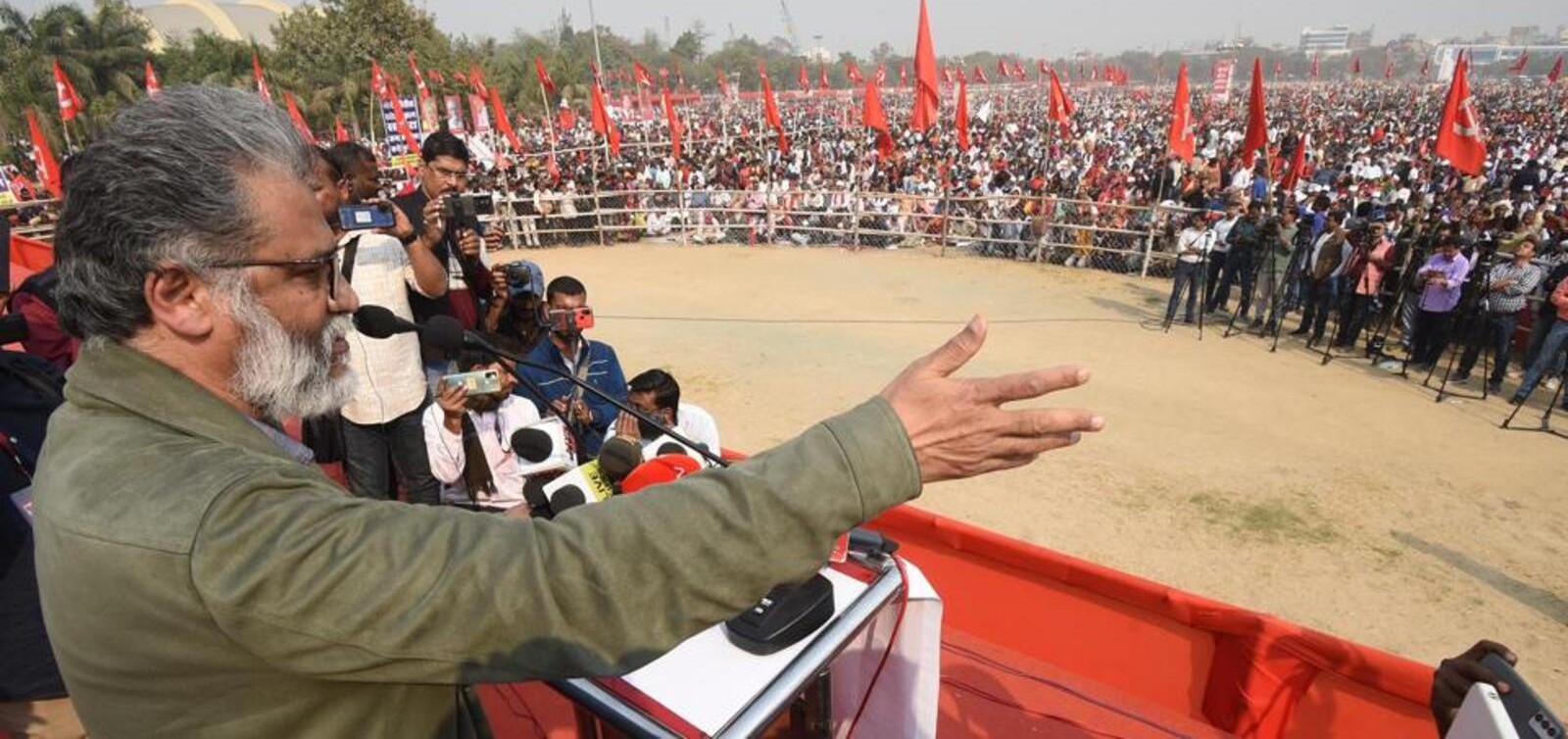
Featured Image: CPI-ML national secretary Dipankar Bhattacharya addresses a rally at Gandhi Maidan in Patna/Photo: HindustanTimes

A.K Shiburaj began his journalism career in 2000 with the publication of Samvadam magazine from Kozhikode. He later worked as a teacher on the Maldives island and engaged in social work across North Indian states. He practiced organic farming for a time and served as the Assistant Editor of Keralayam Magazine (Web). He is now a freelance journalist and an advocate for civil society and social movements. He is a recipient of the Maja Koene Social Journalist Award in 2025.