
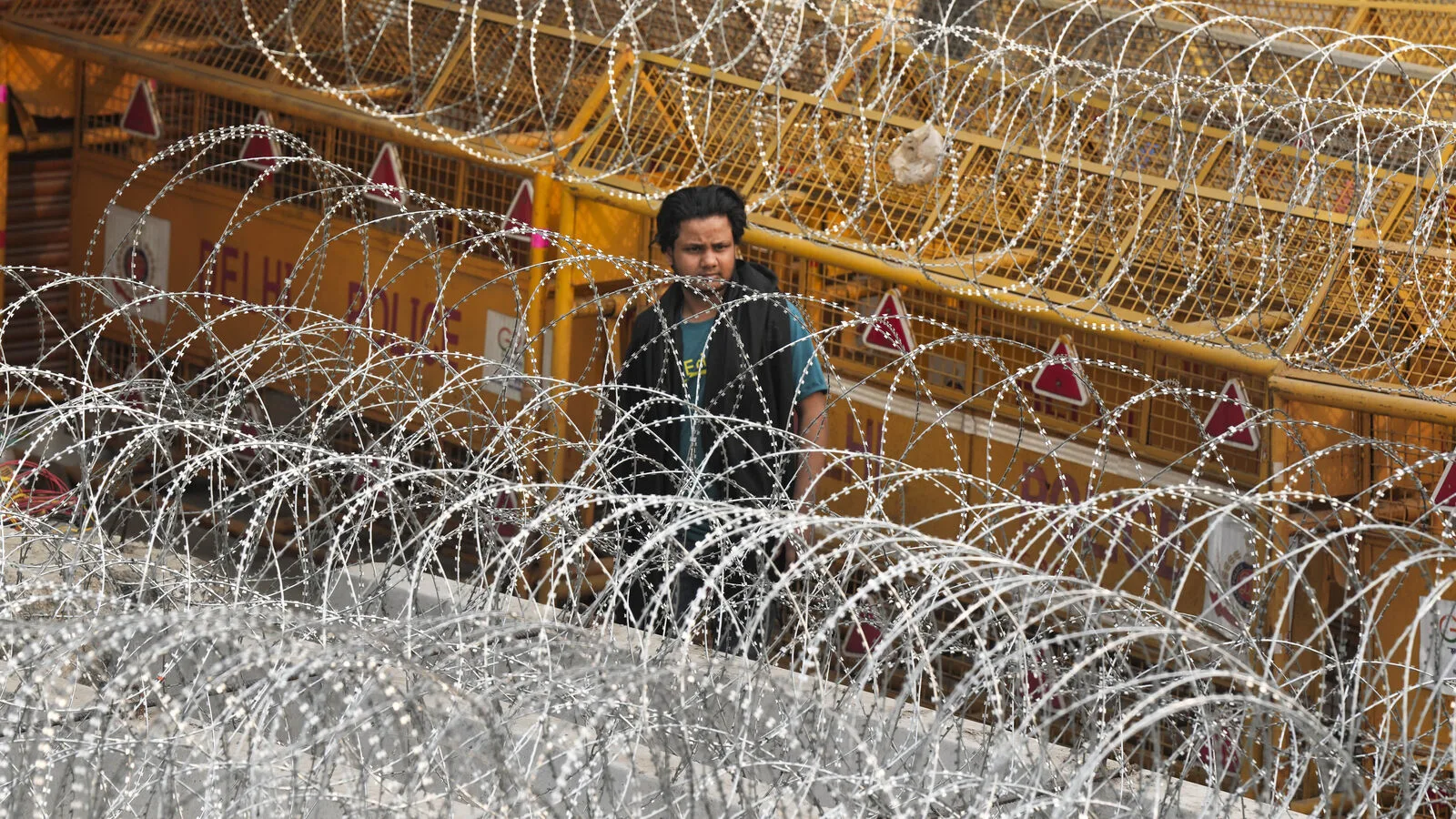
From One World to One Nation: Manu Bhagavan on India’s Changing Republic
In this exclusive interview with Abhish K. Bose, historian and scholar Manu Bhagavan examines the changing character of Indian democracy and the idea of Indian nationhood. He discusses the farm laws and CAA protests, the relationship between constitutional rights and citizenship, the rise of majoritarian nationalism, the changing meaning of dissent, and the pressures on democratic institutions. Drawing on his work on India’s role in shaping the post-war human rights order, Bhagavan reflects on the contrast between Nehru’s pluralist internationalism and contemporary debates over cultural nationalism, while also examining youth politics, globalisation, economic insecurity and the future of democratic freedoms.
Abhish K. Bose: When farmers camped for a year and students led protests over CAA and examination paper leaks, were these merely policy disputes? Or do they signal a deeper crisis of trust between citizens and the Indian state — a rupture in the post-colonial social contract?
Manu Bhagavan: Well, firstly, peaceful protesting is clearly established through Articles 19 and 21 of the Indian Constitution as part of the fundamental rights of all Indian citizens. The ability to express one’s opinions freely and nonviolently through speech and assembly is an essential element of democracy and, thus, is a part of the postcolonial social contract. The farm law and resulting demonstrations illustrate this point: legislation passed that would ostensibly benefit a certain sector and the wider population; those affected did not see it this way and felt that their concerns were not taken into account during earlier steps; farmers engaged on the issues and ultimately forced a walk back. Democratic government has to be responsive to its constituent public, as it must express their general will to have validity.
The CAA privileges religion as a decisive factor in determining who can qualify for citizenship. If humanitarianism is the sole basis driving its necessity, then there certainly appear other groups who should qualify. For this reason, it has raised questions about the state’s guarantee of equality and concerns that it could undermine the country’s core values.
In The Peacemakers you show how India tried to build a post-imperial, human-rights based world order. Today the state pushes “One Nation, One Election, One Language.” Has India moved from Nehru’s internationalism to a civilizational majoritarianism? What does that do to India’s idea of itself globally?
Nehru too saw India as a continuous civilizational society, but one with pluralism and synthesis at its heart, as he wrote in Discovery of India. He identified a rational inquiry as the key driver of India’s progress, contrasted with a “blind idolatry of the past” the very rigidity of which leads to a “mental stupor” and deterioration.
Nehru’s internationalism was built around the principle of difference — that there are many kinds of people, each with their own values, ideas, and contributions. While respect for difference had to be the basis of all human relations, certain practices grounded in discrimination and intolerance had to be contained or jettisoned altogether. Postwar human rights provided the framework to accomplish this through global consensus.
The world is held together in a delicate, interdependent balance. While there is nothing wrong with local, regional, or national pride in the abstract, it becomes self-defeating and unethical (see Levinas) when wedded to the denigration of superficially grouped enemy others.
Nehru saw India as the world in microcosm. He saw India’s success as globally necessary, the basis of a prosperous and peaceful planet, because the country’s diverse fabric could then provide the basis for a larger international tapestry.
The problem with civilizational/majoritarianism is the supremacism that motivates it. If India embraces this philosophy, it not only cannot stand in the way of others doing the same, it will be drawn ineluctably into clashes with other supremacisms because of inherent ontological logics.
Savarkar defined the nation in cultural-racial terms. The RSS today speaks of “cultural nationalism.” As a historian of sovereignty, has the core project of defining Indian nationhood shifted from the Constitution to culture? Or is this only new packaging for an old claim?
There have been competing ideas of Indian nationhood since the 19th century. Rationalists like Ram Mohun Roy and Ranade promoted civic principles for instance. The Constitution is a remarkable work of synthesis, both in terms of the document itself and in terms of the debates that went into it. Cultural nationalists like K.M. Munshi, Purushottam Das Tandon, and Rajendra Prasad all played influential roles in the drafting. Their views were balanced out by B.N. Rau, Hansa Mehta, and Ambedkar, among others. So I would not contrast the Constitution with cultural nationalism per se.
The views of the RSS today remain anchored in works of Savarkar, Golwalkar, and Hedgewar, which sought to privilege certain cultural norms over others as the essential characteristics of the nation. It is exclusivist by definition.
This exclusivism was rejected by the framers.
You’ve written on India’s role in shaping universal human rights. With CAA, NRC, anti-conversion laws, and hijab bans, are we witnessing the state actively narrowing the domain of rights in the name of the majority? Can constitutional rights survive when they are branded anti-national?
So long as the constitution itself stands, those rights remain enshrined and protected. Human rights conceptually exist beyond the state — universal, inherent, and fundamental. The founders intertwined India’s legal codes with such declared principles, reinforcing them and making them broadly justiciable.
Though currently being attempted in many places around the world, the narrowing of rights ultimately is an unsustainable, self-defeating process. The ongoing weaponization of citizenship, immigration, and religious practice in the United States, for instance, has been turned on Indians, their own long-embraced self-identification as a model minority notwithstanding. Racism, bigotry, and ultra-nationalism are genies once unleashed with an all-consuming fury. To contain them in one place requires containing them everywhere, lest we revert to endless 19th and 20th century imperial hostilities and watch the world burn again.
Post-Mandal, the BJP’s largest gains are among OBCs and Dalits. Is this the democratization of Hindutva, or a new technique of absorbing caste into a majoritarian framework while neutralizing its emancipatory politics?
The writer Ta-Nehisi Coates recently reflected on this exact problem in the American context. Much like with Kamala Harris, and even Barack Obama, representation in positions of power only means so much. It’s important no doubt. Certainly, it is symbolically and psychologically significant when someone from an oppressed group or marginalized community is able to break down an old barrier. It can inspire others to believe in themselves and in possible futures and can lead some others to rethink prejudices. And this can lead to a surge in support for the organization incorporating representation. But ultimately, there are systemic and structural forms of discrimination and oppression. Unless and until those are tackled and dismantled, the changes that occur are by default limited. In India, we need only look to the recent incident with Mallikarjun Kharge (where deeply misguided people outrageously conducted caste-based cleansing rituals following the Congress President’s remarks) to see how deeply ingrained such offensive behaviors are and to see how much remains to be done. Ultimately, politics is driven by these deeper needs, representational change usually limited to surface impacts.
The generation born after liberalization is aspirational, digital, and globally connected. Is their nationalism less about anti-colonial sovereignty and more about status, Vishwa Guru status, and civilizational pride? Has the vocabulary of 1947 lost meaning for them?
In my work, I have talked about three forms of globalization — of the economy, of conflict, and of crises — that have caused people to feel a loss of control over their own lives. Things like global corporatism have shifted sovereignty away from local communities and hampered the ability of state officials to provide redress. The subsequent loss of faith in democracy led initially to an embrace of authoritarian politics, the idea that a strong leader, unencumbered by norms, could quickly turn things around. But little has actually changed on the ground.
Gen Z protests have been taking place all over the world demanding governance that is more responsive to them. In case after case, whether in Nepal or Bangladesh, Peru or Indonesia, youth discontent centers around the sense that the ruling class serves vested interests rather than everyday people. The scholar Samuel Moyn identifies gerontocracy as part of the problem, as the older generation has hoarded resources and benefits to the detriment of the younger population.
Gen Z politics have so far been premised on a hope for a better future. They have held up mirrors of truth to distorted realities. They have relied on satire to mock the mighty and have created their own languages of resistance (as with the use of the repurposed Jolly Roger flag). There are significant non-violent elements, often in conversation with fed up, more radical wings. In India, the cockroach movement has much more clearly adhered to the former while maintaining an impressive discipline overall. It seems to me that the vocabulary of 1947 is very much still in use, if being expanded upon, while the precise prose or poetry it produces remains to be seen.
The 1991 generation was promised jobs through markets. With unemployment at multi-decade highs and gig/Agnipath models, has the economic social contract broken? Is the state now substituting welfare + nationalist pride for economic citizenship?
The global corporatism that stemmed from the globalization of the economy ultimately disempowered people and destroyed the ability of national governance to address the situation. Welfare is generally a necessary safety net and even a certain national pride is not in itself a bad thing. But the economic problems of today are international in nature, global in scope, and about to get even worse with AI-driven automation. Only collective, coordinated human will can combat this. I’ll address this further in response to question 9.
From the collegium to electoral bonds to CAA challenges, the Supreme Court has been both arbiter and spectator. Are we seeing a shift from constitutional supremacy to parliamentary/executive supremacy? Can courts still defend fundamental rights when they are accused of judicial overreach and activism?
I think you’ve placed your finger on an important set of questions. The scholars Sandipta Dasgupta and Rohit De have both explored the tensions between parliamentary and judicial sovereignty, the former arguing that parliament was originally envisioned as the vehicle of transformative change, the latter that ordinary people utilized the courts for their specific needs, rejecting elite control of the narrative and raising the profile of the judiciary to constrain the power of parliament.
In recent years, the government’s use of delay tactics has hampered the ability of the Court to control its appointments and thereby, in this way and others, has undermined the Court’s overall independence, functionally resulting in the further empowerment of parliamentary and executive power. While tension and negotiation between the two branches is to be expected, the system can only function if each branch operates free of the other, with authority apportioned enough for some semblance of balance, even with a significant tilt, between them.
But these issues are far from settled. Fundamental rights are surprisingly resilient, in part, I would argue, because of the international consensus (originally forged with key Indian contributions) behind them. It is up to people to exercise these rights and to speak up in their defense.
In the first 50 years of the Republic, dissent was treated as part of democracy. Today it is often labeled anti-national, urban Naxal, or toolkit. Has the public sphere shrunk to the point where the citizen-state conversation is now only about loyalty rather than accountability? What does that do to democracy’s health 75 years on?
Overly concentrated power, whether in the hands of corporations, oligarchs, the media, or a particular political party, is unhealthy for both the broader body politic and for those at the top as well. For instance, a recent viral paper on the “AI Layoff Trap” suggests that companies that automate will gain a temporary savings and related advantage over competitors, forcing system wide competition. But as workers are laid off, the economy loses consumers, leaving no one to purchase the very goods the companies are making, this destruction of demand implicitly dragging the economy down with it. To prevent this, the authors argue for a tax to dis-incentivize automation of tasks that lead to notable human cost. To put it simply, checks and balances are required for both the companies and their workers to thrive, and this principle should be applied more broadly as well, a rather obvious point on which most modern democracies are based (see Alexis de Tocqueville).
The Nobel laureate Daron Acemoglu in his new book argues that intellectual humility is essential to a vibrant, productive, and healthy society. Conversations around any proposal or policy must begin with the presumption of fallibility, that human frailties can introduce errors. Analysis, argument, and revision, basically scientific temperament, are a necessity.
For these reasons, dissent is not a nuisance to be ignored, nor a danger to be quashed. It is the essence of all free thinking, of liberty itself and the progress that flows from it.
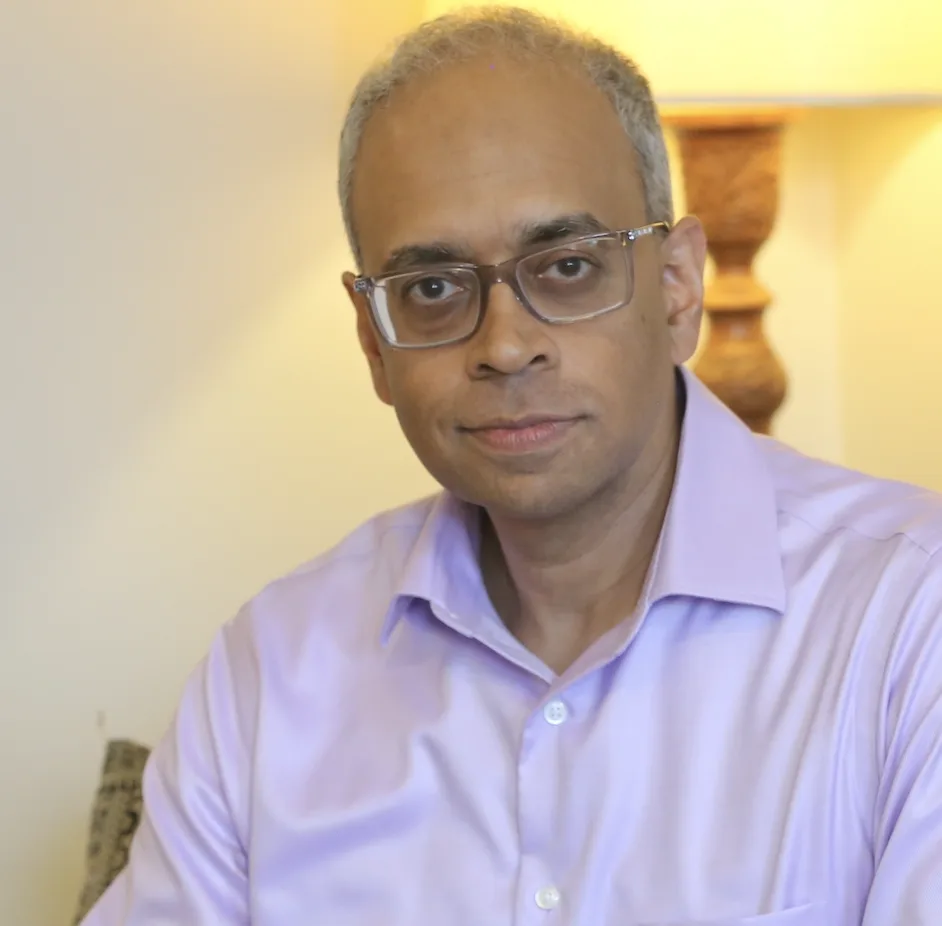
Featured Image: Multi-layered barricading in place at Singhu Border ahead of the scheduled ‘Delhi Chalo’ march by the protesting farmers, in New Delhi, in, 2024.(Image creditPTI)
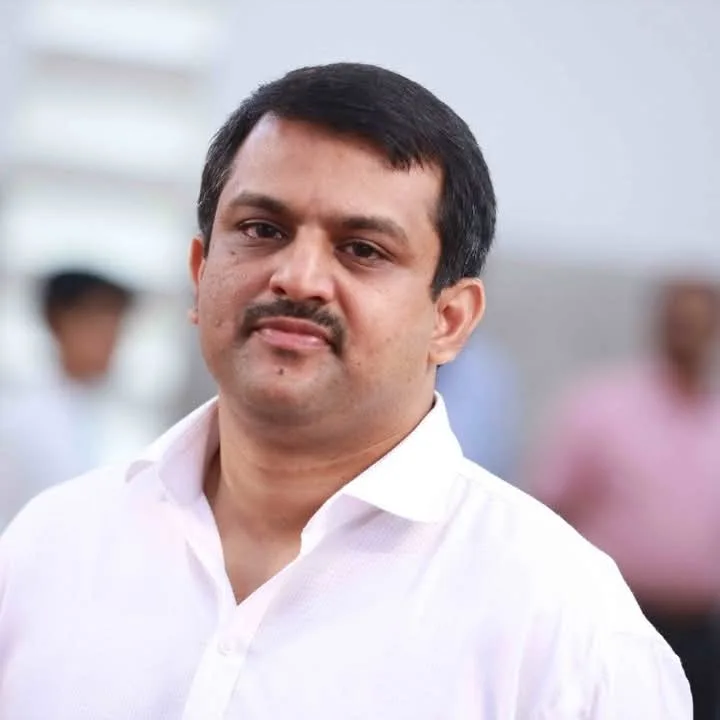
A journalist with 18 years of experience Abhish K Bose was a staffer at The Times of India and The Deccan Chronicle - Asian Age. As a contributor, his interviews and articles have been published in Frontline magazine, The Wire, The Print, The Telegraph, The Federal, The News Minute, Scroll, The Kochi Post, The Leaflet, The Hindu.com, Outlook.com Countercurrents.org and the Asian Lite international published out of London