

Land Reforms 2.0: Is Chief Minister V. D Satheesan Ringing the Death Knell for the Landless?
In this article, R. Sunil examines the proposed changes to Kerala’s land reform framework and raises serious concerns about their implications for the landless. Tracing the historical foundations of land reforms and the exemptions granted to the plantation sector, he argues that the proposed legislative changes could undermine the original objectives of land redistribution and place large tracts of land beyond the reach of future landless communities.
Kerala’s land reforms were a landmark legislative intervention that fundamentally transformed the state’s socio-economic structure. The process of land reform has a long historical background. Its origins can be traced to the Pandarappattom Proclamation of 1865. Issued by Maharaja Ayilyam Thirunal of Travancore, the proclamation granted ownership rights to farmers who held government land. Subsequently, the Jenmi-Kudiyan Act of 1896 was enacted with the objective of securing permanent rights for tenants in Travancore. In Malabar, the Malabar Tenancy Act of 1929, introduced following farmers’ struggles, provided tenants with a degree of protection. Later, struggles such as those at Kayyur, Karivellur and Kavumbayi, along with the broader movement against the landlord system, strengthened the demand for such legislative reforms.
After the formation of the unified state of Kerala, the first government, led by E.M.S. Namboodiripad and elected to power in 1957, initiated a decisive phase of land reform. Within a week of assuming office, the government issued an ordinance prohibiting the eviction of tenants from the land they cultivated (the Eviction Prohibition Ordinance, 1957). In the same year, Revenue Minister K.R. Gouri Amma introduced the Kerala Agrarian Relations Bill, which was passed by the Legislative Assembly in 1959. Its principal objectives were to grant permanent rights to tenants over the land they cultivated, impose a ceiling on landholdings, and distribute surplus land among the landless. However, following the dismissal of the E.M.S. government in 1959 in the aftermath of the ‘Liberation Struggle’ (Vimochana Samaram), the implementation of the Bill encountered serious obstacles.
Subsequently, the coalition government that came to power in 1960 introduced certain amendments to the 1957 Bill and passed the Kerala Land Reforms Act, 1963. However, the Act granted substantial exemptions from land ceilings to the plantation sector. When the E.M.S. government returned to power in 1967, it introduced comprehensive amendments to the 1963 Act in 1969. The amended legislation came into full effect on January 1, 1970, during the tenure of C. Achutha Menon as Chief Minister.
The Land Reforms Act rested on three major pillars. The first was the imposition of a land ceiling. The maximum extent of land that an individual or family could own was clearly specified (7.5 acres for an unmarried individual and 15 acres for a family of five, for example). Any land held beyond this prescribed limit was to be taken over by the government as ‘surplus land’ and distributed among the landless.
The second was the end of the Jenmi system or feudal land tenure in Kerala, which was officially abolished on January 1, 1970. Ownership rights over agricultural land vested in the government, which subsequently assigned the land to the actual cultivators (tenants). The second was the abolition of the Jenmi system.
The third was the recognition of tenant’s rights (Kudikidappu Avakasham) over agricultural land they cultivated. This move also enabled landless agricultural labourers who lived in makeshift shelters on land belonging to Jenmis to gain ownership of their huts and the surrounding land (up to 10 cents in rural areas, five cents in municipalities and three cents in corporations). These enabled hundreds of thousands of families to secure a home of their own.
Nevertheless, Dalit and Adivasi communities who worked as agricultural labourers did not receive their rightful share of cultivable land through the distribution of surplus land. Most of them received only a few cents of land under the homestead rights provisions. Although land reforms broke the backbone of Kerala’s feudal system, the plantation sector remained largely untouched. New forms of landlordism and the exploitative labour conditions imposed on landless workers continued to persist there.

The Exemptions Granted to the Plantation Sector
Under Chapter II of the Kerala Land Reforms Act, 1963, plantations that existed before April 1, 1964, were exempted from the ceiling on landholdings. This exemption was granted to protect cultivation in large-scale plantations and prevent their acquisition as surplus land. C. Achutha Menon explained the rationale for allowing such land to remain with the respective holders. Chapter III of the Act dealt with the procedures for acquiring surplus land and distributing it among the landless after determining the other lands that could be retained within the ceiling prescribed under Section 82. However, plantations were excluded from this ceiling. The intention was to preserve large plantations for the future needs of the country rather than declare them surplus, acquire them, fragment them and distribute them. Land Boards also allowed land to be retained within the ceiling limits prescribed under Section 82 by those who surrendered surplus land to the government and those who obtained exemptions on the grounds that their plantations existed before April 1, 1964.
Under the provisions of Section 81(1)(b) to (u) of the Act, various enterprises were granted exemptions in respect of land held by them before April 1, 1964. A condition attached to these exemptions was that the exempted surplus land should be preserved without being converted to other uses or fragmented. The utilisation of such land was strictly regulated under Explanations I and II to Section 87(1).
Under the first provision, an exemption would cease to apply if the land was not used for the specific purpose for which the exemption had been granted or if that use was abandoned. Under the second provision, if the land was converted to another use, the exemption would cease to apply to the corresponding extent of land. The government could then acquire the land for distribution as surplus land.
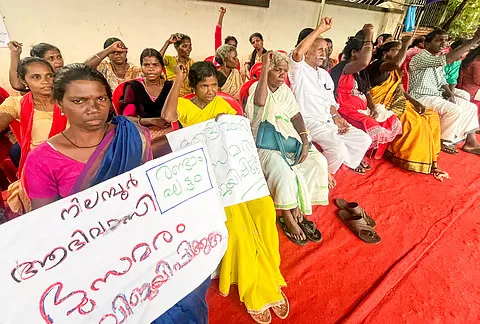
This was a provision based on remarkable foresight. The reservation of such land through exemptions was intended to create a substantial source of land that could be made available to the growing population of landless people in the future. It is important to remember that hundreds of thousands of people in the state are currently waiting for the allocation of even three to five cents of land after submitting applications.
The principle of equality guaranteed to all citizens under Article 14 of the Constitution is a fundamental right. Kerala brought an end to the landlordism by acquiring hundreds and thousands of acres of land held beyond the prescribed ceiling by a section of society comprising Jenmis. Yet, the compensation paid under the Land Reforms Act was a mere Rs. 100 to Rs. 1,500 per acre. The total compensation was capped at Rs. 2 lakh. The government even acquired surplus land from the Maharaja of Travancore. Under Section 82 of the Land Reforms Act, the unmarried Maharaja was treated as an individual and was permitted to retain just 7.5 acres. The government acquired approximately 192 acres of land as surplus land, including 4.5 acres from the Kowdiar Palace estate itself.
On the other hand, another section of society received extensive exemptions. Under the pretext of classifying their holdings as plantations, they were allowed to retain land that would otherwise have been acquired as surplus. They generated substantial income and profits from these lands, obtained loans worth crores of rupees from banks, and freely sold and converted the land for other uses. Moreover, Kerala witnessed the bizarre spectacle of plantation owners negotiating with the government and selling land back to the government at market prices, even though that land was actually surplus land in the first place. All these discriminatory practices constitute grave injustice.
The total geographical area of Kerala is approximately 96 lakh acres. Of this, only around 20 lakh acres constitute revenue land. Even within this category, approximately 10 lakh acres are held by fewer than a thousand families and companies. The remaining 10 lakh acres or so are held by the other 3.5 crore people of the state. This clearly demonstrates the severity of the inequality in land ownership.
The landless are apprehensive about the government’s latest legislative move. At a time when hundreds of thousands of families are struggling to find a place to live, the government is preparing to introduce new legislation that would completely remove nearly 10 lakh acres of surplus land held by the wealthy from the purview of the Land Reforms Act and enable them to acquire ownership of it. Under Section 81(1) of the Act, the ultimate ownership of land granted exemption as surplus land rests with the government. The Land Reforms Act and its rules were framed with considerable foresight, ensuring that whenever the need for surplus land arose in society, including in an emergency, the government could acquire such land through legislative amendments and distribute it among the landless.
For instance, to implement the concept of ‘agrarian reform’ envisaged by the Constitution, the government could revoke a specified percentage of the exemptions granted to existing surplus land under Section 81(1), acquire that land and distribute it among the landless. A legislative amendment to this effect could be introduced in the Legislative Assembly. However, contrary to this principle, the government’s decision to enact legislation permitting plantation owners themselves to convert land that had been granted exemption is unconstitutional. This is because such a move completely undermines the ceiling provisions under Section 82 and the provisions of Section 83.
Any amendment to the Land Reforms Act, which is included in the Ninth Schedule of the Constitution and enjoys protection under Article 31B, must be based on the principles of agrarian reform. If legislation is enacted to permit land reserved as surplus under the agricultural exemption provided by Section 81(1)(e) to be used for industrial purposes, such legislation would be unconstitutional. The government already has the authority under Section 81(3) to grant exemptions for acquiring land beyond the ceiling limits for industrial purposes. In such circumstances, there can be no justification whatsoever for enacting legislation to convert plantation land that had previously been granted exemption and transfer it to large industrialists.
It is against this background that the government is preparing to introduce legislation that would remove the essential provisions underpinning the Land Reforms Act, alienate government surplus land and surrender it to a small minority belonging to the privileged sections of society. By altering the definition of ‘plantation’ under Section 2(44), is the proposed amendment intended to shift the strict cut-off date of April 1, 1964, to the 2026–2027 period? If exempted surplus land can henceforth be used for any type of cultivation or industrial activity, will Kerala eventually reach a deplorable situation in which not even a single piece of land can be acquired as surplus for distribution among the landless?
Will the tens of thousands of acres of surplus land currently involved in cases pending before the Supreme Court, the High Court, the State Land Board and various Taluk Land Boards be undermined under the cover of the proposed legislation? Will this create an opportunity for plantation owners to convert their land and acquire permanent ownership of it? By moving the historically significant date of April 1, 1964, to the 2026–2027 period, will the Kerala Land Reforms Act, which reshaped the state’s history over several decades, itself disappear? Will V.D. Satheesan’s second land reform pave the way for a small minority of plantation owners in Kerala to acquire half of the state’s revenue land? Is the government ringing the death knell of the hopes and aspirations of the landless?
(To be continued)
This article was originally published in Malayalam on the Keraleeyam website

Dr. R. Sunil received his Ph.D. for his research thesis titled “The Contributions of Elamkulam Kunjan Pillai and P.K. Balakrishnan to Kerala Cultural Studies,” submitted under the supervision of Dr. M.T. Sulekha. He has worked as a temporary faculty member at Government College, Tripunithura, D.B. College, Kottayam, and D.B. College, Thalayolaparambu. He also served as the editor of Nayalapam, the magazine of the Kerala Pulayar Maha Sabha (KPMS), and as a reporter for the daily newspaper Thejas. After retiring from Madhyamam daily, he joined Keraleyam Web as an Assistant Editor.Books in Malayalam: Harrison's Rekhayillatha Janmi, Madhu: Vamshiyathayude Ira (Editor), ADB Enthu Cheyyunnu? (co-authored with Dr. S. Muhammad Irshad), Maoistukal Anarchistukalo? (Editor), Lalgarh: Yojippum Viyojippum (Editor)