
Hindutva’s Politics of Oneness: Caste, Citizenship and the Erasure of Difference
How does Hindutva construct the idea of a unified Hindu identity, and what happens to religious, caste and cultural differences within this project? In this interview with Abhish K. Bose, historian Luna Sebastian discusses the ideological foundations of Hindutva, drawing on the political thought of V.D. Savarkar and Deendayal Upadhyaya. She examines the concept of ‘violent absorption’, the relationship between caste and Hindu nationalism, the politics of citizenship and electoral exclusion, and the possibilities of resistance through Ambedkarite thought, constitutionalism and genuine religious pluralism.
Abhish K. Bose : You argue European fascism was about purity through exclusion, Hindutva about erasure through forced absorption — that Muslims are Hindus to be reclaimed. If absorption is the model, why does the practice on the ground look like exclusion — CAA, NRC, SIR voter deletions?
Luna Sabastian .: The question assumes absorption and exclusion are alternatives, but there is a complicated interplay between both. In Nazi fascism, the exclusion of Jews and other “undesirables” served to purify and consolidate the German body politic on the inside. In Hindutva, the premise is different. Savarkar’s Hindu nation is a mixed, absorptive race, and the Muslim is a Hindu who has been alienated from his origins. The problem is therefore not the Muslim’s body but the Muslim’s separateness. What had to disappear was Muslimness as an autonomous identity and Muslims’ potential for political power.
Once one sees that, the exclusionary tools you list can be made sense of as instruments of absorption rather than contradictions of it. A model built on reclamation needs to make remaining outside the fold costly. The CAA, NRC and the SIR regimes do this with unusual clarity. Again and again, Muslims are the ones who must prove they belong. Belonging is presumed for the Hindu but has to be earned by the Muslim. Citizenship becomes conditional and revocable for those the state reads as not already within the fold.
But at its core, the question is this: how can Hindutva want to annex the one it hates? There is a psychoanalytically significant and entirely unacknowledged ambiguity between inclusion (a desire to possess?) and exclusion (hate?) of Muslims in Hindutva that is bridged by aggressive incorporation: what I call violent absorption. Savarkar believed that India’s Muslims were once racial Hindus. He gave them a choice between total biological merging or annihilation through war. BJS/BJP ideologue Deendayal Upadhyaya and RSS leader Mohan Bhagwat, in turn, regard Hindutva as a “oneness” capable of absorbing even Islam as just another form of “puja.” They point the finger of blame at Muslims: it is they who don’t want to be absorbed; they are intolerant where Hindus are tolerant; they turn themselves into enemies. Inclusion is a Hindu ideal backed by coercion; exclusion, according to Hindutva, a choice made by Muslims.
You write Savarkar redefined Hinduism from meditative dharma to a warrior political race. If that shift was so radical, why did it find mass appeal in Bengal — a region that prided itself on Tagore’s universalist Hinduism?
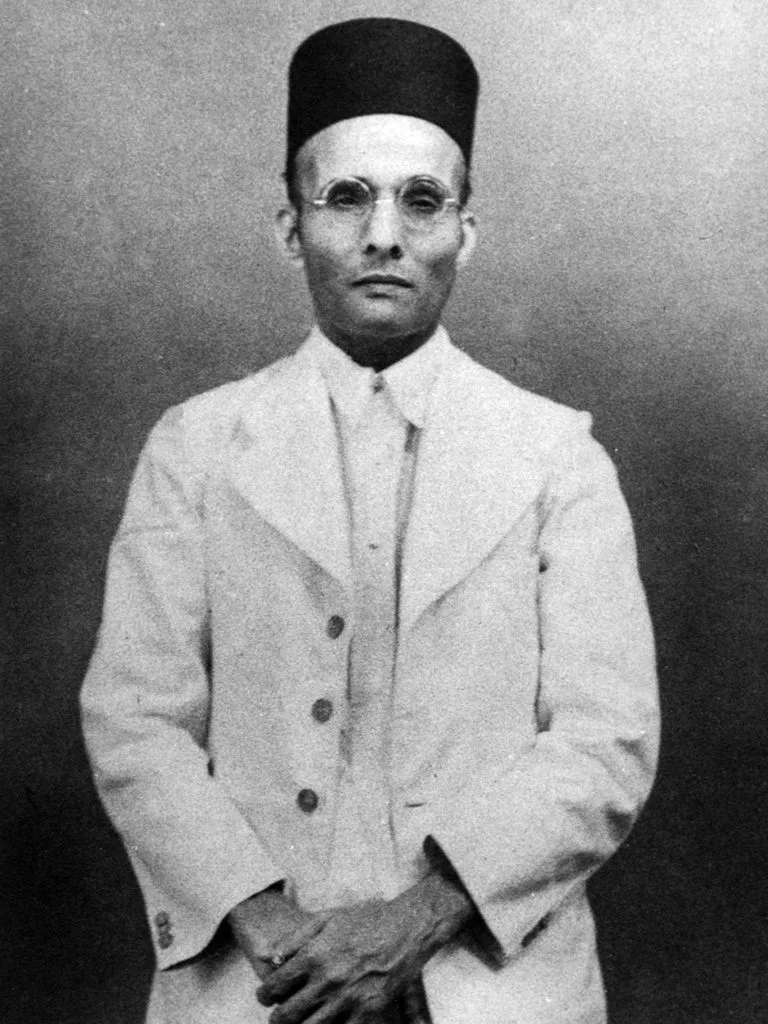
Though the term Hindutva first circulated in Bengal, the ideology and political movement originated in Maharashtra. Its original formulation by Savarkar was very situated; Savarkar’s historical imagination, for instance, was defined by the Maratha empire, which beat back the Mughals. Shivaji fought for recognition of his Kshatriya status. And though they were predominantly Brahmin, the men who developed Hindutva in the 1920s and 30s believed that Hindus needed to collectively remake themselves as warriors, not priests.
Savarkar was the iconic figure who led the Hindu Mahasabha, but his brand of Hindutva – known as Savarkarite – was never the only vision within the party. In Bengal, Syama Prasad Mukherjee dominated. Savarkar was famously nonreligious, and his message was dualism, or stronger: antagonism. But in Bengal, the Hindu religious idiom – monism, the Vedanta and bhakti – made a comeback, especially around 1947 as a last stand against Partition and the creation of Pakistan.
Hindutva claims to unify Hindus above caste, but your book shows it needed caste hierarchy to define the “Hindu race.” Is Hindutva then fascism with caste as its permanent base, not its contradiction?
No. Savarkar reinterpreted the Brahmanical theory that explained the origin of jatis, or subcastes, through reproductive unions between varnas. Where others saw degeneration, he saw inter-caste unions so ubiquitous that every Hindu shared the same blood. In other words, the proliferation of castes proved to Savarkar that the Hindus were a single race.
Savarkar was against casteism. His anti-caste activism was long unknown but is today used to whitewash his legacy. But his opposition to caste should not be seen as the “good” to temper the “bad” of Hindutva. Instead, anti-casteism was an integral part of Hindutva’s violence. This was through the idea that forging the Hindus into a unified political subject required their biological unification. Savarkar recommended inter-caste marriages because these would consolidate the Hindu race – unifying them like the Muslims, whom Savarkar deeply envied. But Savarkar’s radicalism on the issue of inter-caste unions was not shared by Hindu nationalists either before or after him.
Caste is Hindutva’s greatest problem – in theory. Non-dominant castes are promised inclusion and equality within Hindutva, as well as empowerment vis-à-vis Muslims. But as we see today, in practice, the promise of inclusion is paired with continuing caste domination and inequality.
You link Savarkar’s writing on mass rape in 1947 Partition to 2002 Gujarat. That’s a very heavy claim. What archival line led you to make that continuity argument?
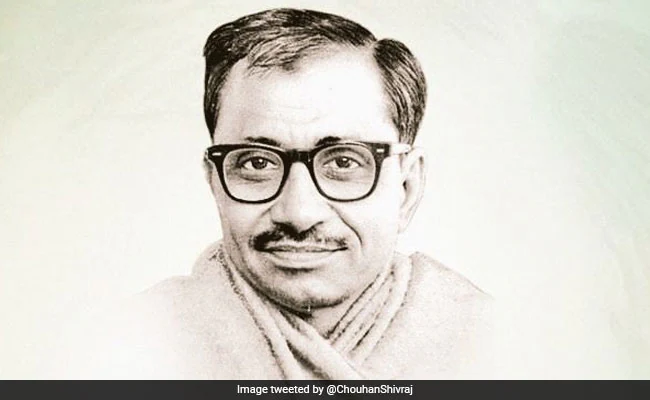
The book does not quite say that. What I do say is that contemporary Hindutva is an uneasy combination of two strands of Hindutva – Savarkar’s and Deendayal Upadhyaya’s. Gujarat followed Savarkar’s brand of Hindutva, which is characterised by its fascination with violence. Where Savarkar stood for open war with Muslims, Upadhyaya and the RSS-BJP appropriated Hinduism for an outwardly more benevolent form of Hindutva.
It is true, however, that for many commentators, the anti-Muslim riot in Gujarat immediately brought up parallels with Partition. One reason was the scale of the slaughter; another, the explicit way in which women were targeted. Accounts of gang rapes and pregnant bellies being cut open were interpreted as attempts to destroy Muslim women’s reproduction. In contrast, I argue that Hindutva, as developed by Savarkar, aimed to hijack Muslim women’s reproductive capability, rather than destroying it. His genocidal logic worked through capturing Muslim women and giving them to Hindu men to produce Hindu offspring. This is the logic that played out in Partition-time abductions.
You start with Bengali thinkers like Benoy Kumar Sarkar, not just Savarkar. Why is Bengal’s role in inventing Hindutva’s racial theory erased from both Left and Right histories in Kolkata?
Bengal matters to my argument about Hindutva’s race, but as context. Eugenics dominated racial science in the 1920s and 30s, when Savarkar formulated his ideas of race. He was one of a small number of thinkers who came to see race, as well as caste in India, as rooted in intermixture. Some of the most important work on this came out of Kolkata, home to the Zoological and Anthropological Survey of India. We don’t know if this reached Savarkar. But Benoy Kumar Sarkar would have likely been aware, who argued in 1940 that “caste mixture” was visible everywhere and all around.
I cannot say why this history of race is not better remembered in Bengal. Perhaps it is because the Right remembers Mukherjee, while the Left is split on Bose.
After Gandhi’s assassination, RSS had to rebrand. How did Upadhyaya make Hindutva respectable again — and is that same rebranding playbook being used today around ECI and institutional language?
The RSS was banned following the murder of Gandhi by one of their own, and the condition for lifting this ban was for the secretive RSS to adopt a written constitution. What stands out to me about this constitution is its Preamble: “Whereas in the disintegrated conditions of the country it was necessary to have an Organisation.” The word “disintegration” as the justification for the RSS is striking.
In 1965, Upadhyaya, who was also involved in the drafting of the RSS constitution, wrote the second major treatise on Hindutva after Savarkar’s Essentials of Hindutva of 1923. He called this “Integral Humanism,” which serves to this day as the “basic philosophy” of the BJP. Its main claim is that Bharat’s – India’s – essence is integrality. What is striking to me is this idea became central to Hindutva in the very moment in which India fractured, in other words, lost its integrality: with Partition.
In Hindi, “integral” is rendered as ekatma or ekatmata – “one-soul” or “one-soulness”. This locates Integral Humanism – the new Hindutva – in the theological domain: its matrix is Advaita Vedanta. It puts emphasis on oneness. Integral Humanism’s eventual aim was the undoing of Partition, to be sure, but the immediate target was the remaking of Indian society into one integrated whole, leaving no place for anyone outside the fold.
With Integral Humanism, Hindutva – which was historically ambivalent towards the Hindu religion, to say the least – came to embrace Hinduism. Savarkar was too irreligious and too radical to make Hindutva hegemonic in India. To achieve that, and to make Hindutva respectable again, it needed the more conservative, religious element that Upadhyaya and the RSS brought.
When Mohan Bhagwat told an audience at New York’s Madison Square Garden this August that India stands for oneness and that Muslims have a place in it – even as they are being struck from electoral rolls – this was very much in line with Hindutva’s rebranding as Integral Humanism.
You are writing from US academia (Harvard) UK academia (London) about Indian ground reality. Critics will say “Harvard London writing about Hindutva = colonial gaze.” What did you see in Marathi/Hindi archives that Delhi historians missed?
Colonialism created an imbalance of power that allowed British scholars to make distorting, often negative claims about India that fed justifications of empire. Postcolonial scholars have pointed this out since the 1970s – Indian thinkers have done so much longer. But today this postcolonial argument is used for gatekeeping. Purveyors of Hindutva have appropriated postcolonial theory, allowing them to frame their ideology as indigeneity. It allows them to police not only who gets to speak about India, but what is being said. That, too, is an exercise of power.
Academia should be international. It thrives on diversity. In theory, anyone could have found what I did in the archives and come to similar conclusions, regardless of nationality, country of residence, or university affiliation. In practice, I was sensitised to certain issues by the fact that I read German. In preparing this book, I read a lot of original writings from Nazi Germany, allowing me to pinpoint crucial differences between National Socialism and Hindutva on the issue of race.
In the Veer Savarkar Papers in what was then still known as the Nehru Memorial Museum and Library – today the Prime Ministers’ Museum and Library – I found a letter exchange from 1940 between Savarkar and a Brahmin man in which they discuss whether a Brahmin should marry a Muslim girl. And Savarkar says: absolutely marry the Muslim girl, because this will boost Hindu numbers!
This find formed the basis of my argument that Savarkar stood for interreligious marriage, including Hindu unions with the enemy – Muslims. This is a stark contrast to Nazi Germany and White supremacist regimes like the segregated US and Apartheid South Africa, which valorised purity and penalised what they called miscegenation. But in Savarkar, we find a thinker of race who championed a myth of the Hindus as a race that functioned through miscegenation, including with the Muslim other. Muslims would disappear by Hindus taking their women. This is what I mean when I say that Hindutva’s violence functions through absorption.
Your book ends in Dec 2025. SIR exercise has deleted 16 lakh names in Bengal, mostly Muslims. Is SIR an administrative exercise or, in your framework, a fascist technique of absorption/exclusion?
It is definitely more than an administrative exercise. It is a mark of a political ideology that views India as Hindu Rashtra; that demands uniformity in the name of “oneness;” and that does not shy away from stripping Indians of citizenship if they do not conform. So yes, it is a symptom of the paradox between inclusion and exclusion of Muslims that has characterised Hindutva from the start. It is also a sign of anxiety on the part of the BJP government, which no longer trusts its electorate.
If Hindutva is fascism, what is its anti-fascism in India? Is it Nehruvian secularism, Ambedkarite constitutionalism, or something else — because both have failed to stop it electorally.
I don’t think Nehruvian secularism holds that potential anymore. It has been branded “pseudo-secular” by the Hindu Right for too long, and too successfully, to be able to recover its name. Constitutionalism, in turn, seems too sober an ideology to galvanise the masses. And yet it is as citizens defending their right to vote that Indians are currently taking to the streets in one of the biggest challenges the Modi government has faced. This is because rights make the abstract – a political ideology – immediate and felt by everyone.
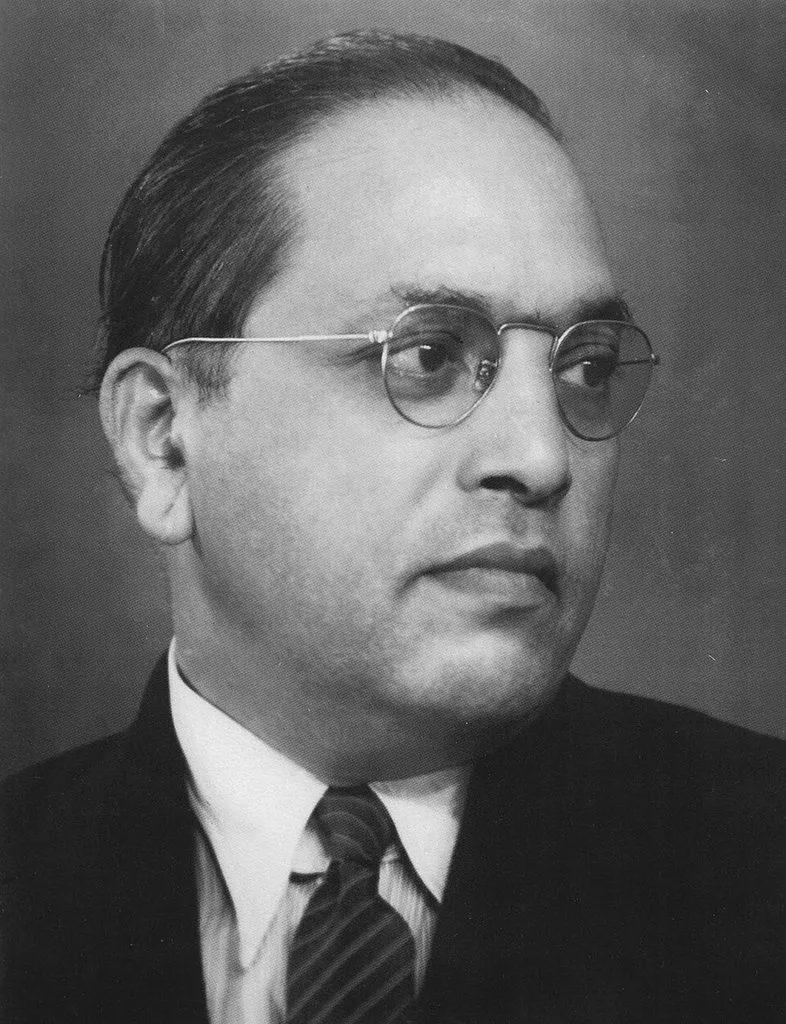
Beyond constitutionalism, I think another move of Ambedkar’s holds real anti-fascist potential, and this is his conversion to Buddhism. You see, the “Hindu” is an absorptive, composite identity – that’s why Savarkar called it the “Pan-Hindu” – which glossed over the deep divides within Hindus; chief among them: caste. Ambedkar refused to be swallowed up by this pan-identity. He asked Dalits to secede from Hinduism and Hindutva, so to speak. This move remains as powerful today as it was then.
Then, there is Gandhi, Ambedkar’s great adversary. Gandhi made a virtue out of the non-appropriation of the other. Hindu nationalists will often say that Hindus personify “tolerance.” This builds on the long belief that Hinduism contains multitudes: that it is not a religion but the religion: a meta-religion that subsumes all others as mere “sects” or “creeds.” Even Islam is not exempt from this Hindu ecumenism. Hindutva’s answer to difference is to absorb that difference and fold it into Hindu identity. But this is an anaemic understanding of tolerance, which requires exactly nothing from the tolerator – least of all pluralism and the endorsement of real difference. Tolerance, as it should be understood, means an ethical commitment to respect and retain the other’s difference. Gandhi knew this. Opposing proselytising, he urged Muslims to become better Muslims and Christians better Christians. Gandhi’s nonviolence was built on self-sacrifice, which left the other intact, with oneself absorbing the cost rather than the other being absorbed. That is still a powerful a message.
Lastly – though its long-term impact is yet unknown – the Cockroach movement. Youth has always been a revolutionary force. It has also historically been a driving force behind Hindutva. What is unprecedented is the satirical form of the CJP movement, which is unthinkable outside the twenty-first century but resonates with younger Indians. Maybe a new vocabulary is being developed here, one not anticipated by the generation of thinkers and politicians that founded India. In a context where traditional Congress politics and moral condemnation of Hindutva have failed, perhaps satire turned deadly serious possesses untried anti-fascist potential. We’ll have to wait and see.
You’re a historian debuting with a book calling the ruling ideology fascist. What was the one document in your research where you felt scared to write what it said?
It was not so much writing about a particular document but the book as a whole whose publication filled me with dread. As an author and researcher, you want to be read. But as a private person, you do worry about repercussions. Hindu nationalists will find some of the claims I make in this book unpalatable. Scholars have been targeted for less.
There was, however, one archival find that stood out. It is the letter exchange I already mentioned, in which Savarkar recommends that Hindu men marry Muslim women to outpopulate Muslims. So, he is advising Hindus to do the very thing that is now called love jihad! I knew this was explosive stuff as soon as I saw it. The letter exchange now opens the chapter on Savarkar’s concept of race.
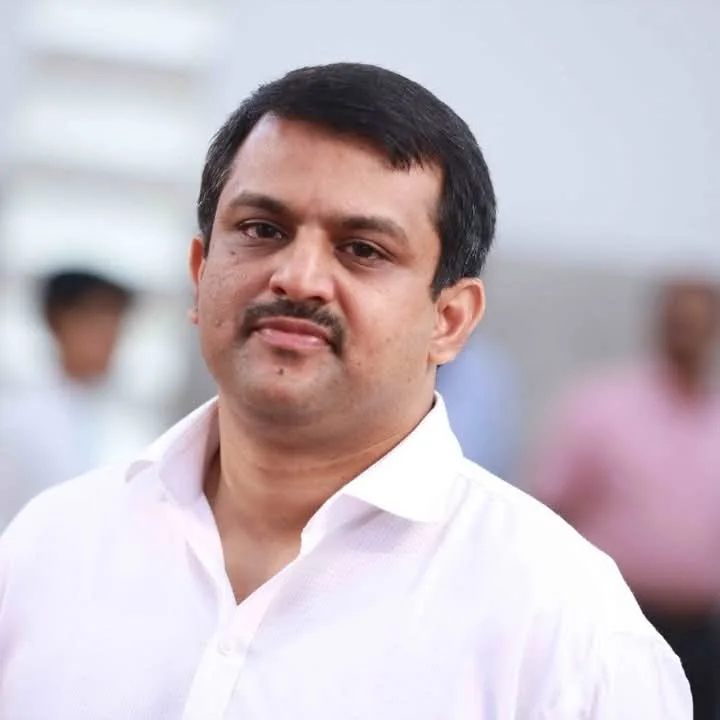
A journalist with 18 years of experience Abhish K Bose was a staffer at The Times of India and The Deccan Chronicle - Asian Age. As a contributor, his interviews and articles have been published in Frontline magazine, The Wire, The Print, The Telegraph, The Federal, The News Minute, Scroll, The Kochi Post, The Leaflet, The Hindu.com, Outlook.com Countercurrents.org and the Asian Lite international published out of London