
WHO GETS TO COUNT AS A SCHOLAR?
The controversy surrounding Professor Ciza Thomas’s academic credentials has reopened an important debate about scholarly excellence, academic evaluation and the politics of higher education in Kerala. In this article, Jos Chathukulam and A. M. Jose examine the limitations of citation metrics, journal rankings and publication counts, while exposing the growing influence of commercial academic publishing and article processing charges on researchers. They argue for a more inclusive and discipline-sensitive system of research assessment that recognises teaching, originality, academic integrity and socially relevant scholarship. The authors also make the case for strengthening India’s public scholarly publishing infrastructure and protecting academic independence.
The Ciza Thomas controversy and the hidden politics of academic publishing
A controversy that raises a larger question
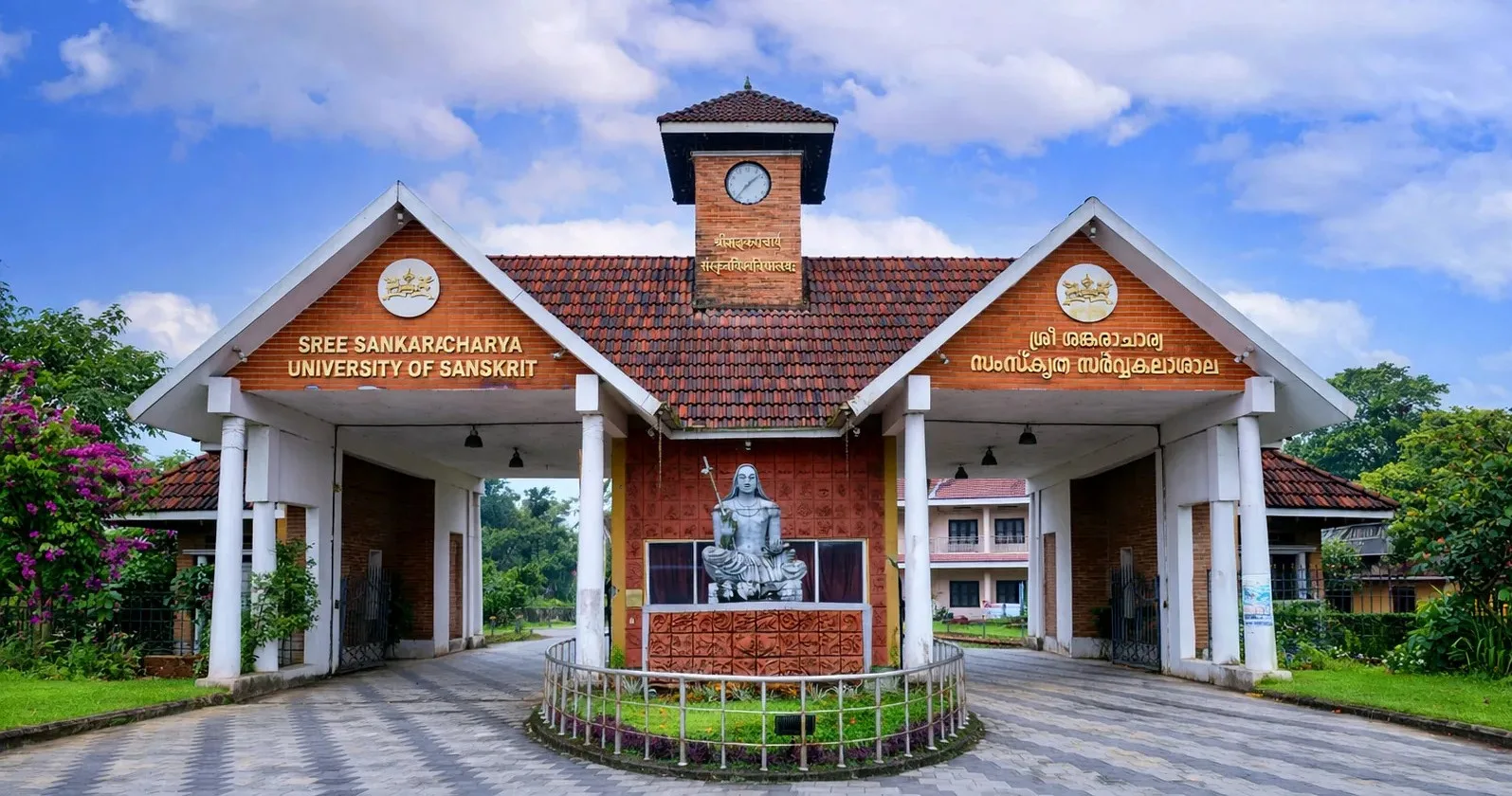
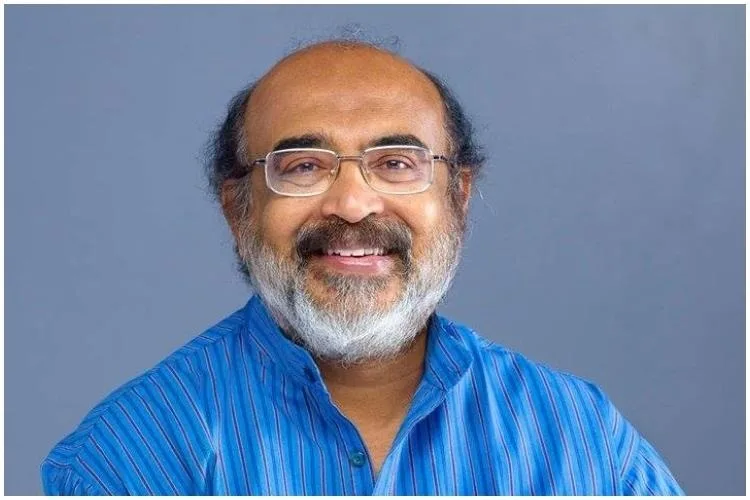
The argument over Professor Ciza Thomas’s qualifications to lead a university has become another episode in Kerala’s increasingly bitter politics of higher education. On 11 November 2026, former Finance Minister and economist T. M. Thomas Isaac publicly challenged her academic credentials. He questioned the absence of a granted patent, distinguished books written from volumes edited, and asked whether someone unfamiliar with Sanskrit should head Sree Sankaracharya University of Sanskrit. Thomas responded that her qualifications were open to scrutiny and that disputes about university appointments should not encourage students to disregard responsibility for their actions (The Hindu Bureau, 2026).
University appointments must certainly be open to public scrutiny. The manner of appointment, statutory eligibility, political influence, independence, administrative competence and treatment of students are legitimate questions. But criticism loses its scholarly authority when selected items from a curriculum vitae are presented as a complete assessment of an academic career. The danger is especially serious when a public argument is framed as an academic audit but conducted in the language of partisan confrontation.
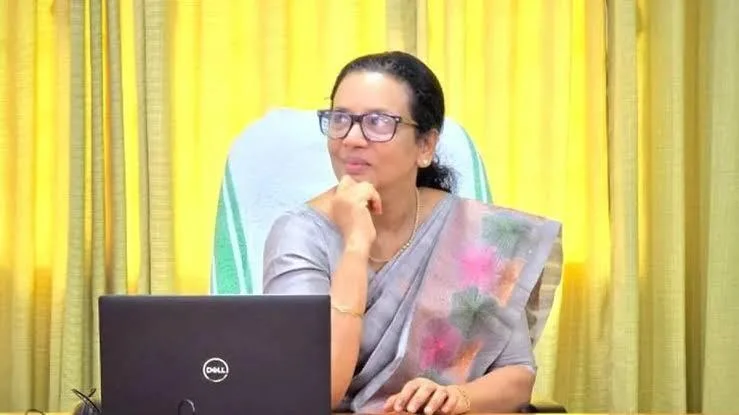
An institutional curriculum vitae published by the Digital University of Kerala records that Ciza Thomas earned her PhD from the Indian Institute of Science, Bengaluru, taught and held academic leadership positions in engineering, supervised doctoral research, and worked in network security and related fields. It lists 99 international journal and conference publications combined, 50 national conference contributions, 24 book chapters and seven edited books. These are the university document’s own categories, not our independent verification that every item is peer-reviewed or currently indexed (Digital University of Kerala, 2024). A serious assessment would examine individual publications, their quality, originality, collaborators, citation record and actual contribution—not dismiss a scholar on the basis of an edited-book count alone. Two independently traceable examples are her co-authored articles with Jisa David in Computers & Security (2019) and the Journal of Parallel and Distributed Computing (2021). The existence of these research publications does not settle whether she is the best person to lead a particular university, but it plainly contradicts any suggestion that her academic record consists only of edited books (David & Thomas, 2019, 2021).
Former Mahatma Gandhi University Vice-Chancellor Sabu Thomas has intervened in the public discussion to explain why peer-reviewed publications and research collaborations matter in the sciences. His larger point deserves attention. Indeed, his own publicly documented career in polymer science demonstrates the international reach that sustained scholarship can achieve. Yet even this example points to a necessary caution: scientific productivity, teaching quality and university leadership are related but different capacities. A highly cited researcher is not automatically a good vice-chancellor; nor does a smaller citation record establish incompetence.
There is another distinction. Knowledge of Sanskrit could reasonably be considered relevant to the leadership of a Sanskrit university. It is not, however, the same question as whether an engineer has a credible research career. The statutory conditions of an appointment, the needs of the institution and the candidate’s demonstrated capacity must be examined separately. Politics should not collapse them into one allegation.
The criticism concerning the absence of a patent also deserves closer examination. Patents are important indicators of certain forms of technological invention, particularly in engineering, pharmaceuticals and applied sciences. But not every valuable scientific discovery leads to a patent, and not every patent produces a useful technology or commercial innovation. Fundamental research, theoretical advances, research methodology and public-interest scientific work may generate substantial knowledge without producing patentable inventions. Academic excellence must therefore be assessed according to the nature of the discipline and the originality and impact of the research, rather than through a universal requirement for patents. The absence of a patent, by itself, cannot establish academic incompetence.
What the public rarely sees: “publish or perish”
Behind the controversy lies an academic world that has changed dramatically. For generations, scholarship was recognised through teaching, major books, intellectual debate, experiments, service to society and the training of younger researchers. Today, careers are also shaped by a blunt instruction: publish or perish. A young academic competing for a position, grant or promotion is increasingly expected to demonstrate a stream of publications in recognised venues.
The principle has some justification. Research must be subjected to criticism, made publicly available and tested by other specialists. Peer review—evaluation by scholars who understand the subject—can improve a manuscript and screen out weak claims. Research articles are especially important in fast-moving scientific fields, where new results often appear long before a textbook can be written.
But peer review is not a guarantee of truth. Nor are books inferior by definition. A major work of history, philosophy, economics or literature may reshape thinking for decades; a short scientific article may report an incremental finding. Edited volumes can also perform valuable intellectual work when editors select, organise and critically integrate contributions. The appropriate question is not simply book or journal article? It is what knowledge has this scholar produced, and how well has it stood up to examination?
A further distinction is necessary between original research monographs, textbooks, edited scholarly books and compilations of conference papers. Each can serve a useful academic purpose, but their contributions are not identical. A serious edited volume may involve considerable intellectual work in developing a common theme, selecting original contributions, organising independent peer review and bringing different findings into a coherent publication. A collection of seminar papers assembled with limited editorial scrutiny cannot automatically claim the same scholarly standing. Even an International Standard Book Number (ISBN) is merely a means of identifying a publication; it does not certify the quality of its contents. Kerala’s universities should therefore evaluate books according to their originality, editorial standards, intellectual contribution and scholarly reception, rather than their numerical count.
Pressure to publish creates other pressures. Researchers may divide one project into several thin papers, prefer fashionable questions over locally important ones, join large authorship networks with uncertain individual contributions, or spend scarce funds on publication rather than investigation. Some universities advertise publication targets without providing laboratories, data access, libraries or adequate research time. This is not an argument against publication. It is an argument against treating a count as a substitute for judgment.
The pressure to publish has also created opportunities for questionable academic publishers. Some journals promise unusually rapid acceptance, advertise misleading impact factors or claim international indexing without providing credible editorial scrutiny. Researchers under pressure to complete a PhD or secure promotion may become vulnerable to such practices. There are also concerns about duplicate publications, recycled conference papers and publications designed mainly to increase an individual’s academic score. However, a publication fee alone does not make a journal predatory; many respected open-access journals charge legitimate processing fees. What distinguishes responsible publishing is genuine peer review, transparent editorial policies, research integrity and an honest account of indexing status. Universities must therefore examine the credibility of publications instead of mechanically rewarding their numbers.
A professor is more than a publication record
The traditional responsibilities of a university professor can be described in three words: teaching, research and extension. Teaching involves preparing classes, mentoring students, evaluating work fairly and making difficult ideas understandable. Research advances knowledge through disciplined inquiry. Extension—or public engagement—takes knowledge beyond the campus: to farmers, industries, local governments, schools, hospitals, workers and public debate. Universities also depend on academic administration and institutional service.
These responsibilities should reinforce one another. Research can renew classroom teaching; students can identify fresh research questions; outreach can reveal whether academic ideas are useful in ordinary life. In Kerala, a professor who helps a panchayat solve a water problem, improves school teaching, works with agricultural cooperatives or explains a public policy may make a contribution that citation databases barely notice.
Yet the reward system often makes research output more visible than good teaching or useful extension. A published paper enters an international database; the patient work of an inspiring teacher may leave no comparable numerical trace. This can create incentives to protect publication time at the expense of classroom preparation. It would be unfair to claim, without workload evidence, that most professors no longer teach. The sounder conclusion is that universities frequently measure what is easy to count rather than everything that matters. Exceptional scholars can combine teaching and research, but the system should not make that combination unnecessarily difficult.
Citations, h-index and i10-index: what do they actually mean?
Many readers encounter three numbers beside a researcher’s Google Scholar profile without knowing what they signify.
Citations are references made by later publications to an earlier work. If other papers cite an article 50 times, the article has 50 recorded citations in that particular database. Citations suggest that research has attracted attention; they do not establish that every citation is praise, that the result is correct, or that it has helped society.
The h-index combines publication volume and citations. A scholar has an h-index of 20 if at least 20 publications have each received at least 20 citations. Consider five papers cited 32, 19, 11, four and once. The scholar’s h-index is four: four papers have at least four citations each, but five papers do not each have five citations.
The i10-index, reported by Google Scholar, is simply the number of publications that have received at least ten citations. For the same five papers, it is three. Their total citations would be 67. These metrics are easy to calculate, but far harder to interpret responsibly.
Google Scholar, Scopus and Web of Science do not index exactly the same material. Google Scholar is broader, including many books, theses and other documents; Scopus and Web of Science employ different coverage rules. Numbers therefore vary by database and date. Citation customs also vary greatly between medicine, mathematics, engineering, economics and history. A senior researcher has had more time to accumulate citations than a young scholar. Large teams can generate many co-authored papers, but authorship should still reflect real contributions.
Most importantly, these numbers can be manipulated. In a study published in Scientific Reports, Ibrahim et al. (2025) examined large numbers of Google Scholar profiles and demonstrated that citations could even be purchased through a citation-boosting service. Other recognised problems include excessive self-citation, reciprocal citation groups, paper mills, honorary authorship and journals pressuring contributors to cite their own titles. Self-citation is often legitimate; systematic inflation is not. Any fair academic assessment must read the work, examine contribution statements and check for anomalies rather than worship a profile.
Another neglected issue is the actual contribution of individual authors. Contemporary scientific publications frequently involve large research teams, sometimes spread across several countries. Such collaboration is valuable, but the presence of a scholar’s name on a paper does not, by itself, establish the nature or extent of their intellectual involvement. International publishing practice increasingly encourages transparent contributor statements. The CRediT taxonomy identifies 14 research roles, including conceptualisation, methodology, investigation, data analysis, supervision and writing (National Information Standards Organization, 2022). Kerala’s universities should encourage similar disclosures during recruitment, promotion and research evaluation. This would recognise genuine collaborative scholarship while discouraging honorary authorship and the inclusion of senior academics who have made no substantial contribution.
What are Scopus, Q1 and Q2—and who decides what counts?
Scopus is a citation and abstract database operated by Elsevier; it is not a publisher of every journal it indexes. Journals are separately published by universities, learned societies, non-profit organisations and commercial firms. Scopus and Clarivate’s Web of Science are important tools for finding scholarly publications and measuring their reach, but database inclusion should never be mistaken for a certificate that every article is excellent.
A journal’s Q1, Q2, Q3 or Q4 position describes its placement within a subject category under a particular ranking system and year. Q1 means the top quarter of the journals in that category, Q2 the next quarter, and so on. SCImago Journal Rank uses Scopus-derived information; Scopus CiteScore percentiles and Clarivate’s Journal Citation Reports use their own methods. The same journal may occupy different quartiles in different subjects or systems. These are journal-level indicators, not grades awarded to an individual paper or author.
In India, indexed publications have often influenced faculty selection, promotion and institutional rankings. But the rules have changed. The University Grants Commission’s 2022 PhD regulations removed the previous national requirement that a doctoral candidate publish a journal article before submitting the thesis. Individual universities may still have programme-specific conditions, which must be checked. In February 2025, the UGC discontinued further updating of its CARE journal list. Its July 2025 notice released suggested quality parameters and preserved a list of 1,474 earlier CARE titles only as a reference, explicitly not as a new endorsement (University Grants Commission [UGC], 2022, 2025). It is therefore wrong to announce that every Indian PhD student must publish a Q1 or Scopus paper, or that the old UGC-CARE list remains a compulsory national standard.
The wider international movement is also reconsidering rankings. The San Francisco Declaration on Research Assessment (DORA) cautions against using a journal’s impact factor to judge an individual scholar. The Coalition for Advancing Research Assessment calls for informed qualitative judgment, supported—not displaced—by appropriate indicators (Coalition for Advancing Research Assessment, 2022; San Francisco Declaration on Research Assessment, 2012). Ironically, while many institutions in India are learning to worship metrics, parts of the global academy are learning their limits.
Kerala has already begun addressing institutional research performance through the Kerala Institutional Ranking Framework (KIRF), developed by the Kerala State Higher Education Council. Its methodology goes beyond publications to include teaching and learning, research excellence, graduation outcomes, outreach and social inclusivity. This broader approach deserves appreciation. However, the 2025 KIRF manual relies on Scopus and Web of Science for its measures of research publications and citation impact. While this provides standardised information, it also raises an important question: how should valuable Malayalam scholarship, locally influential policy studies and other contributions inadequately represented in these databases be recognised (Kerala State Higher Education Council, 2025)?
The need for careful interpretation is illustrated by an assessment released through the Kerala State Higher Education Council and reported in 2024. It recorded 8,242 research papers from Kerala’s state universities during 2018–2023, with a Field-Weighted Citation Impact (FWCI) of 1.38 (Express News Service, 2024). FWCI compares citations received with the expected citations for comparable publications in the same field. A value of 1.38 indicates citation performance about 38 per cent above the relevant global benchmark. This is encouraging evidence of international research visibility. Yet even a favourable aggregate indicator cannot establish the originality, quality or societal usefulness of every publication. Kerala’s research assessment must therefore combine such indicators with expert academic judgment.
Stanford’s “top two per cent”: recognition, not a verdict
Kerala universities regularly celebrate faculty who appear in the widely reported Stanford–Elsevier database of highly cited scientists. The initiative, associated with John Ioannidis and collaborators, uses Scopus records, a composite citation score, authorship positions and disciplinary classifications. The 2026 update, released in October, provides separate career-long and single-year views (Ioannidis et al., 2020; Ioannidis, 2026).
Gireesan and Chathukulam (2020), writing in The Hindu, highlighted how the Stanford rankings revealed the significant contribution of publicly funded research institutions and the emergence of scientific excellence beyond major urban centres. They argued that greater research funding, institutional support and academic freedom were essential for strengthening India’s scientific capabilities. In a subsequent analysis, Chathukulam and Prathap (2021) reported that only 57 Kerala-affiliated scientists featured in the 2020 Stanford list, with fewer than 12% belonging to universities, raising serious concerns about the research performance of Kerala’s higher education institutions. These observations remain relevant to the continuing debate on research excellence and institutional accountability in Kerala.
One analysis of that edition reported approximately 3,898 India-affiliated researchers on the career-long list and about 6,953 on the single-year list; the numbers cannot be added because some individuals appear in both. They also vary when sources apply different affiliation or counting rules (ETEducation, 2026). For a Kerala example, the University of Kerala’s 2026–27 budget document reports that five senior faculty members featured in the list available when the budget was prepared; this is not necessarily the October 2026 edition. In October 2026, the ICAR–Central Tuber Crops Research Institute in Thiruvananthapuram separately reported the inclusion of its scientist A. N. Jyothi. These are documented institutional examples, not a verified statewide total (Indian Council of Agricultural Research, 2026; University of Kerala, 2026).
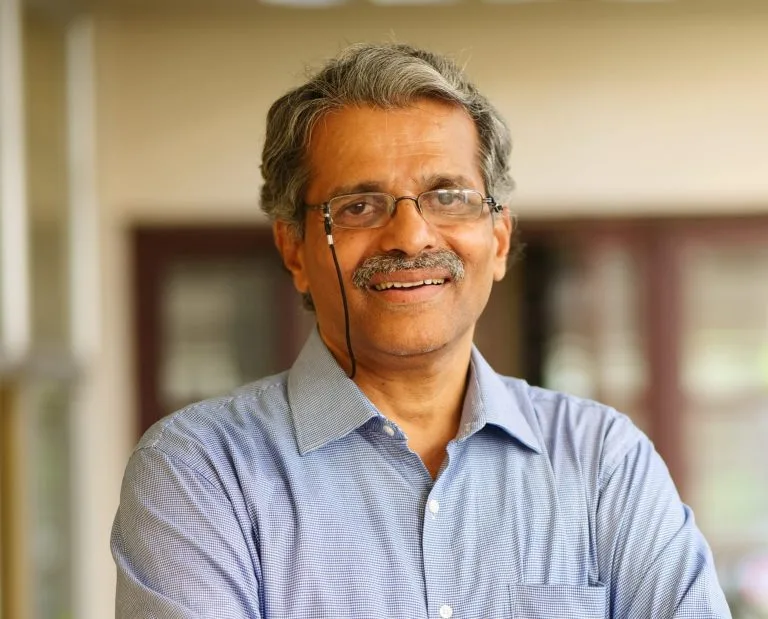
Such inclusion deserves acknowledgment. Professor Sabu Thomas’s research record is one conspicuous example of Kerala’s international scientific visibility. But the database is not a university teaching award, a complete audit of research integrity or a ranking of vice-chancellors. Equally important, the absence of a scholar working in Malayalam literature, local history, public administration or community extension does not establish that their work is unimportant. A sensible academic culture would celebrate recognition without confusing it with the whole meaning of excellence.
India publishes research; who owns the publishing system?
India has strong scholarly traditions and several reputable journals. The claim that Kerala or India has no good journals would be unjustified. But the imbalance between the scale of Indian research and the strength of Indian-controlled publishing infrastructure deserves serious attention.
SCImago’s India country filter lists roughly 530 Scopus-linked journal titles in its 2025 journal data, depending on the selected filters and coverage. The titles differ enormously in reputation, field, size and publishing arrangements. The journal Current Science is published fortnightly; Economic and Political Weekly is a weekly; the Indian Journal of Medical Research is issued monthly; and Kerala Agricultural University’s Journal of Tropical Agriculture provides a locally rooted outlet. For perspective, SCImago reports 295 indexed documents for Current Science, 861 for Economic and Political Weekly, and 45 for Journal of Tropical Agriculture in 2025. These are all indexed document types by authors from different countries, not counts of Indian scholars or peer-reviewed Indian-authored articles. A reliable figure for “how many Indian researchers publish in Indian journals” would require a separate author-affiliation analysis, not a guess from journal totals (SCImago, 2026).
The problem is therefore not simply the number of journals. It is editorial capacity, regular publication, rigorous and independent peer review, digital archiving, discoverability, international collaboration, and support for subjects important to Indian society. Kerala should strengthen credible local journals rather than abandon them, while continuing to participate in the best international publications. Rigorous Malayalam-language scholarship also needs recognition, translation and wider access. Academic quality cannot be reduced to the geography of a publisher.
This question is particularly important for scholarship published in Malayalam. Kerala has a rich intellectual tradition in history, literature, social reform, political thought, local governance and cultural studies. A carefully researched Malayalam monograph based on archival documents, oral histories or field investigation may contribute significantly to our understanding of Kerala society without attracting many citations in international databases. Such scholarship should not be treated as academically inferior merely because of its language. At the same time, regional-language publications must meet the same standards of originality, evidence and scholarly scrutiny expected elsewhere. Kerala could improve their recognition through independent peer review, institutional digital repositories, reliable bibliographic records and English-language abstracts that make important regional research more accessible internationally.
The article-processing-charge trap
A further political economy lies hidden in the words article processing charge (APC). Under a traditional subscription model, readers or libraries pay for access to a journal. In many open-access journals, readers can access articles freely, but an author, university or research grant pays a charge to publish an accepted manuscript. Some journals levy no APC at all; these are often called diamond open-access journals. A legitimate APC is normally linked to editorial and publishing services, not to a promise of acceptance.
The distinction matters especially to young Indian researchers. An APC of US$2,000 or US$3,000 can exhaust a modest research budget. The charge may be waived or discounted; some universities negotiate arrangements; and prestigious journals can be either free to publish in or expensive. Paying a fee is neither proof of quality nor evidence of fraud. The real question is whether authors face transparent prices, independent peer review and meaningful alternatives.
A study in Current Science by Kampa et al. (2023) examined Indian-authored gold open-access output in Web of Science-indexed journals in 2020. It identified 26,127 articles and estimated US$17 million in APC expenditure for its defined sample. About 81 per cent of that estimated expenditure went to four commercial publishers. These estimates are not an audited record of all Indian payments: they are bounded by the study’s database, journal selection and assumptions. Nevertheless, they expose a significant transfer of publishing expenditure to commercial intermediaries.
The broader structure reinforces the concern. Larivière et al. (2015) documented the concentration of journal publishing among large firms. Researchers usually write manuscripts with publicly funded or institutionally supported time, and other academics often review them without payment. Publishers certainly supply valuable editorial systems, technical services, preservation and distribution; however, market concentration can give them substantial bargaining power. When public funds finance research and universities then pay to read—or pay to publish—the results, questions of price, ownership and public value are unavoidable.
This is not necessarily colonial exploitation in the historical sense. But there is a defensible neo-colonial or dependent relationship when researchers in poorer systems must repeatedly buy visibility and access from infrastructures controlled elsewhere. The economic problem is not the nationality of every publisher; it is unequal control over the channels through which knowledge becomes legitimate and visible. An Indian university cannot remedy that dependence by simply exhorting its lecturers to publish more (Das & Menon, 2025).
The Government of India’s One Nation One Subscription (ONOS) programme, operating from January 2025, is a useful intervention. It provides eligible public institutions access to large international journal collections, and the official scheme provides for centrally supported APCs at selected high-quality journals. Government communications envisaged ₹150 crore annually for this component (Office of the Principal Scientific Adviser to the Government of India, 2025; One Nation One Subscription, 2025; Press Information Bureau, 2025). But a scheme that negotiates subscriptions and publication charges must also ask a longer-term question: will India remain primarily a purchaser of scholarly infrastructure, or become a producer and steward of it?
What Kerala and India can learn from China
China offers an instructive, though not perfect, comparison. Alongside its investment in universities and research, it has worked to expand domestic scholarly publishing capacity. Tsinghua University Press launched SciOpen in June 2022 as a digital journal platform. In its June 2026 account, the publisher reported more than 220 journals hosted on the platform. It is a mechanism for publishing, managing and internationally distributing scholarship through infrastructure developed in China (Tsinghua University Press, 2026). Reader access on a platform should not automatically be confused with zero APCs for every journal it hosts; the important point is institutional capability and control.
India need not copy China’s political or regulatory model. Brazil’s SciELO initiative offers another example of a regionally rooted scholarly communications platform, although its participating journals have varied business models (SciELO, 2023). What matters is the principle: public research systems need not accept a permanent dependency on a few commercial gateways.
India already has assets on which to build—INFLIBNET, public research institutes, the Indian academies, university presses, disciplinary societies, repositories and emerging open-access initiatives. The Union and state governments could establish a National Public Scholarly Publishing Mission, with Kerala as an early partner. It should provide professionally managed journal software, preservation, plagiarism and image-integrity screening, transparent peer-review systems, DOI registration, multilingual abstracts, translation support and independent editorial funding. Its highest priority should be diamond open access, wherever financially sustainable: free to read, free for authors to publish and publicly accountable.
The mission should protect editorial autonomy from both governmental and commercial interference. Funding must be allocated by transparent, discipline-sensitive criteria and assessed periodically for quality. Public institutions should also negotiate fair APCs, publish their actual subscription and publication costs, support lawful repository deposit and reward research that serves regional needs. A high-quality article on Kerala’s coastal ecology, migration, agrarian crisis or public health should not be invisible merely because it lacks an expensive foreign publishing address.
Building an Indian scholarly publishing platform is only one part of the solution. Kerala must also reform the system through which academic work is evaluated and rewarded. The Kerala State Higher Education Council, in consultation with universities, disciplinary associations and independent researchers, could develop a Kerala Framework for Responsible Research Assessment. Such a framework should examine originality, publication quality, research impact, academic integrity, teaching, doctoral supervision, public engagement and contributions to society. It should recognise differences between natural sciences, social sciences and humanities rather than impose identical publication or citation targets on every discipline. The international Leiden Manifesto provides useful guidance by emphasising that quantitative indicators must support, not replace, informed expert judgment (Hicks et al., 2015).
A practical first step would be to establish a Kerala Research Assessment Observatory to examine publication quality, research integrity, citation practices and the academic performance of universities. It could develop verified digital research profiles that separately identify authored books, edited volumes, journal articles, conference proceedings, patents, datasets and policy contributions. Its purpose should not be to create another league table of individual professors, but to improve transparency, identify institutional weaknesses and strengthen research standards. A pilot programme involving selected Kerala universities could precede wider implementation. Such reforms would complement the proposed National Public Scholarly Publishing Mission by ensuring that India develops not only better platforms for publishing knowledge but also fairer institutions for recognising it.
Recovering academic integrity from political argument
The Ciza Thomas controversy should have opened a serious conversation about what makes a credible researcher and an accountable vice-chancellor. Instead, there is a risk that academic metrics become weapons in a political quarrel. That should concern everyone, including those on the Left who have historically defended public universities, intellectual freedom and the democratisation of knowledge. A critique grounded in democratic principles must be especially careful with evidence, distinctions and fair procedure. Such responsibilities apply equally to political opponents, university managers and researchers themselves.
Let appointments be scrutinised. Let plagiarism, political interference, weak teaching, misconduct and poor administration be challenged. But let criticism also be intellectually honest. A researcher’s seven edited volumes are not the whole of her career; a scientist’s citation count is not the whole of her character; and a vice-chancellor’s political acceptability is not a substitute for legal and professional evaluation.
The deeper question for Kerala is not which political camp wins this week’s argument. It is whether our universities can create a system that rewards good teaching, careful research, public service and scholarly independence, without forcing researchers to measure their worth by the number of papers they can place in costly journals. If Kerala wants an intellectually serious higher education system, it must stop treating publication statistics as either political ammunition or sacred truth. It must start building the institutions that allow knowledge to serve society.
References
Chathukulam, J., & Prathap, G. (2021, January 4). ഗവേഷണരംഗത്ത് കേരളത്തിലെ സർവകലാശാലകൾക്ക് എന്തുപറ്റി? [What happened to Kerala’s universities in research?]. Malayala Manorama. https://www.manoramaonline.com/news/editorial/2021/01/03/notes-on-research-in-kerala-universities.html
Coalition for Advancing Research Assessment. (2022). Agreement on reforming research assessment. https://www.coara.org/agreement/the-agreement-full-text/
Das, S., & Menon, N. (2025). Challenges and opportunities of scholarly publishing landscape: A case study from India. Learned Publishing, 38(4), e2023. https://doi.org/10.1002/leap.2023
David, J., & Thomas, C. (2019). Efficient DDoS flood attack detection using dynamic thresholding on flow-based network traffic. Computers & Security, 82, 284–295. https://doi.org/10.1016/j.cose.2019.01.002
David, J., & Thomas, C. (2021). Discriminating flash crowds from DDoS attacks using efficient thresholding algorithm. Journal of Parallel and Distributed Computing, 152, 79–87. https://doi.org/10.1016/j.jpdc.2021.02.019
Digital University of Kerala. (2024). Prof. (Dr.) Ciza Thomas: Curriculum vitae. https://duk.ac.in/wp-content/uploads/2025/01/ProfDr.CIZA_THOMAS_CV_2024_V1.pdf
ETEducation. (2026, October 12). Beyond the IITs: Mapping India’s presence in the top 2% scientists list. https://education.economictimes.indiatimes.com/news/higher-education/beyond-the-iits-mapping-indias-presence-in-the-top-2-scientists-list/134865307
Express News Service. (2024, March 15). Research output of varsities in Kerala rose significantly from 2018 to ’23: Report. The New Indian Express. https://www.newindianexpress.com/states/kerala/2024/Mar/15/research-output-of-varsities-in-kerala-rose-significantly-from-2018-to-23-report
Gireesan, K., & Chathukulam, J. (2020, December 9). In Stanford ranking, hope for Indian science. The Hindu. https://www.thehindu.com/opinion/lead/in-stanford-ranking-hope-for-indian-science/article33282851.ece
Hicks, D., Wouters, P., Waltman, L., de Rijcke, S., & Rafols, I. (2015). Bibliometrics: The Leiden Manifesto for research metrics. Nature, 520, 429–431. https://doi.org/10.1038/520429a
Ibrahim, H., Liu, F., Zaki, Y., & Rahwan, T. (2025). Citation manipulation through citation mills and pre-print servers. Scientific Reports, 15, 5480. https://doi.org/10.1038/s41598-025-88709-7
Indian Council of Agricultural Research. (2026, October 13). ICAR-CTCRI, Thiruvananthapuram scientist Dr Alummottil N. Jyothi recognised among world’s top 2% scientists. https://www.icar.gov.in/en/icar-ctcri-thiruvananthapuram-scientist-dr-alummottil-n-jyothi-recognised-among-worlds-top-2
Ioannidis, J. P. A. (2026). August 2026 data-update for “Updated science-wide author databases of standardized citation indicators” (Version 9) [Data set]. Elsevier Data Repository. https://doi.org/10.17632/btchxktzyw.9
Ioannidis, J. P. A., Boyack, K. W., & Baas, J. (2020). Updated science-wide author databases of standardized citation indicators. PLOS Biology, 18(10), e3000918. https://doi.org/10.1371/journal.pbio.3000918
Kampa, R. K., Sa, M. K., & Dora, M. (2023). Publications in gold open access and article processing charge expenditure: Evidence from Indian scholarly output. Current Science, 125(10), 1057–1062. https://doi.org/10.18520/cs/v125/i10/1057-1062
Kerala State Higher Education Council. (2025). Kerala Institutional Ranking Framework (KIRF): Manual (revised). https://www.kshec.kerala.gov.in/images/pdf/KIRF%20%20MANUAL%202025.pdf
Larivière, V., Haustein, S., & Mongeon, P. (2015). The oligopoly of academic publishers in the digital era. PLOS ONE, 10(6), e0127502. https://doi.org/10.1371/journal.pone.0127502
National Information Standards Organization. (2022). ANSI/NISO Z39.104-2022, CRediT, Contributor Roles Taxonomy. https://doi.org/10.3789/ansi.niso.z39.104-2022
Office of the Principal Scientific Adviser to the Government of India. (2025). One Nation One Subscription. https://www.psa.gov.in/oneNationOneSubscription
One Nation One Subscription. (2025). Guidelines on payment of article publishing charges. https://onos.gov.in/public/docs/APC-Guidelines.pdf
Press Information Bureau. (2025, January 1). One Nation One Subscription. Ministry of Education, Government of India. https://www.pib.gov.in/Pressreleaseshare.aspx?PRID=2089179
San Francisco Declaration on Research Assessment. (2012). Read the declaration. https://sfdora.org/read/
SciELO. (2023, August 14). Program, publication model, and SciELO network. https://www.scielo.org/en/about-scielo/program-publication-model-and-scielo-network/
SCImago. (2026). SCImago journal and country rank: India, 2025 journal data. https://www.scimagojr.com/journalrank.php?country=IN&type=j
The Hindu Bureau. (2026, November 11). Thomas Isaac questions Ciza Thomas’s credentials as V-C; she says her qualifications are open to scrutiny. The Hindu. https://www.thehindu.com/news/national/kerala/thomas-isaac-questions-ciza-thomass-credentials-as-v-c-she-says-her-qualifications-are-open-to-scrutiny/article71688897.ece
Tsinghua University Press. (2026, June 25). SciOpen platform: Fourth-anniversary development review [In Chinese]. https://www.tup.tsinghua.edu.cn/journals/news?id=15681
University Grants Commission. (2022). Minimum standards and procedures for award of Ph.D. degree regulations, 2022. https://www.ugc.gov.in/e-book/ugc_regulation/files/basic-html/page565.html
University Grants Commission. (2025, July 16). Public notice on discontinued UGC-CARE listing and suggestive parameters for peer-reviewed journals. https://www.ugc.gov.in/pdfnews/6124898_Public-Notice-CARE-Journals.pdf
University of Kerala. (2026). Budget estimates 2026–27 (p. 163). https://www.keralauniversity.ac.in/downloads/Budget_Estimates_2026_277.pdf
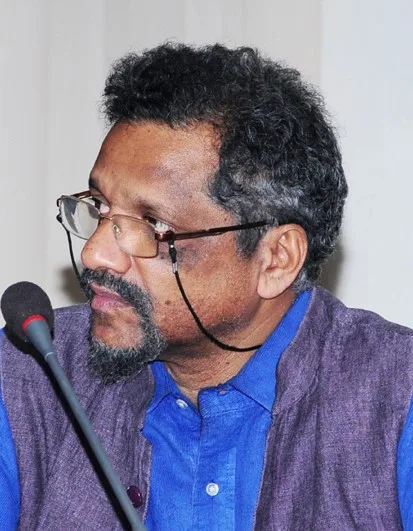
Jos Chathukulam is a Professor of Political Economy and Director of the Centre for Rural Management (CRM), Kottayam, Kerala. Formerly Professor at the Ramakrishna Hegde Chair on Decentralisation and Development, Institute for Social and Economic Change (ISEC), Bengaluru, his research focuses on decentralised governance, public policy, rural development, political economy and participatory planning. He has published extensively in national and international academic journals.
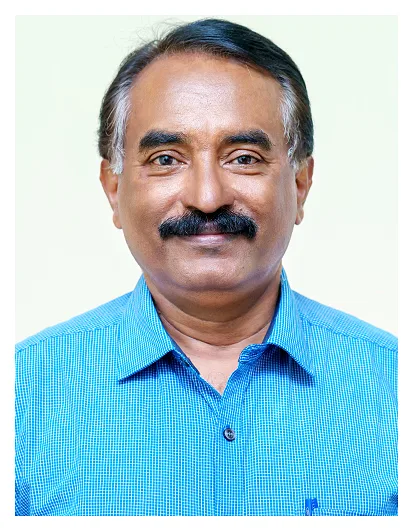
Prof. (Dr.) A. M. Jose is Professor and Head, Amity School of Economics, Amity University Haryana, India. With over 42 years of academic experience, he specialises in Development Economics and Managerial Economics. He previously served at Kerala Agricultural University as Associate Director of the MBA in Agri-Business Management Programme, and at the National University of Rwanda. He is an alumnus of ISEC Bengaluru, IIM Ahmedabad, and York St John University, UK.