
How Energy Poverty Keeps Clean Cooking Beyond the Reach of Poor Migrants
India’s clean cooking transition is often measured through rising LPG connections, but for millions of poor migrant families, access to clean fuel remains uncertain and unaffordable. This article by Prof. A. M. Jose and Aishwarya examines how poverty, insecure housing, informal tenancy and weak welfare portability force urban migrants into unsafe cooking practices, exposing deep inequalities hidden behind official energy success stories.
India may celebrate the spread of LPG connections as a sign of social progress, but in the cramped rented rooms of its migrant poor, the reality is far harsher. For thousands of families in urban informal settlements, clean cooking fuel remains less a public entitlement than a distant promise. What stands between them and a smoke-free kitchen is not the absence of supply alone, but the combined weight of poverty, insecure tenancy, missing documents and a policy design that still struggles to see the migrant poor as they really live. That difference is crucial.
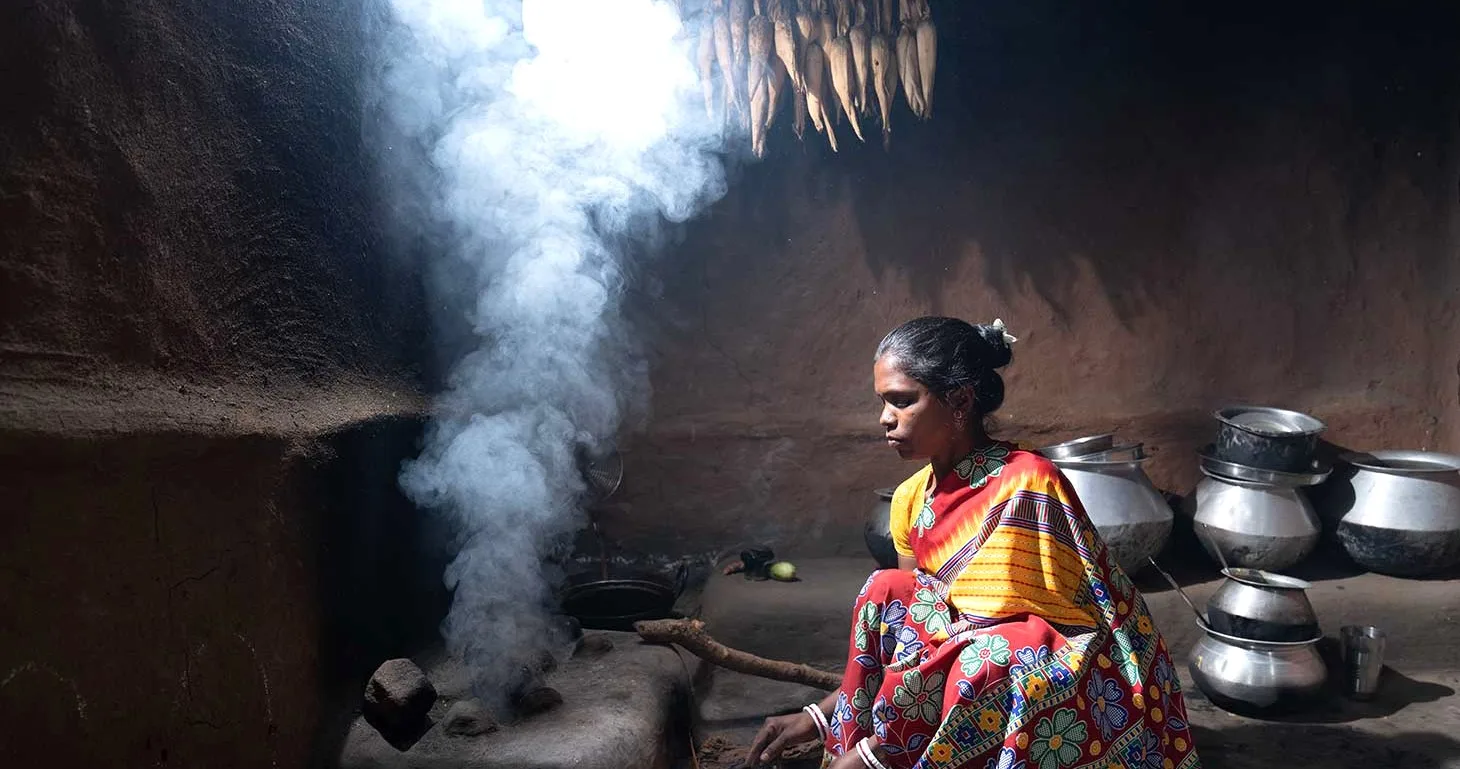
For a low-income migrant family, cooking is not just a domestic activity. It is a daily negotiation with poverty. It is shaped by rent, irregular earnings, lack of documents, insecure shelter and the harsh discipline of survival. In these urban settlements, the kitchen becomes a place where inequality is not discussed in theory, but inhaled in smoke. Many migrant workers in India’s cities survive on meagre incomes while supporting large families. A significant share of their earnings goes towards rent for cramped, poorly ventilated rooms that often lack basic amenities such as toilets, water access and adequate cooking space. After paying rent, very little remains for food, transport, healthcare, children’s education and fuel. Under such pressure, families do not make ideal choices. They make possible ones. This is where the clean energy story begins to fracture.
Public policy often measures progress by counting LPG connections and expanding infrastructure. That is important, but it is only the first step. A connection does not guarantee continued use. For migrant households, especially those living on the edge of urban informality, the bigger challenge is not obtaining access once, but sustaining it month after month.
The problem is intensified by documentation barriers. Many migrant tenants live under informal, verbal rental arrangements. They have no rent agreement and often no valid local address proof. This makes them nearly invisible to formal systems of welfare delivery. Schemes designed with settled households in mind frequently exclude those whose lives are defined by movement, temporary shelter and insecure work. As a result, families who most need support often remain outside the reach of the very programmes meant to protect them.
When formal access weakens, informal markets fill the gap. Small cylinders sold without proper oversight, borrowed cylinders from employers or relatives, and costly informal refill arrangements become part of everyday coping strategies. But these are unstable and often exploitative. When even such options fail, families are pushed towards dangerous substitutes: scrap wood, cardboard, plastic waste, used engine-oil, discarded packaging and other combustible materials gathered from around them.
No household burns such materials out of preference. They do so because poverty narrows choice until risk begins to look like necessity.
That is what makes this issue morally urgent. Too often, the use of dirty fuels is seen as backwardness or lack of awareness. In reality, it is a story of compulsion. Families know smoke is harmful. Mothers know children cough more when toxic materials are burned. But knowledge alone cannot overcome economic helplessness. When the choice is between an unaffordable refill and whatever can keep the stove going, health becomes a luxury.
The burden falls most heavily on women and children. They spend the greatest amount of time near cooking spaces and therefore face the highest exposure to smoke and toxic fumes. Respiratory illness, eye irritation, headaches and longer-term health risks become woven into ordinary life. For poor households, these are not isolated health events. They translate into medical expenses, lost workdays and reduced earnings. The cycle is vicious: poverty leads to unsafe fuel use, unsafe fuel use leads to ill health, and ill health deepens poverty.
Some migrant workers respond by sending their wives and children back to the village, hoping to reduce the costs of urban life. But this is not a solution. It is only a redistribution of hardship. In rural areas too, many households depend on firewood, dung cakes and other polluting fuels. The geography may change, but the energy insecurity remains. The poor, whether in the village or the city, continue to cook under conditions that endanger their health and dignity.
This exposes a larger weakness in energy policy: availability is not the same as accessibility. A country may have sufficient LPG supply, efficient distribution systems, and strong coverage statistics, yet for the migrant poor, clean cooking remains out of reach due to barriers of affordability, documentation, and unresponsive delivery systems. In periods of geopolitical conflict, even where aggregate supply may remain officially adequate, price volatility, distribution stress and speculative pressures can make LPG less accessible to poor migrant households.
The problem cannot be solved by infrastructure alone. The real challenge is not merely providing connections, but ensuring affordable and regular access to clean fuel. Welfare systems must recognise migrant realities by making support more portable and less tied to fixed residence. Energy poverty must also be addressed as part of the wider urban poverty trap of insecure housing, poor health and irregular work. Above all, policy must listen to migrant communities whose daily struggles reveal what official statistics often miss.
The smoke rising from the poorest homes in our cities should trouble us far more than it does. It tells us that the promise of clean energy remains unevenly distributed. It tells us that growth without inclusion leaves essential aspects of life untouched. And it reminds us that the dignity of a household begins with something as basic as the ability to cook a meal without poisoning the air inside the home.
If India’s clean cooking transition is to mean anything to those at the bottom, it must be built not only on cylinders and schemes, but on affordability, portability and compassion. Until then, for millions of migrant families, the kitchen will remain not a place of comfort, but a site of silent crisis.
Featured image credit: www.myclimate.org
Prof. (Dr.) A.M. Jose is a Professor at Amity School of Economics, Amity University Haryana, Gurugram, and a Former Professor at Kerala Agricultural University, Thrissur, Kerala. He can be contacted at amjose@ggn.amity.edu