
A Nation’s Shame: Prof. A.R. Vasavi on Farmer Suicides and Policy Failure
In this in-depth conversation, social anthropologist Prof. A.R. Vasavi reflects on the structural roots of India’s agrarian crisis and the continuing tragedy of farmer suicides. Drawing on decades of field research, she critiques the government’s “contradictory approach” to agriculture marked by systemic neglect alongside short-term populist interventions. The interview explores how neoliberal policies, the legacy of the Green Revolution, caste inequalities, and climate stress have collectively deepened rural distress, while also outlining pathways for sustainable and equitable agrarian reform.
According to data from 2022, at least one farmer died by suicide every hour in India. In fact, farmers’ suicide deaths have been showing an increasing trend since 2019, when 10,281 deaths were recorded in National Crime Record Bureau data. Despite government intervention and policy measures in place, why are farmer suicides recurring? Is it due to the unscientific addressing of the underlying sociological issues precipitating the suicides? Please explain.
Some data/ facts need to be clarified. It is not merely a few thousand farmers who have committed suicide but several thousands over the years. Estimates indicate that at least three lakh farmers have committed suicide since 1997. Tragically, 1997, marked the 50thanniversary of our independence and the spate of suicides has only gathered momentum. Redefining farmer suicides and relegating data, as the National Crime Records Bureau (NCRB) has done and which accounts for showing it as merely ten thousand odd suicides by farmers, is to obfuscate the issue. It does not diminish the fact that farmer suicides are our national shame.
Again, contrary to assertions, governmental intervention or policy support are largely inadequate. Over the past three decades there has been what I call a dual and contradictory government approach to agricultural and farmers’ issues. There is, on the one hand, an ‘economics of neglect’ where there is inadequate budgetary allocation for agriculture, rural development and farmers’ welfare. On the other hand, there is a ‘politics of rescue’ where during elections to garner votes, there is a rush of populist programs such as moratoria on loans, announcements of a range of support schemes such free electricity, annual direct payments, such as the PM-KISAN payment etc. All of these independently or a combination of these is unable to address the complex and deep-rooted, structural problems of agriculture and rural India.
You have extensively conducted field studies in the rural areas on the reasons for the farmers committing suicides after they are incapable of repaying the debts they have incurred. Is there any region specific precipitative factors for these suicides based on your field expertise?
Debts are not the only reason for farmers to commit suicides but they are the most glaring factors and are often the immediate trigger for farmers to commit suicide. Since 1997, studies have documented that farmers’ distress and suicides are located primarily (and not exclusively) in the regions that have promoted commercial agriculture based primarily on the Green Revolution model. That is regions and farmers who are ‘adversely integrated’ into the larger capital and market based economy are more victims. The cultivation of crops such as cotton, sugarcane, groundnuts, and other crops based on a dependency on external capital, commercial inputs of seeds, fertilisers, pesticides, and market dependency accounts for this. Vidarbha and Yavatmal in Maharashtra, Warangal in Telengana, which are cotton belts, Ananthpur and other groundnut regions in Andhra Pradesh, various districts of Karnataka and Punjab, the soya belts of Madhya Pradesh etc are some of the examples. Climate change and natural resource depletion, such as shrinking water resources and depleted soil fertility exacerbate these forms of risk and stress. Regions which are considered ‘backward’ and are not integrated into the larger commercial and capitalised economy are marked with less suicides by farmers.
Could you explain how the neo liberal economic policies aggravated the crisis of Indian farmers resulting in the decrease in crop production and profits thereby deteriorating their socio economic conditions ?
Let me clarify that ‘decrease in crop production’ or a problem of productivity is not the singular problem of India’s agriculture. As studies such as those by Glenn Stone and others have indicated, the productivity problem is a perspective that is promoted by the agri-business industry and vested transnational interests. Instead of the focus on productivity, we need to recognise the other myriad reasons for the deteriorating socio-economic conditions of rural India and therefore of agriculture. Neo-liberal economic policies do not consider agriculture to be on par with industries and the service economies and do not provide adequate financial support or regulatory systems. It has meant exposing vulnerable farmers, a majority of them (86 percent of all cultivators) who own less than one hectare of land, to compete with large farmers or exposing them to the risks of capital and market.

Has the Green Revolution, brought in by the government to increase agricultural production, pressurized marginal farmers and complicated their agricultural life? Was the ambitious program a burden on the farmers who lacked necessary social and economic resources to do justice to the program?
The Green Revolution (in the 1960s) was deployed to address what was then seen as a pressing problem of inadequate food production for a growing population. There was an inversion in the understanding of India’s agricultural/agrarian complexes. The problematic caste-based socio-economic structure of agriculture was retained while the positive dimensions of a rich corpus of agricultural knowledge that had evolved to suit various ecological contexts was sought to be erased. As a result, we now have a model that reproduces the caste-based inequities in rural and agrarian India, while the relevant knowledge and skill sets are largely (but not completely) eroded. Instead, of reversing or addressing these problems, which became visible since the 1980s, there is a further consolidation of the Green Revolution model with increasingly new and potentially dangerous inputs such as genetically modified seeds, poisonous pesticides and weedicides, and questionable technologies that are also ecologically harmful.
So, in reality it is not why and how farmers have failed to engage with policies as much as that policies have not been appropriate to address the foundational or structural problems of the most marginalised rural citizens. Instead, policies over the past three decades have intensified the risks of capital, knowledge, and market while climate change has further exacerbated these risks that most agriculturists face.
Is it prudent to assume that those who were at the receiving end of the agricultural distress belong to a sizeable section from the backward castes regardless of their regional differences? How has their caste distinction aggravated their miseries?
Yes, a sizeble number of victims have been from the ‘Backward’ and ‘Other Backward caste’ groups as they are, along with SCs and STs, the most marginalised. As small and marginal cultivators, whose access to capital and markets is limited and whose networking abilities to diversify into various occupations is minimal they bear the brunt of a decelerating and high-risk agricultural economy. This is different for ‘dominant castes’ among the BCs and OBCs who may be able to juggle new sources of income (investments in retail and business, salaried incomes, politics etc) and therefore do not become victims of this system.
Despite the decentralisation of the administration why have the concerns of the farmers not been properly addressed?
The Panchayat Raj Institutions (PRIs) have their value in strengthening decentralised democracy and have been effective in challenging the dominance of landed and upper castes in rural India. In the case of implementing the MNREGA (the Mahatma Gandhi National Rural Employment Guarantee Act), the gram panchat has been a valuable institution. However, agriculture and crop planning are not decentralised and much of agriculture is influenced by what dominant, commercialised players do in different regions. In fact, over the years, agricultural policies are made behind closed doors and are increasingly corporatised, centralised and commercialised. Although rural India sends in the largest proportion of legislators and parliamentarians, they no longer represent the interest of farmers as they themselves are now largely in business, real estate, industries, and a range of speculative economies. Is it any wonder that agricultural issues are now rarely discussed in assemblies and the parliament? The case of how the three Farm Acts of 2020 were sought to be forcefully implemented is a case of the increasing centralisation and corporatisation of agricultural policies. So, PRIs, as institutions are not able to address local agricultural issues.
Could you suggest some structural changes that should be implemented in the agrarian sector to address agrarian issues and to stem the loss in farming?
First of all, agriculture and rural economies need to be conceptualised as viable and important economies and not relegated to secondary or shadow positions as they are now. Recognising their strengths, agriculture must be planned and administered to suit the range of agro-climatic zones so that ecological sustainability is addressed. Linked to this is the need to reckon with the fact that a large proportion of holdings need to be consolidated to become viable plots. Supporting pooled farming through incentives for soil, water, and seed conservation (which will also address climate change issues), and focusing on locally viable production systems that integrate local food requirements (to address food and nutrition security) will be key and go beyond the populist policies that only support large farmers and unsustainable cultivation practices. Decentralised and localised agricultural complexes can be supported with decentralised processing and supplementary industries so that rural industries are revived. In addition, rural India urgently needs good and functioning public health and education systems so that the need for additional income is decreased and the overall opportunities for life are enhanced. In summary, both sustainability and equity and not just productivity and profit (for a few) should become key criteria.
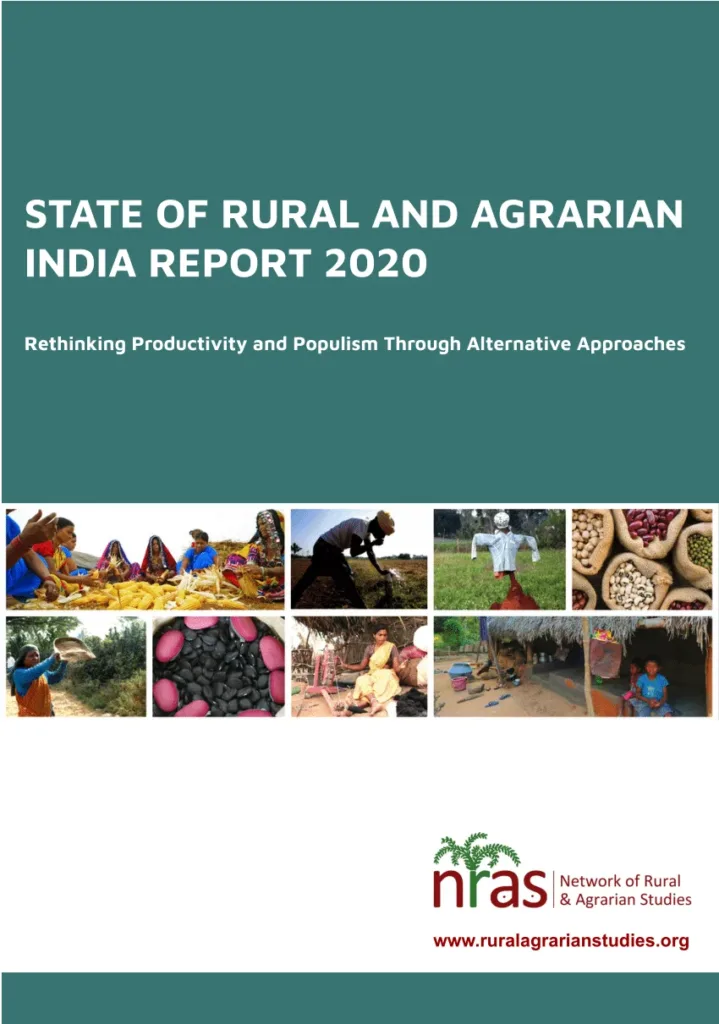
The NRAS report suggests an alternative rural and agrarian policy for comprehensive reforms for changing the status quo. Do you think an alternate policy will be effective?
The NRAS report, ‘State of Rural and Agrarian India, 2020’, articulates an alternative approach to addressing rural India’s multiple problems. These include the need to address not only the extant ecological crises, marked by depleted natural resources and exacerbated by climate change, but also the economic and social challenges. The report argues for going beyond a ‘productivist’ approach—that is, it is important to not continue to emphasise only increased production and productivity of crops—and to recognise the pluri-economies of rural India, and address the other interlinked problems. It will take not just political will to accept and implement an alternative approach but also support and demand by farmers and rural citizens themselves. Currently, there is a trend of the government and elected representatives upholding merely neo-liberal approaches that endorse capitalisation, corporatisation, and centralisation of agriculture. Even many farmers and farm leaders, especially the ones with large and commercialised holdings, support this along with increased demands for more government support for such a problematic model of agriculture. Unless these in-built and foundational problems are understood, the search and assertion for alternative rural and agricultural policies will be elusive.
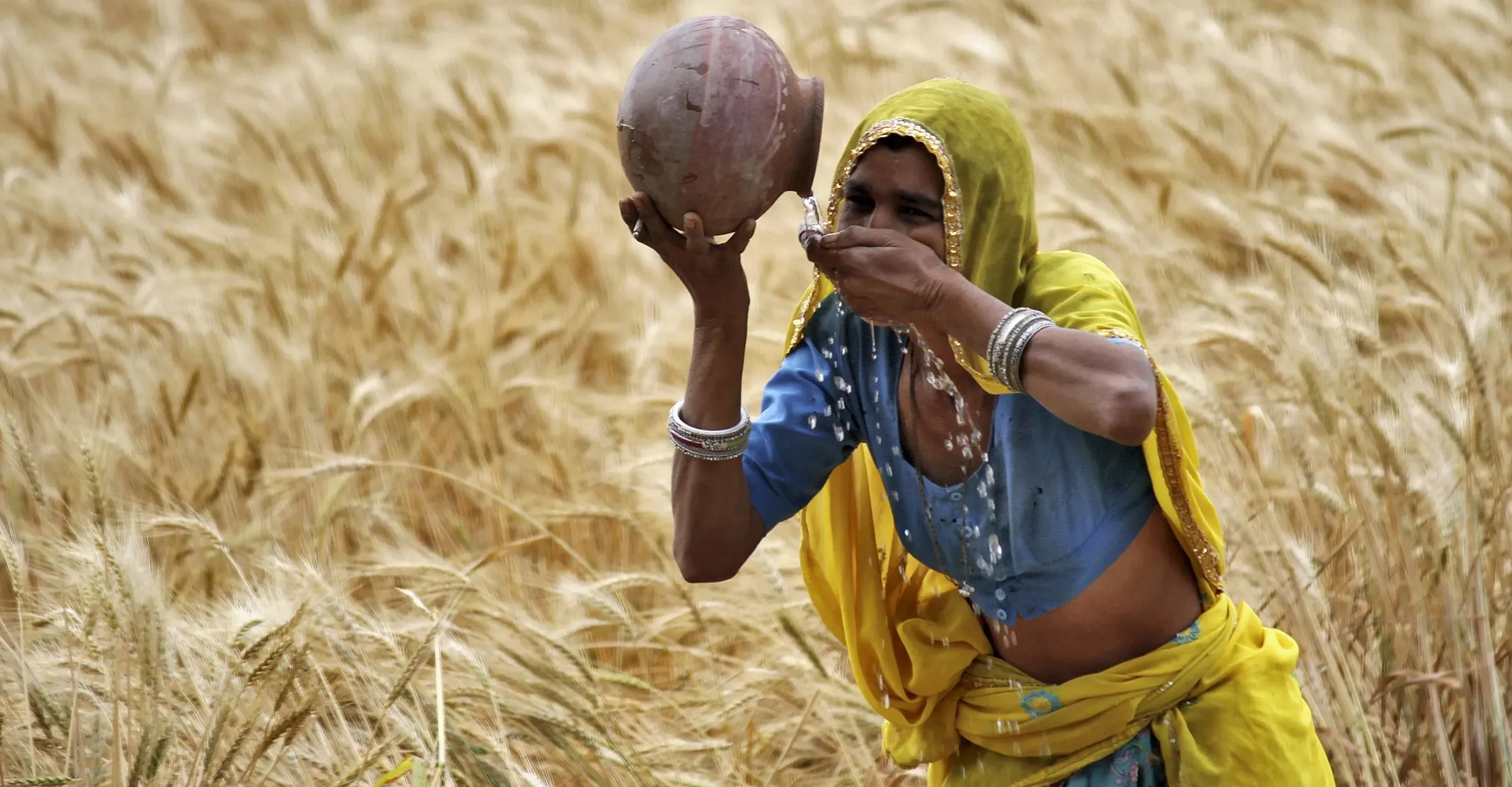
Featured Image: A woman farmer drinks water from an earthen pot in a wheat field on the outskirts of Ajmer in the desert Indian state of Rajasthan. Photo credit: www.context.news

A journalist with 18 years of experience Abhish K Bose was a staffer at The Times of India and The Deccan Chronicle - Asian Age. As a contributor, his interviews and articles have been published in Frontline magazine, The Wire, The Print, The Telegraph, The Federal, The News Minute, Scroll, The Kochi Post, The Leaflet, The Hindu.com, Outlook.com Countercurrents.org and the Asian Lite international published out of London