
Democracy Without Representation: Gender, Youth, and Political Exclusion in Kerala
In this article, Jos Chathukulam and A. M. Jose argue that despite Kerala’s celebrated social development, its electoral politics remains deeply exclusionary. They show how patriarchal party structures, economic inequalities, and notions of “winnability” systematically marginalize women and youth, and contend that true democratic progress requires structural reforms that ensure meaningful and inclusive political representation.
Kerala’s Democratic Paradox
Kerala has long been celebrated as a distinctive development experience within India. High literacy, relatively good health outcomes, and broad-based social achievements have made the state a frequent point of reference in discussions on human development and social democracy. Yet the state’s political sphere continues to lag behind its social achievements in one crucial respect: representative inclusion. The 2026 Kerala Assembly candidate lists once again show that women and youth remain significantly underrepresented. Women account for more than half of Kerala’s population, while persons below 50 years constitute a substantial majority; nevertheless, the share of women candidates in the major fronts reportedly ranges only from about 8.57% to 12.85%, and youth representation also falls well below demographic reality (Chathukulam, 2026). This is not a marginal discrepancy. It is a structural contradiction at the heart of Kerala’s democracy.
At one level, this is a problem of descriptive representation. Democracies should broadly reflect the composition of the societies they claim to represent. But the issue runs deeper. The gap between Kerala’s social progress and its electoral inclusion suggests that development by itself does not automatically democratize power. Representation is filtered through institutions, party cultures, financial barriers, social norms, and historically accumulated networks of access. In that sense, the Kerala case invites a larger question: can a polity be called fully democratic when its candidate selection processes remain so resistant to gender and generational inclusion? (Fraser, 1995).
Why Representation Matters Economically
Too often, political representation is treated as a narrow matter of party tactics, seat-sharing, or symbolic fairness. A Feminist Economics perspective pushes us to ask different questions. Who has the time, resources, confidence, networks, and social permission to enter politics? Whose labour is visible and rewarded, and whose labour is taken for granted? How are households, parties, and public institutions organized in ways that systematically advantage some groups over others?
Feminist Economics has consistently challenged the illusion that formal equality automatically produces substantive power. Kabeer (1999) argues that empowerment must be understood in terms of resources, agency, and achievements, not merely legal entitlements or statistical participation. Agarwal (1997) similarly shows that bargaining power is shaped not only by individual attributes but also by social norms, institutional structures, and fallback positions. When applied to politics, these insights reveal that women’s underrepresentation is not simply because they are “not chosen”; it is because the entire route to political candidacy is embedded in unequal social relations.
This is where Feminist Economics becomes especially important for understanding Kerala. Even in a socially advanced state, women continue to shoulder a disproportionate burden of unpaid care work, household management, emotional labour, and community reproduction. Such labour sustains the economy and society, but it is not counted, rewarded, or converted into political capital. Politics, meanwhile, rewards a very different profile: uninterrupted public visibility, years of party networking, mobility, late-night organizational work, financial flexibility, and a style of leadership historically coded as masculine. What appears as a “neutral” merit-based process is often a deeply gendered institutional filter. Elson’s critique of supposedly gender-neutral policy frameworks is relevant here: institutions often look neutral only because the gendered assumptions built into them remain unexamined (Elson, 1991).
From Formal Equality to Substantive Empowerment
Kerala’s case illustrates a classic feminist distinction between formal equality and substantive empowerment. Women in Kerala have made remarkable gains in education, life expectancy, and access to public services. Yet these achievements have not translated proportionately into political decision-making power. This gap should caution us against any easy assumption that development indicators alone can measure gender justice.
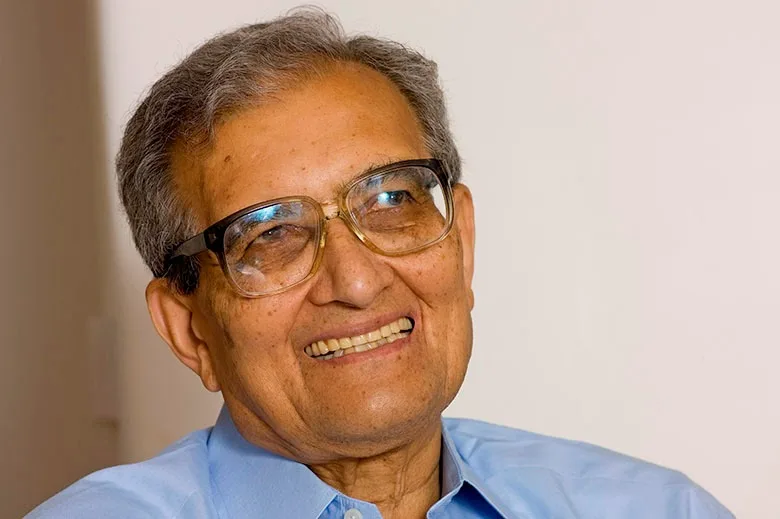
Amartya Sen’s work on agency and cooperative conflict is useful here. Inequality persists not only because of overt exclusion, but because institutions normalize unequal expectations, unequal claims, and unequal bargaining positions within families and society. Women may be present in the public sphere as voters, workers, teachers, health activists, or local participants, yet remain absent from the command posts where policy priorities are defined and resources allocated. Kabeer’s formulation of empowerment as the expansion of the ability to make strategic life choices is equally relevant: the right to participate is not the same as the practical ability to shape outcomes (Kabeer, 1999; Sen, 1990).
This distinction matters greatly in Kerala because the state is often viewed as having already “done enough” on gender by achieving relatively progressive social outcomes. That assumption is misleading. A society may educate women without empowering them politically. It may celebrate women’s literacy while excluding them from party tickets. It may value women as caregivers, mobilizers, and campaigners while withholding leadership from them. The democratic deficit lies precisely in this contradiction.
Party as a Gendered Institution
The underrepresentation of women and youth in candidate lists does not occur in a vacuum. It is produced through the inner workings of parties. The available analysis of Kerala’s 2026 candidate lists points to centralized decision-making, the dominance of senior leadership, incumbent advantage, and the repeated invocation of “winnability” as key filters in candidate selection (Chathukulam, 2026). These are not merely technical criteria. They are institutional mechanisms through which existing power reproduces itself.
The concept of “winnability” deserves particular scrutiny. It is often presented as pragmatic realism, but in practice it is deeply circular. Candidates are considered winnable because they already possess visibility, finance, caste or community backing, organizational depth, and elite endorsement. Since these assets are unevenly distributed, the criterion rewards those who are already structurally advantaged. Women and younger entrants are then judged against standards shaped by male-dominated political histories. In this sense, “winnability” is less an objective measure than a conservative institutional belief that protects existing hierarchies.
Feminist Economics helps uncover the hidden costs of this arrangement. Women often face higher opportunity costs in entering politics because they carry unpaid care burdens that parties do not recognize. They may have fewer independent resources, less access to patronage networks, and less freedom of movement. Folbre’s work on the structures of constraint is especially relevant: gender inequality is reproduced not simply by market outcomes, but by social institutions that assign care responsibilities unevenly and treat dependence as normal (Folbre, 1994). The party, in this sense, is not outside the household or the economy; it is part of the same architecture of gendered constraint.
Youth Exclusion and Democratic Ageing
The issue is not confined to women alone. Kerala’s candidate lists also reveal substantial underrepresentation of younger age groups relative to their demographic share (Chathukulam, 2026). This matters not only because youth are numerous, but because they inhabit a different social and economic landscape—one marked by unemployment anxieties, technological change, migration, precarious work, climate uncertainty, and new aspirations around identity and autonomy. A democracy that persistently excludes younger voices risks becoming institutionally aged even if society itself remains dynamic.
Yet youth exclusion is not gender-neutral. Young women face a double barrier: they encounter both age hierarchy and patriarchy. They are often visible in student politics, civil society activism, and digital public discourse, but far less visible in formal electoral nominations. Seniority-based party cultures, the valorization of decades-long organizational service, and the assumption that leadership must be “seasoned” tend to push younger aspirants to the margins. Feminist analysis reminds us that hierarchy in politics is not simply generational; it is also gendered, because the credentials valued by parties are themselves shaped by male life courses.
The Costs of Underrepresentation
A central contribution of Feminist Economics is the insistence that questions of voice and power cannot be separated from questions of resource allocation. Who sits in legislatures matters because policy priorities are not neutral. The absence of women from decision-making spaces affects what counts as a public issue and what remains hidden within the family or community. Care infrastructure, social protection, public transport safety, nutrition, health access, time poverty, gender-based violence, and the design of welfare systems often receive more serious attention when women have greater voice in governance.
This is not merely theoretical speculation. Research on women’s representation in local government in India has shown that mandated political inclusion can alter public goods provision in ways that better reflect women’s priorities. Chattopadhyay and Duflo (2004), in their influential study of political reservations in India, found that women leaders changed investment patterns toward issues more closely aligned with women’s expressed concerns. Their work is important because it moves the debate beyond tokenism: representation can reshape actual policy outcomes.
That finding has important implications for Kerala. If women remain underrepresented in state-level electoral politics, then the state may be foregoing not only democratic fairness but also better governance. A Feminist Economics approach would argue that care, welfare, and social reproduction are not “soft” subjects secondary to the real economy. They are foundational to the economy itself. When these domains remain politically undervalued, development becomes narrower, more technocratic, and less responsive to lived realities. Elson’s argument that mainstream policy frameworks routinely shift costs onto the unpaid economy is particularly relevant: when women’s labour is invisible, policies are likely to be built on unrealistic assumptions about who absorbs social stress (Elson, 1991).
Recognition, Redistribution, and the Kerala Question
Nancy Fraser’s distinction between redistribution and recognition offers a powerful framework for interpreting Kerala’s democratic shortfall. Gender injustice is not only economic and not only cultural; it is both. Women face material disadvantages in access to resources, time, mobility, and networks, but they also face cultural devaluation through stereotypes about leadership, authority, experience, and public legitimacy. Fraser warns against treating recognition and redistribution as separate worlds. In real life, the two are deeply intertwined (Fraser, 1995).
This is precisely the problem in Kerala’s electoral politics. Women and youth are not excluded solely because parties fail to “recognize” them symbolically. They are excluded because recognition itself is tied to material structures: campaign finance, organizational routes, patronage access, and the unequal distribution of free time and public credibility. A party may publicly celebrate gender equality while privately reproducing a male political order. Symbolic acknowledgment without institutional redistribution changes very little.
Therefore, the demand for more women candidates should not be reduced to a plea for benevolent inclusion. It is a democratic claim grounded in both justice and political economy. It asks not only for better optics, but for a restructuring of the terms on which political competition takes place.
What Reform Would Actually Mean
If Kerala is serious about democratic deepening, incremental goodwill will not suffice. The issue demands institutional reform. First, there is a strong case for extending effective gender quotas or other enforceable inclusion mechanisms beyond local self-government into higher legislative arenas. India’s local government experience has already demonstrated that reservations can open political space, build confidence, and alter governance priorities (Chattopadhyay & Duflo, 2004).
Second, intra-party democracy must become a central concern. Candidate selection cannot remain an opaque, centralized exercise controlled by small leadership circles. Transparent criteria, published procedures, meaningful consultation, and institutionalized targets for women and young candidates are essential. Without reform within parties, democratic reform outside them will remain partial.
Third, leadership development must be treated as a public democratic investment. Women and young entrants need sustained mentoring, organizational exposure, financial support, media training, and protection from the reputational and social costs of political participation. A Feminist Economics lens is useful here because it reminds us that equal competition is impossible when the starting conditions are unequal.
Fourth, the question of unpaid care work cannot be ignored. If political life presumes total availability, mobility, and endless organizational time, then it will continue to reward those whose domestic responsibilities are socially outsourced to women. Greater political inclusion therefore also requires a broader societal shift: redistribution of care within households, better public provisioning, and a revaluation of social reproduction as a public concern rather than a private burden.
Towards an Inclusive Kerala Model
Kerala’s democratic future depends on whether it is willing to confront this contradiction honestly. The state cannot indefinitely celebrate itself as socially progressive while normalizing exclusion in the sphere of political candidacy. A mature democracy must be judged not only by voter turnout, electoral competitiveness, or alternation of fronts, but by who is allowed to stand, decide, and shape the public agenda.
The exclusion of women and youth is not a secondary flaw in an otherwise healthy system. It is a warning that political institutions have not kept pace with social transformation. A Feminist Economics perspective helps us see why: because inequality persists not only through income gaps or labour markets, but through the organization of care, time, voice, authority, and institutional recognition. The real question, therefore, is not whether Kerala values women and youth in the abstract. It is whether Kerala is prepared to redesign power so that those values become materially real.
Conclusion
Kerala stands at an important democratic crossroads. Its social development record remains impressive, but social development without political inclusion produces an incomplete modernity. The underrepresentation of women and youth in candidate lists is not simply an electoral inconvenience; it is evidence of a deeper structural imbalance in the state’s political economy. Feminist Economics sharpens this diagnosis by showing that representation is inseparable from social reproduction, institutional bias, bargaining power, and the unequal organization of opportunity.
A more inclusive Kerala will require more than rhetoric. It will require institutional guarantees, intra-party reform, leadership pipelines, financial and organizational support, and a cultural shift in how political leadership is imagined. Above all, it will require moving from formal equality to substantive empowerment. Only then can Kerala’s democratic system begin to reflect the social achievements it so often claims as its pride.
References
Agarwal, B. (1997). “Bargaining” and gender relations: Within and beyond the household. Feminist Economics, 3(1), 1–51. https://doi.org/10.1080/135457097338799
Chathukulam, J. (2026, March 31). Sthanarthi Pattika : Sthreekalum, Yuvajanagalum Padikku Purathu Thanne(Malayalam) [Candidate lists: Women and youth remain outside the gate]. The Malabar Journal.
Chattopadhyay, R., & Duflo, E. (2004). Women as policy makers: Evidence from a randomized policy experiment in India. Econometrica, 72(5), 1409–1443. https://doi.org/10.1111/j.1468-0262.2004.00539.x
Elson, D. (1991). Male bias in macroeconomics: The case of structural adjustment. In D. Elson (Ed.), Male bias in the development process (pp. 164–190). Manchester University Press.
Folbre, N. (1994). Who pays for the kids? Gender and the structures of constraint. Routledge.
Fraser, N. (1995, July–August). From redistribution to recognition? Dilemmas of justice in a “post-socialist” age. New Left Review, I(212), 68–93.
Kabeer, N. (1999). Resources, agency, achievements: Reflections on the measurement of women’s empowerment. Development and Change, 30(3), 435–464. https://doi.org/10.1111/1467-7660.00125
Sen, A. (1990). Gender and cooperative conflicts. In I. Tinker (Ed.), Persistent inequalities: Women and world development (pp. 123–149). Oxford University Press.
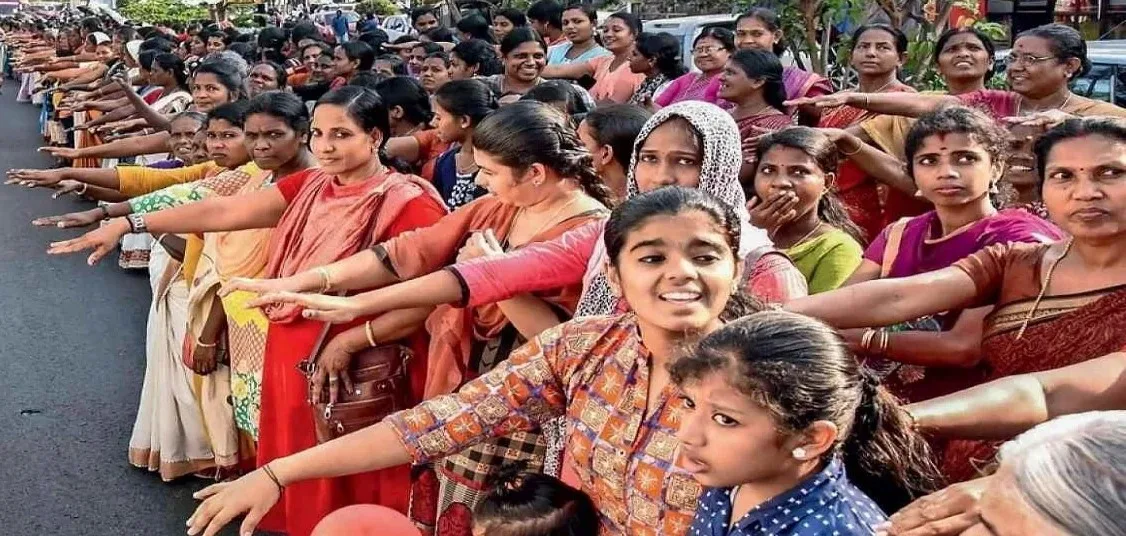
Featured Image: More than three million women formed an over 600-km long unbroken human chain ‘Vanitha Mathil’ (Women’s Wall) in Kerala in 2019 to defend gender justice and values of renaissance in the society. Courtesy: feminisminindia.com

Prof. (Dr.) A.M. Jose is a Professor at Amity School of Economics, Amity University Haryana, Gurugram, and a Former Professor at Kerala Agricultural University, Thrissur, Kerala. He can be contacted at amjose@ggn.amity.edu
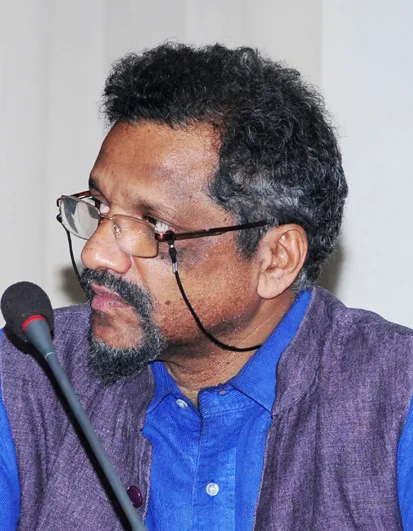
Jos Chathukulam is a Professor of Political Economy and Director of the Centre for Rural Management (CRM), Kottayam, Kerala. His academic work focuses on public policy, decentralisation, public finance, local governance, development studies, and political economy in India, with a special emphasis on Kerala. Prof. Chathukulam has authored and edited several influential books and research papers, and has served as a policy advisor to governments and international agencies. He is widely recognised for his critical engagement with development paradigms and for advocating sustainable, people-centred alternatives in economic and governance practices.
- Democracy in Kerala
- Feminist economics
- Gender inequality in politics
- Inclusive democracy
- Intra-party democracy
- Kerala development model
- Kerala Politics
- Party politics India
- Political Economy of Caste
- Political exclusion
- Political representation
- Substantive equality
- Unpaid care work
- Women political representation
- Youth in politics