
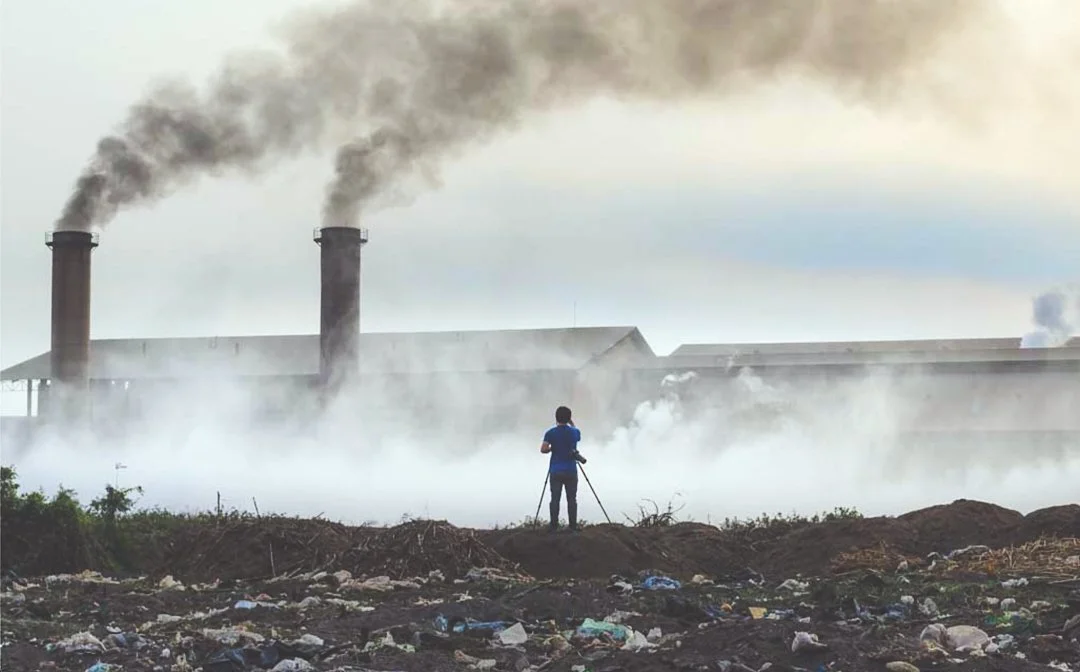
Capitalism Is a Trap – And You Can’t Get Out?
Economist Clara Mattei, author of Escape from Capitalism: Economics Is Political, speaks with Ava Santina Evans, political correspondent at PoliticsJOE, about why capitalism is not simply failing but functioning as it was designed to. Drawing on her work, Mattei examines how austerity, wage labour, central banks and the concentration of wealth sustain capitalist power and deepen inequality. She also discusses the possibilities of building alternatives through grassroots organising, collective action and participatory democracy.
The Politics of Capitalism and the Plight of Workers
Ava Santina Evans: To begin, could you introduce yourself and tell us about your work?
Clara Mattei: I am an economist and the founding president of the Forum for Real Economic Emancipation, known as FREE. It is a very interesting grassroots organisation that we launched in Tulsa, Oklahoma, in the United States outside the traditional centres of economic and political power.
We are developing a critical understanding of economics connected to the idea that, if we want to change things, we need to participate concretely in the process. The local level is where we must begin. We are trying to build an understanding of economics that empowers people to participate in transforming society.
You are based in Oklahoma, which is perhaps an unexpected place for an initiative of this kind. How does this sort of thinking resonate with people there?
It is surprising how many people are fed up with the existing economic system. They experience its violence directly in their lives. They do not have healthcare or housing, and they struggle to afford food and pay their rent.
People are ready to hear a different explanation of what is going wrong. Nobody really believes the familiar argument that they are struggling because they do not work hard enough or because they are lazy. People increasingly recognise that they are struggling because the system is not designed to allow them to succeed.
In your book, you describe the contemporary economic system as fundamentally anti-democratic, particularly in its relationship with workers. What exactly do you mean by that?
What is distinctive about capitalism is that it makes coercion invisible.
At the surface level, we believe we are free to choose. We can choose our employer or the brand of coffee we want to buy. But beneath this apparent freedom lies a deeper form of coercion-a compulsion from which we cannot escape because we have become dependent on the market.
If we do not have money, we cannot purchase the things we need to survive. Almost everything has become a commodity that we must buy. To purchase these commodities, we have to sell our capacity to work in the market.
This makes us dependent on a relationship that is fundamentally hierarchical. We lose control over much of our daily lives, and we produce more value than we receive in our paychecks.
In the United States, for example, 77 per cent of workers live from paycheck to paycheck, meaning they cannot afford an unexpected emergency expense. Meanwhile, wealth at the top continues to accumulate at an extraordinary rate because an increasingly large share of the value produced goes to a very small number of people.
Consider another example. Nineteen people in the United States, representing an extremely tiny fraction of the population, have accumulated almost $2 trillion over the past two years, while homelessness has been increasing. Official figures indicate an 18 per cent increase in homelessness between 2024 and 2025, with more than 118,000 additional people experiencing homelessness. These figures are likely to underestimate the actual situation.
The same pattern can be seen in the United Kingdom. Since 2014, the number of billionaires has increased six fold, while one in three children now lives in poverty.
We are dealing with a system designed to take value away from the very people who produce it. That is what exploitation means.
We can actually measure the rate of exploitation using economic data. We can compare the share of national income going to profits with the share going to wages. What we find is that the rate of exploitation has been rising in recent years, not only in the Global South but also in the Global North.
The Myth of the Free Market
Governments and supporters of free-market economics might argue that these inequalities are simply part of how markets function. Are you suggesting that what we call the free market is not really free?
Absolutely. That is one of the central arguments of my book. The free market is a myth. It is a myth because, first of all, there is no real freedom for those who produce economic value. They are compelled to sell their labour because they have no alternative if they want to survive.
But there is another important reason. Markets are structurally protected by governments and states. When I refer to the state, I do not mean only the executive government. I mean the entire state apparatus: parliaments, the judiciary, law enforcement, independent central banks, the International Monetary Fund and international economic institutions.
These political institutions constantly intervene to protect the two fundamental pillars of capitalism. The first is wage labour: the compulsion that people face to sell their capacity to work.
The second is private control over investment. Decisions about what gets produced, how it gets produced and why it gets produced remain in the hands of a very small number of private investors. The overriding objective is to maximise profit.
These two pillars-wage labour and private control over investment-are not spontaneous or natural. They are politically established and maintained through state intervention.
This is why the subtitle of my book is Economics Is Political. Economic institutions actively intervene to shift resources away from those who produce them, namely workers, and towards those who control capital.
Central Banks and the Control of Workers
From what you have said, I understand that you do not consider central banks to be politically neutral institutions. How do they function, and what does their role mean for ordinary workers?
This is an important question because central banks make decisions that profoundly affect our everyday lives.
When we hear about interest rates and monetary policy, we tend to think that these are highly technical matters that we do not need to understand. They seem distant and relevant only to people with PhDs in economics. But the reality is that when interest rates rise, one of their intended effects is to put pressure on the labour market.
Higher interest rates can make it harder for businesses to borrow and invest. This can reduce employment opportunities and lead to layoffs. This is not simply an accidental consequence. It is embedded in the economic models used by central bankers to manage the economy.
There would be no capitalism without a certain level of unemployment. When unemployment falls, it can be seen as a threat to monetary stability. This is when the Federal Reserve, the Bank of England or the European Central Bank may intervene by increasing interest rates.
What does that mean for workers?
Their credit card bills become more expensive, mortgage payments may increase, and they may find it harder to secure employment. They can even lose their jobs.
The relationship between inflation and unemployment is embedded in the models used by central bankers, including variations of what is known as the Phillips curve. These models suggest a trade-off: reducing inflation may require higher unemployment.
So the choice presented to society becomes this: would people rather face higher prices in supermarkets or have greater difficulty finding a job?
This is the trap that capitalism creates. Central bankers are political actors because they participate in safeguarding an economic system that structurally depends on the suffering and insecurity of workers.
During the COVID period, Andrew Bailey, the then Governor of the Bank of England, asked workers not to demand pay increases because they could contribute to inflation. What is the alternative to this approach?
There is something important to understand here. When governments and central banks decide to address inflation through austerity and higher interest rates, they are imposing a form of monetary austerity.
Austerity hurts people. To justify it, policymakers often argue that ordinary people are responsible for inflation. This is an extremely classist way of understanding the economy. Instead of examining why profit margins are so high, or why companies with the power to set prices decide to increase them, the blame is placed on workers.
The possibility that companies themselves are making decisions to increase prices is rarely given sufficient attention. Economic models often treat prices as though they emerge automatically, without meaningful decisions by individual firms. That is absurd.
Instead, we are told that prices rise because workers demand higher wages or because people consume too much. Once again, ordinary people are blamed.
This is characteristic of an economic system that claims to be based on meritocracy and freedom but presents people themselves as the problem. The proposed solution then becomes making those people suffer.
The way we explain economic problems is itself political. What appears to be a neutral explanation can actually be a deeply political decision to protect existing power relations.
Austerity as a Tool of Social Discipline
What can we do to challenge this system?
The first thing we need to understand is that capitalism is not natural.
We need to denaturalise capitalism and recognise that it is a relatively young economic system. It has existed for only a tiny fraction of the time that Homo sapiens has lived on this planet. Yet it has produced enormous destruction, including the climate breakdown, social devastation and mental health crises that we are experiencing today. It is not a sustainable system.
We also need to understand that capitalism is not as strong as it appears. It requires constant protection from state institutions to maintain the belief that there are no alternatives. How do these institutions ensure that people do not imagine alternatives? By making their lives more difficult.
When monetary austerity is combined with fiscal austerity, governments cut social expenditure. They also create tax systems in which workers often bear a disproportionate burden compared with those who earn income from capital.
In the United States, for example, people can accumulate wealth through investments without necessarily paying tax on unrealised capital gains. Meanwhile, workers continue to pay taxes on their earnings.
The taxes collected from workers are not necessarily used to meet their needs. Social benefits are continually reduced, while public resources are directed towards surveillance, immigration enforcement, militarism and war.
We produce economic value, but that value is structurally taken away from us. What remains in our pockets is then taxed, and the resources collected by the state are not necessarily used to provide adequate schools, healthcare and social protection. Instead, they can finance militarism and wars that produce enormous suffering, particularly in the Global South.
This makes no sense from the perspective of human needs. But it makes perfect sense from the perspective of profit. My argument is that there would be no capitalism without austerity because austerity keeps people disciplined. If your life becomes more difficult, if you have to struggle to pay for education, healthcare and housing, you have to spend more time looking for work and working additional hours.
You consequently have very little time to organise with other people, build solidarity or explore alternative ways of organising society.
So, ultimately, you see austerity as a mechanism of social control?
Absolutely. Without social control, there would be no sustained accumulation of wealth. Capital, wealth and GDP growth require relationships of subordination and exploitation. Political control over people is necessary to maintain these relationships and allow profits to accumulate.
Exploitation is not limited to people working in sweatshops to produce the clothes we wear. It also affects professionals who may believe they enjoy comfortable lives.
If you work for Google, for example, you are still producing more value for the company than you receive in your paycheck.
There is also a loss of personal agency. Imagine that your company decides to use your work to fund contracts with the US Immigration and Customs Enforcement agency or to provide data services to the Israeli military that could be used to target Palestinian hospitals. You may have to accept that work or risk losing your job if you object.
The loss of agency is a feature of wage labour generally, although the conditions differ depending on the circumstances. Austerity is therefore a crucial policy instrument through which capitalist states maintain social control and prevent alternative forms of organisation from emerging.
It also makes people more dependent on markets and more competitive with one another. When unemployment increases, workers compete for the same limited job opportunities. This can weaken solidarity. People may begin to resent immigrants whom they believe are taking their jobs, or see others who are more vulnerable as competitors.
This division of the working class promotes individualism, which is beneficial to capital accumulation.
Austerity and the Rise of Right-Wing Populism
You have connected austerity with the weakening of social solidarity. Could the rise of populism that we are witnessing in the United Kingdom, on different sides of the political spectrum, also be understood as a consequence of austerity?
Austerity is certainly a crucial factor in understanding the contemporary turn towards the political right. The important point is that austerity has been implemented across the political spectrum. In many cases, it has actually been governments of the centre-left that have implemented austerity policies.
Consider Italy. Giorgia Meloni, who represents the increasingly authoritarian and fascistic tendencies of capitalism, has expanded military spending while cutting social benefits. Poverty continues to rise as social services are dismantled.
Yet she came to power with a very different promise. She said she would break with the austerity imposed by the European Union.
People supported her because they wanted a break from the policies that had been implemented by the mainstream centre-left. They were suffering under austerity and wanted something different. But the supposed alternative came in the form of Meloni, Trump and other right-wing political figures who have ultimately reinforced austerity, often in an even more aggressive form.
This is how austerity reproduces the conditions that allow it to continue. It does not make sense from the perspective of human needs, but it does make sense from the perspective of profit.
The hostility towards immigrants is also connected to the fact that people have been structurally disempowered. When people are made insecure and forced to compete with one another, they can become more susceptible to narratives that blame immigrants and other vulnerable groups for their difficulties.
Beyond Policy Reforms: Building Alternatives
Let us return to possible solutions. You have discussed capital gains and the unequal distribution of wealth. Would more progressive taxation, perhaps through a wealth tax, be part of the solution?
I think we need to be careful about offering abstract solutions. I do not want to simply tell policymakers what economic policies they should implement, as though we could provide them with a technical recipe for ending austerity.
The central argument of my book is that no economic policy is neutral. Under capitalism, economic policies are designed to serve the interests of the existing economic system, which means maintaining the conditions that allow workers to be exploited.
Austerity cannot simply be dismissed as irrational because it does not promote economic growth or because it increases public debt. That is different from the argument made by many Keynesian economists on the left, who regard austerity as irrational because it undermines growth. My perspective comes from the tradition of critical political economy and Marxist political economy.
If we stop taking capitalism for granted, question why people must spend most of their lives in subordinate relationships, and begin to question wage labour itself as a social relationship, we can understand that austerity serves a much deeper purpose.
It stabilises class hierarchies and prevents people from organising alternatives. I do not believe we can simply trust governments, which are increasingly influenced by concentrated wealth and technocrats, to come up with progressive solutions on our behalf.
A different taxation system is possible, but it would hurt the interests of capital. Such changes will happen only when there is sufficient political pressure. That pressure can emerge only when people organise at the grassroots level and build alternative institutions.
Participatory Budgeting and Grassroots Democracy
Could you explain how you are putting these ideas into practice through the Forum for Real Economic Emancipation?
This is precisely what we are trying to build in Tulsa, Oklahoma, through FREE. We have an educational platform that is also intended for a global audience. We run a podcast and publish resources through our website. We want to create an empowering understanding of economics, drawing not only on my book but also on the work of other scholars who want to transform society.
At the local level, we are building an assembly that functions as an alternative institution. Its purpose is to organise people and create pressure on the local administration. Our hope is that what we are doing through FREE can eventually be reproduced elsewhere through similar local chapters.
We are experimenting with a model that we hope can offer guidance to others. We have been operating for only six months, but the assembly is already growing. Around 100 people are involved, coming together every two weeks to deliberate and discuss issues.
Recently, we organised an event on how progressive taxation could be implemented at the local level. In the United States, cities can actually introduce certain forms of taxation on wealthy individuals and their assets.
But this rarely happens because local political leaders, including mayors, are often influenced by wealthy philanthropists and people who present themselves as benefactors, despite having accumulated their wealth through oil extraction, ecological destruction and the exploitation of Indigenous communities.
We managed to bring the mayor into a discussion about taxing the wealthy and connecting this demand with the idea of participatory budgeting. Participatory budgeting is a practical democratic tool that I believe can help challenge austerity.
It does not depend on waiting for well-intentioned people at the top to introduce reforms. Instead, it is about people coming together and demanding the right to decide how public resources are allocated. This model has a history in Brazil, where participatory budgeting emerged in the 1980s through social movements that pressured local administrations.
Under participatory budgeting, people can propose projects and participate in decisions about how public money should be spent. These proposals are discussed and voted on through a more extended process that allows people more time and opportunities to participate.
It can also include younger people who may not meet the formal voting-age requirements of conventional electoral systems. Participatory budgeting demonstrates that alternatives are possible. We do not have to wait for a revolution before beginning to transform society.
As Rosa Luxemburg reminds us, reforms and revolutionary transformation are connected. By demanding and winning changes, we create greater social awareness. People begin to feel empowered and become more motivated to organise in a more structured way.
Building assemblies is difficult because people are not accustomed to making collective decisions. We have been socialised into individualistic mindsets and reduced largely to the role of consumers.
What we are trying to achieve is a process of repoliticisation and re-education: rediscovering what we can be as human beings when we organise and make decisions together.

Rebuilding Solidarity and Collective Action
You have spoken about the importance of assemblies and collective spaces. This reminds me of the working men’s clubs that trade unions in the United Kingdom often talk about the places where workers would gather after work, discuss ideas and develop solidarity. Is that essentially the kind of institution you are trying to build?
Yes, absolutely. In the United States, the situation is so difficult that even organising a public gathering can require at least $2,000 to rent a venue, including public libraries. This demonstrates how thoroughly spaces for human association have been dismantled.
And that is beneficial to the existing power structures because they do not want people to organise?
Absolutely. When people sit together in a room and realise that they have the collective power to do something, they can begin building something serious. That is a threat to the existing economic system.
We have seen examples of this in Italy. I was very proud of my country when people mobilised in support of the Sumud Flotilla, which was attempting to challenge the blockade preventing food and medicine from reaching the Palestinian people.
The entire country rose up, and we witnessed a general strike that effectively paralysed the economy for a week. This was a remarkable development because people had not been organising in this way. Trade unions were weak, and the left was fragmented. Yet when people mobilise around a cause they believe in, extraordinary things become possible.
I think the Palestinian liberation movement is also about liberating ourselves from capitalism. Capitalism needs war. War is one of the ways in which the economy can be stimulated without creating the kind of political empowerment that might emerge when resources are invested in social needs.
If economic activity is stimulated through social spending, people gain more resources and more space to organise collectively. But militarism, surveillance and subsidies to private investors serve a different purpose. They direct resources away from ordinary people, extract value from their lives and contribute to the suffering and deaths of others.
Capitalism increasingly relies on militarisation as a way of stimulating economic activity without empowering people politically. This is not merely a temporary development. It is structural to the way the system operates. Rosa Luxemburg recognised this relationship more than a century ago.
But people have the power to stop it. When workers collectively withdraw their labour, the economy cannot function. This is something that frightens economic elites. That is why they are so concerned about organisations that promote solidarity with people in the Global South and with communities around us. They want us to hate one another.
Through FREE, we are trying to demonstrate that people from different racial backgrounds, social classes and generations can come together, organise locally and participate in collective action. The local is connected to the global. We need to participate and act.
The Failure of the Mainstream Left
The struggle you are describing is not simply a conflict between the political right and the political left. We also have a serious problem with the moderate left and the political centre. Many of their arguments about immigration and the economy are counterproductive to the kind of transformation you are advocating. They often reinforce the existing system rather than challenge it.
Absolutely. This is one of the reasons I wrote Escape from Capitalism. My criticism is directed particularly at what is conventionally called the left, which has increasingly adopted categories and assumptions that are constructed and reinforced by mainstream economic thinking.
There is a tendency to treat academic economics as though it possesses a superior understanding of society and that ordinary people should simply accept its conclusions. The problem is that these categories are transmitted from academia into the political establishment, including sections of the left.
A significant part of the left has become elitist without necessarily recognising it. This is not about blaming individuals. It is about examining the intellectual framework through which we understand the economy. The lens we use to interpret the world is itself political.
If we internalise ideas and categories that serve the existing economic system without recognising their political implications, we end up reproducing that system. Look at the kinds of economic debates that dominate mainstream politics. How can we make labour more productive? How can we reduce tariffs and increase international trade? How can we improve global value chains?
These discussions may appear progressive or technical, but they remain entirely compatible with an economic system that extracts as much value as possible from people in order to enrich an increasingly small group.
Inequality, Growth and the Limits of Economic Reform
Inequality has reached extraordinary levels. The figures are particularly disturbing, and it seems to have accelerated in recent years.
Yes. Oxfam is an excellent source of data on inequality. Its reports provide information that is rarely discussed in mainstream economic debates.
The figures are astonishing. According to the data discussed in these reports, a tiny group of the world’s wealthiest individuals controls more wealth than billions of people combined. At the same time, a large proportion of the world’s population lives in poverty, surviving on less than $6.85 a day.
We also need to challenge the claim that poverty automatically diminishes as capitalism progresses. That is simply not true. We tend to idealise certain periods in the history of capitalism when workers experienced higher wages and improved living conditions.
Consider the United Kingdom, where there were periods when workers benefited from higher wages. But this did not necessarily happen because profits were reduced or because the distribution of economic resources became more equitable.
It was also possible because workers were producing more value through increased productivity. This allowed wages to rise while companies continued accumulating profits. This is important because even the argument that productivity will solve all our problems remains within the logic of capitalism.
It suggests that the solution is simply to make the economic pie larger rather than question how the existing pie is distributed. The underlying distribution of wealth and resources remains untouched.
Many Keynesian economists and technocrats on the left continue to offer this kind of solution: increase productivity, expand economic output and make the pie larger.
But this approach avoids the fundamental question of distribution. Changing the distribution of resources is threatening to the existing economic system. Therefore, the preferred solution is to expand the economy rather than challenge who controls its resources and who benefits from the value produced.
We need to recognise that there is no purely technical or apolitical solution under capitalism. Every economic decision involves questions of power and the distribution of resources. Our economy is fundamentally structured around power relations. That is an inescapable reality.
This interview was originally published on the PoliticsJOE YouTube channel under the title “Capitalism Is a Trap – And You Can’t Get Out?” and is reproduced here in an edited text format.
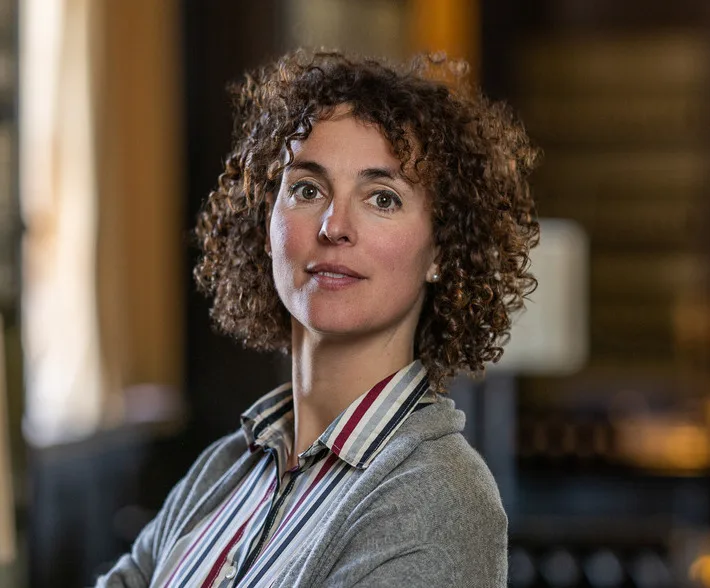

Ava-Santina Evans is one of the most high-profile figures at PoliticsJOE, a digital-first newsgroup aimed at captivating younger audiences. Starting journalistic life at LBC, she first produced James O’Brien’s popular lunchtime radio show throughout the Covid-19 pandemic and has now been a member of the parliamentary lobby for the past few years, covering national and London politics.