
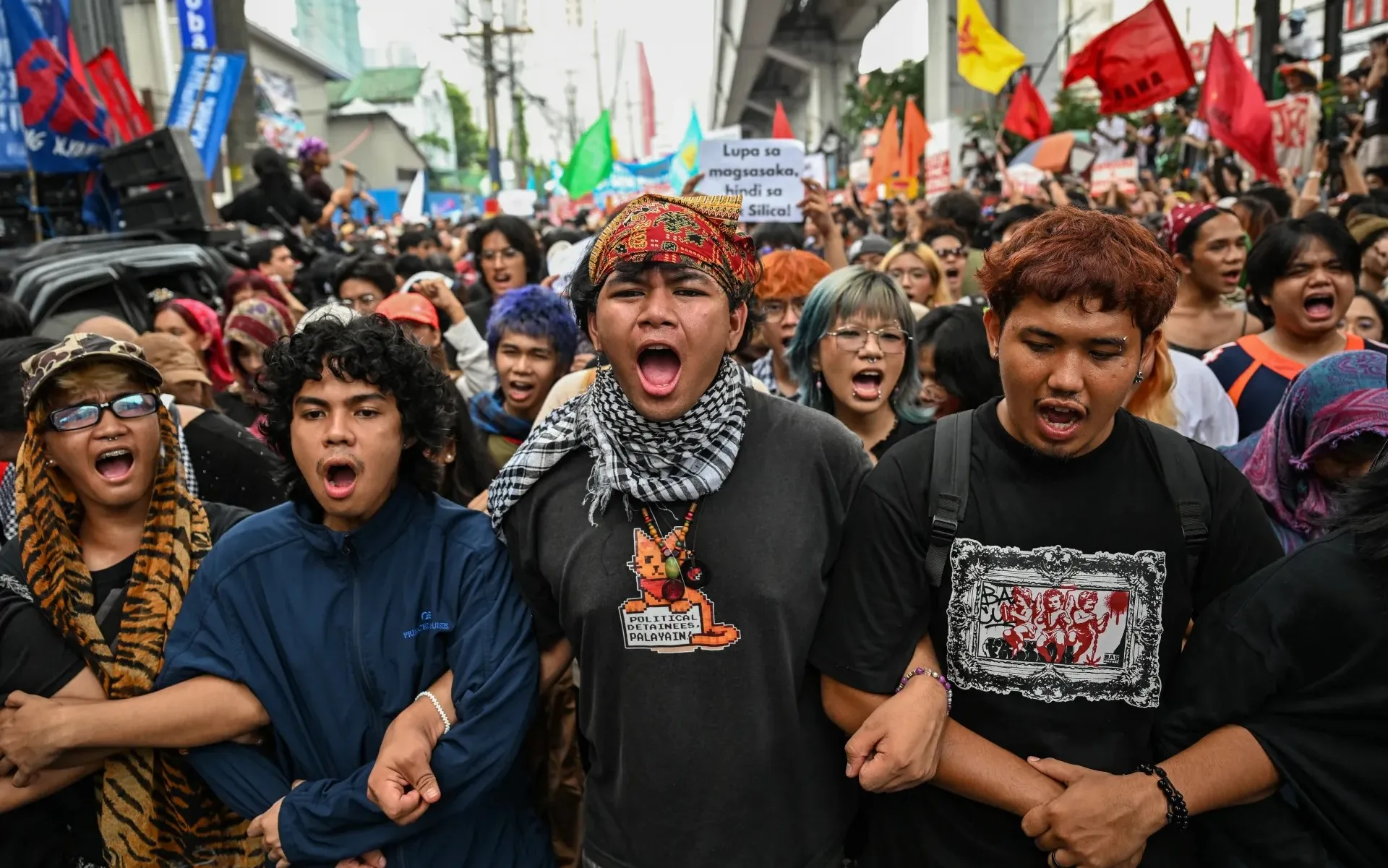
Ayta People Resist US-Backed Pax Silica Project as Trump Visits the Philippines
As US President Donald Trump visited the Philippines for the 49th ASEAN Summit, Indigenous Ayta communities joined a wider protest movement against the US-backed Pax Silica initiative. Their lakbayan brought attention to the threat of displacement, the struggle to protect ancestral lands, and the growing concerns over critical mineral extraction, industrial expansion and geopolitical interests shaping the future of the region. The controversy raises fundamental questions about Indigenous rights, environmental justice and who benefits from the global technology economy.
As US President Donald Trump arrived in Manila on November 17, 2026, for the 49th Association of Southeast Asian Nations (ASEAN) Summit, Indigenous Ayta communities joined a growing movement of farmers, workers, students and environmental activists to protest against the US-backed Pax Silica initiative. Their resistance brought an important but often overlooked question into the international spotlight: who pays the price for the expansion of the global technology industry, and whose interests does this model of development serve?
The Ayta people, whose ancestral territories lie in and around Capas in Tarlac province, north of Manila, fear that a proposed high-tech industrial hub under Pax Silica will dispossess communities of their land and undermine their livelihoods, cultural heritage and relationship with the natural environment.
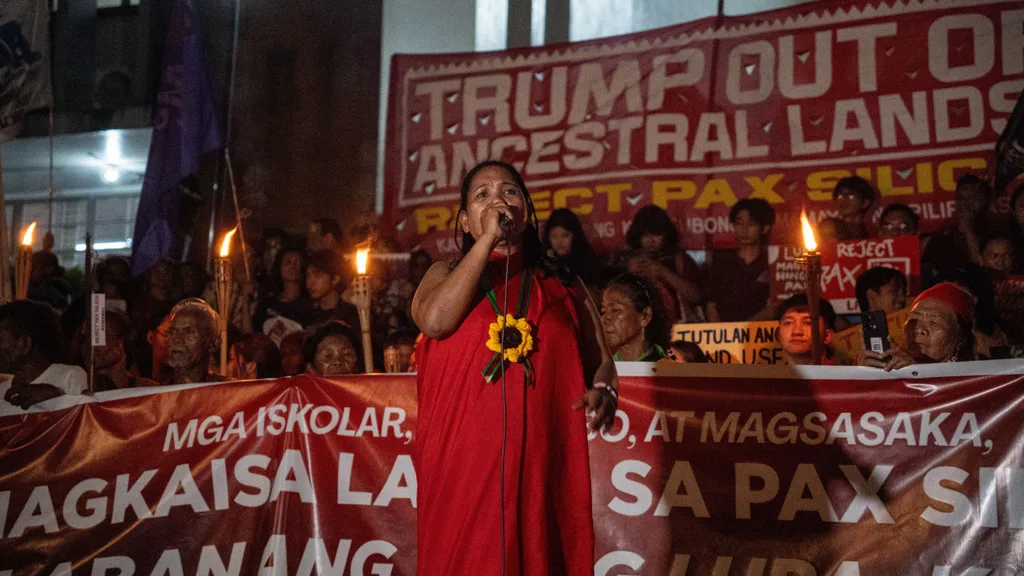
Their protest took the form of a lakbayan, a protest caravan and encampment through which Indigenous communities and other social movements mobilise collectively to bring their demands to the national capital. The mobilisation coincided with Trump’s visit and the ASEAN summit, linking the local struggle over ancestral land to wider questions about US economic and geopolitical influence in the Asia-Pacific region.
The controversy surrounding Pax Silica is not simply about the construction of a semiconductor manufacturing facility. It concerns an extensive industrial development programme involving artificial intelligence (AI), advanced manufacturing, critical minerals, energy infrastructure and transport and logistics networks. For the Ayta communities, the consequences could extend far beyond the proposed industrial site.
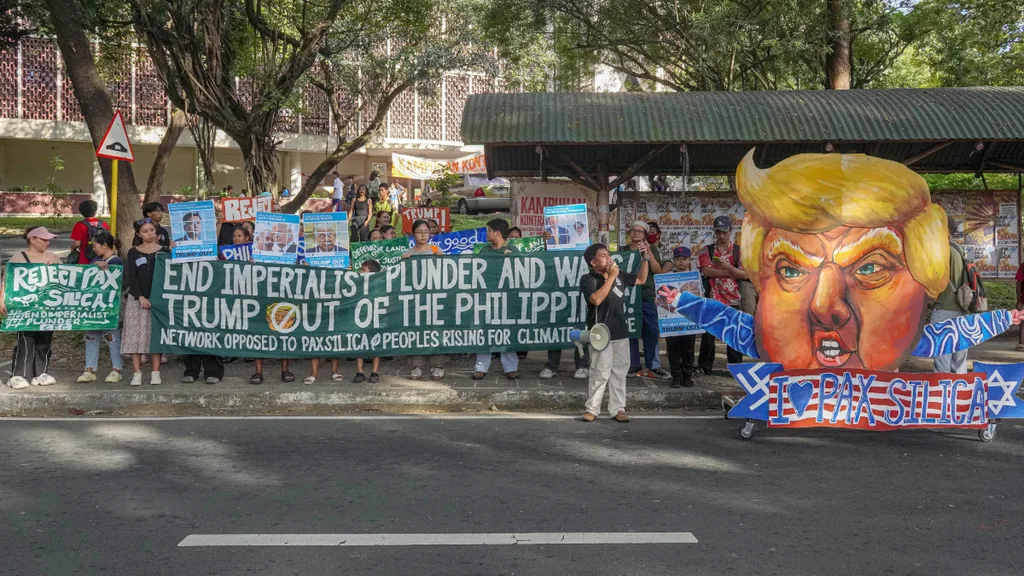
What is Pax Silica?
Pax Silica is a US-led strategic initiative launched in December 2025 to strengthen and secure international supply chains for critical technologies, particularly artificial intelligence, semiconductors and other advanced technological products.
The initiative reflects the growing strategic importance of critical minerals and technology manufacturing in international economic and geopolitical competition. Minerals such as nickel and other materials required for semiconductor production, batteries and advanced technologies have become increasingly important to governments seeking to secure their industrial and defence capabilities.
The United States has been building partnerships with countries that possess critical mineral resources, manufacturing capacity and technological infrastructure. The broader objective is to establish more secure and strategically aligned supply chains for the industries considered essential to future economic and military power.
The Philippines joined the initiative in April 2026. Under the proposed development, a high-tech industrial hub covering approximately 1,618 hectares (around 4,000 acres) is planned in New Clark City, in the municipality of Capas, Tarlac province. The project, known as the Clark Advanced Manufacturing Park, is expected to accommodate advanced manufacturing and semiconductor-related industries.
The Philippine government presents the project as an opportunity to move the country up the global industrial value chain. Rather than continuing to export raw materials or participate only in lower-value segments of electronics production, the government wants to attract investment in advanced manufacturing, semiconductor assembly, electronics and related industries.
The Department of Trade and Industry has described the proposed hub as a potential source of investment, industrial competitiveness and skilled employment. Government estimates cited by the department suggest that the wider development could generate around 200,000 jobs. However, the proposed industrial transformation has raised serious questions about the distribution of its economic and environmental costs, particularly for communities living in the project area.
An industrial hub on Indigenous territory
The proposed industrial hub is located in an area inhabited by Indigenous Ayta communities and farmers whose lives and livelihoods are closely connected to the land.
The Bases Conversion and Development Authority (BCDA), a Philippine government agency responsible for developing former military base areas, is leading the development of New Clark City. The proposed manufacturing hub forms part of the government’s wider industrial and infrastructure ambitions for the region.
For generations, Ayta families have cultivated land, grown food, maintained community institutions and preserved their cultural relationships with their ancestral territories. These lands are not merely economic assets. They are the foundation of their identity, history, livelihood and collective existence.
The concerns of the affected communities became more urgent in July 2026, when BCDA personnel reportedly approached residents in parts of the proposed development area and informed them that their lands would be affected by the project. Human Rights Watch, following visits to two affected locations in Capas in October, reported that Indigenous residents and farmers faced the prospect of losing land they and their families had occupied and cultivated for generations.
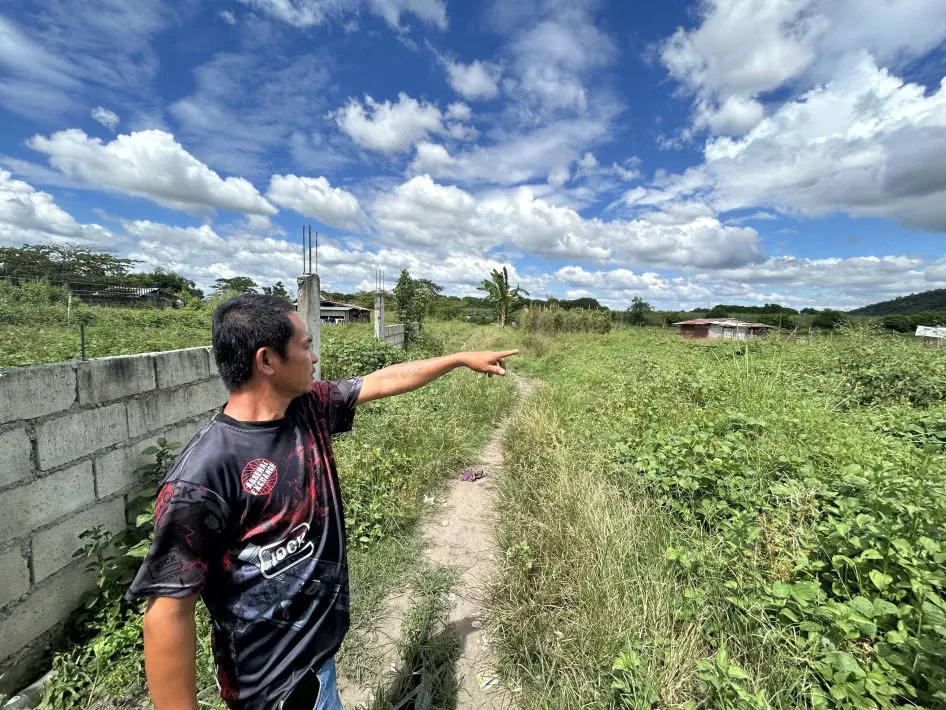
One of the residents interviewed by the organisation was Mander Matias, an Ayta farmer from Sitio Binyayan. According to Human Rights Watch and a separate investigation by Bulatlat, government representatives approached him about his agricultural land and offered compensation. Matias resisted the proposal, fearing that accepting payment would mean surrendering land on which his family’s livelihood depended.
Other residents have expressed similar concerns. Petronila Capiz-Muñoz, an Ayta community leader, has questioned how the community could be expected to leave land that contains its homes, places of worship, burial grounds and sources of livelihood. The question is particularly significant because the Ayta community’s ancestral land claims have not been fully resolved. The Ayta Hungey community reportedly filed an ancestral domain claim in 1999, but formal recognition remains pending.
Human Rights Watch has warned that the proposed project could displace hundreds of Indigenous people and farmers. It also reported that the government had not secured the free, prior and informed consent of affected Ayta residents, based on the information available to the organisation.
The issue is therefore not simply whether compensation or alternative housing will be provided. It concerns whether Indigenous communities have the right to decide what happens to their ancestral territories in the first place.
The question of Indigenous rights and consent
The dispute over Pax Silica raises fundamental questions about the rights of Indigenous peoples under Philippine law and international human rights standards.
The United Nations Declaration on the Rights of Indigenous Peoples (UNDRIP) recognises the right of Indigenous communities to participate in decisions affecting their rights and territories. It also establishes the principle of free, prior and informed consent (FPIC) before governments approve projects or measures that may affect Indigenous lands and resources.
Free, prior and informed consent means that communities must receive relevant information, have sufficient time to consider proposals and be able to participate in decision-making without coercion or manipulation. Consultation cannot simply be reduced to informing people that a development project has already been decided upon.
The Philippines also has the Indigenous Peoples’ Rights Act of 1997, which recognises Indigenous rights over ancestral domains and provides mechanisms for protecting these rights. However, the implementation of these protections has become another source of controversy.
A report published by the Philippine investigative publication Bulatlat on November 14 examined amendments to the National Commission on Indigenous Peoples’ (NCIP) FPIC guidelines approved in May 2026 and released publicly in September.
According to the report, the revised procedures introduce shorter timelines for community consultations and decision-making. They also provide for automatic issuance of certificates in certain circumstances when officials fail to act within prescribed deadlines. Some government-funded projects may undergo documentary review rather than a full community consent process.
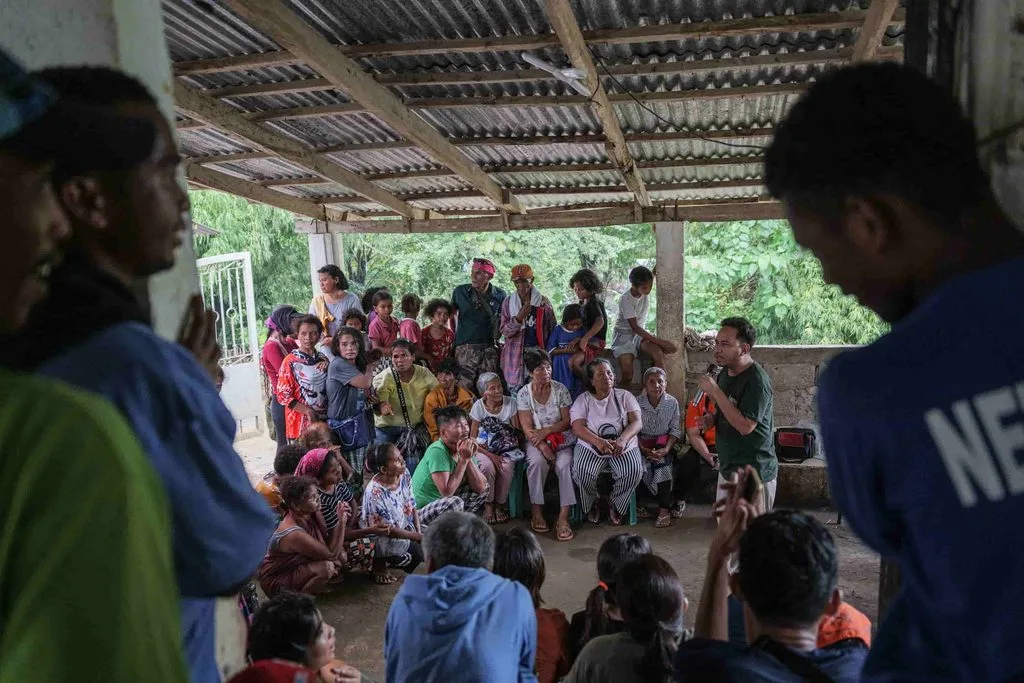
Indigenous rights advocates fear that these changes could weaken the ability of communities to reject projects affecting their ancestral territories and make it easier for large infrastructure and industrial developments to proceed. The controversy is particularly relevant to Pax Silica because the question of ancestral land claims, community consent and the precise boundaries of the proposed industrial hub remains contested.
For the Ayta people, the central demand is that their rights should not be subordinated to the priorities of investors, industrial development or international strategic partnerships.
Critical minerals, artificial intelligence and the geopolitics of technology
The significance of Pax Silica extends beyond the Philippines. The global expansion of artificial intelligence and semiconductor manufacturing has intensified competition for the minerals, energy and infrastructure required to sustain these industries. Governments increasingly regard access to critical minerals and advanced technology supply chains as matters of national security.
Semiconductors are essential to computers, communication systems, data centres, automobiles and numerous other civilian technologies. They are also integral to modern military systems, surveillance technologies, weapons and defence infrastructure. Artificial intelligence has similarly become a major component of military planning, intelligence gathering and warfare.
Consequently, the expansion of semiconductor and AI manufacturing cannot be understood exclusively as an economic or technological development. It is also connected to the strategic interests of states seeking technological superiority and greater control over critical resources.
The US-led Pax Silica initiative must be understood within this wider geopolitical context. Its emphasis on securing critical mineral supply chains and advanced manufacturing reflects Washington’s efforts to strengthen its position in the global technology economy.
The Philippines occupies a strategically important position in this emerging industrial landscape. It has significant mineral resources, particularly nickel, and is geographically important to US interests in the Asia-Pacific region.
Friends of the Earth Asia Pacific has raised concerns that the proposed industrial hub could become the centre of a much wider network of mining, mineral processing, energy production and transportation infrastructure extending across Indigenous territories. The organisation argues that the consequences of Pax Silica could therefore reach far beyond the 1,618-hectare manufacturing site.
This concern is important because industrial supply chains do not end at the factory gate. Semiconductor manufacturing and advanced technology production require minerals, electricity, water, transport networks and other infrastructure. The environmental and social costs of these requirements are often borne by communities located far from the final manufacturing facilities and the markets that consume the products.
For Indigenous communities, the question is whether their territories will become resource frontiers for an industrial system whose principal benefits may accrue to governments, corporations and international investors.
The nuclear energy question
One of the most significant developments surrounding Pax Silica is the discussion about using nuclear energy to supply electricity to the proposed industrial hub. The scale of the project’s anticipated electricity requirements is substantial. According to a report published by Rappler on November 13, the proposed hub could require approximately 3,000 megawatts of electricity when fully developed.
The Department of Energy has been exploring different options to meet this demand. These include renewable energy, natural gas and potentially nuclear power. Patrick Aquino, Director IV at the Department of Energy, confirmed in November that the possibility of locating a nuclear reactor within the proposed development was part of the discussions. The United States had reportedly initiated studies on possible energy arrangements for the hub.
The government is concerned that drawing such a large amount of electricity from the existing power grid could place additional pressure on the electricity supply available to ordinary consumers and surrounding communities. However, nuclear power introduces a separate set of challenges.
According to Rappler, the regulatory requirements for small modular reactors and micro-modular reactors in the Philippines have not yet been finalised. The Philippine Atomic Energy Regulatory Authority (PhilATOM) is also yet to become fully operational, with important regulatory arrangements and implementing rules still pending.
Experts have questioned whether the country currently has the institutional and regulatory capacity to safely approve and operate such facilities. Giovanni Tapang, former dean of the College of Science at the University of the Philippines Diliman, has warned that a nuclear facility developed specifically for Pax Silica could become an expensive and underutilised investment if the industrial hub fails to attract sufficient investors or generate the expected electricity demand.
Environmental lawyer Tony La Viña has also questioned the feasibility of the proposal, pointing to the country’s lack of regulatory capacity and unresolved issues relating to nuclear safety and radioactive waste management.
The nuclear energy discussion illustrates the scale of the infrastructure that may be required to sustain the industrial hub. It also raises questions about who will bear the risks associated with meeting the energy requirements of a development programme designed primarily to serve global technology supply chains.
For communities already concerned about the impact of industrial development on their land, water and environment, the prospect of additional large-scale energy infrastructure adds another dimension to the controversy.
Development, land and environmental consequences
The concerns surrounding Pax Silica are part of a larger debate about the environmental and social costs of industrial development. The proposed manufacturing hub is expected to be connected to critical mineral resources, energy systems, roads, transport facilities and logistics infrastructure. Such developments can place considerable pressure on forests, watersheds, agricultural land and biodiversity.
Friends of the Earth Asia Pacific has warned that the interconnected infrastructure associated with Pax Silica could affect extensive areas of Indigenous ancestral territories. The organisation has also pointed to the relationship between mining concessions and ancestral domains in the Philippines. According to its November 18 statement, 54 per cent of approved mining tenements in the country overlap with ancestral domains.
This overlap highlights a persistent structural problem: Indigenous territories are often treated as areas available for mineral extraction and infrastructure development, even when they are central to the cultural survival and livelihoods of communities. There are also unresolved questions about environmental assessment.
In August 2026, the Philippine Department of Environment and Natural Resources reportedly told the Inquirer that it had not received a project-specific environmental impact assessment application for Pax Silica because the project description and other necessary details had not yet been submitted. This is significant because the environmental consequences of a project of this scale cannot be adequately assessed without a clear understanding of its proposed facilities, resource requirements, locations and associated infrastructure.
The government, meanwhile, has argued that the project will bring high-value employment, investment and technological advancement. It has stated that developers will be expected to provide their own roads and power and secure and reuse their own water, rather than placing additional pressure on existing community resources.
The competing positions point to a fundamental question: can an industrial development of this scale be considered sustainable if the rights, livelihoods and environmental security of the communities living in its proposed location remain unresolved?
From a local land struggle to a national protest movement
Opposition to Pax Silica has increasingly brought together Indigenous communities and a broader range of Philippine social movements. The Ayta people’s lakbayan became part of a wider mobilisation against Trump’s visit and the proposed industrial initiative. Farmers, workers, students, environmental activists and other groups joined protests in Manila and other parts of the country.
The demonstrations were not limited to opposition to one industrial project. They also expressed wider concerns about US influence in the Philippines, the country’s relationship with Washington, the expansion of extractive industries and the implications of strategic economic agreements.
Trump’s participation in the 49th ASEAN Summit on November 17 gave the protests an international dimension. The summit brought together Southeast Asian leaders and international partners to discuss regional cooperation, economic relations and security. For the protesters, however, the occasion also provided an opportunity to challenge the direction of economic and strategic cooperation between the Philippines and the United States.
Demonstrators gathered at Liwasang Bonifacio in Manila and attempted to march towards the Philippine International Convention Center, where the summit-related meetings were being held. Ayta representatives participated in the demonstrations, making the defence of ancestral land a visible part of the protests against Trump’s visit.
The mobilisation reflected the growing recognition among different social movements that struggles over land, labour, environmental protection and national sovereignty are interconnected.
Police crackdown and allegations of human rights violations
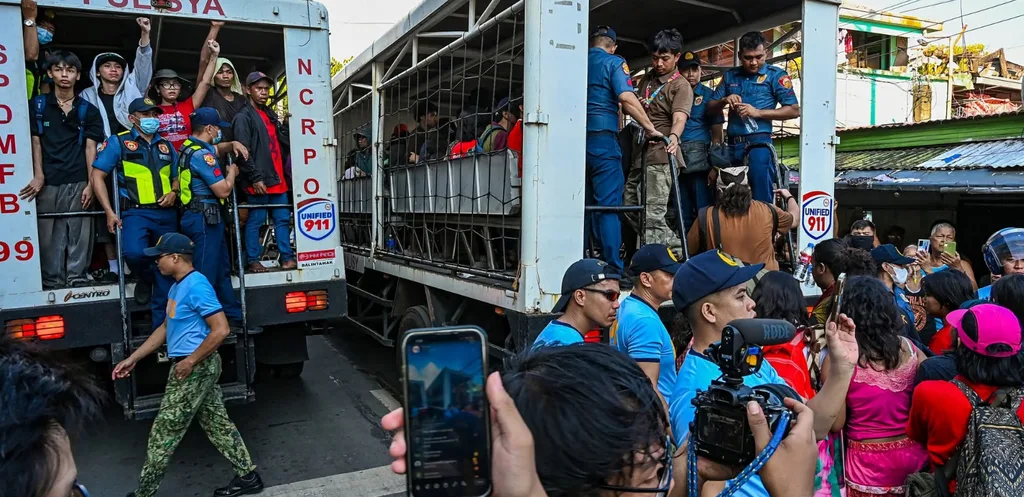
The protests also became the subject of serious allegations of police violence, restrictions on civil liberties and arbitrary arrests. In a statement published on November 18, Friends of the Earth Asia Pacific called for an international investigation into what it described as a crackdown on protest movements opposing Pax Silica and Trump’s visit.
According to the organisation, its member groups from 11 countries and territories across the Asia-Pacific region initiated an international solidarity and monitoring effort in anticipation of the demonstrations.
The monitoring was coordinated in the Philippines by the Legal Rights and Natural Resources Center (LRC), which is affiliated with Friends of the Earth Philippines. Between November 13 and 16, the organisation documented at least 19 incidents involving alleged violations of the rights to peaceful assembly, free speech, expression, movement and other civil liberties.
The reported incidents included:
- At least four instances of violent dispersal or harassment of protest gatherings in Manila, Muntinlupa, Quezon City and Cebu City.
- At least four incidents of arrests involving 297 people, including Indigenous Iraya-Mangyan and Hanunuo-Mangyan people, workers, students, climate justice activists, minors and media practitioners.
- Allegations that those arrested faced prolonged restrictions on access to legal counsel, medical assistance and visits from the Commission on Human Rights.
- An alleged incident of torture in which police officers were reportedly filmed kicking an apprehended protester in the head while the person was lying on the ground.
- Restrictions on the movement of protest contingents, including reported vehicle damage, vehicle impoundment and threats of arrest against drivers.
- The cordoning of protest camps at the University of the Philippines Diliman and Liwasang Bonifacio by large numbers of police personnel.
- Reports of food blockades affecting detained protesters and people staying at protest camps.
These are allegations and monitoring findings reported by the organisations involved in the protests. They require independent investigation and appropriate responses from the Philippine authorities.
The reported arrests of Indigenous Mangyan people are particularly significant. They demonstrate that the protests have brought together Indigenous communities from different regions of the country, not only those directly affected by the proposed industrial hub in Capas.
The November 18 statement called on international human rights institutions, including the United Nations Human Rights Council and its Special Procedures on Indigenous Peoples, the environment and climate, to investigate the reported abuses. It also urged diplomatic missions of Asia-Pacific countries in the Philippines to raise concerns with the Philippine government.
The controversy has once again drawn attention to the dangers faced by environmental and land rights defenders in the country. Friends of the Earth Asia Pacific has described the Philippines as the deadliest country in Asia for environmental human rights defenders over the past 13 years.
A question of whose development?
The Pax Silica controversy exposes a contradiction at the heart of contemporary development policies.
Governments increasingly present advanced technology, artificial intelligence and semiconductor manufacturing as essential to economic progress. These industries are promoted as sources of investment, employment, technological advancement and national competitiveness.
But the production systems supporting them depend on extensive networks of mineral extraction, energy generation, water consumption, industrial infrastructure and transportation. The social and environmental consequences of these networks are frequently concentrated in communities with the least influence over the decisions being made.
The Ayta struggle raises a fundamental question about this model of development: can technological advancement be considered progress when it threatens to dispossess communities of their ancestral lands and undermine the ecological foundations of their existence?
The Philippine government argues that Pax Silica will create employment and help transform the country’s industrial economy. Those objectives deserve examination alongside questions about who will own and control the facilities, where the profits will flow, how much technology and expertise will be transferred to local industries, and what protections will be available to affected communities.
There is also a wider geopolitical question. As the United States and other powerful economies compete for control over critical minerals and advanced technology supply chains, countries possessing natural resources may increasingly be drawn into strategic industrial arrangements. The benefits and costs of such arrangements are unlikely to be distributed equally.
For the Ayta people, the immediate concern is more fundamental. Their ancestral territories are not simply land parcels waiting to be converted into industrial assets. They are the basis of their identity, culture, livelihood and future generations.
The lakbayan therefore represents more than a protest against a visiting US president or a proposed manufacturing hub. It is an assertion of the right of Indigenous communities to determine their own future and to participate meaningfully in decisions affecting their land and lives.
As the Philippines pursues its ambitions in the global technology economy, the struggle of the Ayta people raises a question that extends far beyond its borders: should the future of technological development be built on the dispossession of those whose lands and resources make it possible?
Featured Image: Protesters take part in a demonstration as US President Donald Trump visits in Manila on November 18, 2026, following the 49th Association of Southeast Asian Nations (ASEAN) Summit. (Photo by Jam STA ROSA / AFP) (AFP)

Panthi Desk is the editorial team of Panthi.in, producing and editing articles, explainers and summaries on issues of social justice, democracy, ecology and economic systems.