
US-Israel Strikes on Iran: A Complex Web of Geopolitics
In this interview, Dr. Umesh Kumar speaks with Abhish K. Bose on the geopolitical implications of the US–Israel strikes on Iran, examining the limits of international law and the shifting balance of global power. The conversation explores how great-power rivalries, energy politics, and strategic calculations are reshaping West Asia, raising critical questions about global governance, regional stability, and the future of the liberal international order.
In light of the ongoing US-Israel military actions against Iran, despite UN Secretary-General calls for ceasefire, do international treaties and agreements still hold relevance, or do powerful nations like the US assert dominance, undermining global governance? Is the international community witnessing a continuous reality where might supersedes international laws?
The nature of international law and the order established by it has always existed with inherent limitations. In fact, the institutional structure of the United Nations itself is not entirely democratic. The veto system in the United Nations Security Council remains subject to the dominance of major powers, and attempts at institutional reform have repeatedly failed.
Nevertheless, the importance of the UN and global governance remains significant as long as there is no viable alternative. This is precisely why even powerful states that frequently violate international norms still attempt to justify their actions within the language of international law. For instance, the attack on Iran itself has been justified by the United States and Israel as a necessary measure for maintaining regional stability and security.
At the same time, the implementation of international law often depends on the leadership choices and political calculations of individual leaders. The US-Israel attack on Iran can also be interpreted as part of the political management strategies of Donald Trump and Benjamin Netanyahu, both have faced declining political support in their respective countries. In this sense, their actions may not necessarily reflect the broader will of American and Israeli citizens. The decision to attack Iran at this point of time is also a miscalculation of Trump, expecting that it may result in a regime change in Iran.
Finally, the US-led liberal international order has been facing a deep structural crisis in recent years. Such moments of crisis in the US led liberal international system have often been managed through strategic use of force or wars by United States. However, the policies of successive US administrations (especially Trump Administration) have themselves contributed to the deepening of crisis of liberal order. For instance, Trump’s traffic plans are challenge to global governance model.
Does the international community’s muted response to the US-Israel attack on Iran imply tacit approval, or does it reflect a deeper unease and fear of escalating tensions, as US Ambassador Mike Waltz justifies the strikes as targeting Iran’s missile capabilities and nuclear ambitions? Is the silence a sign of fear among nations or a nod to US power?
It can reflect both tacit consent and underlying fear. The international community itself is deeply divided. One side many US allies remain embedded within Washington’s broader strategy of maintaining military based security partnerships that create dependence on US. US allies, France and Germany, have openly framed the strikes as acts of self-defence against Iran’s nuclear programmes and disproportionate missile use, echoing Waltz’s justification.
China and Russia, on other side, have criticised the US-Israel action but have largely avoided direct countermeasures. This restraint may stem either from concerns about further escalation or from the risk of further US sanctions that could produce significant economic costs to them. Other factors also matter that Russia remains engaged in the war with Ukraine, while China traditionally follows a cautious foreign policy that avoids direct military involvement in conflicts.
India, too, has refrained from taking a strong position, partly due to concerns over economic repercussions such as tariffs and partly because the Narendra Modi government is cautious about damaging relations with both United States and Israel which are projected as unprecedented achievements by the political party in power.
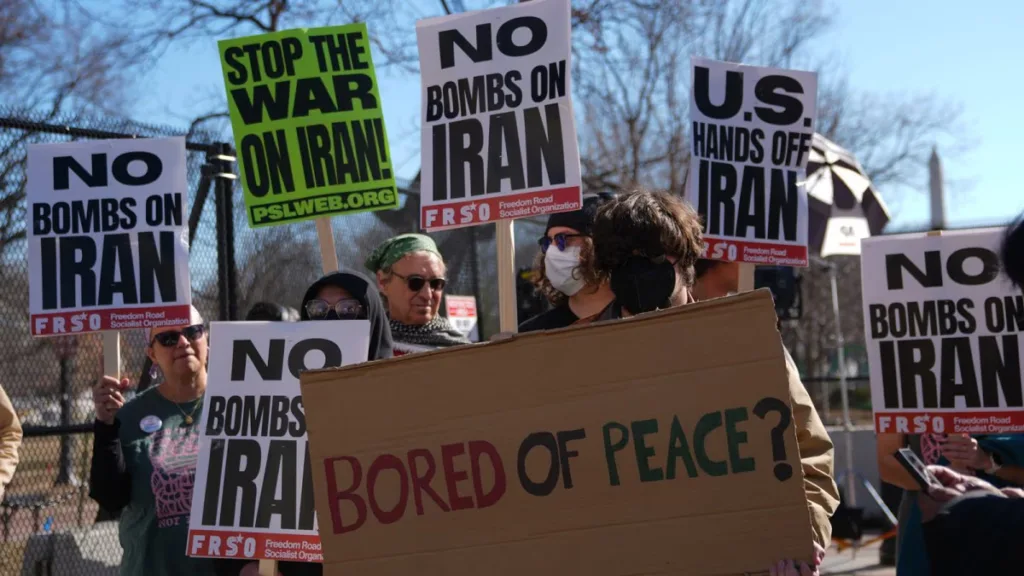
However, the positions of governments around the world may not always reflect the true will of the people. For instance, a large section of the opposition in India has taken a firm position in support of Iran and has criticised the current government’s policy towards the United States. Protest rallies have also been organised by Muslim communities, especially Shi’a Muslims in Lucknow and Kashmir, in support of Iran, particularly after the assassination of Ali Khamenei.
As escalating West Asia tensions boost oil prices and redirect global energy flows, will Russia’s gains from soaring crude revenues and strengthened ties with China and India outweigh the loss of Iran as a regional ally, ultimately blunting Western sanctions and cementing Moscow’s energy dominance?
The redirection of global supply chains will definitely help Russia and open new avenues for strengthening its ties with China and India, particularly under the 30-day exemption provided by the Donald Trump administration. This can partially explain Moscow’s cautious response in the current conflict, despite the fact that Russia and Iran signed a 20-year Treaty on Comprehensive Strategic Partnership, which officially came into effect in October 2025.
However, it is difficult to say that Russia is losing Iran as a regional ally. Russia has not yet officially refused military support to Iran; rather, it has reportedly provided assistance in specialised intelligence. According to some reports, Moscow has helped Iran with drone-targeting strategies against U.S. and Israeli forces. At the same time, it has avoided supplying certain advanced defensive weapons (Sukhoi Su-35 aircraft), largely due to its own preoccupation with the war in Ukraine. Whether it leads to blunting Western sanctions and cementing Moscow’s energy domination, I would say it depends on the future course of the conflict. If it becomes a prolonged or low-intensity conflict, then such structural shifts can definitely be expected.
As the Russia-Ukraine war and Iran-Israel conflict escalate, will China’s strategic positioning and the US’s distracted focus create a power vacuum in the Middle East, allowing Beijing to emerge as a dominant force and reshape regional geopolitics?
China has already emerged as a significant player in the region through its Belt and Road Initiative. The BRI has deepened China’s economic footprint in the region. Beijing has emerged as a top trade partner with many states, including Saudi Arabia, United Arab Emirates, Oman, and Qatar. China also attempted to provide stability by mediating an agreement between Saudi Arabia and Iran in 2023, before the Israel-Hamas War took place. This was unprecedented and created some hope for peace in region.
The Trump Administration, in its first term, decided to curtail its military presence in the region, especially in Iraq and Afghanistan. This hinted at a decreasing US interest in the region. However, the current Trump administration has been somewhat unpredictable, which has reflected in decision of attacking Iran. Nevertheless, the United States military presence in the region remains incomparable and largely uncontested.
However, China’s engagement with the region has largely been limited to trade, investment, and infrastructure development. It has not developed military bases across the region in the same way as the United States. Therefore, it is less likely to replace the US geopolitically. As mentioned above, China traditionally follows a cautious foreign policy that avoids direct military involvement in conflicts that do not directly threaten its sovereignty.
What are the implications of the US’s simultaneous pursuit of a two-state solution and military escalation in West Asia, and can this contradictory approach stabilize the region?
The United States’ support for a two-state solution has historically been more rhetorical than operational. However, Donald Trump’s 2025 Gaza plan, in which Hamas agreed to key parts of the first phase of the U.S.-led 20-point peace framework, initially created some hope. Both Hamas and Israel agreed to a ceasefire and to the release of hostages and prisoners. Nevertheless, deep differences remain regarding disarmament, political authority, and the long-term governance of Gaza.
At the same time, strikes on Iran, the killing of its Supreme Leader, and the expanding confrontation, including Israel’s attacks on Lebanon, have significantly weakened the prospects of the Gaza plan, as these developments once again destabilize the region. Also, in official statements, the United States has framed the joint strikes on Iran primarily in terms of degrading Iran’s nuclear and missile capabilities, weakening its regional proxies, and aiming at regime change in Iran, while not mentioning about Palestine or to advancing the two-state solution. This contradiction highlights a broader strategic dilemma. While diplomatic rhetoric continues to emphasize a political settlement to the Israeli-Palestinian conflict, simultaneous military escalation risks reinforcing cycles of retaliation and deepening regional insecurity.
How would a potential blockade of the Strait of Hormuz, a critical chokepoint for global oil trade, impact India’s economy and global economy considering the international community’s heavy reliance on Gulf crude shipments and the already fragile global energy market?
In case the United States rejects the three demands put forwarded by Iran, which appears likely, the situation may move toward a prolonged phase of low-intensity conflict.
At the same time, it is also possible that the US could intensify strikes and military attacks in an attempt to force Iran into surrender. However, Iran is less likely to surrender, especially after the election of Mojtaba Khamenei as Supreme Leader. He is regarded as a hardliner and is believed to share close ties with the IRGC. Any surrender or major compromise could undermine the legitimacy of the regime. On the contrary, resistance and counteraction are more in line with the Islamic Republic’s political narrative and ideological self-image.
If a low-intensity conflict does take shape, it may reduce the immediate panic associated with open war, but it would still have the potential to significantly disrupt the global oil supply chain, particularly through its impact on the Strait of Hormuz. Which controls around 20 percent of oil trade. Such a situation could lead to further price hikes and supply shortages in many countries, including India, and would likely disturb markets across sectors. Even Russian supply would not fill the gap.
However, this crisis may also push some positive changes in the longer term. It could encourage countries to diversify their energy sources, reduce dependence on vulnerable routes and suppliers, and prepare more seriously for future geopolitical shocks. In that sense, while the conflict would be deeply destabilizing in the short run, it may also accelerate energy transition debates and contribute in the long term, to more sustainable development.
Is the US-Israel onslaught on Iran a veiled attempt to scorch the $400 billion Iran-China strategic pact, thereby thwarting China’s rising influence in West Asia and preserving US dominance in the region?
Iran and China signed a long-term strategic partnership agreement in 2021 reportedly worth about $400 billion. Under this arrangement, China invests in Iran’s oil, infrastructure, and technology sectors, while Iran provides China with relatively cheap and reliable oil supplies. The agreement also includes provisions for expanded military and security cooperation between the two countries. For Iran, this partnership helps mitigate the impact of Western sanctions, while for China it strengthens its economic and strategic footprint in West Asia.
China’s growing engagement in the region is also reflected in its diplomatic initiatives. As I have mentioned earlier, in 2023, Beijing mediated an agreement between Saudi Arabia and Iran to restore diplomatic relations between two countries who are known as arch rivals. This development was widely viewed as a significant diplomatic breakthrough and signalled China’s increasing role as a political actor in regional affairs, not merely an economic partner.
From this perspective, China’s expanding presence in the region could be perceived as challenging the long-standing strategic dominance of the United States. Therefore, this could be said that the current US-Israel attack on Iran partly caused within the broader geopolitical context of great-power competition. However, it would still be difficult to argue that the military actions are solely aimed at undermining the Iran-China partnership. Rather, the conflict reflects a combination of security concerns, regional rivalries, and the wider strategic competition between major powers.
Ends
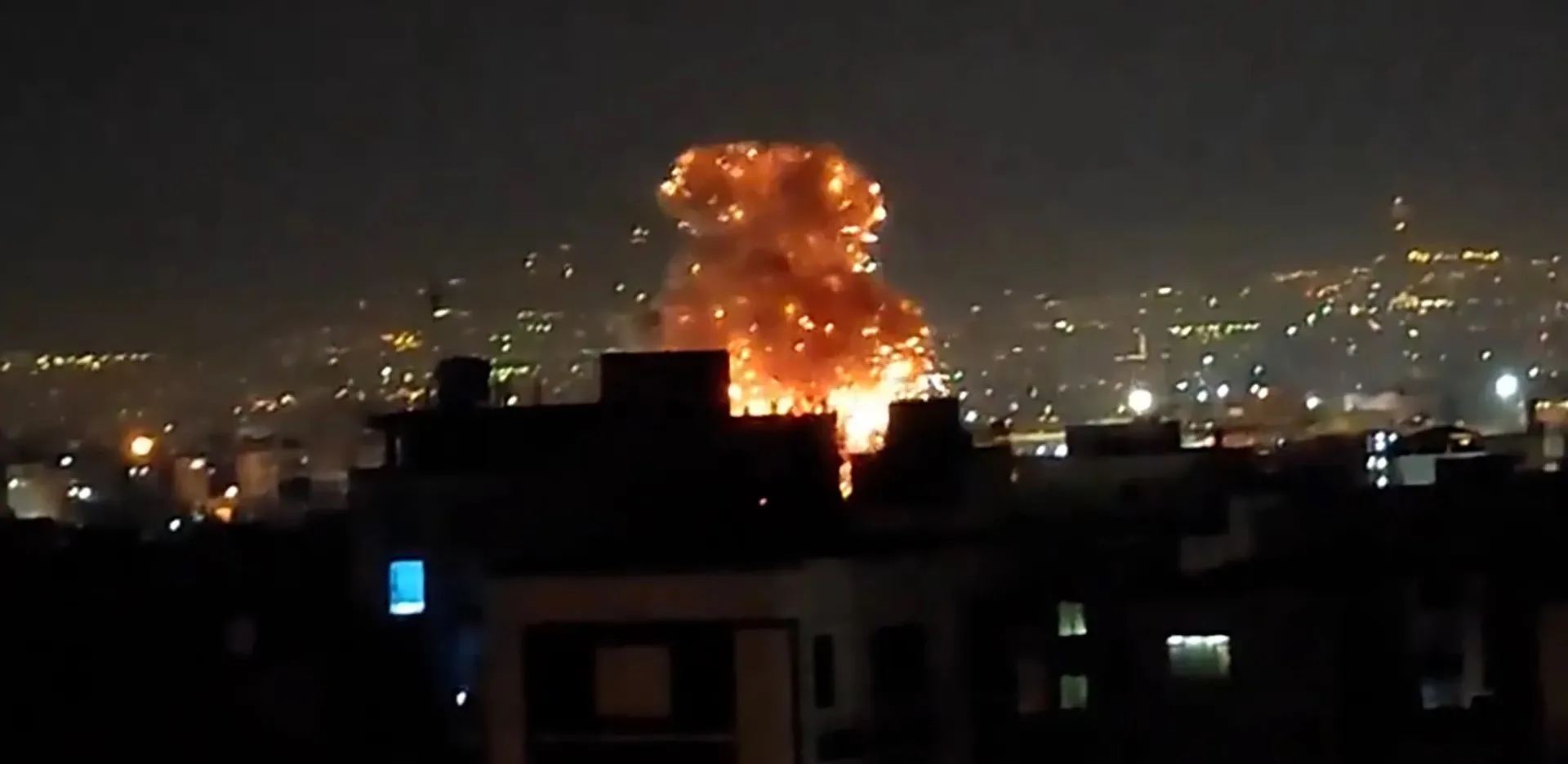
Featured Image: Massive explosions and fires across Tehran as US-Israeli strikes pummelled targets in the Iranian capital. Courtesy: Aljazeera
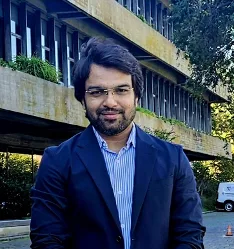
Dr. Umesh Kumar is an Assistant Professor at the Jindal School of International Affairs, O. P. Jindal Global University, Sonipat, Haryana. He completed his PhD at the Centre for West Asian Studies, Jawaharlal Nehru University. His doctoral research focused on the reformist movement in Iranian politics.

A journalist with 18 years of experience Abhish K Bose was a staffer at The Times of India and The Deccan Chronicle - Asian Age. As a contributor, his interviews and articles have been published in Frontline magazine, The Wire, The Print, The Telegraph, The Federal, The News Minute, Scroll, The Kochi Post, The Leaflet, The Hindu.com, Outlook.com Countercurrents.org and the Asian Lite international published out of London