
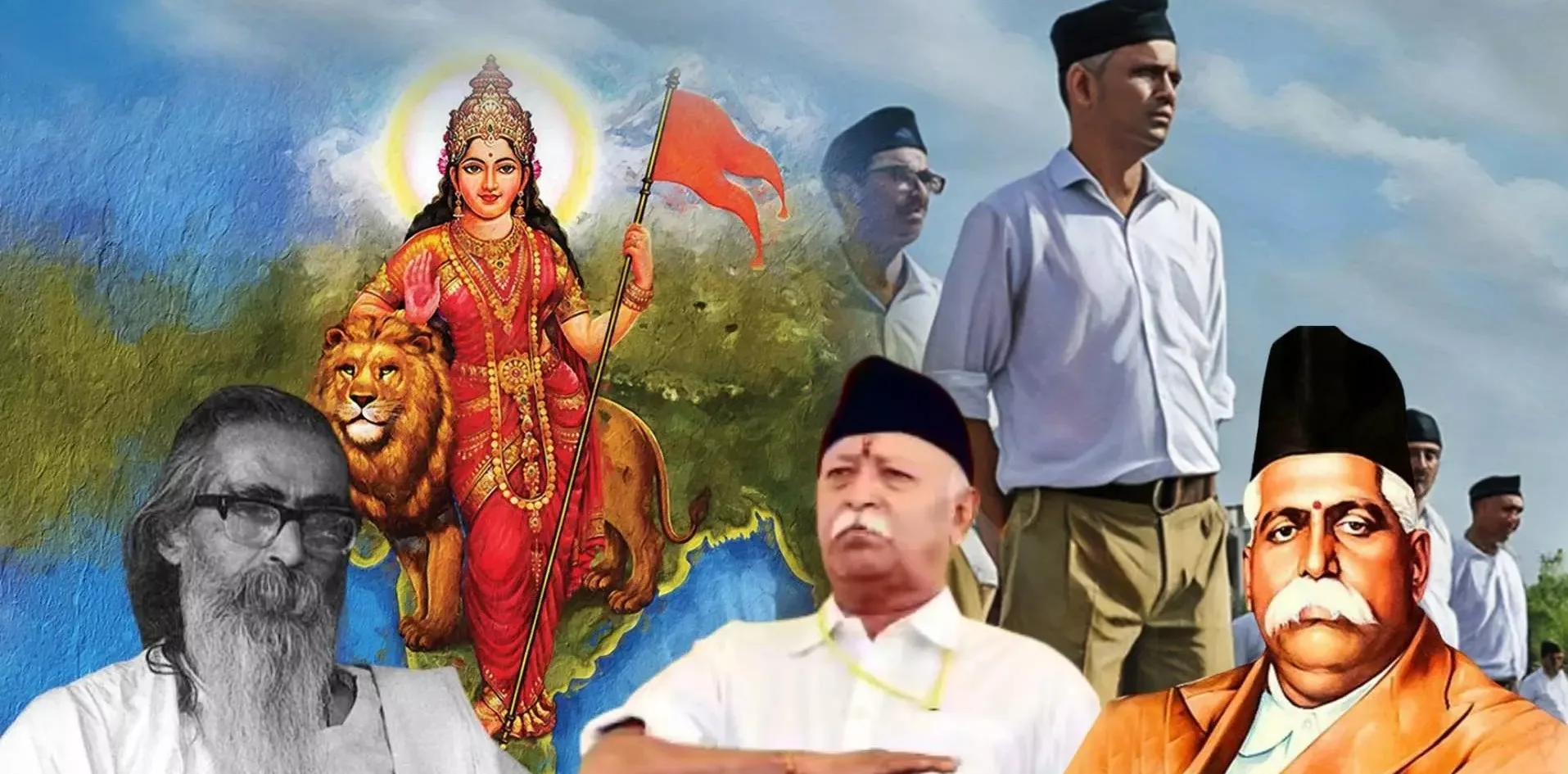
RSS at 100: Power, Hindutva, and the Remaking of Indian Politics
As the Rashtriya Swayamsevak Sangh (RSS) approaches its hundredth year, debates around its ideological project, political influence, and organisational transformation have become increasingly urgent. From a tightly knit cadre organisation committed to ideological discipline, the RSS today stands at the centre of India’s political power through its complex relationship with the BJP and the wider Sangh Parivar.
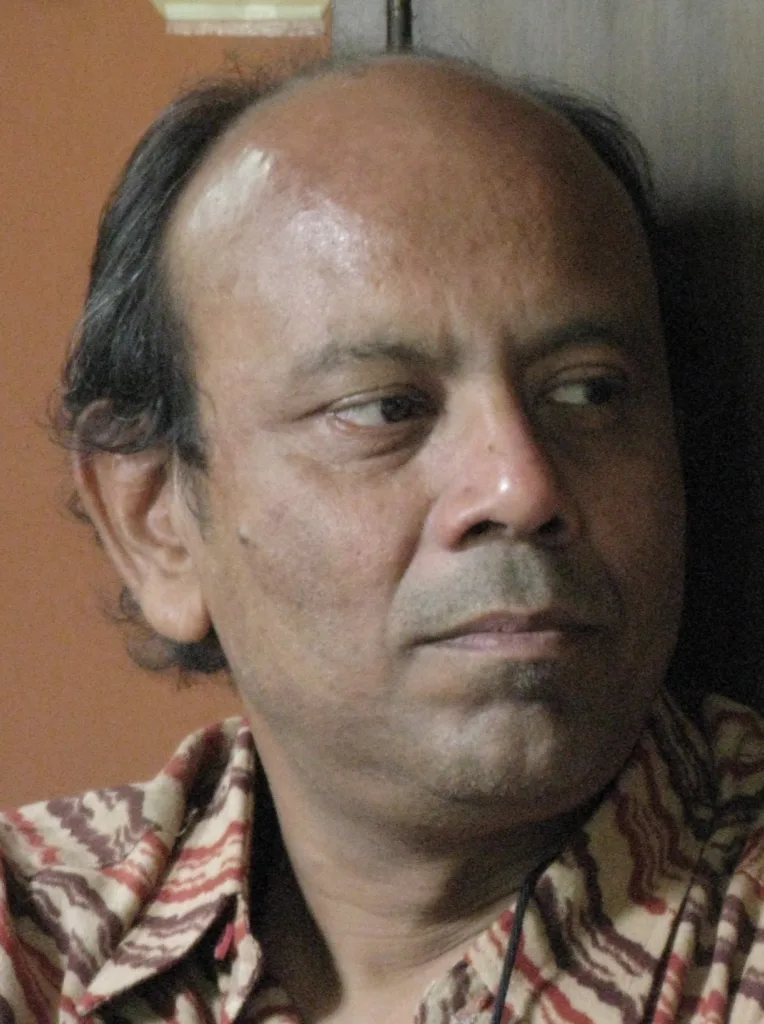
This is the first part of a two-part of the exclusive interview with ABHISH K. BOSE in which political theorist Pradip Kumar Datta examines key questions surrounding the RSS today: the rise of personality-driven leadership under Narendra Modi, the Sangh’s shift toward mass mobilisation and propaganda, the social conditions enabling the spread of Hindutva, and the changing dynamics between the RSS and the BJP.
Pradip Kumar Datta, is former Professor, Jawaharlal Nehru University, India. He had earlier taught as Professor, University of Delhi. He has written, co-authored, and edited several books including Khaki Short Saffron Flags: A Study of the Hindu Right, (Orient Longmans, 1993), Carving Blocs: Communal Ideology in Twentieth Century Bengal (OUP, 1999), Heterogeneities: Identity Formations in Modern India (Tulika, 2010), Indian Political Thought (OUP, 2013), and Rabindranath Tagore’s The Home and the World: A Critical Companion (Anthem Press, 2005).
Part One
Has the RSS’s traditional emphasis on collective leadership and organizational supremacy given way to a personality-driven approach, with Modi redefining the dynamics between the individual and the institution?
There is undoubtedly a change from 2014 when Narendera Modi took over as PM and emerged as the undisputed leader of the BJP and as the most charismatic politician of India today. The parent organization, the RSS (which supplies its recruits to staff all the important positions in their “front” organisations such as the BJP, VHP and so on), had held the bhagwa dhwaj, their flag, as the real “Guru” to whom obeisance had to paid in all their rituals. This understanding shaped the projection of a triumvirate of leaders (Vajpayee, Advani, Joshi) in the 90’s instead of a single personality. The avoidance of a personality cult appears to have been suspended with the coming of Modi. Two points need to be made here.
The first is that Modi was chosen to be a prime ministerial candidate at a time when the BJP found itself to be riven with factions. The loss of the NDA and of its Prime Ministerial candidate Vajpayee, produced a situation in which there appeared many leaders with their own factional followers. This was a result of the transition of the BJP from a RSS dominated party to a mass party that was becoming like the Congress. The crisis of leadership made it necessary to have a commanding centre of authority which in turn, required a charismatic leader who would concentrate power in himself.
But this does not represent a reversal of the basic commitments of Hindutva ideology. The BJP –RSS network has evidently come to the conclusion that its basic drives – that is, of saffronising education, controlling cultural life together with an anti-minorities agenda – can be served by personality based, charismatic leadership. On the other hand, the problem that this may raise for the Hindutva parivar is a potential tussle between the BJP and the RSS leadership. The BJP has shifted from being a derivative, “front” organization of the RSS into an autonomous authority because of its direct link with State power. This may lead to a situation in which its leaders may also increasingly regard the RSS as its auxiliary force to keep them winning elections. That is, as a resource for providing cadres whenever political mobilisation requires it. A more extreme possibility is that the internal power dynamics of the BJP may spill over to the RSS itself, making the latter produce factions allied to the groupings in the BJP.
How has the RSS adapted its strategy to leverage technology and media, abandoning its earlier aversion to publicity and instead harnessing the power of advertising and propaganda?
Sometime in the 80’s with the Ramjanambhumi movement, the RSS decided to shift from preserving its narrow cadre based, ideological purity to becoming a mass organization. Hitherto it had adopted a strategy of patient, person to person transformation. To turn to mass mobilization meant that it had to make itself appear “mainstream”, as an acceptable part of the cultural and political life of the country. Historically the RSS had, till the end of the 60’s decade, suffered from being seen as “fanatical” and marginal to the mainstream. The disintegration of Congress hegemony allowed it to make itself more acceptable to the mainstream. Even then, it may be recalled that the first Janata government had fallen due to objections to membership of the RSS among its coalition partners. The RSS began mainstreaming itself initially through support extended to Rajiv Gandhi in the 1984 electionsand then, even more successfully, with the Ramjanambhumi/ Babri Masjid issue. Indeed, the Ramjanambhumi/ Babri Masjid issue skillfully combined the basic anti Muslim agenda with a Hindu conception of Nationalism that appeared refreshing after the collapse of the Congress.
Under Mohan Bhagwat there has been a massive membership drive. This has gone together with the greater projection of RSS leaders on the national stage and incorporating important members of the public such as corporate leaders in their programmes as Special Guests and so on. Publicity is now an essential part of the RSS strategy in acquiring more mainstream recognition as well as new recruits.
It may also be noted that publicity has become more important for the RSS in retaining a role that it has played historically. This is to claim to be the moral voice of Hindutva that is outside politics and which can therefore also criticize the BJP from time to time. Given the growing clout of the BJP, it is also internally necessary for the RSS to publicise itself as independent of it, thereby allowing it to put pressure on it publicly.Instead of – or maybe in addition to – internal checks on its mass fronts that would have been the norm earlier, the RSS now publicizes its criticisms to gain public acceptability as a moral voice that checks the politics of the BJP.
To what extent has economic inequality created a fertile ground for Hindutva’s proliferation, exploiting the discontent and frustrations of marginalized sections?
This is an open question. Till now Hindutva represented the aspirations of the middle classes (lower and upper). This was combined with shifting support from segments of the (poor) low castes who gravitated to it due to their local contradictions with dominant castes in the competition to acquire greater social and economic power. With accelerated neo liberal policies,a flourishing middle class and concentration of wealth amongst the big industrialists, has come recognition of growing inequalities within the urban and rural populations. While liberalisation policies from the 1980’s (intensified by globalization) has created a strong aspirational culture that cuts across classes, it has also produced, at the same time, deepening inequalities that can generate deep frustration at structural constraints on social and economic mobility. Aspirational culture succeeds when at least (in a manner of speaking) one or two out of ten persons succeed while another two or three partly succeed or come close to fulfilling their aspirations. Once the number of those who don’t succeed (even to the point of not getting employment) far exceeds those who do, then the aspirational culture can lead to collective discontent – and even rage.
The growing inequality in India in conditions of heightened aspirations has opened up the space for opposition parties to appeal to the growing segments who have begun to lose hope in the possibility of advancing their status and wealth under the present dispensation. But we are at a knife’s edge. If opposition parties are not successful in mobilizing growing numbers of the hopeless by appealing to their political imaginations and by devising ways of coming together in a stable political platform (whether in an organization or in long term alliances between political parties), then the alternative can be alarming. It would lead to blaming certain sections of the population for the collective frustrations of the majority. The rage is most likely to be channeled against the minorities, especially the Muslims – and anyone else who dubbed as anti-national and/or of offending the (claimed) majority sentiment.
How has the RSS-BJP relationship evolved over time, and what implications does this symbiosis hold for India’s political future?
The pan Indian mobilization of the Sangh Parivar in the 80’s succeeded by its long stint in governance, has transformed the relationship of the RSS with the BJP. It is true that the RSS regards itself – and is still regarded – as the mother organization that has spawned the BJP (together with a large range of front organisations).
Over time, this has generated an interesting paradox.
The Jana Sangh was founded in order to protect the political – public flank of the RSS after the latter found itself isolated (and temporarily banned) after Gandhi’s assassination (for which Hindutva organisations were held responsible). The defensive policy of the RSS determined the structure of the political wing. The RSS contributed its own cadres to set up, run and control the Jana Sangha. Over time, especially in the latter half of the 1960’s, when the Congress hegemony suffered its first blow, the Jana Sangha began to enter the realms of local governance while using religious personnel to campaign for Hindu issues. However, it was still regarded as a North Indian party drawing mainly on upper castes, especially its more conservative sections.
The emergence of the BJP after the break-up of the Janata government has marked a sea change. While the RSS cadres kept control over the BJP, they also had to be given more autonomy to make them more acceptable to the public. The Ramjanambhumimobilization marked their arrival.
While the BJP maintained its RSS workers in key positions, they had to increasingly work in an autonomous way. The RSS was forced to give more autonomy and space to its fronts in order to engage in mass politics. Governance – especially after 2014 – has marked a third break in the relationship. The style of post 1914 governance has been to keep power at all costs. This has also involved – increasingly – more amoral activities of realpolitik such as toppling governments; enticing opposition members into top public positions within the BJP; working with tools such as bargaining and offering material incentives to coalition partners. This has created a culture of opportunism that is a far cry from the ascetic, warrior ideology of the RSS. Together with this – and in fact facilitating it – are the vast amounts of money that the BJP fund managers now control. All these elements arebound to produce fiscal and ethical corruption within the party.
Can the RSS be sealed off from this new culture of power? The problem is that while the two organisationsare autonomous, they are also bridged by common organizational and ideological links. Their personnel circulate and personally communicate– even if in limited ways relative to the earlier phase – within the organisations. This means that much of the new culture of opportunism and corruption can easily smuggleitself into the RSS itself – if it has not so. This may result in a generational divide within the RSS between the older recruits accustomed to greater emphasis on ideological integrity and to some lifestyle norms and the newer recruits attracted equally by ideology and by the prospects of easy power. And this may very well lead to an internal politico-moral struggle within the entire combine – especially when there is a ostentatious profession of moral norms within the combine.
Nevertheless, the appeal of Hindutva remains strong. All the wings of the Parivar are joined together by a common motivation of transforming the national identity of the country. The transformation relies heavily on active anti-minoritism – which is centred on the marginalisation of Muslims and reducing their status to second grade citizens. The programme of transformation gives a positive thrust to their mobilization that keeps them together. At the same time this is a Hindutva with a diminishing moral authority. It is a purely pragmatic Hindutva, increasingly transparent in its commitment to upholding upper class/caste power while resorting to short term manipulations to divide and co-opt low class/caste constituencies in acts of governance.
This can lead to two possible outcomes. The first is a fragmentation of the Hindutva combine. This seems unlikely given their history which has largely managed to avoid the schismatic divisions that has plagued the Indian left and low caste groupings. On the other hand, it will be more difficult to maintain the wider political and social community that Hindutva nationalism aspires towards and has partially succeeded in forming. The fragmentation and challenges to its authority from different social and political formations can easily lead to more intensive doses of authoritarianism than what we are seeing now, that is, a vigilante authoritarianism powered by an ideology of transformation. It will involve a multiple tightening of authoritarian rule orchestrated at different levels, ranging from draconian measures taken by the State, propaganda by its political and religious wings and scapegoating of minorities,militant low caste groups/individuals or simply those critical of Hindutva – to exemplary and spectacular actions by vigilante groups engaged in terrorizing vocal sections of the minorities and/or of civil society. All of these may combine together to suspend democratic rights in the name of the majority and its Nation.
(to be continued)
Featured Image Courtesy: thefederal.com

A journalist with 18 years of experience Abhish K Bose was a staffer at The Times of India and The Deccan Chronicle - Asian Age. As a contributor, his interviews and articles have been published in Frontline magazine, The Wire, The Print, The Telegraph, The Federal, The News Minute, Scroll, The Kochi Post, The Leaflet, The Hindu.com, Outlook.com Countercurrents.org and the Asian Lite international published out of London
- Abhish K Bose
- Authoritarianism in India
- BJP RSS relationship
- Communal politics India
- Hindu Nationalism
- Hindutva ideology
- Hindutva politics
- Indian democracy
- Indian political thought
- Indian politics
- Majoritarian politics
- narendra modi
- Politics of Hindutva
- Pradip Kumar Datta
- Right wing politics India
- RSS
- RSS at 100
- RSS ideology
- sangh parivar