

Rethinking public finance in India through the lens of J C Kumarappa
The first of this article series revisits public finance in India through the economic philosophy of J. C. Kumarappa, arguing for its renewed relevance in contemporary policy debates. It contends that achieving a truly sustainable Viksit Bharat by 2047 requires moving beyond conventional fiscal frameworks and engaging seriously with the Gandhi–Kumarappa model of development. Drawing on Kumarappa’s key writings and using a transhumanist analytical lens supported by artificial intelligence, the paper explores how his ideas might inform present-day issues such as the Goods and Services Tax (GST). The study situates Kumarappa’s approach within current public finance discourse and offers a comparative assessment with modern fiscal thought.
Part One
Introduction
Joseph Chelladurai Kumarappa was a renowned Gandhian economist and a strong critique of colonial public finance. J C Kumarappa was born on January 4, 1892 in Thanjavur, Tamil Nadu, India. He was educated at Doveton School and Madras Christian College. He was a chartered accountant in Britain for some time. Kumarappa also earned a degree in Business Administration from Syracuse University and a Master’s in Economics under E.R.A Seligman. In 1929, he met Mahatma Gandhi, who asked him to conduct an economic survey in Matar Taluka, Kheda district, Gujarat and this was later published with the title A Survey of Matar Taluka (1931). This Survey set the foundation for his seminal works including Economy of Permanence. Similarly, Kumarappa’s PhD thesis titled Public Finance and India’s Poverty, submitted to Columbia University, under the guidance of economist Seligman, is a pioneering academic work in Indian economic thought and Gandhian economics. In his thesis, Kumarappa critically examines how the British colonial public finance system contributed to India’s poverty. His PhD thesis highlighted how British rulers’ revenue collection, taxation and spending priorities were formulated to support imperial interests rather than Indian welfare. The PhD thesis laid the foundation for the moraleconomic framework in his notable works. He argued that the Britishers designed public finance to drain India’s resources, not to serve Indian development, the core argument he reiterates in another seminal work, Public Finance and Our Poverty: The Contribution of Public Finance to the Present Economic State of India (from here onwards, Public Finance and Our Poverty).
Kumarappa’s interpretation of public finance is deeply ethical and metaphorical unlike conventional modern economics. For Kumarappa, public finance was a mirror of the moral character of a nation and not just about budgets, taxation and expenditure. He used metaphors to express how public finance reflects and shapes the trajectory of a nation. In Public Finance and Our Poverty, Kumarappa uses biological metaphors like Parasite Economy, Predatory Economy to classify the typology of economies.
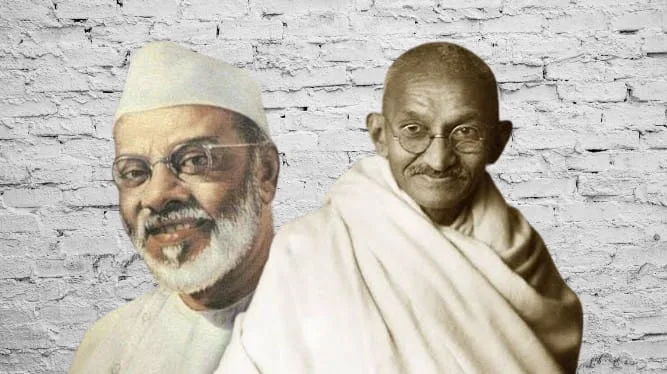
He was the only Gandhian economist on the pre-Independent India’s National Planning Committee and after Independence, Kumarappa chaired the Congress Agrarian Reforms Committee and authored the Kumarappa Report on Agriculture (Thangaraj, 2018). He also played an instrumental role in All India Village Industries Association and served as the editor of Young India during the Salt Satyagraha (1930-31). Eminent historian Ramachandra Guha calls Kumarappa as the first Gandhian environmentalist and portrays him as a Green Gandhian who developed environmental ethics in realm of social ecology and Eco socialism (Guha, 1994). Through his seminal works, including Public Finance and Our Poverty and Economy of Permanence, Kumarappa advocated people – centered (ethical) economics grounded in economic decentralization, village self-sufficiency and sustainable development. In Public Finance and Our Poverty, Kumarappa argued that the mismanagement of public finance during British rule led to structural poverty in India. Kumarappa called the British model of public finance (taxation and spending policies were designed to extract surplus from Indian villages to finance the colonial administration and imperialistic policies) as a tool of exploitation of the masses and looting India’s resources. For instance, the regressive land taxes and salt monopoly impoverished the poor peasants, exorbitant expenditure on defense (army and administration) and minimal attention to rural development, health and education. India’s share in the global economy was around 23 per cent when the British arrived in the country in 1700; by 1947, when they left India, it fell below 4 per cent (Tharoor, 2015, Tharoor, 2016). Prior, to the arrival of the British, India was a leading manufacturer of textiles, steel and shipbuilding. However, the colonial administrators dismantled indigenous industries through tariffs and bans. India exported raw materials, including cotton, indigo and opium while importing expensive goods from Britain.
The British also looted wealth in terms of gold, diamonds and artefacts and natural resources. According to Kumarappa, the British East India Company was a profitmaking enterprise that ruthlessly extracted wealth from its colonies, including India. Britain also imposed unjust trade system wherein India became a market for British goods and a rich source of raw materials and monopolized trade routes. India became a colonial economy engineered to sustain the Imperial government and its policies. In short, the British rule left a painful legacy of poverty and underdevelopment to the Independent India, from which the country is yet to be liberated/resuscitated.

For Kumarappa, public finance was not merely about balancing accounts and stimulating Gross Domestic Product (GDP), but about self-sufficiency, sustainability, rural-centric budgeting rooted in simplicity. He was against the technocratic and bureaucratic, growth obsessed policy making. Kumarappa championed for ecological sensitive public finance and laid the moral foundation for just and sustainable budgeting in 21st century India. Kumarappa, being an ardent follower of Mahatma Gandhi, advocated for fiscal decentralization through Gram Swaraj and redirecting revenue to prioritize local needs including construction of schools, tanks, and wells, affordable and accessible healthcare and other basic necessities. Kumarappa model of public finance focuses on development from the grassroots, where budgeting begins with the last person in the last village (Kumarappa, 1931). In Public Finance and Our Poverty, Kumarappa argued that British taxation and spending policies were designed to extract surplus from Indian villages to finance imperial administration and wars.
In Public Finance and Our Poverty, Kumarappa describes the concept of public finance as more than just revenue and expenditure. Throughout the book, he emphasizes the ethical aspects of finance; particularly how money raised and spent reflects the moral values and priorities of a government. Kumarappa opined that “what we tax and what we spend on are reflections of the character of our State,” (Kumarappa, 1930). For Kumarappa, public finance is more of a public service that serves the common good.
He criticizes that the colonial rule used public finance as a means of exploitation that primarily served British interests. Kumarappa further points out that “the public finance of British India was not an instrument of welfare, but a weapon of plunder,” (Kumarappa, 1930). He cites the example of railways, “the railway was built not to unite India, but to carry raw materials to the ports and troops to crush dissent.” (Kumarappa, 1930).

Instead of Western economic models that justify inequalities, Kumarappa advocated indigenous models like Gandhian vision of economic decentralization. Kumarappa proposed progressive taxation and ethical revenue collection with fairness and social justice. In his work Public Finance and Our Poverty, Kumarappa exposes the priorities of colonial administration, particularly mismatch between sources of revenue (collected mostly from poor people) and expenditure (for colonial administration and military). Kumarappa opined that poverty in India is not a natural phenomenon but the result of deliberate and flawed policy choices. Kumarappa remarked, “to spend on armaments while millions go without food is a betrayal of civilization,” (Kumarappa, 1930). He stated that “a nation’s poverty is not always due to lack of wealth, but often due to perverted priorities, (Kumarappa, 1930). Kumarappa’s emphasis on ethical governance and bottom-up development aligns with the Gandhian economic framework.
Kumarappa envisioned a national budget that gives due emphasis to rural development, education, healthcare and decentralization (self-reliant communities). Democratization of financial planning was the core feature of Kumarappa model of public finance (moral budgeting) in which resource allocation is based on the social needs of the citizens. For Kumarappa, an ideal national budget should be participatory in nature and locally informed. For Kumarappa, “Budgets are not merely documents of income; they are moral documents,” (Kumarappa, 1930). Kumarappa further argued that “a budget is the mirror of a nation’s soul; if the soul is dark, the budget will reflect it,” (Kumarappa, 1930). In the book Public Finance and Our Poverty, Kumarappa offers a roadmap for a just and ideal financial system rooted in decentralized planning, rural industrialization, ethics and sustainability for India. A public finance that is people centric and ecologically balanced, more in line with Gandhi’s concept of Swaraj is the foundation of Kumarappa model of public finance.

Kumarappa’s A Survey of Matar Taluka (1931) offers an in depth yet systemic analysis of life in 54 villages in Gujarat’s Kaira (Matar) taluka. This Survey offers a detailed qualitative data (empirical data and findings) on land holding patterns, crop yields, irrigation facilities, debt, and income vs expenditure at both village and household levels. The Survey of Matar Taluka offers a glimpse into the land revenue and debt analysis of the selected villages and traced the agricultural distress to seasonal crop failures, limited irrigation facilities, and excessive taxation. Kumarappa points out that the emergence of cooperatives and government banks led to the decline of traditional moneylenders. The Survey, primarily concentrated on economic aspects primarily served British interests. Kumarappa further points out that 7 Kerala Economy Vol.6 No.3 July – September 2025 laid the groundwork for Kumarappa’s advocacy of village industries, self-reliant economy and sustainable development. To capture the real state of public finance, Kumarappa undertook extensive field surveys and empirical studies as in the case of Matar Taluka, Gujarat and emphasized ethical, participatory and village-centric planning. In 1936, Kumarappa served as the Financial Advisor to the Bihar Central Earthquake Relief Committee, overseeing the disbursement of funds and ensuring transparency and accountability in the use of donations (Lindley, 2007). Kumarappa, despite being a close associate of Mahatma Gandhi, refused to approve a bill for Gandhi’s expenses while working with the Bihar Central Relief Committee, following the devastating Bihar earthquake (Annamalai, 2017). The bill was not approved as Gandhi’s expenses exceeded the per diem limit set by the Relief Committee. This incident shows Kumarappa’s strict adherence to financial rules, even with his mentor and guru Gandhi, and it also stands as a testimony to his commitment to ethical and transparent financial and accounting practices (Annamalai, 2017). The present-day public finance experts are products of the ‘textbook view school’ (rely heavily on secondary data and statistics) and they should sooner or later adopt the ‘field-view’ and participatory approach of Kumarappa in studying public finance.
Part I – Kumarappa’s public finance model Vs modern public finance in India
The Kumarappa framework of public finance is founded on the principles of simple living, decentralized economic empowerment and planning rooted in ecological harmony. The modern public finance is growth-focused, globalized, consumptiondriven and prioritizes extractivism by simultaneously placing sustainable policies that does not interfere with their growth and development targets. Modern public finance treats economics as a technical discipline while Kumarappa model aligns with the Gandhian morals, concepts and ethics (more on a spiritual perspective). In Kumarappa approach, state acts as a facilitator of rural welfare, equity and self-reliance, while modern public finance plays a mixed role from a minimal state (in the neoliberal perspective) to welfare state (Keynesian economics). Kumarappa would likely criticize the GDP-centric, corporate -led economic model as his vision places service to the poor through empowerment of village economies as the first and foremost duty of public finance. Kumarappa dismissed GDP as a measure of true well-being.
Kumarappa might argue that the large allocations for defence, infrastructure and subsidies to big industries in the country come at the cost of rural development. In terms of revenue collection, Kumarappa favoured progressive taxation and urged to avoid indirect taxes that burden the poor. While modern public finance accepts the progressive income tax, the introduction of GST and other indirect taxes in India, which are regressive in nature, will negatively affect the poor and small producers. Kumarappa has aptly pointed out that “no public finance system can be just if it perpetuates the poverty of the many for the luxury of the few…………. a finance system that does not reduce poverty is itself bankrupt – morally, if not fiscally,” (Kumarappa, 8 Kerala Economy Vol.6 No.3 July – September 2025 1930). Meanwhile, from a transhumanist perspective, Kumarappa would likely support some aspects of the GST including efforts to bring businesses into formal economy provided that it does not come at the cost of environmental degradation and social inequality. However, Kumarappa would likely exercise caution regarding the excessive centralization within the GST framework that would prove harmful to local governments, local economies and village-level industries1 .
Modern economists and public finance experts in India have also expressed missed opinions concerns regarding the implementation of the GST. There has been considerable criticism that states have become mere agents of the GST council and their capacity to design tax policy for their own development needs is sidelined. Public finance expert M Govinda Rao, former member, 14th Finance Commission, calls for the inclusion of fuel, power and real estate in the ambit of the GST (The Hindu, November 12, 2021). Noted economist Prabhat Patnaik observed that indirect taxes like GST is a fiscal injustice if the poor have to pay more than the rich as a share of income (Patnaik, 2017). Y V Reddy, former Governor, Reserve Bank of India (RBI) that the GST mechanism fails to command the state’s trust and a trust deficit has emerged within the states regarding the administration of the GST (The New Indian Express, April 4, 2019).
Kumarappa would oppose the growing public debt and debt financing as it can pose risks and challenges, if the borrowed funds are not directed towards the benefit of rural livelihoods and productive investments. He might support progressive taxation including wealth taxes on large corporations and landowners. In India, the tax-toGDP ratio remains low (11%), effectively limiting wealth redistribution. The tax-toGDP ratio measures the total tax amount earned by a government against its annual gross domestic product (Panigrahi, 2024). The low tax-to GDP ratio in modern public finance reflects a narrow tax base due to high inequality, concentration of wealth and poor compliance by elites. It also shows limited fiscal capacity to invest in public goods and welfare.
Like Kumarappa, Malcolm S Adiseshiah, a distinguished Indian economist often criticized the increasing share in defence expenditure in India’s budgets at the cost of human development. He advocated development-oriented budgets. According to Adiseshiah, public expenditure must reflect national development priorities – not elite consumption (Adiseshiah, 1970, Adiseshiah, 1985). He pointed out that India’s budgetary choices reflect misplaced priorities (Adiseshiah, 1970). Adiseshiah strongly believed in progressive taxation and emphasized that direct taxes, including income and wealth must play a greater role than indirect taxes. He opined that tax policy in India should correct inequalities and not deepen them (Adiseshiah, 1988).
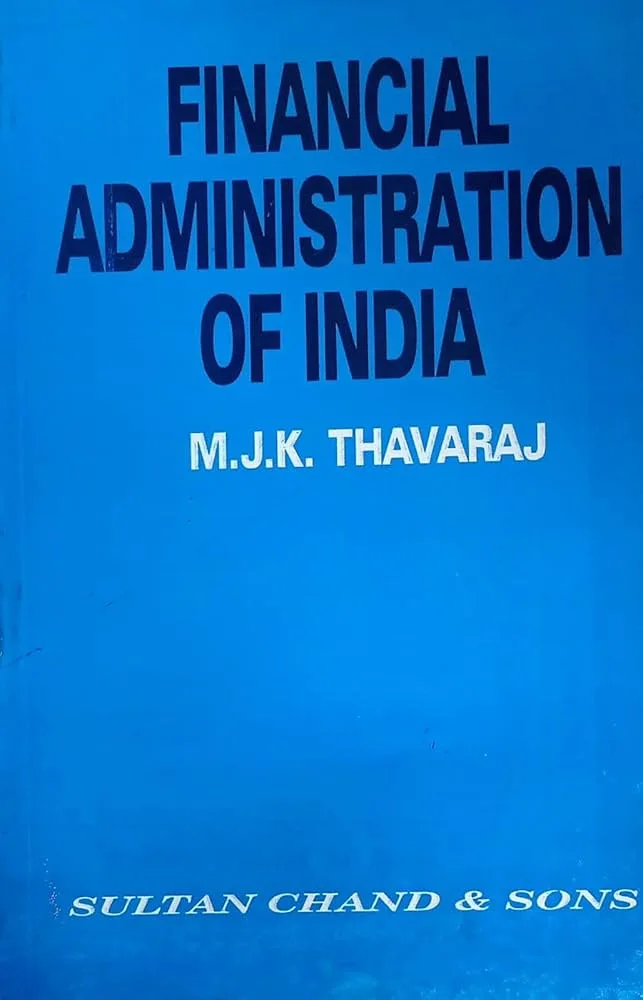
Renowned public finance experts like M J K Thavaraj and G Thimmaiah have noted that India’s tax system as regressive in practice, despite being progressive in design. 9 Kerala Economy Vol.6 No.3 July – September 2025 Thavaraj observed that Indian tax structure fails to serve the redistributive objectives of public finance (Thavaraj, 1975). It has been argued that overreliance on indirect taxes can burden the poor more than the affluent. Thavaraj also noted that Indian budgets remained largely incremental and input-based, not outcome-based. He also observed that budgeting priorities has shifted away from public capital formation to consumption and transfers (Thavaraj, 1975, Thavaraj, 1978).
Thimmaiah has raised concerns regarding the inefficient public expenditure, particularly the rising share of non-developmental expenditure (Thimmaiah, 1979). Thimmaiah noted that public expenditure has often expanded without commensurate social returns with low outcomes in rural development and education. He also cautioned against fiscal deficit, particularly regarding fiscal deficits and public debt as persistent borrowing to meet revenue deficits can eventually led to a public debt trap (Thimmaiah, 1979). Thavaraj and Thimmaiah noted the lack of transparency, public participation and performance auditing in Indian budgetary process. The concerns raised by Thimmaiah and Thavaraj can be seen in Kumarappa’s discourses.
When it comes to public expenditure priorities, Kumarappa would call for greater spending on rural development, health, agriculture, and education. The modern public finance system still prioritizes defence, infrastructure, welfare schemes and subsidies. Defence remains a major budget head in majority of the Union Budgets presented in India. Kumarappa would likely support schemes like Mahatma Gandhi National Rural Employment Guarantee Scheme (MGNREGS), Swachh Bharat Abhiyan (SBM), Pradhan Mantri Garib Kalyan Yojana (PMGKY), Galvanizing Organic Bio- Agro Resources Dhan (GOBAR-Dhan) as these programmes focus on rural upliftment and ensuring sustainable livelihoods to the village people.
Kumarappa’s economic framework stresses village-level planning and budgeting, while fiscal federalism exists in Indian Constitution, the real power remains centralized and local governments remain underfunded, with actual devolution of funds, functions and functionaries yet to be materialized. Kumarappa’s ideas has echoed in Panchayati Raj Institutions (73rd Constitutional Amendment Act) and Finance Commission grants to local governments. However, decentralized economic planning framework in its true sense (as proposed by Kumarappa) is missing in the Indian context as funding and autonomy remain weak and the element of empowered village planning is not yet fully realized.

The modern public finance thrives on extractivism policies while Kumarappa calls for degrowth approach rooted in ethics, morality and spirituality, which is largely absent in the technocratic policy making of today. Kumarappa’s vision of an economic framework rooted in ethics, equity, decentralization, and sustainability offers a counternarrative to the dominant growth at any cost (paradigm). Modern public finance gives more emphasis to efficiency; Kumarappa emphasizes justice, 10 Kerala Economy Vol.6 No.3 July – September 2025 decentralization and sustainable development. As India grapples with rising inequality, poverty, climate change and other crises, Kumarappa’s vision and ideas have the potential to inspire a moral and just rethinking of development and budgeting.
(to be continued)
This paper was originally published in the July–September 2025 issue of Kerala Economy.
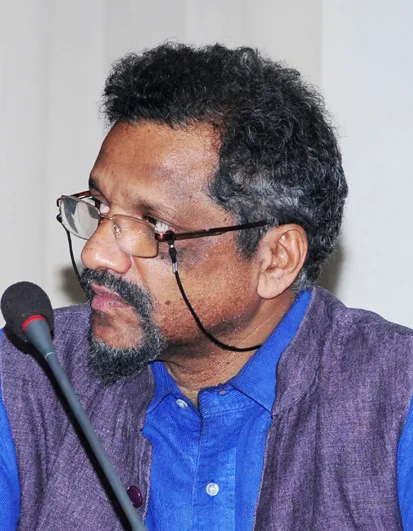
Jos Chathukulam is a Professor of Political Economy and Director of the Centre for Rural Management (CRM), Kottayam, Kerala. His academic work focuses on public policy, decentralisation, public finance, local governance, development studies, and political economy in India, with a special emphasis on Kerala. Prof. Chathukulam has authored and edited several influential books and research papers, and has served as a policy advisor to governments and international agencies. He is widely recognised for his critical engagement with development paradigms and for advocating sustainable, people-centred alternatives in economic and governance practices.