
Identity Voting Is Not Irrational: Rethinking Democracy, Caste and Social Justice in India
Is identity-based voting irrational or a calculated response to inequality? In this opening conversation with Abhish K. Bose, political theorist Manindra Nath Thakur challenges common assumptions about caste, religion, and democracy, urging a deeper rethink of how power, community, and citizenship shape political choices in India.
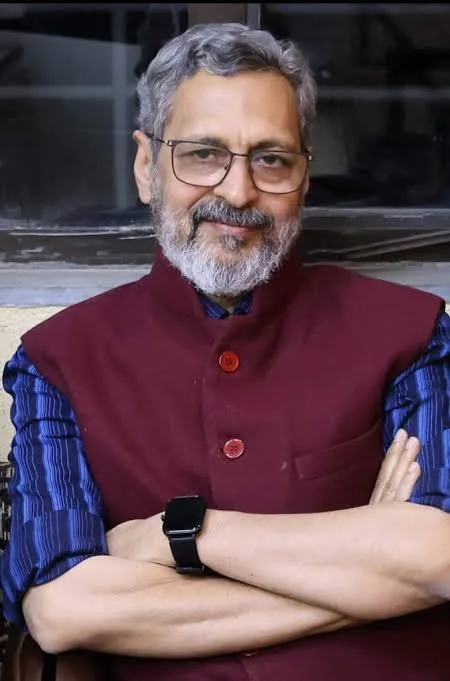
Manindra Nath Thakur is Associate Professor at the Centre for Political Studies, Jawaharlal Nehru University. He serves as a trustee of the Foundation for Creative Social Research and the Association for Creative Theory, which organizes the annual Creative Theory Colloquium. He is also a founding member of the Samved Trust, which publishes Sablog, a Hindi periodical committed to fostering serious intellectual engagement with contemporary public issues. His recent book, Gyan ki Rajniti (Politics of Knowledge), critically examines the philosophical foundations of the social sciences and calls for a shift from administrative to transformative approaches in social science practice.
How can Indian democracy transcend the entrenched influence of religious and caste organizations, which currently dictate voting patterns and constrain political discourse, to enable citizens to exercise their franchise independently of these identities, and what paradigmatic shift in politics and ideology, including a redefinition of communism, is necessary to achieve this transformative goal, especially in a context where even ostensibly secular and materialist parties succumb to societal pressures and compromise with these forces?
The tension between community identity and citizenship—often described as the “democratic dilemma”—stems from a deep contradiction at the heart of modern democratic theory. On one hand, individuals are shaped by collective identities rooted in religion, caste, region, and language. On the other, modern democracies are built on the philosophy of individualism, which assumes that people primarily understand themselves as autonomous individuals. Within this framework, citizenship is conceived as a legal and political status granted by the state—a status emerging from a notional social contract formed among individuals seeking to escape the uncertainty and insecurity of the so-called ‘state of nature.’
This framework of social contract theory became a part of modern political common sense, deeply influencing the imagination and construction of democratic institutions. However, the philosophical foundation of this imagination rests on a narrow and often flawed understanding of human nature—namely, that humans are essentially rational beings. While it is true that humans possess the rational capacity to create institutions and organize social life, this captures only one side of human reality. Equally important is the fact that humans are emotional and relational beings. They form deep emotional connections with others and derive meaning from these relationships. The quest for meaning is central to the human condition.
The democratic model that emphasizes the individual as the basic unit and citizenship as the primary identity was more easily institutionalized in Western societies, where individualism was reinforced by the rise of capitalism. These societies were often mono-religious, mono-cultural, or at least dominated by a single cultural group. However, with increasing migration and the assertion of minority identities, this model is now facing a serious crisis. It has become evident that individuals are not isolated from their community affiliations. These affiliations continue to shape their access to the state and its resources. As relational beings, people naturally gravitate towards their communities, and whenever they perceive discrimination or exclusion, community identities shift from being latent to politically active forces. Under such conditions, community-based voting becomes a likely outcome in democratic processes.
In the non-Western world, particularly in societies like India, the scenario is markedly different. Here, religious and cultural pluralism has always been a historical reality, and the philosophy of individualism has never fully taken root. Community participation and voting based on community identity have long been part of the political landscape. Yet, India presents a unique case: alongside community-based voting, issue-based mobilizations have also played a significant role. Election outcomes have often defied conventional identity-based predictions, revealing a high percentage of floating voters who prioritize issues over identities. This unpredictability makes Indian democracy particularly dynamic.
Therefore, the question must be reframed in the Indian context: Under what conditions do voters prioritize community identity—such as religion or caste—in their political choices? And when do they act as rational, responsible citizens, guided more by issues than by identity? It would be mistaken to assume that voting based on religious or caste identity is inherently irrational. In such instances, individuals often make calculated decisions to advance the collective interests of their community. Typically, this occurs in contexts where communities face systemic discrimination, marginalization, or threats to their security. In such conditions, identity-based voting becomes a rational response to lived vulnerabilities.
Given the entrenched legacy of caste and religious mobilization in India, can a paradigmatic shift occur towards forging constituencies based on non-ascriptive identities, such as occupation, education, or economic interests, and if so, what innovative strategies and institutional reforms would be required to reconfigure the political landscape and challenge the hegemony of caste and religious organizations, particularly in a context where heterogeneity and diversity are often leveraged to reinforce existing social cleavages?
I do not believe that creating constituencies based on non-ascriptive identities will significantly alter the dynamics of political behaviour. Even within such constituencies, ascriptive identities—such as caste or religion—will continue to exert a powerful influence. This is evident in the persistence of caste-based trade unions in India. To grasp the complexity of this phenomenon, we need a nuanced understanding of identity-based political mobilization, which is not a static occurrence but rather a multilayered process that evolves through several distinct phases.
Phase One: Identity Identification
This initial phase emerges naturally from the relational nature of human beings. People are drawn to one another based on shared attributes, experiences, or cultural backgrounds. This phase reflects the human search for meaning and belonging, rooted in emotional and social connection.
Phase Two: Identity Formation
In this phase, the process of identification leads to sustained interaction, often facilitated by the emergence of informal or formal institutions—associations, cultural groups, religious gatherings—that provide continuity and a shared space for expression. Both the first and second phases are organic and essential to human social life.
Phase Three: Identity Consolidation
This critical turning point occurs when a group begins to experience systemic discrimination, marginalization, or humiliation based on its identity. Consolidation may also emerge from a sense of perceived superiority and the desire to maintain dominance. This is the phase where the ‘Other’ is constructed, often demonized, and used as a contrast to solidify group boundaries. At this stage, a once-innocent social identity transforms into a political one. While identity consolidation can be a psychologically and politically liberating response to injustice, it often conceals internal hierarchies and contradictions within the community. Here, rational discourse tends to recede, and even marginalized members of the group may accept dominant internal narratives that work against their interests.
Phase Four: Political Identity and Ideology Formation
Once an identity is consolidated, it often evolves into a structured political identity, supported by an ideology aimed at securing access to power. If democratic institutions are inclusive and functional, such identities may find representation within the system, potentially advancing the interests of the group. However, this also introduces the risk of undermining democratic principles, as identity politics can begin to override broader civic norms. If institutions exclude such identities, the result may be radicalization, community conflict, ethnic violence, or even militancy.
Phase Five: Ideological Entrenchment and Democratic Breakdown
In this final phase, identity-based political ideologies become entrenched, often turning inwardly oppressive and outwardly exclusionary. The identity group may suppress dissent within its own ranks and reject democratic values altogether, fostering authoritarian tendencies and deepening social fragmentation.
While some degree of community-based voting will always exist, the real danger arises when identity politics progresses unchecked from the second to the third and subsequent phases. Preventing this transition is crucial for the health of democracy.
What is needed?
The key lies in strengthening the modern state’s commitment to the rule of law, ensuring non-discriminatory governance, and fostering a relatively egalitarian social structure. If the state can guarantee justice, security, and dignity for all citizens, social hierarchies based on identity will weaken, and diversity will be less likely to translate into division. The central task, therefore, is to innovate political policies and institutional frameworks that discourage the shift from identity formation to identity consolidation. Only then can democratic societies manage diversity without succumbing to fragmentation.
How can the radical potential of social movements and grassroots activism in India, such as the anti-caste and feminist movements, be leveraged to subvert the dominant political culture and institutionalized hierarchies, and what specific strategies and tactics can be distilled from these movements to disrupt the intersectionalities of caste, gender, and religion that reinforce social and political exclusion?
This is an important and thought-provoking question. Social movements and grassroots activism in India are rich with radical potential. In many ways, they are the inheritors of the Indian National Movement, which remains one of the most extensive mass mobilizations for freedom and justice in human history. That movement not only challenged colonial rule but also generated a wide range of philosophies and strategies for non-violent protest by mobilizing the masses against systems of domination.
These traditions of political experimentation have continued in the postcolonial period. Each major movement has raised critical issues—whether emerging from the legacies of the past or from exploitative structures of the modern state. Through their struggles, these movements have articulated new philosophical visions, developed alternative theories of justice, and innovated grassroots institutions. Their strategies of political mobilization have greatly enriched the tradition of resistance in India.
What remains absent, however, is a creative dialogue among these movements—a space for sharing experiences, coordinating efforts, and forging a united front aimed at systemic transformation. Too often, these movements operate in silos, failing to recognize the common structures of oppression they are up against. This fragmentation significantly limits their transformative potential.
There are, nonetheless, extraordinary examples from India’s recent past that offer powerful models for changing the political culture. One such example is the Chhattisgarh Mukti Morcha, led by Shankar Guha Niyogi in the late 1980s. Originally a workers’ movement against a liquor company polluting rivers and pushing alcohol onto mine workers, the movement rapidly expanded its vision. It established workers’ hospitals, heavy vehicle repair workshops, and schools, and even succeeded in winning elections to the state assembly. This movement went far beyond economic demands, offering a holistic model of social transformation.
One of the key limitations of many contemporary social movements is their reluctance—or inability—to integrate the social and the political. Gandhi’s genius lay precisely in this integration: his movements were deeply political, but in a broad, civilizational sense, not just in terms of electoral participation. Many current movements aim to remain a-political, misunderstanding politics as synonymous only with electoral engagement. What is urgently needed is a broader political imagination—one that allows movements to engage with one another, build solidarity, and shape the contours of political change.
Without such a shift in political culture, the transformative energies of social movements will remain constrained and fragmented. A systemic alternative requires not just struggle, but also unity, vision, and shared strategy.
What innovative strategies and tactics can civil society organizations and social movements employ to effectively counter the entrenched influence of religious and caste organizations in politics, and how can they disrupt the patronage networks and clientelistic relationships that underpin these organizations’ power?
To understand the enduring power of caste and religious organizations, it is essential to recognize that ascriptive identities—such as caste, religion, or ethnicity—are deeply rooted in human nature. Humans are relational beings who naturally form groups based on shared histories, symbols, and experiences. These affiliations often provide meaning, belonging, and a framework through which individuals interpret their lives.
Rather than dismissing these identities, progressive movements must acknowledge their social significance. Only by taking these identities seriously can their exploitative dimensions be challenged. However, this is not an easy task. Identity-based groups are unlikely to be receptive to critique unless they perceive the movement as empathetic to their lived realities. Critiquing the internal hierarchies and contradictions within a community is difficult if the external structures of exploitation—economic, political, or social—are ignored. Thus, social movements must first establish credibility by confronting external domination before they can address internal oppression.
Accepting the processes of ‘identity identification’ and ‘identity formation’ as genuine human responses to marginalization may provide social movements with the strategic agency needed to critically engage with religion and caste. In this regard, there is much to learn from the experience of Liberation Theology in Latin America. In contexts where mainstream Christian institutions had aligned themselves with imperial and elite interests, Marxist movements found it difficult to mobilize the oppressed masses. The traditional Left, guided by Marx’s “opium of the people” thesis, often viewed religion as a regressive force. However, Latin American leftist thinkers re-evaluated this stance, acknowledging the deep emotional and cultural significance of religion in people’s lives.
By taking religion seriously, they developed a counter-theology—Theology of Liberation—that reinterpreted the life of Christ as a commitment to the poor and re-read religious texts through the lens of justice and emancipation. This new theological framework, rooted in the experience of the oppressed, created a version of religion compatible with revolutionary politics. The result was not merely a critique of religious orthodoxy but a transformation of religious discourse itself, leading to deep divisions within the Church and new alliances between faith-based and radical political movements.
In contrast, many Indian social movements have either ignored religious and caste identities altogether or adopted a strategy of accommodation without seeking to critically reclaim these identities for transformative politics. What is required is a creative political engagement—one that does not treat religion and caste as monolithic or inherently regressive but rather as dynamic and contested terrains. Only then can these identities be reclaimed as sources of emancipatory potential, rather than instruments of domination.
(to be continued)
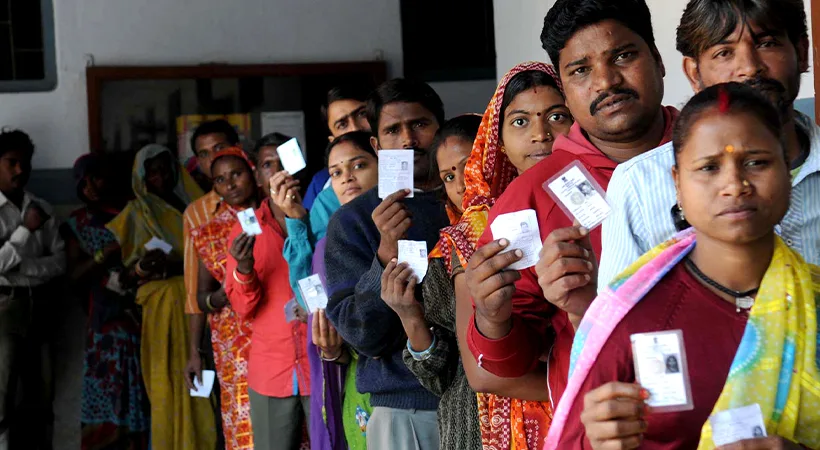
Featured Image: voters in a queue to caste their vote at a polling station during the Madhya Pradesh Assembly Election in Bhopal on November 2013/ Courtesy: commons.wikimedia.org

A journalist with 18 years of experience Abhish K Bose was a staffer at The Times of India and The Deccan Chronicle - Asian Age. As a contributor, his interviews and articles have been published in Frontline magazine, The Wire, The Print, The Telegraph, The Federal, The News Minute, Scroll, The Kochi Post, The Leaflet, The Hindu.com, Outlook.com Countercurrents.org and the Asian Lite international published out of London
- Abhish K Bose
- caste and democracy
- citizenship and community
- grassroots activism india
- identity based voting
- identity politics india
- indian democracy debate
- institutional reform india
- manindra nath thakur
- political philosophy india
- political theory interview
- religion and politics india
- rule of law india
- social justice india
- social movements india