

Crushed from Toe to Skull: The Lynching of Ram Narayan in Kerala
In this powerful intervention, social activist and journalist Baburaj Bhagavathy examines the brutal killing of Ram Narayan at Walayar as more than an isolated crime. Situating the incident within the broader rise of mob lynching, Hindutva vigilantism, and everyday Islamophobia in India, the article argues that the murder must be legally and politically recognised as a case of mob lynching.
The body of Ram Narayan was crushed from his little toe to his skull. The 31-year-old migrant worker from Chhattisgarh died after being brutally assaulted by a group of local residents near Walayar in Palakkad district of Kerala on 17 December 2025. This killing once again exposes the dangerous direction in which Kerala is heading. Social activists have demanded that the murder, carried out by Hindutva fascist forces, be officially recognised as a case of mob lynching and that appropriate legal action be initiated accordingly.
Describing the injuries, Dr Hithesh Shankar, who conducted the post-mortem examination, told the media: “There is no part of the body without injuries.” He described the assault as “cruel,” carried out “from different sides,” and categorically stated that it was “a mob attack,” adding that the victim was “beaten like an animal.” Police have arrested five people in connection with the crime. According to police reports, four of those arrested are BJP–RSS workers.
The Walayar incident is clearly a case of mob lynching. A video that later surfaced shows a group of men attacking Ram Narayan while questioning his nationality and asking whether he was “Bangladeshi.” In the initial days, however, the incident received little attention in the mainstream media and circulated on social media in a distorted and misleading manner.
The following day, Walayar police brought the body from Palakkad to Thrissur Medical College for post-mortem examination. After learning about the incident through media reports, Abdul Jabbar, the brother of Mohammed Ashraf, who himself had been a victim of mob lynching in Mangaluru, reached the medical college. It was largely through Jabbar’s intervention that details of the case began to emerge in the public domain.
When Jabbar arrived, only two policemen who had escorted the body and a few relatives of the deceased were present. Through his conversations with the police and the family, he realised that the case was being treated as an ordinary murder. The police were preparing to send Ram Narayan’s body back home and were even attempting to collect money from the family for this purpose. Jabbar intervened and halted the process. He contacted several social activists in Thrissur and brought them to the medical college. Together, they persuaded the police and others present that this was not an ordinary murder, but a case of mob lynching, and that it required a different legal and moral response.
After the incident became public, sections of the media, along with writers and activists, described it as the murder of a Dalit worker by Sangh Parivar forces. At the same time, some argued that it should not be described as mob lynching. A view emerged that the term “mob lynching” does not adequately convey the gravity of the crime and that it is more politically accurate to call it a Sangh Parivar killing.
However, lynching has a specific meaning. Historically, the term refers to racially motivated killings in the United States during the eighteenth and nineteenth centuries, when Black people were publicly murdered without trial by white racists. Despite its limitations, the term has acquired legal recognition in India. Indian jurisprudence defines lynching as an attack or killing driven by religious, linguistic, national, or racial hatred. It refers to a form of collective violence rooted in prejudice, often fuelled by rumours, misinformation, and propaganda. In such acts, the mob assumes the roles of judge, jury, and executioner.
Mob violence in India has sharply increased since the coming to power of the Modi government. During this period, cow-protection vigilante groups and fascist organisations such as the Bajrang Dal began attacking and killing Dalits and minorities on a large scale, particularly in North India. Allegations of beef consumption or cow smuggling were routinely used as pretexts. As these attacks multiplied, the term “mob lynching” entered public discourse.
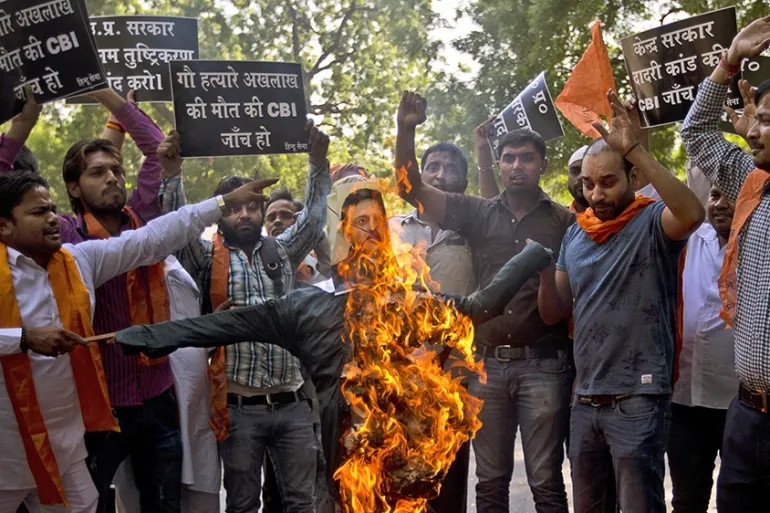
It is therefore natural that legal circles have argued for treating mob lynching under a special legal framework. Mob lynching is now widely recognised as a form of identity-based or ethnic murder. Some activists argue that since these crimes are committed by Sangh Parivar forces under a fascist ideology, it is sufficient to describe them simply as Sangh Parivar attacks. This approach, however, overlooks the specific legal and political implications of recognising a crime as mob lynching.
Fundamentally, mob violence is not an act committed by one individual against another. It is collective violence rooted in layered prejudices—religious, racial, linguistic, or national. These elements are central to how the law identifies and defines a murder as mob lynching.
Once a crime is recognised as mob lynching, the Supreme Court’s guidelines become applicable. In 2018, while hearing a public interest litigation filed by Tehseen Poonawalla, the Court directed that a Special Investigation Team investigate such cases under the supervision of an officer not below the rank of Superintendent of Police. The trial must be conducted in a fast-track court, compensation must be provided to the victim’s family, and hate speech must form part of the investigation. All procedures must be completed within a specified timeframe. Despite these directives, police and authorities continue to treat lynching cases as ordinary murders.
In the Walayar case, the government has not yet initiated legal proceedings by recognising the crime as mob lynching. As a result, the murder is not being investigated as a racially or identity-motivated attack. At this crucial stage, the general public, social activists, and political parties must insist that this was a lynching and demand that legal action be taken accordingly.
Ram Narayan, the victim, was a Dalit labourer, as far as is known. He had arrived in Kerala only a few days earlier in search of work. It was here that he was killed. However, one crucial fact must not be overlooked. In the current climate of intense Islamophobia, Ram Narayan was not attacked because he was Dalit, but because he was suspected of being a Bangladeshi Muslim. This crime must therefore also be understood as an act of Islamophobic violence.
Islamophobia is anti-Muslim racism. Its primary targets are Muslims, but its victims are not limited to Muslims alone. Those who merely appear to be Muslim or are perceived as Muslim because of their appearance, language, clothing, or body features are equally vulnerable. Islamophobic violence does not require the presence of Muslims; it operates even in their absence.
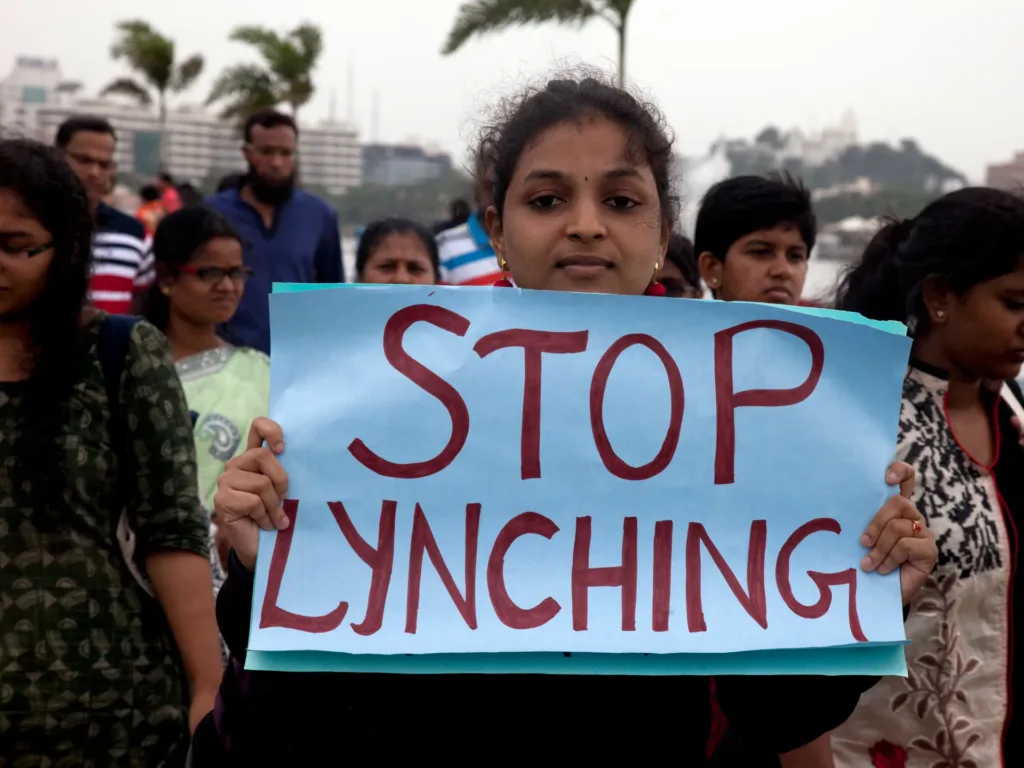
Statements attributed to the assailants in the Walayar lynching suggested that Ram Narayan was beaten because he was suspected of theft. Similar claims were made by the accused in the Mangaluru lynching of Mohammed Ashraf. In that case, initial reports variously claimed that Ashraf raised pro-Pakistan slogans, drank water reserved for cricket players, or attempted theft. Such contradictory justifications are a recurring feature of lynching cases, with theft being the most common allegation.
In mob lynching cases, the perpetrators and victims usually do not know each other. There need not be any prior personal conflict. Even the attackers may not be acquainted among themselves. What binds them is not personal grievance, but shared racial hatred.
Despite this, such allegations are often included in the First Information Report. This effectively erases the mob nature of the crime from the case record and conceals the racial hatred that motivated it. As a result, investigations into hate speech and propaganda, mandatory in lynching cases, are blocked. Questions about who initiated the hate campaign, who spread it, and how it was mobilised remain unexamined. The handling of Ram Narayan’s murder reflects a clear attempt to avoid such scrutiny.
A similar incident occurred on 16 April 2020 during the COVID-19 pandemic, when rumours of child kidnappers spread through WhatsApp in a village in Maharashtra, gradually acquiring an anti-Muslim tone. The incident happened in Palghar district. Local youths began night patrols armed with sticks. When a car carrying monks passed through the area, the mob stopped the vehicle, dragged out the passengers, and brutally killed them, believing they were Muslim robbers in disguise.
When it later emerged that the victims were monks, the BJP launched a campaign alleging Muslim involvement. However, when the Maharashtra Home Minister released a list of around one hundred accused, not a single Muslim was named. Several accused later joined the BJP, a fact that sparked controversy.
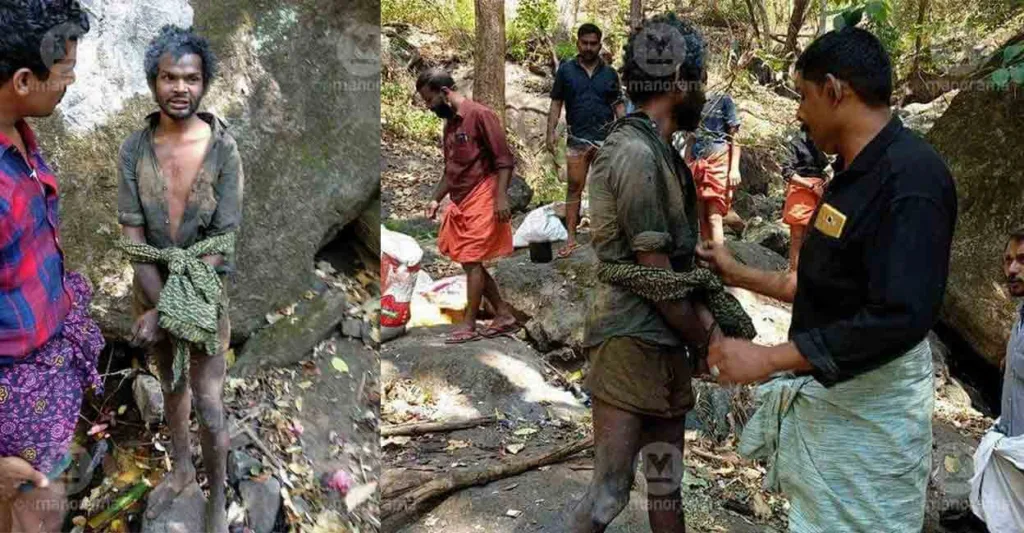
The Walayar killing also recalls the 2018 lynching of Madhu, a tribal youth from Attappady, who was beaten to death after being accused of theft. Thirteen of the fourteen accused were later convicted, triggering national outrage and debate.
These incidents underline the urgent need to confront racial hatred through law. Hate speech, incitement, and propaganda must be legally addressed, and specific legislation enacted. Islamophobia must be treated with the seriousness it deserves. The murder of Ram Narayan demonstrates that Islamophobia is not a problem affecting Muslims alone. The Walayar lynching must not be reduced to just another murder. It must be recognised as mob lynching, and legal action must follow accordingly.
Baburaj Bhagavathy is an activist who worked in various print media in Kerala. Currently works as part of the group preparing the Islamophobia Annual Report