
Bihar 2025: A Rigged Mandate and the Crisis of India’s Electoral Democracy
This article, written by Adv. Vinod Payyada, offers a sharp and timely analysis of the Bihar election results, examining their political implications and the challenges they pose for India’s democratic future.
7 Minutes Read
The results of the 2025 Bihar Assembly elections have proven, beyond a shadow of a doubt, that free and fair elections no longer exist in India. If the figures released by the Election Commission are to be believed, then we must also believe that the elementary truth that “one plus one equals two” is wrong. After Maharashtra and Haryana, there is little doubt that the Election Commission coordinated an organized effort to steal the elections.
The 2024 general election was not the BJP’s final battle, simply because it failed to win the more than 400 seats it projected. Despite the addition of five crore fake votes, the BJP realized that the public mood was turning against it. This appears to have pushed the party towards a strategy of sabotaging state elections on an organized scale, something it could not fully manage in the Lok Sabha polls. Under the current Constitution and legal framework, the BJP enjoys enough room to execute such disruptions. The Election Commission’s role in enabling fake voter additions in Maharashtra and Haryana is already clear.
But in Bihar, weakening the RJD which holds the largest vote share required reducing the turnout of its core voter base. The RJD’s principal social support comes from Yadavs and Muslims. The SIR process (Special Intensive Revision) helped cut into both. The large-scale exclusion of Muslims shows that the SIR was carried out under the guise of revising the voter list, but with the underlying intention of shrinking the RJD’s support base. A comparison of the number of excluded voters and the narrow margins by which many NDA candidates won makes this evident. Even after the SIR, many who submitted all required documents were not reinstated in the revised voter list. In every respect, the election was rigged.
But aside from the numerical manipulations that determined the NDA’s victories, we must examine the deeper causes behind the massive defeat of the majority. A crucial point here is that the RJD, on its own, secured more votes than both the BJP and the JDU. This fact raises fundamental questions about India’s electoral system. The will of the people is not reflected in India’s First-Past-the-Post system. With careful management of vote banks, even slight margins can deliver disproportionate victories. The NDA won the majority of seats by very small margins, yet the BJP could not significantly break into the RJD’s base. Without rigging, the NDA would not have been in a position to defeat the RJD in so many constituencies. The political dynamics in Bihar are therefore significant.
The Social Transformation of Bihar Politics
During the Congress era, Bihar’s politics was dominated by Brahmins, landlords, and Kshatriyas. A revolutionary shift occurred under socialist leader Karpuri Thakur. Guided by Ram Manohar Lohia, Karpuri Thakur, belonging to the extremely backward Kshuraka caste, rose to leadership. As the first socialist Chief Minister of Bihar, he introduced reservations for backward caste groups for the first time in the state’s history. This laid the foundation for backward caste dominance in Bihar politics.
Naturally, the Yadavs, the most influential among the backward classes, became the primary political force. However, the Yadav politics that sought to complete the social revolution by transferring power to the lower strata did not show adequate maturity. It is noteworthy that Lohia chose Karpuri Thakur, whose social background was closer to Dalits, over B.P. Mandal, a wealthy Yadav leader, to lead the movement.
In the 2025 elections, the RJD received 23% of the vote, the highest among all parties, followed by the BJP (20.08%) and the JDU (19.25%). Yadavs constitute 14.2% of Bihar’s population, forming the largest backward caste group. Muslims constitute 17.7%, and except for the Sheikh, Sayyid, Pathan, and Kalal groups, most Muslim communities fall under the backward or extremely backward categories. Muslim turnout increased by 12.9% compared to the previous election. Yet, many believe that Owaisi’s AIMIM damaged the performance of the Grand Alliance in the Muslim-majority Seemanchal region. In these areas, the NDA won most seats, with Owaisi’s campaign largely targeting the RJD and the Congress.
Kurmi–Kushwaha Politics and the Nitish Factor
Kurmis and Kushwahas, like Yadavs, are dominant backward castes, together accounting for nearly six percent of the population. Nitish Kumar, a Kurmi, seldom projected his caste identity, yet tensions between Yadav and Kurmi political claims eventually led to his break with Lalu Prasad. Initial assessments suggest that Owaisi siphoned off a significant portion of Muslim votes, weakening the RJD’s Yadav–Muslim alliance. Apart from the SIR-related voter exclusion, AIMIM’s contest itself damaged the INDIA’s chances.
It would be incorrect to say that the Grand Alliance failed to take Owaisi seriously since 2020, he has consistently acted as the BJP’s B-team. The real failure was the inability to respond constructively to Owaisi’s critique of inadequate Muslim representation. The RJD did not show the political wisdom needed to provide meaningful representation to Muslims in its candidate list.
Following the Mandal era, Lalu and Nitish shaped Bihar’s political trajectory as key figures of backward-caste empowerment. Kurmis and Kushwahas, numerically important but proud of their historic Kshatriya lineage, feared that the Yadavs would dominate backward caste politics. Nitish, seeking political space beyond Lalu’s Yadav-centric bloc, forged a new social coalition by including the most backward classes (including EBC Muslims) and Mahadalits. He designed and implemented welfare schemes targeted at these groups. This coalition became a formidable counterweight to the Yadav–Muslim alliance. Schemes focused on women as a unified social category further broadened Nitish’s support base.
The dominance of Yadavs in Lalu’s bloc created frustration among Muslims. Nitish’s administrative decisions drew Muslims, especially the Dalit-like Pasmanda Muslims, closer to the JDU. They now stand firmly behind him. It is significant that when Nitish stepped aside temporarily, he appointed Manjhi, a Mahadalit leader, as Chief Minister. Although they later parted ways, this move boosted Nitish’s support among Dalits.
Tejashwi Yadav’s lack of political experience prevented him from undertaking the social engineering required to counter Nitish’s strategy. Nitish conducted the first caste census in independent India and increased reservations accordingly. In Bihar, where the Bahujan form the overwhelming majority, confronting a leader like Nitish required powerful political tools. But the Grand Alliance had only anti-incumbency to rely on. By distributing ₹10,000 to women voters just before the election, this anti-incumbency energy was diverted. With an Election Commission willing to oversee manipulation, the BJP can achieve anything.
The Congress and Its Social Vacuum
The traditional Congress vote bank in Bihar—Brahmins, Kshatriyas, Bhumihars, and Kayasthas—has largely shifted to the BJP. Today, the Congress lacks an independent social base. The Grand Alliance appears to have overlooked the fact that both this upper-caste BJP vote bank and Nitish’s consolidated social bloc have remained unchallenged for two decades.
Breaking this would have required reviving the Nitish–Tejashwi partnership through compromise. But the Congress blocked this possibility. Nitish began moving away from the BJP before the last general election because the Congress refused to accept him as the alliance leader. Had they done so, the BJP would not have come to power. The Congress still does not realize that it is a “thin elephant”—big on paper but weak on the ground. It refuses to recognize the centrality of social engineering in Bihar and Uttar Pradesh. Instead, it pursues political agendas that appeal mainly to the urban middle class. Even Rahul Gandhi’s allegations of vote rigging, though they concern Bihar, have been framed in a manner that speaks largely to educated, urban audiences.
The Road Ahead: Nitish, the BJP, and the Reassertion of Oligarchic Power
Even if the BJP allows Nitish to continue as Chief Minister for the moment, it is highly possible that the BJP will install its own Chief Minister before the end of the term. The BJP knows that Nitish’s social engineering does not align with its long-term goals. As seen in Maharashtra, where Brahminical power was re-established under Fadnavis by fracturing the Maratha vote, a similar strategy was expected in Bihar. The BJP had already prepared for this before the election. Although Nitish’s seat count may delay this shift temporarily, such a political turn can occur at any time.
Nitish Kumar’s legacy may ultimately go down in history as that of a reactionary—a leader who dismantled the backward-caste assertion against Brahmin and Kshatriya dominance, abandoned his own political lineage, and handed Bihar back to oligarchic rule.
Originally published in Malayalam on The Roots Media
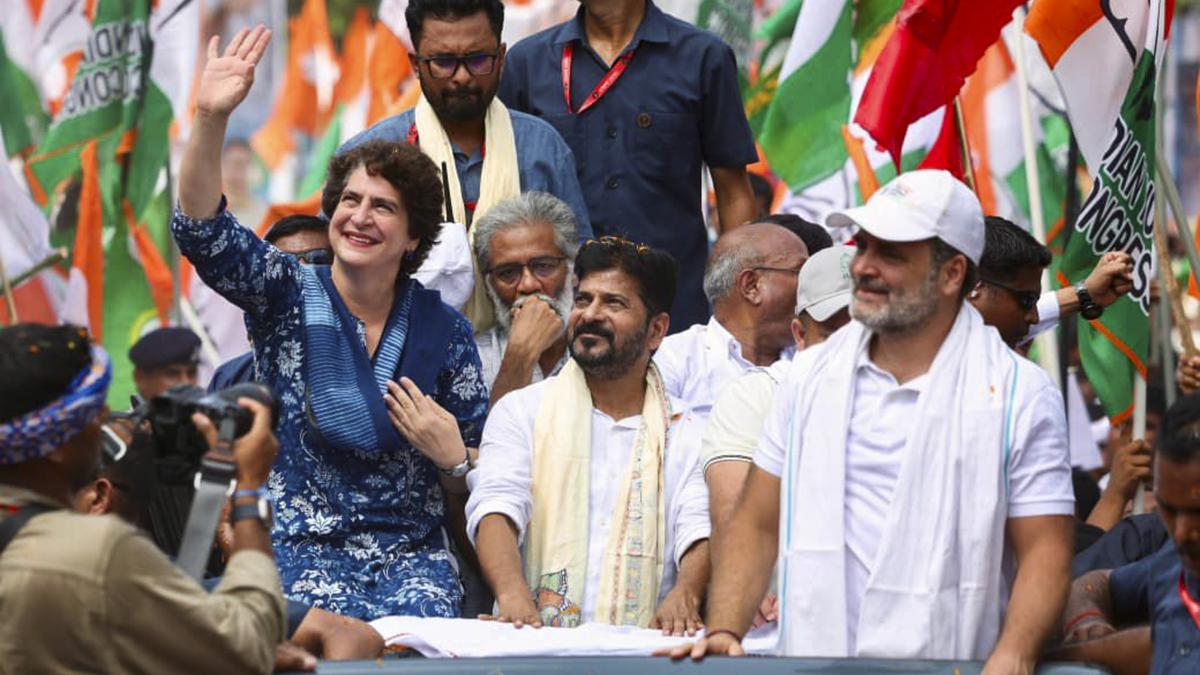
Featured image: LoP in the Lok Sabha and Congress leader Rahul Gandhi with Telangana Chief Minister and party leader A. Revanth Reddy, party leader Priyanka Gandhi Vadra, Bihar party President Rajesh Ram and CPI (ML) Liberation General Secretary Dipankar Bhattacharya during ‘Voter Adhikar Yatra’, in Bihar on August 26, 2025. Photo: AICC via PTI
Adv. Vinod Payyada is a lawyer, writer and social activist based in Kannur, Kerala. He is associated with progressive and socialist movement. He has also been a strong advocate for marginalized communities.