
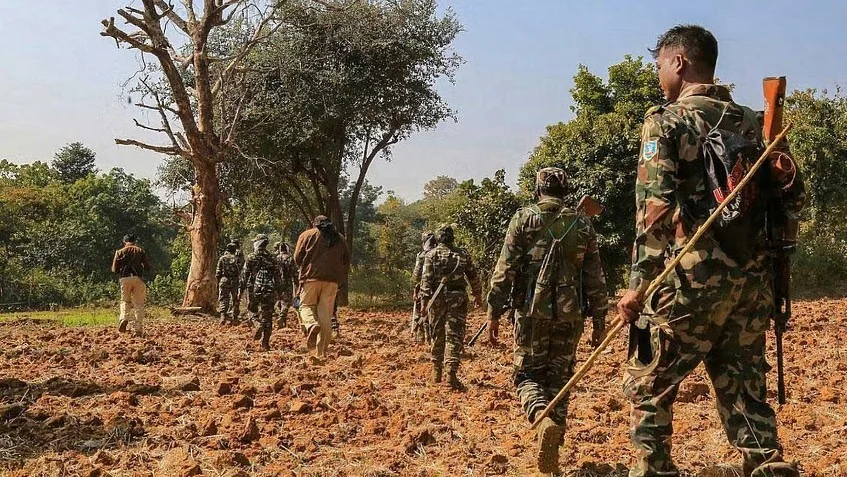
After the ‘Final Assault’, what remains of the Constitution in Bastar?
The People’s Union for Democratic Rights (PUDR) report Reddening the Green: Costs, Contexts and Consequences of the War in Bastar, 2024–2026 documents 27 months of Operation Kagaar through reported killings, arrests and surrenders, while locating the military campaign within a longer history of Adivasi dispossession, mining expansion and weakening of constitutional safeguards. This article reads the report against the author’s own involvement with the Campaign for Peace and Justice in Chhattisgarh during the Salwa Judum years and subsequent work with Adivasi activists including Soni Sori. It argues that the central question after the declared defeat of the Maoist movement is not simply whether armed conflict has receded, but whether exceptional counter-insurgency institutions will give way to accountable policing, review of incarceration, democratic dissent, Gram Sabha authority and the protections contained in the Fifth Schedule, PESA and the Forest Rights Act. Bastar’s post-conflict future will depend on whether Adivasi political agency expands as the guns recede.
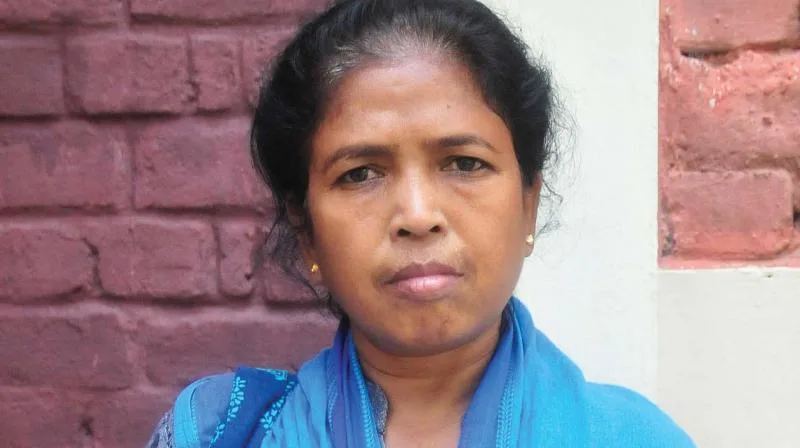
A recent conversation with Soni Sori returned repeatedly to two questions: what Operation Kagaar has done to Adivasi areas in Bastar, and what political space will remain when the government says the Maoist movement has been defeated. Soni’s concern was not framed as nostalgia for an armed movement. It was about land, young people, women, constitutional rights and the right to organise without being treated first as a security threat and suspect.
That conversation also carried an older history. Nearly two decades ago, those of us associated with the Campaign for Peace and Justice in Chhattisgarh (CPJC), were trying to draw national attention to the Salwa Judum and the use of local Adivasi youth as Special Police Officers in counter-insurgency. The legal state was arming civilians from within the same social world in which the conflict was being fought.
The campaign condemned Maoist violence, including the Rani Bodli attack, but rejected the proposition that such violence authorised the burning of villages, forced displacement, sexual violence or the creation of armed vigilante formations. It argued for independent investigation of abuses by all sides, and for a ceasefire and political dialogue.
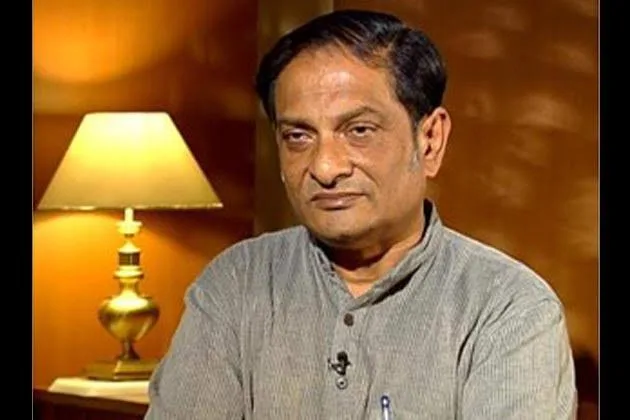
In 2011, the Supreme Court’s judgment in Nandini Sundar v State of Chhattisgarh held the deployment of tribal youth as SPOs for regular counter-insurgency duties unconstitutional and directed the state to stop Salwa Judum, the Koya Commandos or similar formations from taking the law into their own hands (Supreme Court of India 2011). That should have closed one phase of Bastar’s militarisation. Instead, its institutional form changed. The vocabulary moved from Salwa Judum and SPOs to the District Reserve Guard, Bastar Fighters, fortified police stations, paramilitary camps, surveillance and coordinated operations involving central and state forces.
It is against this history that PUDR’s Reddening the Green: Costs, Contexts and Consequences of the War in Bastar (2024–2026) needs to be read.
Reading a war through missing records
PUDR reconstructs 27 months of Operation Kagaar, from January 2024 to March 2026. For Bastar division, it records 607 deaths: 516 persons described by the authorities as Maoists, 55 civilians and 36 security personnel. It also records 487 arrests and 1,496 surrenders (PUDR 2026: 1–5, 25–29).
PUDR is careful about the limits of these figures. Unable to conduct a field fact-finding exercise, it relied substantially on the Bastar edition of Dainik Bhaskar, other newspapers and government information. Much of the underlying material therefore originated with the police and security establishment – methodologically innovative for a human rights report of the sort. That limitation is also central to what the report reveals. The operations were highly publicised, but the legal record that should follow deaths in police action was largely unavailable. Encounter deaths were announced, alleged ranks and rewards were publicised, and weapons said to have been recovered were listed. What is much harder to find are FIRs concerning the deaths, independent investigations, magisterial inquiries, post-mortem records, forensic examination of weapons, or the findings submitted to courts and human rights commissions.
The Supreme Court’s guidelines in PUCL vs State of Maharashtra require an independent investigation of police encounter deaths, along with a magisterial inquiry and other safeguards. PUDR compares those requirements with the available record from Bastar and repeatedly finds that no public information is available to establish compliance (PUDR 2026: 30–40).
The arrest data are equally important. In 50 of the 487 arrests documented, even the date of arrest is unavailable. Only 33 newspaper reports identify a specific alleged offence, and none of those surveyed provides an FIR number. The report therefore cannot establish how many of those arrested remain in jail, how many have been charged, granted bail, tried or acquitted (PUDR 2026: 28–29, 42–45).
The Burkapal case remains one of the clearest examples. In 2017, 121 Adivasi villagers were arrested for allegedly assisting a Maoist attack on CRPF personnel. Five years later, a special court acquitted all 121 after the prosecution failed to establish their participation or Maoist membership (Indian Express 2022). An acquittal could clear the accusation. It could not return the years citizens spent in prison.
From Binayak Sen to Soni Sori
There was a period when such cases produced sustained public engagement. The arrest of Dr Binayak Sen in 2007 generated a national campaign among doctors, academics, civil-liberties organisations and social movements. The argument was not that Maoist politics had to be endorsed, but that medical work, prisoners’ rights and documentation of state violence could not themselves become evidence of sedition.
Soni Sori’s case made the costs of this system even more visible. I have known and worked with Soni over the years, and it is difficult to reduce what happened to her to a paragraph in a human-rights chronology. Arrested in 2011 and accused of acting as a Maoist intermediary, she alleged torture and sexual violence in police custody. Following a Supreme Court-directed examination at NRS Medical College in Kolkata, doctors reported foreign objects removed from her body; the Court subsequently sought the Chhattisgarh government’s response to the allegations (Indian Express 2011a, 2011b). She was later acquitted in the cases against her (Supreme Court of India 2022).
Their visibility briefly opened a window onto a much larger population of Adivasi undertrials, families and villages living with repeated arrests, permanent warrants and long periods of judicial custody.
PUDR’s present report brings that question back without claiming a consolidated figure for all Adivasis incarcerated in Bastar. It documents 487 arrests during Kagaar and cites the Chhattisgarh government’s disclosure that 66 prisoners died in the state’s jails in the 13 months preceding February 2026, while judicial inquiries had been completed in only 18 cases. These figures are state-wide and are not limited to Bastar or Adivasi prisoners. Their relevance is the weakness of custodial oversight in the system into which those arrested during Kagaar have entered (PUDR 2026: 44).
Militarisation and mineral extraction
The report’s second part explains why killings and arrests cannot be separated from questions of land, forests and mineral extraction. Bastar is a Fifth Schedule region with substantial deposits of iron ore, tin, bauxite and other minerals. It is also a region where the Constitution and subsequent laws recognise forms of Adivasi self-governance and rights over customary land and forest resources.
PUDR examines the Fifth Schedule, the Panchayats (Extension to Scheduled Areas) Act (PESA) and the Forest Rights Act (FRA) alongside changes in mining, forest and environmental regulation. Its argument is that the erosion of these safeguards has accelerated even as the military presence has expanded.
The Chhattisgarh government has announced approximately ₹52,000 crore in investment for Bastar. PUDR notes that ₹43,000 crore is associated with NMDC, with another ₹5,200 crore for railways and ₹2,300 crore for roads, making the package overwhelmingly mining or mining-linked infrastructure (PUDR 2026: 62–65). The report also records the entry of private leaseholders into Bailadila, long-term mining leases, disputed public hearings and allegations that Gram Sabha consent was fabricated.
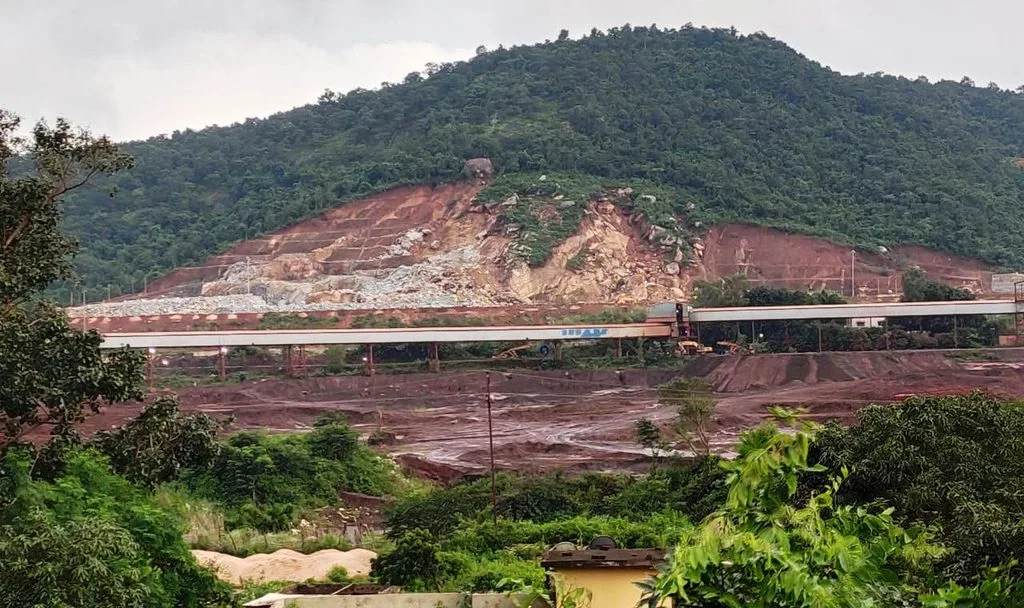
The report does not establish that each security operation served a particular mining project. Its stronger point is structural: the end of Maoist territorial control coincides with regulatory changes and new investment that make mineral-bearing forests easier to access.
The security camps are therefore a post-conflict question, not only a counter-insurgency question. PUDR records 412 camps across Bastar division, many only a few kilometres apart. The state government has indicated that the end of the Maoist insurgency will not necessarily mean closure of these installations; some may be converted into police stations or administrative and “development” centres (PUDR 2026: 77–84). If the exceptional security situation has ended, continued exceptional deployment needs a public rationale. Land occupied for a counter-insurgency purpose cannot automatically become permanent state infrastructure without examining ownership, consent and local need.
Democratic dissent after Kagaar
The Moolvasi Bachao Manch (MBM) case is important here. The organisation grew out of protests against the Silger security camp and raised questions of displacement, militarisation, PESA and forest rights. It was banned in 2024 under the Chhattisgarh Special Public Security Act. The ban later lapsed, but several activists continued to face prosecution and detention under UAPA and NIA cases. UN human-rights experts subsequently raised concerns regarding the arrests of Raghu Midiyami and Suneeta Pottam and their human-rights work (PUDR 2026: 59–61; OHCHR 2025).
The distinction between armed activity and democratic opposition will be decisive in the next phase of Bastar. Opposition to a mine, security camp or disputed public hearing cannot continue to acquire a presumption of Maoist association merely because similar issues were once taken up by the Maoist movement.
PUDR also advances a more difficult legal argument. It suggests that the scale, organisation and command structure of Operation Kagaar make ordinary encounter law insufficient and that the conflict needs to be examined through international humanitarian law governing non-international armed conflicts (PUDR 2026: 30–52). That proposition deserves debate rather than casual acceptance. But the report is right to ask whether local criminal procedure alone can provide accountability when lethal force is exercised through coordinated operations involving several armed formations and higher executive command.
There is also a necessary caution. Bastar cannot be reduced to two armed formations, the state and the Maoists. Adivasi communities constitute the largest political constituency in this conflict, and their aspirations cannot be subsumed under either. Any serious account must also acknowledge Maoist violence against civilians, killings of suspected informers, coercion and the restrictions that armed politics placed on independent political agency. None of this diminishes the state’s constitutional obligations.
From Counter-insurgency to Democratic Governance
If the government wants to stay on its claim that organised ‘Maoist insurgency’ or ‘Left Wing Extremism’, has been substantially dismantled, then Bastar now requires an institutional transition.
The 487 arrests documented during Kagaar require follow-up: who remains incarcerated, under which FIRs, on what evidence, and at what stage of trial? Permanent warrants and prolonged undertrial detention need review. Encounter investigations required by the Supreme Court should be open to judicial and public scrutiny. Those held in surrender or rehabilitation centres must have access to families and lawyers, and freedom of movement unless detention is authorised by law.
The same applies to the security infrastructure. The continuation or conversion of hundreds of camps should not proceed as an administrative fait accompli. Each installation needs timebound judicial review against the security situation, the rights of local communities and the basis on which land was occupied.
Adivasi organisations must also be able to oppose mining, challenge a public hearing, question a camp, organise a Gram Sabha and demand implementation of PESA or the FRA without first having to establish that they are not Maoist fronts.
This is also where civil society has work to do. During the Salwa Judum years, civil-liberties groups, women’s organisations, academics, doctors, lawyers and journalists repeatedly travelled to Chhattisgarh, documented abuses and defended prisoners. That presence has declined even as surveillance and prosecution have become more extensive. PUDR’s dependence on newspaper reports is partly a consequence of the restrictions under which independent work now takes place. It is also a reminder of how far Bastar has receded from sustained national democratic scrutiny.
The formal end of an armed movement will not by itself establish peace. A more useful test is whether ordinary institutions begin to replace exceptional ones: civilian policing in place of heavily armed counter-insurgency formations; transparent criminal procedure in place of indefinite suspicion; Gram Sabha decision-making in place of administratively manufactured consent; and open political organisation in place of the security classification of dissent.
That is the constitutional question left by PUDR’s report. The government has announced the end of a major armed challenge in Bastar. What follows should be judged by whether the Adivasi people of the region gain greater control over their land, institutions and political voice, and whether disagreement can once again take place without guns setting the terms.
References:
People’s Union for Democratic Rights (PUDR) (2026): Reddening the Green: Costs, Contexts and Consequences of the War in Bastar, 2024–2026, New Delhi, July.
Indian Express (2011a): “Sori Medical Report: ‘Foreign Objects’ Found in Private Parts,” 26 November.
— (2011b): “SC Seeks Report on Sori’s Torture,” 3 December.
Indian Express (2022): “121 Tribals, Arrested for 2017 Maoist Ambush in Chhattisgarh, Acquitted after Five Years in Jail,” 17 July.
OHCHR (2025): Communication concerning the arrests of Raghu Midiyami and Suneeta Pottam, Special Procedures of the Human Rights Council, India.
Supreme Court of India (2011): Nandini Sundar and Others v State of Chhattisgarh, Writ Petition (Civil) No 250 of 2007, judgment dated 5 July.
Supreme Court of India (2022): Soni Sori v State of Chhattisgarh, Writ Petition (Criminal) No 206 of 2011, order dated 26 July.

MJ Vijayan is a Delhi-based writer, researcher and civic activist working on peace, democracy, ecological justice and community rights in South Asia. He is Director of the Participatory Action Research Coalition of India (PARC-I).